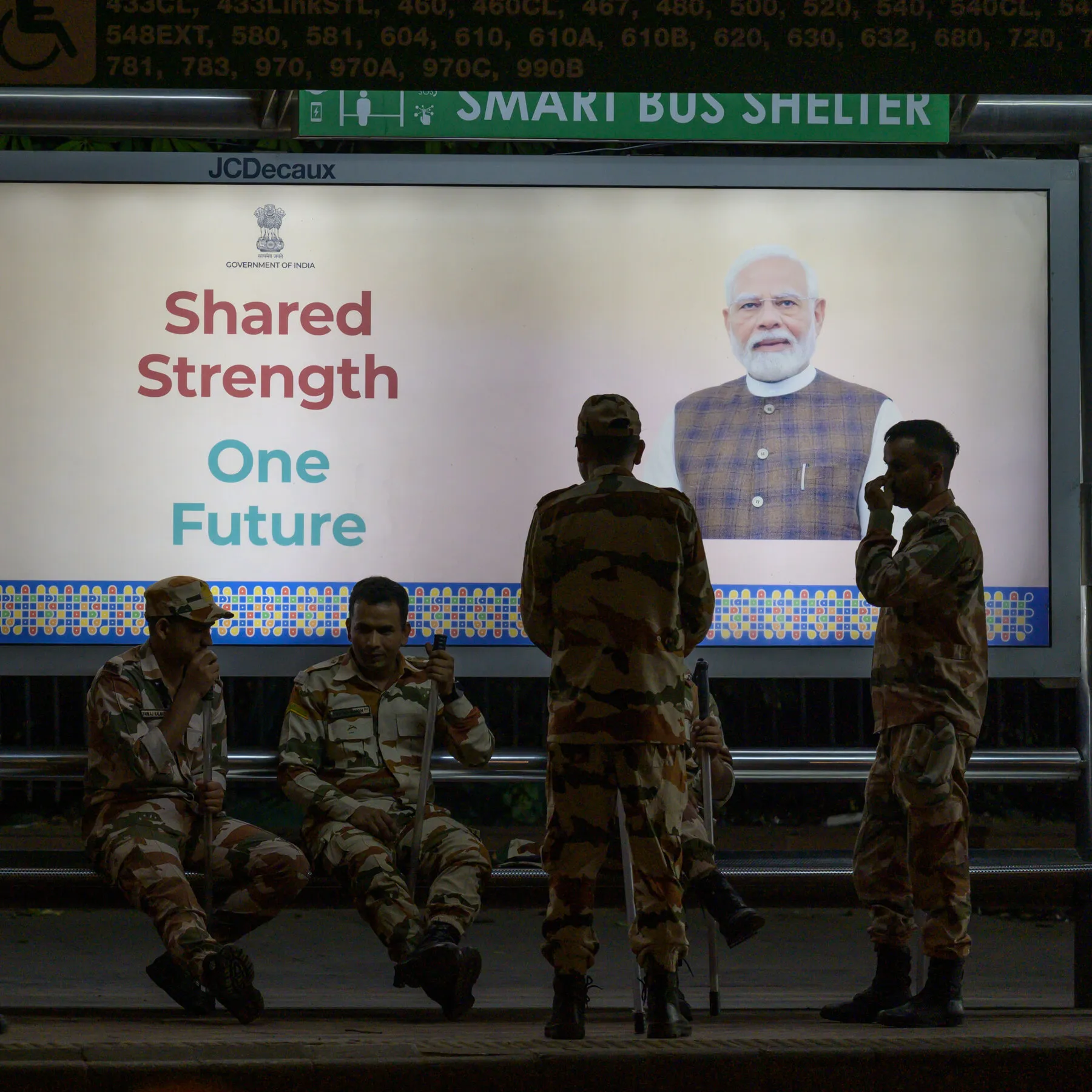
镇压暴露了莫迪维持权力手册的局限性 印度总理纳伦德拉·莫迪长期成功地孤立和削弱了对手。Z世代的抗议活动提出了他从未面临过的挑战。
Crackdown Exposes Limits of Modi’s Playbook for Maintaining Power Prime Minister Narendra Modi of India has long succeeded in isolating and undermining opponents. The Gen Z protests pose a challenge unlike any he has faced before.
纳伦德拉·莫迪总理长期以来在国际上塑造了自己作为世界上最大民主国家的民选领袖的形象,一个在暴力世界中清醒的和平声音。
Prime Minister Narendra Modi has long cultivated an image abroad as the popular elected leader of the world’s largest democracy, a sober voice of peace in a world of violence.
他在印度国内平衡这一角色的同时,也展现出另一种倾向:作为一个强人,他的亲信利用国家机器镇压异议者,利用日益顺从的法律体系和官僚机构。这些行动削弱和分裂了反对派,压制了独立媒体,并监禁了活动人士。
He has balanced that role at home in India with another penchant, as a strongman whose lieutenants have wielded the arms of the state at dissenters, exploiting an increasingly pliant legal system and bureaucracy. These efforts have undercut and splintered the opposition, cowed independent media and jailed activists.
周六,莫迪的平衡之举崩溃了,首都新德里各地的暴力场面被全球屏幕直播,暴露了他统治的粗糙一面以及他维持权力公式的局限性。
On Saturday, Mr. Modi’s balancing act broke down as violent scenes across the capital city were beamed to screens around the world, exposing the rough edges of his rule and the limits of his formula for maintaining power.
新德里警方对愤怒的年轻抗议者使用武力,这些抗议者认为莫迪在操纵国家的投票制度,警方将他们殴打并拘留了数千人。年轻人手持手机记录了这一切,甚至包括他们被关押的警察局的脏乱状况。他们找到了绕过新德里中部网络封锁的方法,将内容冲上社交媒体,削弱了一位民主领袖轻松掌控局面的形象。
The police in New Delhi unleashed force at young protesters angry over what they say is Mr. Modi’s manipulation of the country’s voting system, bashing them and dragging them to detention by the thousands. Phones in hand, the youth have documented the harsh treatment, down to the dirty condition of the police stations they were held in. They found ways around an internet shutdown in central New Delhi to flood social media with content undermining the image of a democratic leader happily in control.
“旧手册已经过时,它疲惫不堪,已经不起作用了,”普林斯顿大学历史学家、长期研究印度政府在1970年代沦为威权统治的贾纳·普拉卡什说道。“那么他们现在还剩下什么?他们只有警察。”莫迪对抗议活动保持了他一贯的沉默。他的官方社交媒体账号 stattdessen 发布了生日祝福和节日问候,延续了他只与积极事物关联的惯例。
“The old playbook has become old, it’s tired, it doesn’t work,” said Gyan Prakash, a Princeton University historian who has written extensively about the Indian government’s descent into authoritarian rule in the 1970s. “And so what do they have now left? They have the police.”Mr. Modi has remained characteristically mum on the protests. His official social media accounts instead posted birthday greetings and festival wishes, keeping with his practice of associating himself only with positive things.
但他仍面临如何应对日益增长的异议的挑战,分析人士表示,这与他迄今为止所面临的任何情况都不同。曾经备受打击的反对派正感到振奋,试图通过数月的顽强抗争所打开的裂缝进一步扩大。
But he still faces the challenge of how to deal with the mounting dissent, which analysts say is unlike anything he has faced so far. The once-battered opposition is feeling invigorated, trying to widen the crack opened by the young people through months of stubborn agitation.
莫迪长期以来一直能够找到办法压制对手,将他们描述为轻量级人物,或将一些人妖魔化为恐怖分子和“反民族分子”。然而,青年运动正日益汇聚来自社会各阶层的力量,使得抗议者难以像以前那样被轻易针对。政府的强硬回应引发了莫迪阵营成员的罕见异议,这些成员通常保持沉默,其中包括他党的一位资深意识形态人物和一位内阁部长。
Mr. Modi had long found ways to box in opponents, dismissing them as lightweight or demonizing some as terrorists and “anti-nationals.”The youth movement, however, increasingly draws on a cross-section of society that makes the protesters hard to target the same way. The government’s heavy-handed response has elicited rare objections from members of Mr. Modi’s camp, who usually maintain silence, including from a senior ideologist of his party and a cabinet minister.
莫迪还面临着代际挑战。他及其印度人民党长期以来将数字敏锐与印度教民族主义意识形态相结合,该意识形态主张等级与统一,但如今似乎对一群对这种僵化权威反应冷淡的出声Z世代感到束手无策。
Mr. Modi also faces a generational challenge. He and his Bharatiya Janata Party, which has long combined digital savvy with a Hindu nationalist ideology that espouses hierarchy and uniformity, seem stumped by a vocal Gen Z cohort that responds poorly to that kind of rigid authority.
当前的愤怒浪潮源于抗议者认为对印度投票神圣性的威胁,这也质疑了莫迪作为拥有强大民意授权的民选领袖的形象。他的党经常引用他在全国大选中的三次胜利——莫迪已担任印度总理12年——以及其在地方选举中的成功,来驳斥对其政府行为的批评。
The current wave of anger is over what the protesters see as a threat to the sanctity of voting in India, and it calls into question Mr. Modi’s image as an elected leader with a strong popular mandate. His party often cites his three victories in national elections — Mr. Modi has been prime minister for 12 years — and its success in local elections in dismissing criticism of his government’s conduct.
过去一年,全国范围内的选民名单修订行动剔除了超过1.3亿个名字。修订过程中混乱的证据日益增多,以及数百万印度人被有意剥夺选举权的指控,进一步激化了民众的愤怒。
Over the past year, a nationwide revision of voter rolls has culled more than 130 million names. Mounting evidence of chaos in the revision process and allegations that millions of Indians were deliberately disenfranchised have fueled popular anger.
抗议者要求选举委员会主席吉亚内什·库马尔辞职,该职位是通过莫迪主导的任命程序任命的。他们指责库马尔篡改选民名单,以巩固执政党多年来的优势。莫迪的政党否认了这一指控,称批评者是输不起的失败者,无法在选举中成功竞争。
The protesters are demanding the resignation of Gyanesh Kumar, an election chief appointed through a process that Mr. Modi dominates. They accuse Mr. Kumar of doctoring the voter rolls to lock in the ruling party’s advantage for years to come. Mr. Modi’s party has rejected the allegation, saying the critics are sore losers who cannot successfully compete in elections.
在新闻发布会上,莫迪政党的资深议员拉维·尚卡尔·普拉萨德表示:“我们并不反对抗议,抗议是民主的自然组成部分。”面对今年夏天早些时候的青年抗议浪潮,莫迪在针对大学入学考试丑闻的大规模抗议中罕见地作出了让步,教育部长因此辞职。
At a news conference, Ravi Shankar Prasad, a senior lawmaker from Mr. Modi’s party, said, “We are not against protest, which is a natural part of democracy.”Facing an earlier wave of youth protests over the summer, Mr. Modi made a rare concession with the resignation of his education minister amid mass agitation over scandals in college entry tests.
他的政党似乎从这一事件中吸取了教训,认为妥协只会助长更多的诉求,正如历史学家普拉卡什所说。选举委员会主席的辞职可能造成特别严重的影响,因为反对派可能将其解读为莫迪的选举授权存疑的承认。“他们正处于进退两难的境地,”普拉卡什说。
His party appears to have learned from that episode that giving in simply fuels demands for more, said Mr. Prakash, the historian. The resignation of the election chief could be particularly damaging, as the opposition could spin it as an admission that Mr. Modi’s electoral mandate was questionable. “They are between the devil and the deep blue sea,” Mr. Prakash said.
曾为印度人民党州政府提供咨询的分析师拉贾特·塞蒂表示,尽管早前针对教育部长的抗议具有非 partisan 性质,但当前这波抗议明显受到政治反对派的强烈影响。
Rajat Sethi, an analyst who formerly advised B.J.P. state governments, said that while the earlier protests against the education minister were nonpartisan, the current wave feels heavily influenced by the political opposition.
他表示担忧,反对派若坚持要求宪法职务官员——选举委员会主席——辞职,可能引发类似最近在邻国孟加拉国和尼泊尔所见的暴力动荡。
He said he feared that the opposition, in demanding the resignation of the election chief who holds a constitutional office, could bring about the kind of violent upheaval seen recently in neighboring Bangladesh and Nepal.
“我们最大的问题是:这件事的终局是什么?”塞蒂先生说。“政党们在这件事上尝到了血腥味,所以他们会走上街头,因为过去12年里他们从未能够动员起来。”政府的强硬手段并未完全平息抗议。虽然它在新德里市中心设立了大量路障,并将数千名安全部队部署在街头,但抗议者仍在城市的不同角屡次冒头,警方随后冲上前去将他们围捕。青年运动的领导人在被释放后承诺将发动更多抗议。
“My biggest question is: What is the endgame on this?”Mr. Sethi said. “Political parties are tasting blood on this, so they will be on the street because they have never be able to galvanize for the past 12 years.”The government’s heavy-handed response has not quashed protests entirely. While it has erected vast numbers of barricades in central New Delhi and put thousands of security forces on the streets, protesters have kept popping up in different corners of the city, before police rush in to round them up.
莫哈克·古普塔,一名22岁的心理学专业学生,是周六早到的抗议者之一,却只看到路障和安全部队的长队。他表示,整天他都在与警察玩躲猫猫的游戏,并在[平台]上分享了他全部的经历。他说,执政党不理解他这一代人的地方在于,他们会恰恰去做被告知不要做的事情。“上次他们也用了武力。他们用警棍打我,”他说,指的是夏季的抗议。
Leaders of the youth movement promised more protests after being released from detention. Mohak Gupta, a 22-year-old psychology student, was among the protesters who arrived early on Saturday, only to find barricades and columns of security. All day, he said he played cat and mouse with the police and shared his entire experience on He said what the ruling party doesn’t understand about members of his generation is that they will do exactly what they are told not to do. “They used force last time, too. They hit me with a baton,” he said, referring to the summer protests.
“这对我们不起作用。他们让我更加愤怒。他们怎么能打我们?”穆吉卜·马沙尔是《纽约时报》南亚分社社长,负责领导对印度及其周边多样化地区的报道,包括孟加拉国、斯里兰卡、尼泊尔和不丹。
“It doesn’t work with us. They made me more angry. How could they hit us?”Mujib Mashal is the South Asia bureau chief for The Times, helping to lead coverage of India and the diverse region around it, including Bangladesh, Sri Lanka, Nepal and Bhutan.