全球人工智能相关产业正面临越来越大的压力。芯片类股票遭遇持续抛售,这令人们对近年来最热门的投资主题能否持续下去产生了新的疑虑。
The global artificial intelligence trade is coming under increasing pressure, with a deepening selloff in chip stocks instilling fresh doubts about the sustainability of one of the most powerful investment themes of recent years.
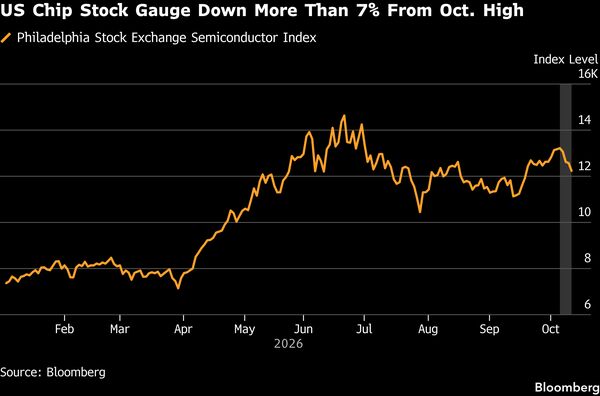
受中国竞争加剧、利率上升、估值过高以及建设人工智能基础设施成本庞大等多重因素影响,与人工智能热潮相关的股票纷纷下跌。周二,韩国综合股价指数暴跌5.5%;费城半导体指数则从本月高点回落了7%以上。
Shares tied to the AI boom have been hit as concerns over intensifying competition from China, rising interest rates, stretched valuations and the enormous cost of building AI infrastructure converge. South Korea’s Kospi Index plunged 5.5% on Tuesday, while the Philadelphia Semiconductor gauge has fallen more than 7% from this month’s high.
随着财报季的开启,投资者正密切关注:投入到芯片、数据中心及计算基础设施领域的巨额资金能否带来足够的回报,从而支撑该行业的迅猛涨势?尤其是在瑞·达利欧等资深市场人士发出泡沫预警的背景下,这种担忧愈发强烈。
With the earnings season underway, investors are scrutinizing whether the billions being poured into chips, data centers and computing infrastructure will generate sufficient returns to justify the sector’s breakneck rally, particularly amid bubble warnings from some market veterans such as Ray Dalio.
“投资者们情绪紧张,正寻找借口来抛售今年表现优异的人工智能相关股票,尤其是存储芯片类股票,”联合银行私人财富管理公司的董事总经理林伟信说道。“这些抛售诱因其实并不新鲜,但没人愿意逆势而行。眼下大家的心态就是‘先卖出,再问原因’。”此次抛售潮的导火索是中国长江存储科技有限责任公司宣布,公司在多年以来业界一直试图攻克的芯片技术方面取得了突破,这一消息削弱了投资者对全球其他存储芯片企业的乐观预期。
“Investors are jittery and looking for excuses to take profit on AI-related stocks that have outperformed this year, especially memory stocks,” said Vey-Sern Ling, a managing director at Union Bancaire Privee. “The excuses are not new, but nobody wants to stand in front of a stampeding herd. Sell first, ask later is the mood.”The latest sell triggers came from China’s CXMT Corp. declaring it achieved a breakthrough in chip technology that rivals had pursued for years, which undermined the case to be bullish on its global memory peers.
博通公司首席执行官陈福阳的言论也进一步加剧了市场焦虑。他将部分追捧人工智能热潮的投资者行为比作赌博,并警告称该行业可能面临资金短缺的问题。
Adding to the jitters were comments from Broadcom Inc. Chief Executive Officer Hock Tan, who likened the strategies of some investors drawn to the AI boom to gambling, and warned the sector can face funding constraints.
“人工智能相关产业的前景充满挑战,形势相当严峻,”对冲基金莲花资产管理公司的首席投资官洪浩说道。他补充道,市场人士担心长江存储“将提升行业产能并引发价格战”。
“The outlook is challenging for the AI trade. It is tough,” said Hao Hong, chief investment officer at hedge fund Lotus Asset Management. Market participants are worried CXMT “is going to increase capacity of the industry and create a price war,” he added.
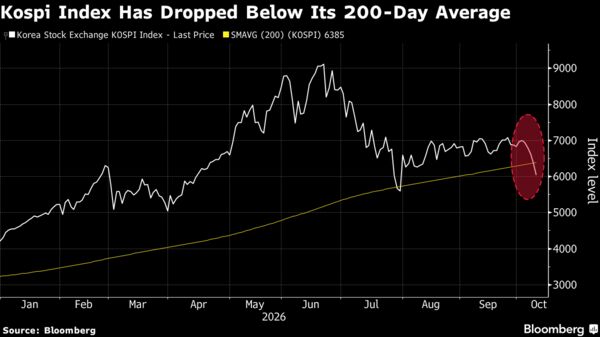
周二,韩国综合股价指数在亚洲市场表现最差:内存芯片巨头三星电子和SK海力士的股价分别下跌了约7%和10%。目前该指数较6月份创下的历史高点已累计下跌三分之一,且已跌破200日均线。与此同时,台湾加权指数也下跌了约2%。
The Kospi took the biggest hit in Asia on Tuesday, with shares of memory giants Samsung Electronics Co. and SK Hynix Inc. dropping about 7% and 10%, respectively. Korea’s benchmark is now down a third from the record high it reached in June and below its 200-day moving average. Taiwan’s Taiex gauge fell about 2%.
诚然,过去类似担忧也曾冲击过人工智能概念股,但随着投资者持续看好这项技术的变革潜力,相关股价随后又重拾涨势。Meta Platforms等公司推出的新人工智能模型将进一步提升对算力的需求,从而使内存芯片的重要性愈发凸显。
To be sure, similar concerns have rattled AI stocks in the past, only for the rally to regain momentum as investors continued to bet on the technology’s transformative potential. New AI models released from the likes of Meta Platforms Inc. will also increase the need for computing, making memory chips ever more critical.
不过有一点是显而易见的:与人工智能投资相关的风险正持续累积,这不禁让人质疑投资者还能在多大程度上对这些风险视而不见。
Yet one thing is clear: the risks surrounding the AI trade have continued to pile up, raising questions about how much longer investors will be willing to look past them.
谨慎情绪随处可见。对人工智能领域的疯狂投资正令美国市值逾10万亿美元的企业市场中的投资者感到不安,促使市场对多家大型科技公司的风险估值重新调整。此外,摩根大通和高盛集团罕见地采取了限制对人工智能初创企业Volta Infrastructure Holdings Ltd.贷款敞口的措施。
Signs of caution are everywhere. The rush to finance AI is rattling investors in the more than $10 trillion US corporate market, sparking a repricing of risks around some of the biggest technology companies. Meanwhile, JPMorgan Chase & Co. and Goldman Sachs Group Inc. have taken a rare step of limiting their exposure to a loan for AI startup Volta Infrastructure Holdings Ltd.
在亚洲,由英伟达提供支持的数据中心运营商Firmus Grid Ltd.的首次公开募股遭遇失败,这也让投资者在评估那些依赖未来盈利的人工智能基础设施项目时变得更加挑剔。
In Asia, the collapse of Nvidia-backed data center operator Firmus Grid Ltd.’s initial public offering is making investors far pickier about AI infrastructure deals that hinge on future earnings.
此次抛售潮的时机也颇具深意——正值各企业准备发布财报之际,这些财报或将为投资者提供新线索,以判断对人工智能领域的巨额投资是否已初见成效。荷兰阿斯麦控股和台湾积体电路制造等公司均计划于本周发布财报。
The timing of the latest selloff is also significant, coming just as companies prepare to report earnings that could offer fresh clues on whether the massive investments in AI are paying off. ASML Holding NV and Taiwan Semiconductor Manufacturing Co. are among firms due to report this week.
“人工智能发展引擎仍在全速运转,但为其提供动力的资本成本却日益高昂,”Vantage Global Prime的分析师Hebe Chen指出。鉴于周三即将公布的美国通胀数据属于下一个关键风险点,她补充道:“投资者采取战术性操作、转向防御型投资策略似乎越来越明智。”
“The AI machine is still running at full speed, but its fuel — capital — is getting increasingly expensive,” Hebe Chen, an analyst at Vantage Global Prime. With Wednesday’s US inflation data the next key risk, “a tactical rotation towards defensive positions looks increasingly sensible,” she added.