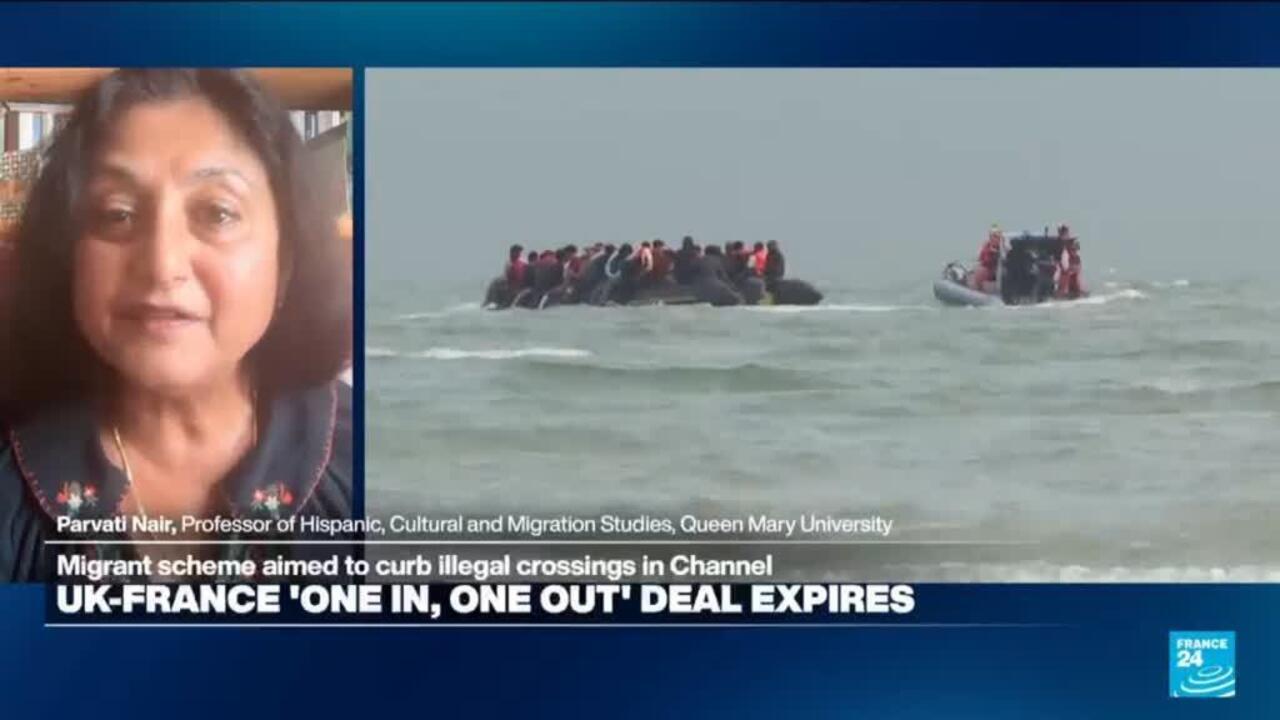
Erin Ogunkeye 欢迎伦敦玛丽女王大学西班牙裔、文化与移民研究教授 Parvati Nair 的到来。
Erin Ogunkeye is pleased to welcome Parvati Nair, Professor of Hispanic, Cultural and Migration Studies at Queen Mary University of London.
她认为英法移民协议虽规模不大,但却揭示了脱欧后两国关系的复杂性——移民问题与外交、安全、情报和监控紧密相连。
She sees the UK-France migration agreement as a small but revealing element of a much wider post-Brexit relationship, in which questions of migration are intertwined with diplomacy, security, intelligence and surveillance.
她警告称,这一协议有可能将复杂的人道现实简化为数字和威慑手段,忽视了那些可能成为政治或经济难民的人的困境。
She warns that the scheme risks turning a complex human reality trivialises it into numbers and deterrence, while obscuring the plight of people who might be political or economic refugees.
许多移民都是因冲突、流离失所和创伤性经历而被迫离开家园的,然而公众讨论往往将他们仅仅归类为‘移民’,并将移民本身视为问题与威胁。
Many of those making these journeys have fled conflict, displacement and traumatic experiences, yet public debate too often reduces them to the category of “migrants” and treats migration itself as a problem and a threat.
因此,核心问题在于我们如何构建关于人口流动的政治和伦理框架。
And so, the central question is linked to the kind of political and ethical framework we are creating around human mobility.
她认为政府需要解决导致流离失所的冲突、气候灾难和历史不平等问题,同时为人们提供安全和合法的迁移途径。
She believes that governments need to address the conflicts, climate disasters and historical inequalities that drive displacement, while creating safe and legal pathways for people to move.
这需要提高问责性和透明度,重新审视边境的军事化以及将人口流动犯罪化的现象,并在公共和媒体话语中改变对移民的认知。人类自古以来就在迁徙,而移民能够深刻丰富迁徙所涉及的社会。挑战在于建立既能维护国家主权又能保障人类尊严的体系。
That also requires greater accountability and transparency, a reconsideration of the militarisation of borders and the criminalisation of mobility, and a more fundamental shift in how migration is represented in public and media discourse. Humans have always moved, and migration can profoundly enrich the societies in which it takes place. The challenge is to build systems that recognise both national sovereignty and human dignity.