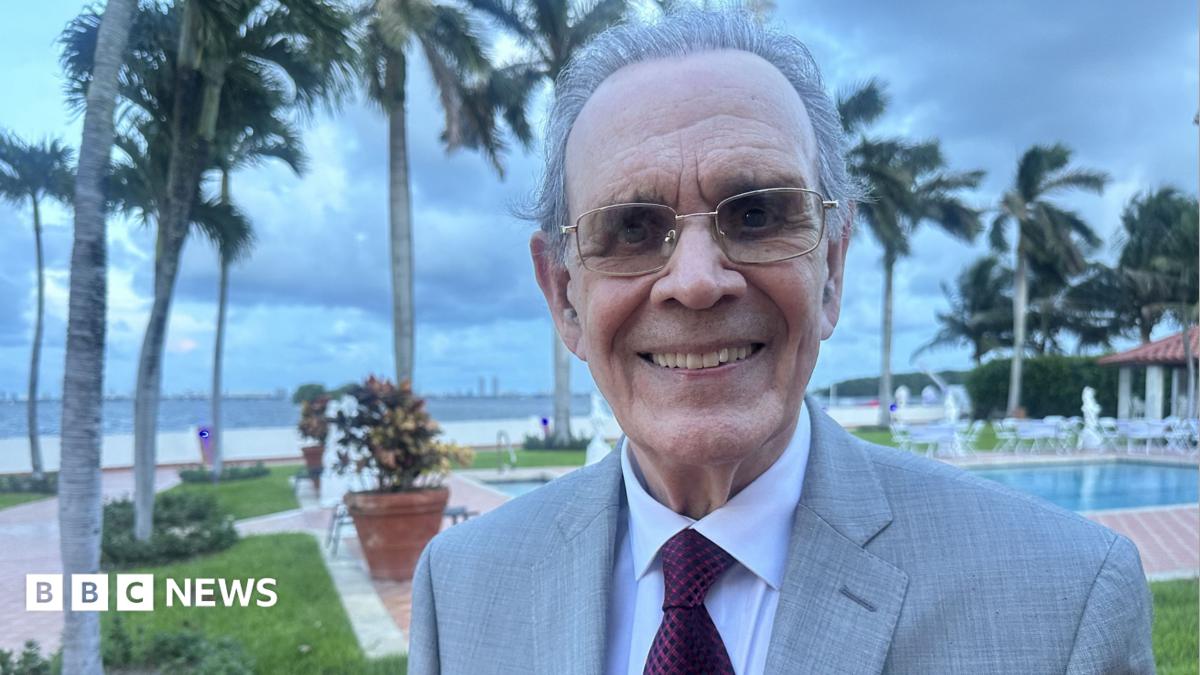
胡安·奥马尔·西斯托表示,他和同事们已经准备好“立即前往古巴开展业务”。BBC墨西哥、中美洲和古巴记者威尔·格兰特报道,迈阿密,5小时前。在迈阿密一位顶级整形外科医生俯瞰比斯坎湾的豪华住宅里,佛罗里达州一些最富有的古巴裔美国人家庭聚集于此。
Juan Omar Sixto says he and his colleagues are ready to 'go and do business in Cuba right away' Will Grant BBC's Mexico, Central America and Cuba correspondent Miami 5 hours ago At the lavish home of one of Miami's top plastic surgeons, overlooking the Biscayne Bay, some of the wealthiest Cuban-American families in Florida have gathered.
他们齐聚一堂,在刚刚成立的古巴裔美国人全国商会(CANCC)的第四次会议上,探讨他们对古巴未来的愿景。
They are there to thrash out their vision of Cuba's future at the fourth meeting of the newly created Cuban-American National Chamber of Commerce (CANCC).
手握朗姆酒,腕戴劳力士,这些人是迈阿密的旧贵族。拥有百加得(Bacardi)和巴本(Babun)等知名古巴裔美国姓氏的人们在泳池边闲聊,谈论着岛上令人堪忧的经济状况,并分享着关于最新政治动向的八卦。
Rum in hand and Rolexes on wrists, this is Miami's old money. People with well-recognised Cuban-American surnames – like Bacardi and Babun – chat around the pool about the lamentable state of the island's economy, and share titbits of gossip about the latest political rumblings.
“今晚的目的是将迈阿密-戴德县最杰出的古巴裔美国企业家聚集在同一个屋檐下,”CANCC主席胡安·奥马尔·西斯托说,“我们的目标是在政权倒台后进入古巴。”他的客人们坚信这一时刻即将到来。
"The intention of this evening is to gather under one roof the most prominent Cuban-American entrepreneurs in Miami-Dade County," says CANCC president Juan Omar Sixto, "and the objective is to be in Cuba once the regime falls". His guests are convinced that moment is nigh.
自已故革命领导人菲德尔·卡斯特罗于1959年掌权并没收了他们的土地、将他们家族的企业国有化以来,这个极具影响力的古巴流亡者群体一直痛恨这个由共产党领导的政府。
This influential community of Cuban exiles has detested the Communist-run government ever since the late revolutionary leader Fidel Castro expropriated their lands and nationalised their families' companies after taking power in 1959.
多年来,他们一直在佛罗里达州利用自己的政治和经济影响力,来塑造华盛顿对其祖国的政策。
And they have wielded their political and economic clout in Florida over the years to shape Washington's policies towards their homeland.
西斯托在十几岁时逃离了古巴。如今,这位80出头的房地产开发商所领导的组织,正在为他所谓的古巴“后天”制定计划。
Sixto fled the island as a teenager. Now a real estate developer in his early 80s, his organisation is drafting plans for what he calls "the day after" in Cuba.
CANCC已经起草了一份关于建立古巴证券交易所的提案,并成立了涵盖从能源基础设施到粮食安全等各个领域的委员会。在迈阿密,针对后共产主义时期的规划并非新鲜事。
The CANCC has created a proposal for a Cuban Stock Exchange and formed committees on everything from energy infrastructure to food security. Post-Communist planning is nothing new in Miami.
几十年来,利益集团已经起草了无数的文件和后勤计划,其中一些比另一些更为审慎和务实。
Countless documents and logistical plans have been drawn up by interest groups over the decades, some of them more sober and measured than others.
西克斯托坚称,现在的不同之处在于特朗普政府正推动对该岛进行彻底变革。他说,他们能够接触到一些高层人士,包括与国务卿马尔科·鲁比奥关系密切的人。
The difference now, insists Sixto, is the Trump administration's push to force total change on the island. And he says they have the ear of some high-profile contacts including people close to the Secretary of State, Marco Rubio.
“一旦人道主义援助和医疗物资运抵,我们就会立即去古巴开展业务,”西克斯托说。
"Together with deliveries of humanitarian aid and medical supplies, we'd go and do business in Cuba right away," says Sixto.
报道,自美国对古巴实施石油进口封锁以来,古巴的经济状况进一步恶化。在古巴国内,此类说法大多受到质疑。
The economic situation in Cuba has worsened since a US blockade on the island importing oil In Cuba itself, such claims are mostly met with scepticism.
面对华盛顿对古巴实施的“极限施压”运动,古巴领导层最近宣布了176项经济自由化措施。古巴总统米格尔·迪亚斯-卡内尔表示,这些措施旨在“推进社会主义的捍卫工作,支持并扩大社会正义”。
In the face of Washington's "maximum pressure" campaign on Cuba, the island's leadership recently announced 176 economic liberalisation measures. The Cuban President, Miguel Díaz-Canel, said they were "to advance the defence of socialism, to support and widen social justice".
在批评者看来,这些措施看起来明显就是全面的资本主义——取消私营企业雇员人数上限、允许直接雇佣和解雇古巴员工,并允许个人同时拥有多家企业,包括古巴裔美国人。
To his critics, they look distinctly like full-blown capitalism - lifting the cap on the number of workers in a private business, allowing the direct hiring and firing of Cuban employees and permitting ownership of multiple enterprises at once, including by Cuban Americans.
尽管如此,参加古巴裔美国人全国商会(CANCC)会议的人员仍认为这些经济改革只是表面文章,称其并未给投资者提供任何有意义的保障。西克斯托表示,只要现行体制依然存在,他们就“绝不会踏入古巴一步”。
Still, the attendees at the CANCC meeting dismissed the economic reforms as cosmetic, saying they gave no meaningful guarantees to investors. They would "not put a foot into Cuba", Sixto said, while the current regime remained in place.
一些分析人士认为,此类规划会议为时尚早。尽管古巴裔美国人确信古巴即将发生变革,但没有人能确定变革会以何种形式出现——是像一月份在委内瑞拉看到的那样进行美国军事行动?还是与古巴领导层达成新的经济协议?
Some analysts think such planning meetings are premature. Although Cuban Americans are convinced that change is imminent in Cuba, none can say with any certainty what it will be - a US military operation as seen in Venezuela in January? Or a new economic pact with the island's leadership?
迈阿密大学历史学副教授迈克·布斯塔曼特表示:“目前,美国政府所营造的关于‘后一天’即将到来,或者古巴将是‘下一个目标’的极高期望,已经被推迟了。”
"Right now, the very high expectations created by the US administration that some kind of 'day after' was coming soon, or that Cuba would 'be next' have been kicked down the road," says Mike Bustamante, associate professor of history at the University of Miami.
随着美国11月中期选举临近,特朗普政府又深陷伊朗战争的“泥潭”,布斯塔曼特认为,美国人几乎没有意愿再进行更多海外冒险。
With the November mid-term elections in the US approaching and the Trump administration embroiled in the "quagmire" of the Iran war, Bustamante argues there is little appetite for further foreign adventures.
“很难想象他们会在目前这种一轮接一轮加码制裁的做法上进一步升级。”自1月以来,这个岛国的石油供应实际上已经被切断。迈克·布斯塔曼特说,这本身已经是大幅升级。他补充说,尽管制裁让大多数普通人的生活苦不堪言,但尚未在古巴“创造出一个政治转折点所需的种种条件”。
"It's really tough to think that they will escalate further than what they're doing which is this drip-drip-drip of sanctions." With the island's oil supply effectively shut off since January, that is already a significant escalation, says Mike Bustamente. Although they have made life unbearable for most ordinary people, they haven't yet "created the ingredients for a political inflection point" in Cuba, he adds.
画面中央的胡安·奥马尔·西斯托和同事已为古巴制定了一套宏大计划。古巴政府尚未就CANCC本身发表评论。不过,这类团体历来会激起革命者的愤怒;他们坚称,绝不会被迈阿密的批评者逼下台。
Juan Omar Sixto, centre, and his colleague have big plans drawn up for Cuba The Cuban government has not commented on the CANCC itself. But traditionally such groups prompt indignation among revolutionaries who insist they will not be forced out by their critics in Miami.
我问过一些嘉宾,他们能否意识到其中的讽刺意味:支持这个岛国一大苦难来源——持续数十年的美国经济禁运以及当前的燃料封锁——的同一群人,如今却正在谋划如何重建古巴,而且没有征询大多数古巴人的意见。
I ask some guests if they can appreciate the irony that the same people who support a major source of the island's misery – the decades-long US economic embargo and the current fuel blockade – are now hatching plans for its reconstruction, without the input of most Cubans.
古巴裔农业专家乌戈·奥里松多认为,为古巴发展制定路线图只是务实之举。“眼下,古巴就像一个黑洞,我们不知道那里正在发生什么,”他承认,“但我们的确看到了投资潜力。”奥里松多说,他理解古巴人对于外国投资者买下可耕地使用权这种敏感资源所持的谨慎态度。“但他们要拿它来做什么?”他反驳道,“投资者到来时,会把资金和技术带到古巴。”他说,如果古巴想要生产足够的粮食养活本国人口,并摆脱对粮食进口的依赖,资金和技术都是当务之急。
For Cuban-American agricultural expert Hugo Orizondo it is only practical to draw up a road map to Cuban development. "Right now, Cuba is like a black hole, we don't know what is happening over there," he admits. "But we do know the potential [for investment]." Orizondo says he understands the reticence among Cubans to see foreign investors buying up something as sensitive as the rights to arable land. "But what are they going to do with it?" he retorts. "When investors come, they bring money and technology into the land." Both are urgently needed, he says, if Cuba is ever to produce enough to feed its own population and break its reliance on food imports.
土地所有权是这一代富裕的古巴裔美国人所提出的任何重建项目的核心。胡安·奥马尔·西克斯托(Juan Omar Sixto)表示,他的父亲在古巴比那尔德里奥省(Pinar del Rio)的革命中失去了五处房产和一个农场。虽然他坚称自己无意驱逐目前居住在这些房屋中的任何家庭,但他确实希望为被国有化的土地获得赔偿。
Land titles lie at the heart of any reconstruction project put forward by this generation of wealthy Cuban Americans. Juan Omar Sixto says his father lost five properties and a farm in Cuba's Pinar del Rio province to the revolution. While he insists he has no intention of removing any family living in those homes, he does want compensation for the nationalised land.
“我曾和父亲在那座农场工作了五年,但他们把它夺走了。我要求归还或赔偿。即使他们只给我一分钱的补偿,我也会接受。”他辩称:“这是道义上的公正。”
"I worked on that farm for five years of my life with my father, and they took it away. I want restitution or compensation. Even if they give me just a penny on the dollar, I'll take it." "It's moral justice," he argues.
古巴政府将这些历史性的所有权主张描述为腐败的地主阶级所怀有的怨恨,称他们是靠契约劳工和奴隶的血汗发家致富的。古巴的奴隶制和契约劳工制度直到19世纪末才结束。
The Cuban government portrays such historic title claims as bitterness by a corrupt landed gentry who made fortunes on the backs of indentured workers and slaves. Both slavery and the system of indentured workers didn't end in Cuba until the late 19th Century.
政府还认为,流亡者永远无法忍受卡斯特罗推行的土地改革,因为改革将他们的田地交给了工人和国家。
The government also argues that the exiles could never stand that Castro passed land reforms which handed over their fields to the workers and the state.
“我们的大多数糖厂已经被拆除,但我们将收回这些土地并投入生产,”古巴糖厂主全国协会(National Association of Sugar Mill Owners of Cuba)主席尼古拉斯·古铁雷斯(Nicolás Gutiérrez)说道,该流亡组织一直致力于支持这些所有权主张。“我不敢保证一定是用来种糖,”他说。
"Most of our sugar mills have been dismantled, but we will recover those lands and put them into production," says Nicolás Gutiérrez, the president of the National Association of Sugar Mill Owners of Cuba, an exile organisation championing the title claims. "I'm not promising it will be in sugar," he says.
“它可能是用于乙醇生产、热电联产、太阳能电池板或水净化装置。谁知道呢?有很多不同的选择,”他评论道。“我们需要让它们恢复生产,我们需要向古巴工人支付真正的工资,并在全岛范围内产生经济乘数效应。”雨果·奥里宗多(Hugo Orizondo)承认,很难了解古巴目前的状况。伴随着杯中冰块的碰撞声和凉爽的微风吹过修剪整齐的草坪上的棕榈树,古巴裔美国人全国委员会(CANCC)的成员们把这一切说得轻而易举。然而,在他们聚会后的几个小时内,古巴就陷入了今年第六次全国性大停电。
"It might be in ethanol, co-generation, solar panels or water purification cells. Who knows? There are a lot of different options," he remarks. "We need to get them producing, we need to have a real wage paid to Cuban workers and create a multiplier economic effect across the island." Hugo Orizondo admits it is difficult to know the current situation in Cuba With the ice clinking in their drinks and a cool breeze rustling the palm trees on the perfectly manicured lawn, the CANCC members make it sound easy. But within hours of their gathering, Cuba had descended into its sixth nationwide blackout this year.
迈阿密对变革的期许与古巴当地的现实之间存在着巨大的脱节。许多居住在迈阿密的古巴人认为,他们祈祷已久的重大转折即将到来。
The disconnection between the hopes for change in Miami and the realities on the ground in Cuba is stark. Many Miami-based Cubans think the monumental shift they have prayed for is almost here.
如果真是这样,它不可避免地会带来巨大的社会和人道主义动荡,而这个饱受打击的岛国根本无力应对。即便假设侨民的支持是出于好意而非纯粹的私利,仅修复该岛破败的电网一项,估计就需要耗资80亿至100亿美元(约合60亿至75亿英镑)。
If so, it will inevitably bring huge social and humanitarian disruption which the stricken island is ill-equipped to cope with. Even assuming the diaspora's support is well-intentioned rather than purely self-interested, fixing the island's failing electrical grid alone is estimated to cost $8bn to $10bn (£6bn to £7.5bn).
在古巴的任何行业——从农业到旅游业——能够通过流亡者的财富和政治关系实现复兴之前,古巴人仍面临着食品、水、燃料和药品的严重短缺。撇开迈阿密那些雄心勃勃的计划不谈,大多数古巴人只是希望自己的日子能早点变得好过一些。
Before any industry in Cuba – from agriculture to tourism – can be revitalised by the exiles' wealth and political connections, Cubans continue to face acute shortages in food, water, fuel and medicines. Miami's ambitious plans aside, most Cubans just hope their days get a little easier sometime soon.