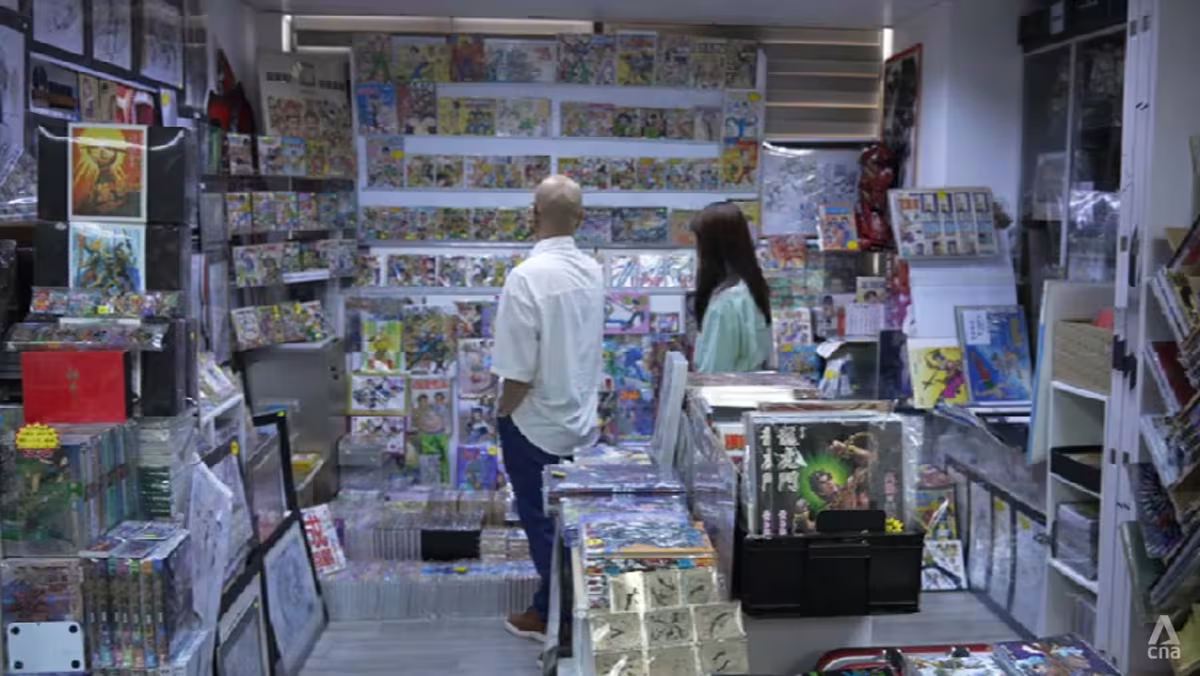
香港:在鼎盛时期,香港曾是漫画重镇。本土漫画作品拥有庞大的受众群体,其中的角色家喻户晓,有些甚至从纸面跃上大银幕。
HONG KONG: In its heyday, Hong Kong was a comics powerhouse. Local titles commanded a huge following, their characters became household names, and some even made the leap from the printed page to the big screen.
在20世纪80年代的行业繁荣期,香港漫画每年的销量约为5000万册。
During the industry's boom years in the 1980s, about 50 million copies were sold annually.
1989年首次出版的武侠漫画《风云》,于1998年被改编为由郑伊健和郭富城主演的电影大片《风云之雄霸天下》。
Martial arts comic Fung Wan, first published in 1989, was adapted into the 1998 blockbuster The Storm Riders, starring Ekin Cheng and Aaron Kwok.
另一部本土漫画《古惑仔》则衍生出了讲述黑帮地下世界的同名系列电影,风靡一时。
Another local comic, Teddy Boy, spawned the hugely popular Young and Dangerous films about the triad underworld.
但黄金时代并未持续太久。自20世纪90年代中期以来,香港漫画被普遍认为处于衰落之中。
But the golden age did not last. Hong Kong comics have been widely regarded as being in decline since the mid-1990s.
如今,专门的漫画店已难觅踪影,印刷量也大幅缩减,许多本地画师已无法再仅靠画漫画作为唯一的收入来源。
Today, specialist stores are harder to find, print runs are far smaller, and many of the city's artists can no longer rely on drawing comics as their sole source of income.
很少有人能像九龙“一代汇”书店的老板林先生(Dicky Lam)那样,如此近距离地见证这一变迁。据信,这是香港唯一一家专门经营本土漫画的书店。“一代汇”书店老板林先生。
Few have witnessed that transformation as closely as Dicky Lam, owner of the Epic One bookstore in Kowloon. It is believed to be the only shop in Hong Kong devoted exclusively to local comics. Dicky Lam, owner of the Epic One bookstore.
他说:“过去,漫画销量轻轻松松就能达到几万,甚至几十万册。”
“In the past, comic book sales were easily in the tens of thousands, (even) a few hundred thousand,” he said.
“现在,如果能卖出……几千册,就已经是非常好的成绩了。所以,你可以看出香港漫画市场已经萎缩了90%。”劳动密集型产业受众群体的缩小改变了漫画制作的经济模式。
“Now, if we can sell … a few thousand books, it’s already a very good figure. So, you can see that the Hong Kong comic market has shrunk by 90 per cent.”LABOUR INTENSIVE The smaller audience has changed the economics of making comics.
制作一部漫画依然是劳动密集型工作,需要画师及其团队在进行草图、上色及其他制作环节之前,先构思角色、背景和故事情节。随着销量减少,收回这些成本变得愈发困难。
Producing one remains labour-intensive, requiring artists and their teams to develop characters, backgrounds and storylines before moving through sketching, colouring and other stages of production. With fewer copies being sold, recovering those costs has become increasingly difficult.
然而,行业的商业衰退并没有阻挡新一代画师创作新作品,也没有阻挡他们赢得海外的认可。
Yet, the industry's commercial decline has not stopped a new generation of artists from producing new work – or winning recognition overseas.
艺术家杰瑞·乔(Jerry Cho)凭借他的漫画《The Life After Life》获得了今年的日本国际漫画奖(Japan International Manga Award)的铜奖。该奖项由日本外交部主办,旨在表彰在海外的漫画艺术家。
Artist Jerry Cho received a bronze award at this year’s Japan International Manga Award for his comic The Life After Life. The awards are organised by Japan's Foreign Ministry to recognise manga artists overseas.
然而,国际上的认可并不一定意味着作品在国内会有出色的销量——截至目前,这部漫画仅售出了3000册。
But international recognition does not necessarily translate into large sales at home – just 3,000 copies have been sold so far.
这部漫画的创作耗时六个月,参与创作的人员包括杰瑞·乔本人、两名全职工作人员,以及另外五位外包的协作者。
The comic took six months to produce, involving Cho, two full-time staff and another five outsourced contributors.
杰瑞·乔目前正在尝试利用人工智能(AI)来优化这一创作流程。
It is an equation Cho is now trying to improve with artificial intelligence.
在开始实际绘画之前,他就会使用AI作为研究和可视化工具,以便在团队投入精力进行绘制之前先对各种设计方案进行测试。以角色设计为例:他可以将某个角色的图片输入AI工具中,尝试不同的服装搭配,从而在团队开始绘制最终场景之前就判断出某种服装是否合适。
USING AI BEFORE PUTTING PEN TO PAPER Cho uses AI early in the production process – as a research and visualisation tool that allows him to experiment with ideas before his team commits time to drawing them. One example is character design. Cho can feed an image of one of his characters into an AI tool and experiment with different clothes, allowing him to judge whether an outfit works before his team begins illustrating the finished scene.
“过去我也会进行这样的尝试,但所有设计内容都得自己亲手绘制,”他说,“有时候即使画完草图后也难以发现某些细节上的问题;等到同事完成绘制并上色后,才发现哪里不对劲。那时想要修改的话,往往意味着必须重新绘制整个场景,浪费大量时间。”
“In the past, I would do this (experimentation) too, but I would draw them all out,” he said. “After sketching, I may not be able to sense that it feels off, and after my colleagues complete the scene and add in the colours, then we realise it’s wrong.”By then, changing his mind could mean having to redo the scene, wasting hours of work.
“现在借助AI进行测试,大大减少了时间的浪费,”杰瑞·乔说道。
“Now with AI to do testing, it reduces the time wasted,” he said. Hong Kong comic artist Jerry Cho.
据杰瑞·乔估计,AI为他的团队节省了大约10%的创作时间。不过,他暂时还不愿意在最终完成的漫画中使用AI生成的图像。
Cho estimates AI now saves his team about 10 per cent of production time. But he draws a line at using AI-generated images in the finished comic – at least for now.
为了说明原因,杰瑞·乔用自己的一幅画作为示例,让AI仅修改其中的角色服装部分。他说:“虽然AI生成的图像看起来和原图中的角色很相似,但绘画风格明显表明这两个角色并非同一个人。”
To demonstrate why, Cho provided an AI tool with one of his drawings and instructed it to change only his character's clothes. “The result is … (while) the AI-generated images look like the character, the drawing style shows it’s not the same person,” he said.
当被问及这是否是因为人工智能无法复制每个人独特的绘画风格时,周回答:“是的,因为艺术是独一无二的。”寻找漫画销售的新途径然而,更快的制作速度并不能解决行业更大的问题:找到足够多的人来购买其作品。
Asked whether that was because AI could not replicate each person's individualistic drawing style, Cho replied: “Yes, because art is unique.”FINDING NEW WAYS TO SELL COMICS Still, faster production does not solve the industry’s bigger problem: finding enough people to buy its work.
香港漫画及动画联合会估计,该市约有一半的漫画艺术家从事自由职业或兼职工作。
The Hong Kong Comics and Animation Federation estimates that about half of the city's comic artists work freelance or part-time.
当局和行业团体一直在努力培养新一代创作者,并帮助他们的作品在港外找到受众。
Authorities and industry groups have been trying to nurture a new generation of creators and help their work find audiences beyond Hong Kong.
2021年,该联合会启动了由政府支持的“香港漫画支援计划”。
In 2021, the federation launched the Hong Kong Comics Support Programme, which is government-backed.
到2025年底,该计划已支持出版了63部原创香港漫画。其中一些作品获得了国际奖项,同时已达成超过50项授权协议和改编交易。
By the end of 2025, it had supported the publication of 63 original Hong Kong comics. Some of those works have received international awards, while more than 50 licensing agreements and adaptation deals have been secured.
漫画艺术家在“动漫游戏展”(Ani-com and Games Hong Kong)上设立展位。
Comic book artists set up shop at the Ani-com and Games Hong Kong.
该计划还将香港作品带到海外活动,包括法国昂古莱姆国际漫画节和马来西亚的“Comic Fiesta”,作为向新读者和商业机会展示这些作品的努力的一部分。然而,目前没有关于这些作品销量的数据。人工智能会是答案吗?
The programme has also taken Hong Kong works to events overseas, including France's Angouleme International Comics Festival and Malaysia's Comic Fiesta, as part of efforts to expose them to new readers and business opportunities. However, there is no data available on how many copies the titles have sold. COULD AI BE THE ANSWER?
业内人士认为,人工智能可以让艺术家更容易将其作品转化为动画和其他形式。
Industry players believe AI could make it easier for artists to turn their work into animation and other formats.
传统上,将漫画转化为动态影像成本高昂,且需要专业技能——从动画、建模到剪辑和后期制作。生成式人工智能可以降低其中一些门槛。
Traditionally, turning a comic into moving images is costly and requires specialised skills – from animation and modelling to editing and post-production. Generative AI could lower some of those barriers.
香港漫画及动画联合会副主席温文杰表示:“漫画艺术家可以先创作漫画,然后将其转化为人工智能生成的动画,甚至是人工智能计算机图形剧。”
“Comic artists can create their comics first, then turn them into an AI-generated animation, or even an AI computer graphics drama,” said Alan Wan, vice-president of the Hong Kong Comics and Animation Federation.
他补充说,这就是为什么漫画艺术家需要紧跟人工智能的发展,并学习如何使用这项技术。
He added that this is why comic artists need to keep abreast of developments in AI and learn how to use the technology.
“等他们真正做到这一点后,就会再上一个台阶——他们将不只是漫画艺术家,还可能成为导演。”但人工智能得到更广泛的应用,也带来了另一个不确定性问题:它创作出的内容,权利归谁?
“Once they do, they'll reach another level – they won’t just be comic artists, they could become directors.”But greater use of AI brings another uncertainty: Who owns what it creates?
随着这项技术进入创意产业,围绕版权、作者身份以及用于训练生成式人工智能系统的材料所产生的问题日益重要。
Questions surrounding copyright, authorship and the material used to train generative AI systems have become increasingly important as the technology enters creative industries.
“法律体系并不完善,也尚未做好应对人工智能相关事务的准备,”香港大学商学院亚洲案例研究中心副主任范婷婷说。
“The legal system is not very comprehensive. It's not very ready for AI work,” said Fan Tingting, associate director of the University of Hong Kong Business School’s Asia Case Research Centre.
“我们目前还不清楚边界在哪里。但保护人类的作品,保护人类的创造力,这一点非常重要。”
“We're not sure about the boundaries at this moment. But protecting humans' work, protecting the creativity of human beings, that is very important.”