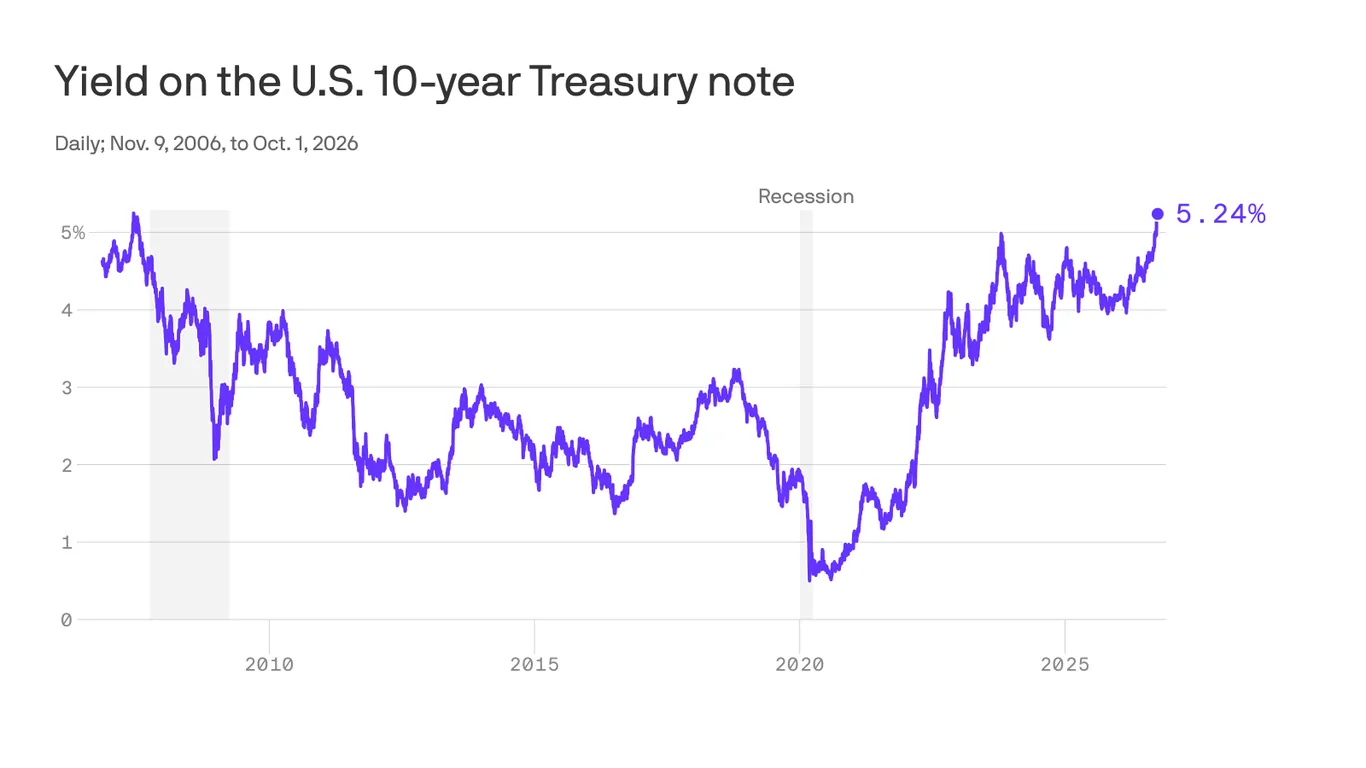
技术层面的因素正是利率飙升的诱因之一,这一现象让向来波澜不惊的国债市场骤然紧张起来——也意味着我们可能会在一段时间内生活在高利率环境中。
Technical mechanics are one factor behind the spike in rates that's got the typically boring government bond markets on edge — and a reason we might be living in a higher interest rate world for a while.
为何此事至关重要:国债市场堪称全球经济的“血管系统”,正如家中的水管系统一样,一旦出现堵塞,就必须引起高度重视。
Why it matters: The Treasury market is the plumbing of the world economy and, much like the pipes in your house, when it gets jammed up you have to pay attention.
数据说话:周四,10年期美国国债收益率一度触及2002年以来的最高水平,随后略有回落至5.24%;30年期国债收益率也处于数十年来的高位。
By the numbers: The interest rate on the 10-year Treasury note touched levels last seen in 2002 on Thursday, before easing back to 5.24%, and 30-year bonds are also sitting at multi-decade highs.
据房地美公司周四发布的报告,与10年期国债收益率挂钩的30年期房贷平均利率从上周的7.03%大幅升至7.28%。
The average rate on the 30-year mortgage, which tracks the 10-year Treasury, surged to 7.28% up from 7.03% last week, Freddie Mac said Thursday.
美国国债收益率的持续攀升形成了自我强化的效应:原本会大量买入国债的机构投资者纷纷转为抛售,进一步推高了利率水平。
The surge in rates on U.S. Treasuries is feeding on itself as institutional investors that typically buy government debt have instead been selling, forcing rates up further.
专家观点:范德比尔特大学专门研究国债市场结构的法学教授耶莎·亚达夫表示:“情况已经彻底失控了。”
What they're saying: "The shizzle has hit the fan," says Yesha Yadav, a professor of law at Vanderbilt who specializes in Treasuries market structure.
深层原因:战争、伊朗局势以及财政赤字不断攀升等宏观因素推动了利率上行,但供需关系这一技术性因素也起到了推波助澜的作用。利率上升使得原本的国债买家——尤其是对冲基金和抵押品支持型房地产投资信托基金——转而成为卖家。
Between the lines: Big macro forces — war in Iran — and rising deficits have driven rates higher, but another part of what's happening is a more technical matter of supply and demand. The rising rates have turned some typical buyers of Treasury bonds — particularly hedge funds and mortgage REITs — into sellers.
这意味着市场对国债的需求减少,进而导致价格下跌;而债券价格下跌又使得其向投资者支付的收益率上升。恶性循环:利率一旦上升,抛售行为便会进一步加剧。
That means there is less demand for the bonds, so prices fall. And when prices on bonds fall, the interest rates those bonds pay to investors rise. The rub: When rates rise, then there's more selling.
宏观视角:摩根大通资产管理公司的投资组合经理普里亚·米斯拉对Axios说道:“这就好比仓鼠不停地跑,却只能原地踏步。”她补充道:“即便没有其他因素干扰,这一循环也会持续下去。”
Zoom out: "It's almost like you're running like a hamster just to stay at the same place,"Priya Misra, a portfolio manager at JPMorgan Asset Management, tells Axios. "If nothing else happens this thing feeds on itself," she says.
值得注意的现象:此次抛售潮的主要推手正是那些持有抵押债券的机构投资者。
The intrigue: The big driver of this selling is coming from institutional investors that hold mortgage bonds.
当利率快速上升时,这些债券持有者必须调整自身的投资避险策略,通常的做法就是抛售美国国债或其他衍生品。“我们每天都在应对这种情况,”米斯拉说道。
When rates rise fast, these bond holders must change the way they hedge their investments, often by selling Treasuries or other derivatives. "We're dealing with that on a daily basis," says Misra.
巴克莱银行利率衍生品研究主管阿姆鲁特·纳希卡尔指出,这种抵押贷款债券的凸性效应正是此次市场抛售背后的主要技术因素。
This mortgage convexity dynamic is the main technical factor behind the sell-off, says Amrut Nashikkar, head of interest rate derivatives research at Barclays.
过去,美联储曾是抵押贷款债券的最大买家,但并未采取任何利率风险对冲措施。不过自2022年起,美联储逐渐退出了该市场,如今这类债券更多地由会进行风险对冲的私人投资者持有。
The Fed was once the biggest buyer of mortgage bonds, and it didn't hedge its interest rate risk. But it stepped back from the market in 2022, and more of those bonds now sit with private investors who do hedge.
目前值得关注的现象是:部分市场观察人士还推测,对冲基金可能正在解除所谓的“基差交易”——这种交易方式旨在利用实际国债价格与其期货合约价格之间的差额获利。不过目前尚无确凿证据能证实这一猜测。此外,美国强劲的经济增长同样在推高利率水平。
What we're watching: Some market observers also suspect hedge funds may be unwinding what's known as the "basis trade," a way to profit on the difference between the price of an actual Treasury bond and a future on that bond. Though the evidence there is not yet clear. Yes, but: Strong economic growth in the U.S. is also pushing up rates.
由于当前美国国债二级市场的总规模高达32万亿美元,市场动态极为复杂。“我们无法实时掌握各类债券的具体流转情况,”布鲁金斯学会的经济学家罗宾·布鲁克斯说道。
The dynamics are murky because we're talking about a $32 trillion secondary market. "You don't know in real time how things are changing hands," says Robin Brooks, an economist at the Brookings Institution.
“我们唯一能确定的是,总体而言市场供给量大于需求量。”从宏观层面来看,过去几年里庞大的美国国债市场发生了显著变化:外国政府减少了购买力度,私人投资者在市场中的占比则有所上升。这意味着未来市场波动可能更加剧烈,利率水平也可能进一步走高。
"The only thing we know is that in aggregate, supply is greater than demand." The big picture: Over the past several years, the massive Treasury market has changed. Foreign governments have pulled back on buying, and private investors now make up a bigger share of the market. That means you're likely to see more gyrations and higher rates in the future.
纳希卡尔指出,当前的市场现象“正是这种结构性变化的外在表现”。
What's happening now "is a symptom of that structural change," says Nashikkar.