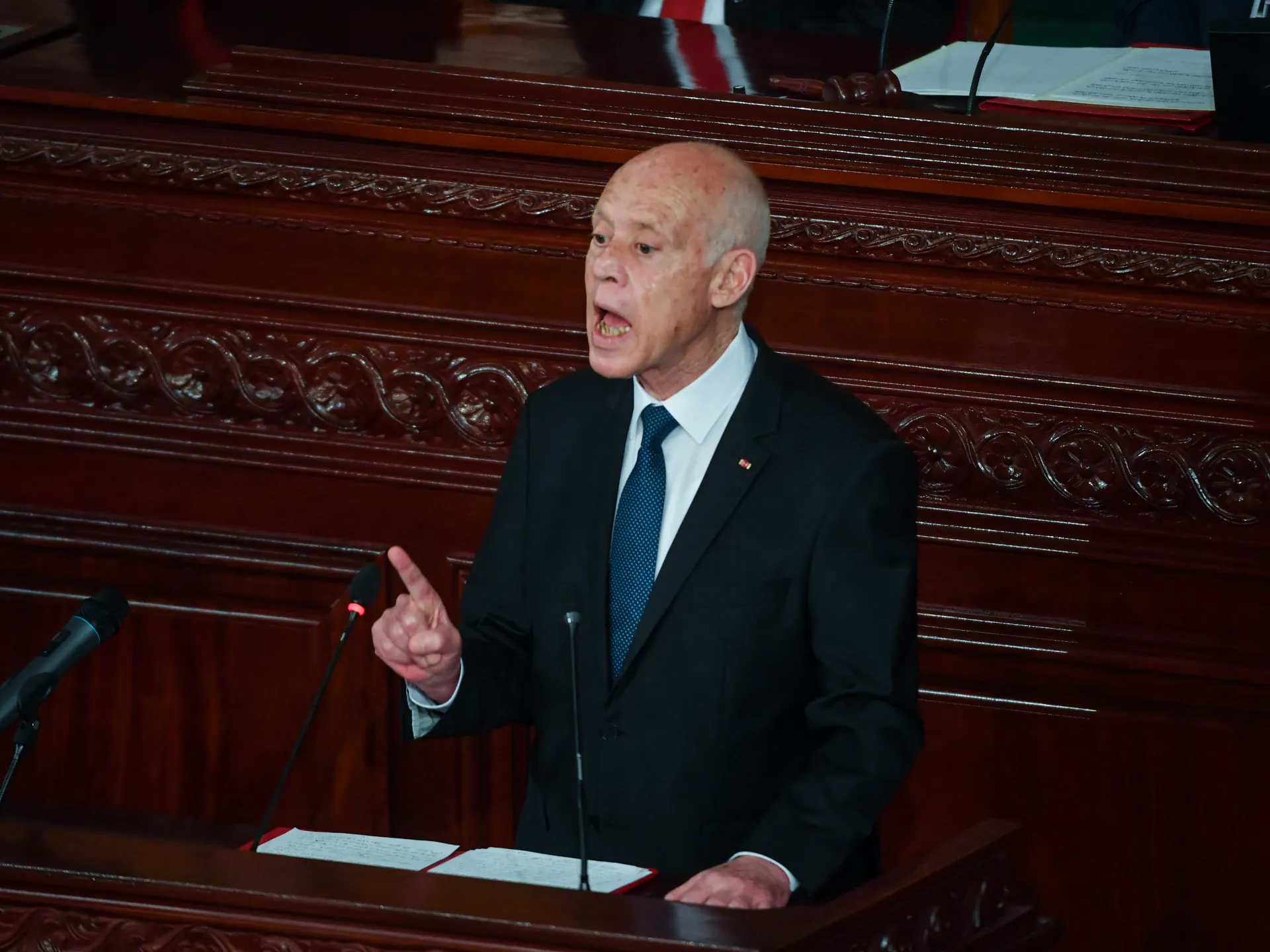
突尼斯放宽了其网络犯罪法律——该法律曾导致许多记者和活动人士入狱;现在,初犯只需缴纳罚款即可,而无需服刑。
Tunisia has softened a cybercrime law that has landed journalists and activists in prison, letting first-time offenders pay fines instead of serving time.
这项对第54号法令的修订于周三正式生效,规定:首次传播“虚假新闻”或相关违规行为的处罚为1万至2万突尼斯第纳尔(约合3,370至6,740美元)。此前,此类行为将面临最高五年的监禁。不过,再犯者仍可能被判处监禁。
The amendment to Decree 54, which went into effect on Wednesday, sets fines of 10,000 to 20,000 Tunisian dinars ($3,370 to $6,740) for a first offence of spreading “false news” and related violations. The fines replace a five-year prison sentence. However, repeat offenders may still face jail.
突尼斯国内及海外的权利倡导者和媒体自由组织长期以来一直反对该法令,认为其具有压制性,并指出该法令曾被用来迫害凯斯·赛义德总统的反对者、活动人士及记者。
Rights and media freedom advocates in Tunisia and abroad have long opposed the decree as repressive, saying it has been wielded against President Kais Saied’s opposition, activists and reporters.
政府方面则辩称,该法令旨在保护民众和公共秩序,是打击网络犯罪及虚假信息的必要手段。
The government, meanwhile, says the decree protects people and public order from attack, and is needed to tackle online crime and disinformation.
那么,究竟发生了哪些变化?该法令是如何被执行的?为什么突尼斯现在会放宽其规定呢?修订后的法律具体内容如下:第54号法令由凯斯·赛义德总统于2022年9月颁布,将通过电子手段传播虚假信息的行为定为违法行为。
So what has changed, how has the decree been used, and why has Tunisia softened it now? What does the amended law say? Decree 54, issued by President Kais Saied in September 2022, made it an offence to spread falsehoods by electronic means.
在此之前,任何被判定传播危害公共安全或不侵犯他人权利的虚假信息的人,都可能面临最高五年的监禁。这些处罚同样适用于那些传播被篡改的内容、个人数据或虚假指控(旨在煽动仇恨、引发攻击、诽谤他人或造成其名誉及物质损失的行为)。
Until this week, anyone convicted of circulating untrue information deemed threatening to public security, or to infringe on other people’s rights, risked up to five years in prison. The penalties also applied when allegedly doctored content, personal data or untrue allegations were spread to stir up hatred, incite attacks, defame someone, damage their reputation or cause them material or moral harm.
如果针对的是公职人员或具有同等地位的人,处罚力度会加重:最高可判处十年监禁并处以10万突尼斯第纳尔(约合32,000美元)的罚款。再犯者将面临六个月监禁以及5万突尼斯第纳尔(约合16,000美元)的罚款。该法令的实施情况如何?该法令引发了突尼斯国内及国际媒体组织对新闻自由的广泛批评。
Targeting a public official or a person of equivalent status raised the ceiling to a decade behind bars and a fine of 100,000 dinars (more than $32,000). Anyone who reoffended faced six months behind bars on top of a 50,000-dinar fine (more than $16,000). The penalties doubled when the offence was aimed at a public official or someone of equivalent status. How has Decree 54 been used? The decree has garnered widespread criticism from Tunisian and international organisations concerned with press freedom.
“这项法律是政府用来压制异见、限制公民自由以及任意限制言论自由的强大工具之一,”国际法学家委员会(ICJ)中东和北非事务负责人贝纳尔比亚对半岛电视台(Al Jazeera)表示。
The law was “one of the potent tools of oppression used by the government to crush dissent, crack down on civic space and arbitrarily restrict the freedom of expression in the country,” Said Benarbia, Middle East and North Africa director of the International Commission of Jurists (ICJ), told Al Jazeera.
拉菲克·阿卜杜勒萨勒姆(Rafik Abdessalem)曾于2011年至2013年担任突尼斯外交部长,同时也是伊斯兰主义政党“恩纳赫达”(Ennahdha)的高层成员。他表示,该法令被用来“压制所有批评现政权的声音”。
在赛义德(Saied)执政期间,“恩纳赫达”曾是主要的反对党;然而赛义德对该党实施了严厉镇压,导致包括阿卜杜勒萨勒姆在内的多名该党领导人被判处长期监禁(其中一些人是在缺席审判的情况下被判刑的)。
Rafik Abdessalem, Tunisia’s foreign minister from 2011 to 2013 and a senior figure in the Islamist Ennahdha party, said the decree had been used “to silence every voice critical of the regime”. Ennahdha was a leading opposition party under Saied until he initiated a severe crackdown against it, sentencing its leadership including Abdessalem, to long prison sentences, some in absentia.
突尼斯记者全国协会(SNJT)指出,自该法令于2022年生效以来,已有数百名记者、博主、反对派政治人士、律师和活动人士因此受到起诉,并将这一局势称为“紧急状态”。
The National Syndicate of Tunisian Journalists (SNJT) documented that hundreds of journalists, bloggers, opposition politicians, lawyers and activists had been tried under the decree since it came into force in 2022, and declared the situation an “emergency”.
在最新的年度报告中,SNJT记录了2025年4月至2026年4月期间共有14名记者遭到起诉,其中6起案件是依据该法令进行的。
In its latest annual report, the SNJT recorded 14 prosecutions of journalists between April 2025 and April 2026 – six of them under the decree.
例如,著名突尼斯律师兼专栏作家索尼娅·达赫马尼(Sonia Dahmani)在今年5月的一次广播采访中批评了突尼斯监狱的糟糕条件,因此被判处两年监禁。她曾五次因在媒体上的言论而受到起诉;早在2024年,她就因批评赛义德的政策而被判处18个月监禁。
In one example, prominent Tunisian lawyer and columnist Sonia Dahmani was sentenced to two years for criticising conditions in Tunisian prisons in a radio interview this May. She has been charged under the decree in five cases, each relating to remarks she made in media appearances, and had already been sentenced to 18 months’ imprisonment after criticising Saied’s policies in 2024.
2024年5月13日,在突尼斯司法宫外,律师们举着标语牌抗议索尼娅·达赫马尼的被捕事件。[ n Chouchane)因在Facebook上发布帖子而被多项审查法律(包括第54号法令)起诉,最终被判处死刑;后来他获得了总统的赦免。
Lawyers carry banners during a protest against the arrest of Sonia Dahmani outside the Palace of Justice building in Tunis, Tunisia on May 13, 2024 [Jihed Abidellaoui/Reuters] Another citizen, Saber Ben Chouchane, was sentenced to death after being charged under a number of censorship laws, including Decree 54, for Facebook posts. He was later granted a presidential pardon.
国际社会对该法令的批评者包括国际特赦组织、人权观察组织和欧洲议会。欧洲议会将其描述为“干涉基本自由的工具”,并呼吁废除该法令。
Among international critics of the decree are Amnesty International, Human Rights Watch and the European Parliament, which has described it as “a tool to interfere with fundamental freedoms” and called for its repeal.
批评人士将其与自赛义德上任以来该国民主倒退的大趋势联系起来,认为这抵消了该国在2011年革命后取得的进步。
Critics connect it to a larger trend of democratic backsliding in the country since Saied took office, undoing progress the country has made after its 2011 revolution.
2021年,执政第三年的赛义德冻结议会、解散政府,并开始以总统令统治——批评人士谴责这些举措是对突尼斯民主化政治体制的专制颠覆。
In 2021, during his third year in office, Saied suspended parliament, dismissed the government and began ruling by presidential decree – steps his critics have denounced as an autocratic subversion of Tunisia’s democratising political system.
2022年,一项新宪法通过全民公投获得通过,许多突尼斯人抵制了该公投,新宪法随后将上述权力固化下来。
A new constitution, put to a referendum in 2022 that many Tunisians boycotted, later locked in those powers.
2024年,在政治镇压的氛围中,赛义德以超过90%的得票率赢得第二个五年任期。投票率为28.8%,是2011年以来所有选举中最低的。
In 2024, amid political repression, Saied won a second five-year term with more than 90 percent of the vote. It was the lowest turnout of any election since 2011 at 28.8 percent.
赛义德拒绝接受专制统治的指责,称他的行动合法合规,且是结束多年混乱和所谓腐败所必需的。为何此时出台?
Saied rejects accusations of autocratic rule, saying his actions are legal and are needed to end years of disorder and alleged corruption. Why now?
在周三修正案生效前几小时,由突尼斯最大工会牵头的公民社会团体公布了全国游行计划,抗议他们所认为的对公民自由的限制。
Hours before Wednesday’s amendment came into effect, civil society groups spearheaded by Tunisia’s largest labour union unveiled plans for a nationwide march over what they regarded as restrictions on civil liberties.
七年前,突尼斯人选举赛义德上台,寄希望于他解决国家糟糕的经济状况并打击腐败;七年后,突尼斯人却面临生活成本危机和政治自由受限的困境。
Seven years after Tunisians elected Saied on promises he would address the country’s poor economic situation and tackle corruption, Tunisians have found themselves facing a cost-of-living crisis and restrictions to their political freedoms.
过去一年,该国因滥用职权、民主倒退和生活水平恶化而引发的公民社会示威活动有所增加。6月,数百名抗议者在突尼斯市呼吁新闻自由并要求释放被拘留的批评人士。7月,数千人在赛义德冻结议会五周年之际聚集,敦促他“下台”。
In the past year, the country has seen a rise in demonstrations by civil society against abuses of power, democratic backsliding and deteriorating living standards. In June, hundreds of protesters in Tunis called for press freedom and for detained critics to be freed. In July, thousands gathered on the fifth anniversary of Saied’s suspension of parliament, urging him to “leave”.
前外交部长阿卜杜萨莱姆指出,民众通过游行和集会等方式发起的动员行动,迫使政府最终让步。
Abdessalem, the former foreign minister, credited popular mobilisation – in the form of marches and gatherings – for forcing the government to back down.
赛义德还面临着来自国外的日益沉重的压力。今年7月,美国众议院议员乔·威尔逊表示,他将继续推动一项法案,以对奉行反民主政策的赛义德及其亲信实施制裁。这项修正案是否足以解决问题?
Saied also faced mounting pressure from abroad. In July, a member of the US House of Representatives, Joe Wilson, said he would keep pushing a bill that would impose sanctions on Saied and those closest to him for anti-democratic policies. Is the amendment enough?
批评者认为,该修正案对于缓解赛义德执政下的言论自由问题收效甚微。
Critics say the amendment does little to address freedom of speech concerns under Saied’s government.
国际法学家委员会的贝纳比亚称,减轻刑罚虽属“积极进展”,但真正需要的是终止一切滥用司法手段的行为,并释放那些依据该法令被任意拘留的人士。
The reduction in penalties was a “positive development”, Benarbia of the International Commission of Jurists said, but what was required was an end to all abusive prosecutions and the release of those arbitrarily detained under the decree.
即便该法令被废除,赛义德的反对者仍面临诸多其他法律手段的骚扰、监禁甚至流放。
Even if repealed, a host of other legal measures have been used to harass, imprison and exile Saied’s opponents.
“简而言之,刑罚力度虽有所减轻,但其压制与惩罚的本质并未改变,”阿卜杜萨莱姆对半岛电视台说道。他指出,这项修正案旨在改善突尼斯的形象——此前该国因频繁出现“审判、逮捕及滥用法令”的现象而形象黯淡。
“In short, the punishment has been reduced, but its repressive and punitive character remains unchanged,” Abdessalem told Al Jazeera. The amendment aimed to make the image of Saied’s Tunisia “less bleak” after it has become associated with “trials, arrests and the use of arbitrary decrees,” he said.
半岛电视台突尼斯分社社长洛特菲·哈吉表示,民间团体与记者联盟均呼吁彻底废除第54号法令,以便记者们能依据2011年颁布的新闻自由法接受审判。
Lotfi Hajji, head of Al Jazeera’s bureau in Tunisia, said civil society groups and the journalists’ union were demanding Decree 54 be scrapped altogether, so that journalists could be judged under the 2011 press freedom law instead.
哈吉强调,该法律堪称革命的重要成果之一,它在保障自由的同时也明确了相应的责任。然而自2024年以来,议会中提出的全面修订提案均遭忽视。
That law was one of the main gains of the revolution, Hajji said, balancing freedom with responsibility. Proposals in parliament since 2024 for a wider overhaul have been ignored.