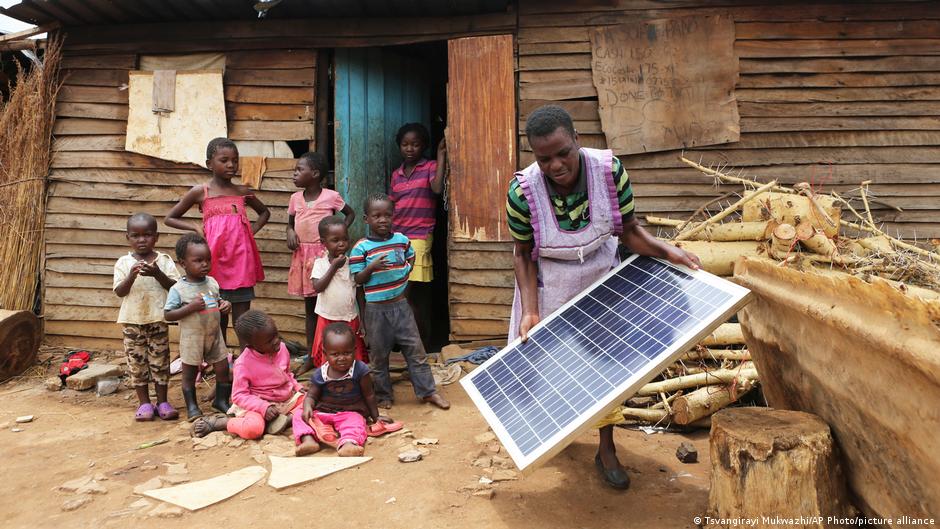
在全球变暖导致气候灾害日益频发的当下——从欧洲的山火到尼泊尔冰川的消融——众多知名气候领袖在一封倡导大力发展太阳能的公开信中指出,太阳能正是提供清洁且价格可承受的能源的解决方案。
In a world set ablaze by global warming with ever worsening climate disasters such as wildfires in Europe collapsing glaciers in Nepal solar energy provides the solution of clean, affordable power, prominent climate leaders wrote in an open letter pushing for more solar.
这封公开信由作家比尔·麦基本、前联合国气候事务负责人克里斯蒂安娜·菲格雷斯以及加拿大前环境与气候变化部长凯瑟琳·麦克纳等知名气候人士联署。信中明确呼吁:各国政府、企业、各类机构及普通民众应携手合作,力争在2030年前为“世界各地的每一个人”提供清洁且价格可承受的能源——既包括近10亿至今仍无法获得稳定电力供应的民众,也包括那些为使用高污染的化石燃料支付过高费用的数十亿人。距离2030年仅剩三年多时间,这一目标究竟能否实现呢?
Signed by prominent climate figures such as author Bill McKibben, former UN Climate Secretary Christiana Figueres and Canada's former Minister of Environment and Climate Change Catherine McKenna, the letter makes a clear call. It urges governments, businesses, institutions and the public to come together to provide clean, affordable energy to "everyone, everywhere by 2030" — from the close to one billion people who still lack access to reliable electricity, to the billions more who pay too much for dirty fossil fuels. With just a little over three years to go until the decade is out, how realistic is this push?
“这确实是个雄心勃勃的目标,但我们在太阳能及可再生能源领域的发展速度已经远远超出了预期,”麦克纳对德国之声说道,“所以,我们只需继续努力即可。”目前太阳能的发展状况如何呢?
"It's an ambitious target, but we've blown away in terms of where we thought we would be on solar and renewables," McKenna told DW. "So let's just keep on going." Where are we currently with solar?
据全球能源研究机构Ember的数据显示,太阳能发电规模正以八年来最快的速度增长。2025年,全球太阳能发电量较上一年增长了30%,创下历史新高;自2015年以来,这一数值更是增长了十倍以上。
According to global energy think tank Ember, solar power has grown at its highest rate in eight years. In 2025, it increased by a record 30% over the previous year and has risen more than tenfold since 2015.
麦克纳创办了气候咨询公司“气候与自然解决方案”,同时也是全球女性气候领袖联盟的发起人。她指出:“太阳能已成为人类历史上成本最低的发电方式,其发展速度也远远超出了所有人的预期。”用于储存多余可再生能源的电池技术同样发展迅猛。
Solar is the cheapest form of electricity in the history of the world, said McKenna, who founded the climate advisory firm Climate and Nature Solutions, and the global coalition Women Leading on Climate. "It is scaling way faster than anyone ever imagined." As is battery technology used to store excess renewable energy.
德国弗劳恩霍夫太阳能系统研究所所长、物理学家艾克·韦伯曾参与创立欧洲太阳能制造业委员会。他指出:“与太阳能组件的成本一样,电池成本也在持续下降。”
"The cost of batteries have as well come down as the cost of solar modules," said Eicke Weber, a physicist and former director of Germany's Fraunhofer Institute for Solar Energy Systems who went on to found the European Solar Manufacturing Council, among other things.
“我们拥有所需的技术,也有足够的资金来推动这一转型,”他在谈到普及太阳能的进程时说道。
"We have the technologies available and we have enough money to finance it," he said, of a transition to widespread solar access.
据Ember最新分析显示,2025年全球电力结构中可再生能源的占比首次在百年间超越了煤炭发电。那么,太阳能发展需要达到什么水平呢?
In 2025, for the first time in 100 years, renewable energy sources overtook coal power in the global electricity mix, Ember's most recent analysis showed. Where do we need to get to with solar?
目前,全球已安装的太阳能发电容量约为3太瓦。1太瓦相当于1000吉瓦,而一座核电站的发电能力仅为1吉瓦。
At the moment, installed solar capacity around the world stands at 3 terawatts. 1TW equals 1000 gigawatts, and a single nuclear power plant has a capacity of 1GW.
目前全球每年新增的光伏发电容量约为1太瓦,其中大部分来自中国。韦伯指出,若要实现全球能源供应全面向可再生能源转型,我们需要约50太瓦的太阳能发电能力。他还补充道:“我们的生产能力其实远超实际销量。”目前全球仍有约6.55亿人口用不上电。
Currently, the world produces about 1TW of new photovoltaic capacity each year, most of it in China Weber says in order to fully change global energy supply to renewables, we would need about 50TW, adding that "we have more production capacities than we are selling." Roughly 655 million people still lack access to electricity.
“要想在2030年前实现电力普及,撒哈拉以南非洲地区的电气化进程速度必须提高三倍,”麦肯纳说道。她强调,借助太阳能技术,这一差距完全能够迅速缩小。
"The pace of electrification in Sub-Saharan Africa has to triple to achieve universal access by 2030," McKenna said, pointing out how quickly this gap could be closed with solar.
她指出,那些尚未通电的地区完全有机会直接采用清洁能源技术,从而跳过导致全球气候变暖的化石燃料阶段。当前全球气温持续升高,正引发干旱、风暴和洪水等各类极端天气事件。
Areas without electricity have the opportunity to leapfrog straight into clean technologies, she says, bypassing the fossil fuels that are heating the planet. Rising global temperatures are fueling extreme weather events such as drought, storms and flooding around the world.
“有一种误解广泛存在,甚至常被化石燃料企业刻意传播——即太阳能成本高昂、实施困难且不可靠。但如今事实已非如此,”她说道。“说实话,最不可靠的其实是试图通过霍尔木兹海峡运输化石燃料的做法。”在如此短的时间内,让世界各地的所有人都能用上太阳能,真的可行吗?
"And there's a misunderstanding, which is often propagated intentionally by fossil fuel companies, that it's expensive, it's hard, it's unreliable. And that just isn't the case anymore," she said. "To be honest, the most unreliable thing is if you're trying to pass fossil fuels through the Strait of Hormuz." Is solar for all, everywhere really doable in that short amount of time?
汉斯-约瑟夫·费尔早已习惯了“某些事情根本做不到”这类论调。作为可再生能源领域的先驱人物,他起草了德国《可再生能源法》,其中规定的上网电价机制有效推动了德国乃至全球清洁能源产业的发展。
Hans-Josef Fell is used to the argument that certain things cannot be done. Widely known as a pioneer of renewable energy, he drafted Germany's Renewable Energy Sources Act which established feed-in tariffs that catalyzed clean energy growth at home and beyond.
“《可再生能源法》催生了呈指数级增长的趋势,彻底打破了人们对可实现目标的种种预期。它颠覆了政策制定者与专家们原本认为符合现实的预测与设想。最终,现实表现甚至超出了所有人的预期,”如今担任智库‘能源观察组织’负责人的费尔说道。
"The Renewable Energy Sources Act unleashed exponential growth that shattered every assumption about what was achievable. It overturned the scenarios and projections that policymakers and experts had considered realistic. In the end, reality outperformed all expectations," said Fell, who now heads the think tank Energy Watch Group.
已经脱离电网生活五年的费尔指出,要实现全球能源转型,需要具备政治与社会层面的决心,但“目前全球范围内都缺乏这种决心,因为公共舆论深受化石燃料利益集团的影响”。据其所在智库的计算,如果全球能源需求完全由可再生能源来满足,太阳能将占能源供应总量的60%至70%左右,其余部分则来自风能以及其他能源形式,如生物质能和水能。那么,未来的方向究竟在哪里呢?中国和巴基斯坦等国早已开始大力推进相关工作。
Fell, who has lived off grid for five years, says achieving a global energy transition requires political and societal will that is "currently lacking around the world because public debate is dominated by fossil fuel interests." According to calculations by his think tank, if global energy demand were met entirely by renewables, solar energy would account for roughly 60-70% of the supply. The rest would come from wind power and other sources, such as bioenergy and hydropower Where to go from here? Countries like China and Pakistan have already pushed ahead.
“就在2026年的今天,我们有能力决定:放下一切事务,集中精力解决这一问题。我们无需等待新的研究成果,”韦伯说道。
"It is in our hands right now in the year 2026 to say we drop everything, we concentrate on this problem. We don't need to wait for new research," Weber said.
他补充道:“实现这一目标完全有可能,但这需要一项规模宏大的‘登月计划’式的项目,并且必须得到强有力的政治支持。”
"It is possible to achieve this, but it would require a very kind of moonshot program," he added, saying it would need serious political backing.
他表示,倘若具备相应的政治意愿,德国或许能在两三年内完成此类转型;但从全球范围来看,所需时间恐怕会更长。“我们大概需要到2040年才能宣称实现了全球范围内80%至90%的电力由可再生能源提供这一目标。”各国如何跳过200年的碳排放历程“我总结一下:只要我们全球社会齐心协力、妥善应对,这一目标确实有可能实现,”费尔说道,“即便最终只实现了目标的90%,那也将是一项了不起的成就。”
He says while it might be possible for Germany to pull off such as transition in two or three years, if the political will were there, it would likely take longer to achieve on a global scale. "We would need probably till 2040 to say that we have a goal of a worldwide 80%, 90% electricity from renewables." How countries are skipping 200 years of carbon emissions To view this video, and "I would sum it up this way: if we as a global society tackle this properly, we might actually be able to make it happen," Fell said. "And even if we achieve only 90% of that goal, it would still be a remarkable accomplishment."
麦肯纳则强调混合融资模式的重要性,呼吁各国政府、世界银行、非洲开发银行以及私营部门共同出资投入。
McKenna points to the need for blended finance, calling on governments, the World Bank, the African Development Bank and the private sector to put in money.
“不明智的是继续沿着化石燃料这条路走下去,”她说。“从成本、风险和影响来看,这都不明智。这是一项老旧技术。”
"What is irrational is continuing down the road of fossil fuels," she said. "That's irrational on the costs, the risks, the impacts. It's an old technology."