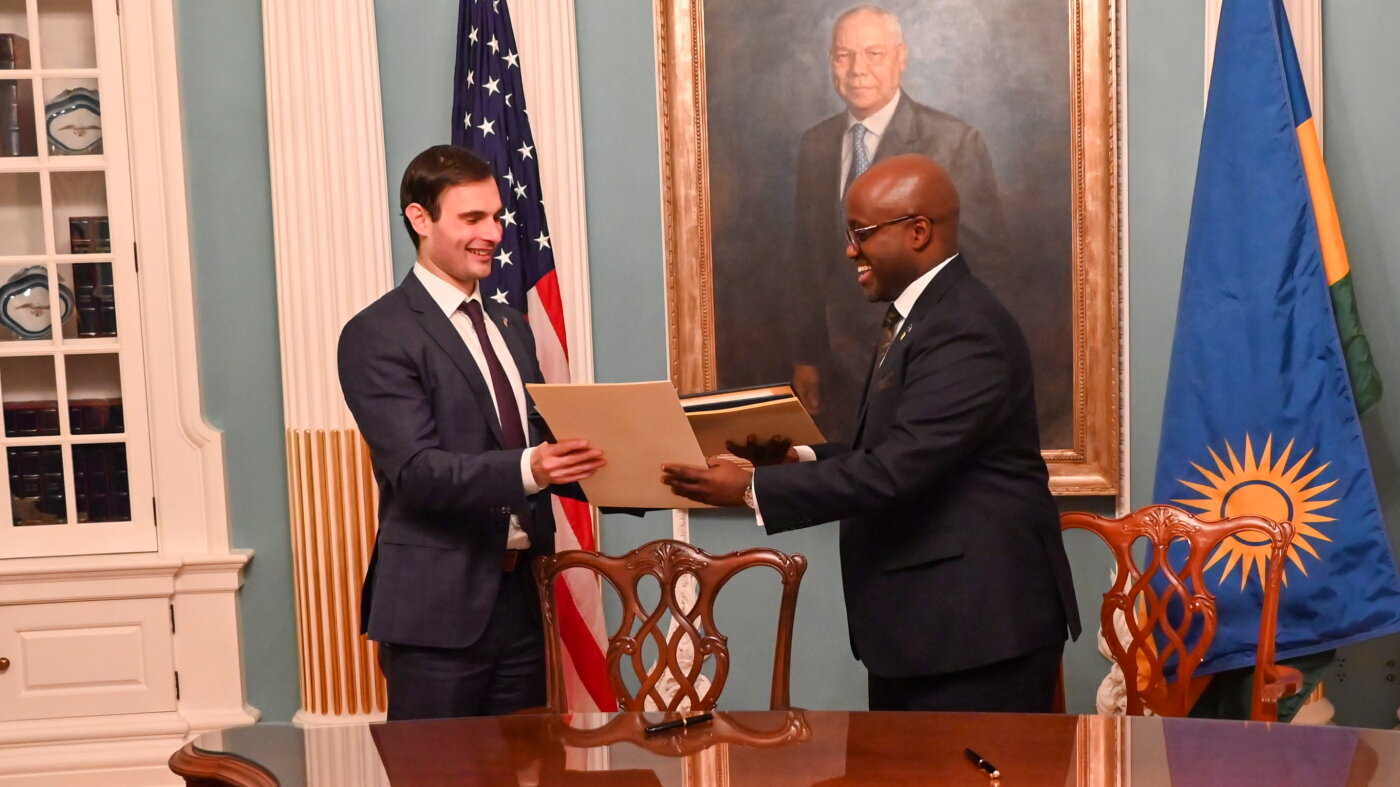
2026年10月2日 美东时间下午2:16 法特玛·塔尼斯 去年12月,美国国务院高级官员杰里米·卢因欢迎卢旺达外交部长奥利维耶·J.P.·恩杜洪吉雷赫,共同签署了一份关于全球卫生合作的多年期谅解备忘录。
October 2, 2026 2:16 PM ET Fatma Tanis In December, State Department senior official Jeremy Lewin welcomed Rwanda Foreign Minister Olivier J.P. Nduhungirehe for theg of a multi-year Memorandum of Understanding on global health cooperation.
美国对外援助办公室 特朗普政府表示,10月1日标志着全球医疗保健新时代的开启。这将是“美国优先全球卫生战略”的时代,也意味着要重新制定为中低收入国家医疗保健提供资金的规则。
U.S. Office of Foreign Assistance The Trump administration says that October 1 marks the dawn of a new era in global healthcare. It's the age of the " America First Global Health Strategy " And that means rewriting the rules for funding healthcare in low- and middle-income countries.
“美国优先”战略的关键内容之一,是认为美国不应在未获得切实利益的情况下,为卫生与发展项目投入数十亿美元,例如获得获取当地矿产资源的权利;同时,美国也不应在未得到各国政府承诺投入自有资金的情况下提供援助。
A key part of the "America First" strategy is the idea that the U.S. should not hand out billions of dollars for health and development programs without reaping concrete benefits — access to local minerals, for example — and without a commitment from governments to spend their own money.
各国若要获得美国资金,就必须签署一份谅解备忘录,其中详细说明美国将投入的金额以及该国作出的资金投入承诺。
To be eligible for U.S. funds, each country is asked to sign a Memorandum of Understanding detailing the amount of money the U.S. will invest as well as the country's financial pledge.
政府表示,要求各国分担费用将使其更加自立,并最终减少对美国援助的依赖。
The administration says the requirement that countries chip in will make them more self-reliant and eventually less dependent on U.S. assistance.
华盛顿智库全球发展中心政策分析师乔茜琳·埃斯蒂斯认为,这一理念有一定道理。但她怀疑该计划的推进速度是否过快。对于相关国家而言,各方反应不一。以下将介绍这项新安排应如何运作,以及前方可能面临哪些障碍。
It's an idea that has merit, according to Jocilyn Estes a policy analyst at the Center for Global Development, a think tank in Washington, D.C. But she wonders if the plan is being rolled out too rapidly. As for the nations involved, reaction has been mixed. Here's a look at how this new arrangement is supposed to work — and what potential obstacles lie ahead.
美国推出新战略的理由 尽管特朗普政府在2025年大幅削减资金,并解散美国主要援助机构美国国际开发署,但美国此前一直是、现在仍然是全球卫生项目最大的捐助方。
The U.S. rationale for the new strategy The U.S. has been — and still is — the largest donor for global health programs, despite the Trump administration's drastic cuts to funding in 2025 and its dismantling of America's premier aid agency USAID.
历届美国政府将全球卫生支出视为加强与受援国关系和扩大影响力的重要途径,也是美国软实力的关键组成部分——通过捐赠赢得好感。
Previous administrations viewed global health spending as an important way to build strong relationships and influence with recipient countries and as a key element of U.S. soft power — using donations to incur good will.
长期以来,关注的重点一直是让所有人受益。中低收入国家地区的健康与发展得到改善,便会水涨船高,而美国也能从中获益,”美国外交关系委员会全球卫生项目主任汤姆·博利基说。以下是美国国务院对其新战略的描述其网站上的表述如下:“这一战略将保护美国本土,阻止传染病暴发蔓延至美国海岸;通过与受援国政府签订要求共同出资的多年期双边协议,加强我们的双边关系,从而挽救数百万人的生命,并推动各国逐步减少对外国援助的依赖;还将在全球推广美国医疗健康创新。”博利基所说的新变化,是一种更具交易导向的健康援助观。
"Historically, the focus has been primarily that everybody benefits. That better health and better development in low and middle-income country regions lifts all boats, and the U.S. benefits from that," says Tom Bollyky director of the global health program at the Council on Foreign Relations. Here's how the State Department describes the new strategy on its website: "It will protect the homeland by preventing infectious disease outbreaks from reaching U.S. shores; strengthen our bilateral relationships by entering into multi-year, bilateral agreements that require co-investment from recipient governments, saving millions of lives and moving countries along the path to decreased dependency on foreign assistance; and promote American health innovation around the world." What's new is what Bollyky calls a more transactional view of health aid.
“美国希望更明确地说明,除帮助有关国家实现自身卫生和发展目标之外,美国纳税人的回报究竟是什么,”他说。
"The U.S. wants to be more clear about what U.S. taxpayers receive in return, beyond just countries doing well on their health and development objectives," he says.
这可能意味着“获得关键矿产的优先获取权,”他说,“也可能是直接获取其他国家的患者数据。”他表示,要求获取这些保密记录,或许是本届政府做法中最具争议的部分。特朗普政府认为,美国由此获得的回报是更强的疫情暴发识别能力和自我保护能力。哪些国家参与?哪些国家没有参与?
That could mean "preferential access to critical minerals," he says — or direct access to patient data from other countries. That request for confidential records is perhaps the most controversial part of the administration's approach, he says. According to the Trump administration, the payoff for the U.S. is an enhanced ability to identify outbreaks and protect itself. Who is participating? And who is not?
美国已与35个国家签署谅解备忘录,承诺在五年内投资约140亿美元用于卫生领域。
The U.S. has signed MOUs with 35 countries committing around $14 billion in health investments over five years.
这些国家遍布全球,包括尼日利亚、卢旺达、菲律宾、塔吉克斯坦、玻利维亚和萨尔瓦多。
They span the globe and include Nigeria, Rwanda, the Philippines, Tajikistan, Bolivia and El Salvador.
以卢旺达为例,美国将提供1.57亿美元,卢旺达将出资7000万美元。作为回报,卢旺达将与美国共享患者数据,并承认美国食品药品监督管理局对暴发期间使用药品的批准,不再要求卢旺达监管机构另行审批。
In the case of Rwanda the U.S. will provide $157 million and Rwanda will pitch in $70 million. In return, Rwanda will share patient data with the United States — and will accept the U.S. Food and Drug Administration's approval of medicines for use during outbreaks without requiring further approval from Rwandan regulators.
迄今为止,已有三个国家以涉及主权问题为由,拒绝与美国签署谅解备忘录:加纳、纳米比亚和津巴布韦。美国与赞比亚的谈判则因有关美国获取关键矿产的条款而停滞了数月。
So far three countries have refused to sign MOUs with the U.S., citing sovereignty issues: Ghana, Namibia and Zimbabwe. Negotiations between the U.S. and Zambia stalled for months over provisions for the U.S. to access critical minerals.
9月25日,在联合国大会举行的一场活动上,加纳总统约翰·德拉马尼·马哈马表示,加纳在看到有关条款后拒绝了美国的提议。这些条款要求加纳交出患者病历和病原体数据,并承认美国食品药品监督管理局为药品的最终监管机构。
On September 25, during an event at the U.N. General Assembly, Ghana's president John Dramani Mahama said the country rejected the American proposal after seeing the stipulations requiring Ghana to hand over medical records of patients and pathogen data, and accept the FDA as the ultimate drug authority. "It was humiliating," Mahama said.
“这是羞辱性的,”马哈马说,“加纳是一个主权国家,我们有自己的程序。我们是一个民主国家。”他把美国提出的资金方案称为“一点施舍,1亿多美元”。不签署协议的后果可能相当严重。同样在9月25日,美国驻津巴布韦大使帕梅拉·特雷蒙特说,由于津巴布韦出于与加纳相同的原因拒绝达成协议,美国将停止对该国的所有全球卫生资金援助。她表示,作为替代,美国将把对津关系的重点从卫生领域转向经济投资和贸易。
"Ghana is a sovereign nation and we have our processes. We're a democratic country." He referred to the funding proposition from the U.S. as "a pittance, 100 and something million." The consequences for notg can be quite serious. Also on September 25, U.S. Ambassador to Zimbabwe Pamela Tremont said the U.S. was stopping all global health funding to the country because it declined the agreement for the same reasons as Ghana. Instead, she said the U.S. would shift the focus of its relations with Zimbabwe from health to economic investments and trade.
博利基说,问题在于,其他拒绝签署协议的国家是否也会被彻底切断援助。
Bollyky says the question is whether other countries who refuse will also be totally cut off.
博利基表示,随着相关措施预计于今年秋季启动,“我们很快就会看到,这届政府是否真的愿意兑现这一承诺”。接受本篇报道采访的全球卫生专家表示,“美国优先”代表了一种对医疗卫生援助持务实态度的方针。
With the rollout expected this fall, Bollyky says it's only a matter of time before "we see whether the administration is really willing to follow through with that." What the experts are saying Global health specialists interviewed for this story say that American First represents a pragmatic approach to healthcare aid.
全球发展中心的乔斯琳·埃斯特斯说:“在公共卫生领域,确实有必要与各国政府密切协调,而各国最终应该自行运营并负担自己的卫生系统。”
"When it comes to public health, it does make sense to actually coordinate closely with governments, and countries should eventually run and pay for their own health systems," says Jocilyn Estes of the Center for Global Development.
然而,她表示:“此次政策转向的范围和规模确实前所未有,而在风险如此之高的情况下,谨慎规划必不可少,但本届政府希望推进的速度似乎与这一点很不相容。”这些协议的落地执行原定于2026年4月开始。当政府未能如期实现这一目标时,将启动时间推迟了六个月,延至10月1日。不过,国务院的资金能否及时到位,目前尚不清楚。
Yet, she says, "the scope and scale of this pivot is really unprecedented, and the pace that the administration wants to move seems pretty incompatible with the kind of careful planning required when the stakes are this high." On the ground implementation of the agreements was originally supposed to have begun in April 2026. When the administration couldn't meet that goal, it extended the start by six months to October 1. But it's not clear yet if the money from the State Department will flow on time.
埃斯特斯表示,这种快速推进对美国全球卫生援助的未来而言,是一个高风险时刻。
Estes says this rapid-fire rollout is a high-risk moment for the future of U.S. global health assistance.
“他们多少有点像是边飞边造飞机。因此,如果本届政府押注的这一新方法行不通,那么真正的患者和民众将承受后果。”此外,另一个令人担忧的问题是:战略与国际研究中心负责全球卫生政策的斯蒂芬·莫里森说,美国援助金额将远低于以往。
"They're sort of building the plane while flying it, and so if this administration's bet on this new approach doesn't work, there are real patients and real people who will suffer the consequences." And there's another concern: The amount of U.S. aid will be far less than in past years, says Stephen Morrison who oversees global health policy at the Center for Strategic and International Studies.
“归根结底,美国一直提供的基础资金已经大幅削减。因此,如果你是一个有大量艾滋病高风险人口的国家,你就会对美国方面的做法感到不满,”他说。
"At the end of the day, the baseline funding that the United States has brought to the table has been significantly reduced. So if you're a country with a large at-risk population for HIV, you're going to be upset with what has happened with the United States," he says.
然而,许多国家可能仍会觉得自己别无选择,只能加入:“你还是得继续和他们打交道,因为在这个领域,美国仍然是最大的玩家,”莫里森说。
Yet many countries may feel they have no choice but to sign on: "You're still going to be engaging with them because it's still the biggest game in town," Morrison says.
最大的问题之一是,各国能否实现自己承诺的出资目标,并增加医疗保健支出,以弥补美国资金减少造成的缺口。
One of the biggest questions is whether countries will be able to meet the goals they agree to for their own contributions and also up their spending on healthcare to compensate for the drop in U.S. funds.
以卢旺达为例。未来五年,卢旺达将从美国获得1.57亿美元。仅2024年一年,卢旺达就从美国获得了超过2亿美元,用于卫生项目。但与许多国家一样,卢旺达正面临高通胀以及伊朗战争波及效应带来的经济压力。
Take Rwanda, for example. It's set to receive $157 million from the U.S. over the next five years. In 2024 alone, Rwanda received over $200 million from the U.S. for health programs. But Rwanda, like many countries, is facing economic strains from high inflation and ripple effects from the Iran war.
“我们审视了这些国家公布的国内预算,看看能否从中看出,它们是否正在弥补美国发展援助不足预计会留下的缺口,”博利基说,“但似乎[它们]并没有这么做。”
"We've looked at the domestic budgets announced by those countries and whether or not we see a sign that they are picking up the slack that's expected to come from the shortfall in U.S. development assistance," says Bollyky. "And it seems that [they are] not."
他说,美国政府推出这项措施的速度非常快,没给各国留下多少调整时间——这使得各国更难营造“一个更稳定的环境,让各国能够承担解决自身卫生需求的责任;这是所有人都希望看到的,包括这些政府本身。”NPR就有关其“美国优先”战略的批评向美国国务院寻求置评,但未能在发稿前收到回复。
The speed with which the administration rolled this out didn't give countries much time to adjust, he says — and that makes it more difficult to create "a more stable environment for countries to assume the burden of addressing their health needs, which everybody wants, including those governments themselves." NPR reached out to the State Department for comment on criticisms of its America First strategy and did not receive a response in time for publication.
想了解我们这个不断变化的世界中的各类故事,
For stories about life in our changing world, to NPR's Global Health newsletter.