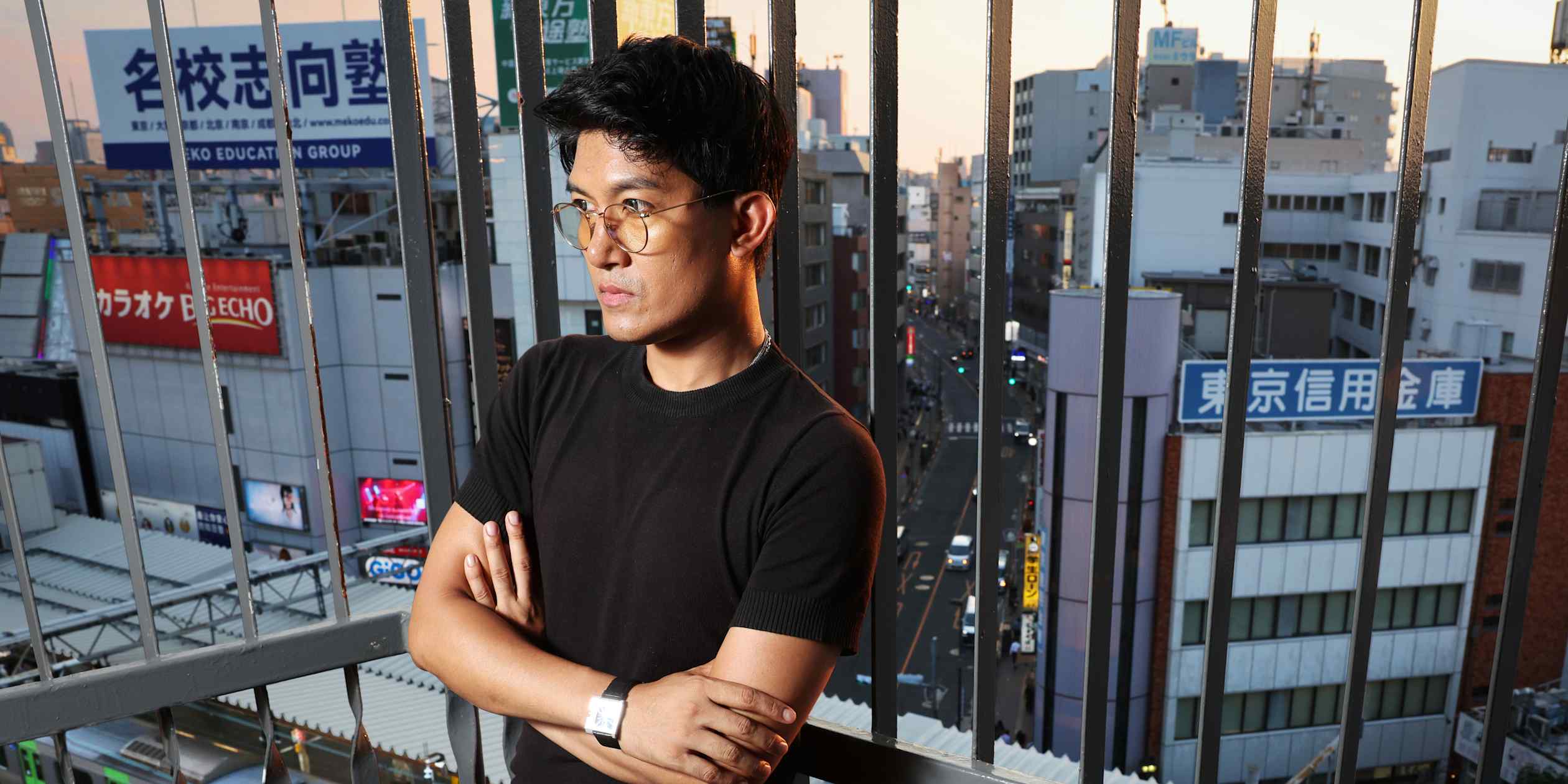
东京——在《托举天球的四大洲》中,19世纪法国雕塑家让-巴蒂斯特·卡佩洛塑造了四名女子,分别代表亚洲、欧洲、非洲和美洲,共同托举着一个地球仪。今年5月,出生于仰光的日本时装设计师Zarny Shibuya以这座如今收藏于巴黎奥赛博物馆的雕塑为灵感和背景,制作了一部展示四款高级定制服装的短片。
TOKYO -- In The Four Parts of the World Holding the Celestial Sphere, the 19th-century French sculptor Jean-Baptiste Carpeaux portrayed four women representing Asia, Europe, Africa and the Americas holding a globe. In May, Yangon-born Japanese fashion designer Zarny Shibuya used the same sculpture, now in the Musee d'Orsay museum in Paris, as the inspiration and backdrop for a short film showcasing four haute couture dresses.
Zarny表示,他将这些女性形象托举地球视为对男性主宰社会的一种制衡。这部短片在社交媒体上线后,成为他重新出发的新起点,既推动了他在巴黎的首秀,也为他近二十年的时装生涯开启了新阶段。
For Zarny, who says he sees the female figures supporting the globe as a counterpoint to male dominance of society, the film marked a fresh start when it was released on social media, kickstarting both his Paris debut and a new phase in his nearly two-decade fashion career.
这部短片由巴黎非营利机构Espero Atelier合作制作。该机构为难民提供专业的缝纫和刺绣培训。通过此次合作,Zarny身为难民的经历在其创作中占据了更加核心的位置。
The film, made in collaboration with Espero Atelier, a Paris-based nonprofit that provides professional sewing and embroidery training to refugees, brought Zarny's experience as a refugee closer to the center of his work.
尽管他从未隐瞒自己的过去,也曾与联合国难民署合作,但Zarny长期不愿将个人经历纳入品牌叙事。他担心,人们看到自己曾经是难民,或许会产生同情,却不再关注他的作品。
Although he has never hidden his past and has worked with the Office of the United Nations High Commissioner for Refugees, Zarny has long resisted making his personal history part of his brand, fearing that being seen as a former refugee might elicit sympathy but stop people focusing on his work.
然而近年来,情况发生了变化。Zarny说:“如今,我可以自豪地说,我曾经是来自缅甸的难民——而现在,我是巴黎的‘时尚难民’。”
In recent years, though, that has changed. "Now I can proudly say that I was once a refugee from Myanmar -- and that I am now a fashion refugee in Paris," Zarny says.
所谓“时尚难民”,是指在全球新冠疫情蔓延之后,被迫为自己的手艺寻找新归宿的设计师。新冠疫情于2019年底最早在中国发现。Zarny说:“疫情几乎摧毁了日本所有与手工技艺有关的产业——制衣厂、服装公司。我不知道该怎么办。”
By "fashion refugee," he means a designer forced to seek a new home for his craft in the wake of the global spread of COVID-19, first identified in China in late 2019. "The pandemic wiped out almost everything related to craftsmanship -- sewing factories, garment companies -- in Japan. I didn't know what to do," Zarny says.
据日本纺织品进口协会统计,2025年日本本土生产的服装仅占国内服装供应总量的1.1%,这一比例较1990年的50%以及2020年的2%均有显著下降。“日本制造”曾是扎尼高级定制品牌的核心标识。但随着维持这一理念的难度日益增加,他开始寻求其他途径来重塑自己的品牌。
According to the Japan Textiles Importers Association, domestically produced clothing accounted for just 1.1% of Japan's apparel supply in 2025, down from 50% in 1990 and 2% in 2020. "Made in Japan" had been central to the identity of Zarny's couture brand. But as maintaining that commitment became increasingly difficult, he began looking elsewhere to rebuild his label.
“于是,”他说道,“我逃到了巴黎,在那里找到了埃斯佩罗工作室——就像当年我从仰光逃到日本一样。”扎尼并未完全放弃日本市场:他在当地推出了运动服饰系列,还从事室内设计工作,并为日本流行歌手设计过西装。如今他往返于巴黎与东京两地,不过他表示高级定制依然是自己品牌的核心所在。
"So," he says, "I fled to Paris and found Espero, just as I once fled Yangon for Japan." Zarny has not completely abandoned Japan. He has launched a sports collection there, designs interiors and has designed suits for Japanese pop singers. He now divides his time between the French and Japanese capitals, but says that haute couture remains at the heart of his identity.
在东京一家专门供应缅甸料理的小餐馆里,扎尼接受了《日经亚洲》的采访。在缅甸音乐的环绕声中,他兴致勃勃地详细讲述了自己在两座城市的生活经历以及时尚事业的发展历程。
In an interview with Nikkei Asia in Tokyo, conducted in a small restaurant specializing in Myanmar cuisine, Zarny talks animatedly and at length about his life and the development of his fashion career in both capitals.
“这里就是我的办公室之一,”他微笑着说道,一边指着店内那些用缅甸语书写的标识牌。许多顾客似乎都认识扎尼,纷纷上前攀谈,这也印证了他在当地社区中是个平易近人且深受信赖的人物。
"This is one of my offices," he says with a smile, talking over the music from Myanmar that fills the restaurant and gesturing at signs in Burmese, the language of Myanmar's biggest population group.
上图:扎尼与埃斯佩罗工作室共同设计的连衣裙,拍摄于巴黎奥赛博物馆。(模特:ESTHER;图片由扎尼提供)下图:扎尼曾一度犹豫是否要将自己的难民经历融入品牌故事中,担心这会掩盖设计本身的魅力。“如今我可以自豪地说,我曾是一名来自缅甸的难民,”他说道。
Many patrons appear to know Zarny and stop to chat, confirming that he is an approachable and trusted figure in the community. Top: A dress created by Zarny with Espero Atelier, photographed at the Musee d'Orsay in Paris. (Model: ESTHER; courtesy of Zarny) Bottom: Zarny long hesitated to make his refugee history part of his fashion brand, fearing it would overshadow his designs. "Now I can proudly say that I was once a refugee from Myanmar," he says.
1993年扎尼初到日本时,在日缅甸籍居民不足4000人,其中15岁以下的儿童仅约80名,他便是其中之一。“常有人对我说,我是日本第一代缅甸裔第二代活动家,”他回忆道。
When Zarny arrived in Japan in 1993, fewer than 4,000 Myanmar nationals lived in the country, and only about 80 were below age 15. He was one of them. "I was often told that I was Japan's first second-generation Myanmar activist," he says.
到2021年2月1日,缅甸军方从昂山素季领导的民选政府手中夺取政权时,在日缅甸社群人数约为3.5万——到2025年底,这一数字飙升至18万以上。
By Feb. 1, 2021, when Myanmar's military seized power from an elected government led by Aung San Suu Kyi, the Myanmar community in Japan stood at roughly 35,000 -- a figure that soared to more than 180,000 by the end of 2025.
扎尔尼是缅甸(前称缅甸)政治活动家的儿子和孙子。他的父亲曾参与1988年的全国性民主抗议运动,该运动让昂山素季作为该国最著名的反对派领袖进入国际视野,随后于1980年代末逃往日本。
Zarny is the son and grandson of political activists in Myanmar, formerly known as Burma. His father took part in a nationwide pro-democracy uprising in 1988, which brought Suu Kyi to international attention as the country's most prominent opposition leader, before fleeing to Japan at the end of the 1980s.
更早之前,他的祖父曾与昂山并肩奋斗,后者是昂山素季的父亲,也是缅甸从英国殖民统治下独立的主要缔造者之一,于1948年独立生效前夕遭政治对手刺杀。
Earlier, his grandfather campaigned alongside Aung San, Suu Kyi's father and a leading architect of Myanmar's independence from British rule, who was assassinated by political opponents just before statehood took effect in 1948.
扎尔尼表示,凭借其上层阶级家庭在军方内部的关系,他和母亲得以跟随父亲前往日本。“我们被迫流亡,被禁止返回缅甸,”他补充道。
Zarny says it was his upper-class family's connections within the military that enabled him and his mother to follow his father to Japan. "We were forced out and barred from returning to Myanmar," he adds.
上图:扎尔尼小学四年级时与父母在日本的合影。左下:与祖父母合影的最后一张照片。右下:初中时期的照片。(扎尔尼提供) 既然无望返回缅甸,一家人只能在日本重新开始生活。扎尔尼在东京一所公立学校参加日语课程,凭借外向的性格迅速适应了当地生活。2000年代初,他开始从事模特工作,并在辣妹文化达到顶峰时成为时尚界的知名人物——这是一种大胆的街头时尚亚文化,从20世纪90年代末开始在东京市中心涩谷区蓬勃发展。
Top: Zarny, then a fourth grader, with his parents in Japan. Bottom left: In the last photograph taken with his grandparents. Bottom right: During his junior high school years. (Courtesy of Zarny) With no prospect of returning to Myanmar, the family had to build a new life in Japan. Zarny attended Japanese-language classes at a public school in Tokyo, and quickly adapted to life in the country, aided by his outgoing nature. By the early 2000s, he had begun modeling and become a prominent figure in fashion at the height of gyaru culture -- a bold street-fashion subculture that flourished in the central Tokyo district of Shibuya from the late 1990s.
19岁时,他通过大学项目前往美国。“当时我是无国籍人士,”扎尔尼说。虽然这种身份在日本很少给他带来实际麻烦,但这次旅行改变了他的观念。"我意识到,要作为一个人享受自由,我需要超越难民身份,"他说,并补充道,他花了10年时间获得难民官方认定,又花了8年时间成为日本归化公民,将名字从Zarny Htoo Htoo改为Zarny Shibuya(涩谷扎尔尼)。"涩谷在某种意义上抚养了我。这就是我采用它作为姓氏的原因,"他说。
At 19, he traveled to the U.S. through a college program. "I was stateless at the time," Zarny says. Although his status had caused him few practical problems in Japan, the trip changed his outlook. "I realized that to enjoy freedom as a human being, I needed to move beyond refugee status," he says, adding that it took him 10 years to gain official recognition as a refugee and another eight to become a naturalized Japanese citizen, changing his name from Zarny Htoo Htoo to Zarny Shibuya. "Shibuya, in a way, raised me. That is why I adopted it as my surname," he says.
上图、右下图:扎尔尼模特生涯时期。左下图:2004年赴美国西华盛顿大学留学期间。(扎尔尼提供)扎尔尼的事业蒸蒸日上。他在东京主要时尚街区之一的青山开设了一家高级定制工作室,为日本皇室成员、首相夫妇和流行歌手设计服装。他的作品包括昂山素季2012年在奥斯陆发表演讲、接受1991年诺贝尔和平奖(当时她正处于软禁状态)时所穿的服装。
Top, bottom right: Zarny during his modeling career. Bottom left: While studying abroad at Western Washington University in the U.S. in 2004. (Courtesy of Zarny) Zarny's career flourished. He opened an haute couture atelier in Aoyama, one of Tokyo's leading fashion districts, and designed clothing for members of Japan's imperial family, a prime minister and his wife, and pop singers. His work included the outfit Suu Kyi wore in Oslo in 2012 when she delivered a lecture accepting the Nobel Peace Prize awarded to her in 1991, when she was under house arrest.
随后,疫情迫使他关闭了工作室。五个月后,缅甸军方逮捕了昂山素季并推翻了其政府。当扎尔尼努力重振事业时,越来越多的缅甸人开始抵达日本。"不知不觉间,我成了他们的大哥哥般的存在,"他说。
Then the pandemic forced him to close his atelier. Five months later, Myanmar's military arrested Suu Kyi and removed her government from power. As Zarny struggled to rebuild his career, a growing number of people from Myanmar began arriving in Japan. "Somehow, I became a big-brother figure to them," he says.
许多新来者持学生签证、通过"技能实习"计划或持"特定技能"在留资格在日本。根据军事政变后推出的紧急措施,面临难以返回祖国的缅甸国民可能获得可续签的"特定活动"签证,允许他们留在日本,在某些情况下还可以工作。
Many of the newcomers are in Japan either on student visas, through the "technical intern" training program or with "specified skilled worker" residency status. Under an emergency measure introduced after the military takeover, Myanmar nationals who face difficulties returning home may be granted a renewable Designated Activities visa, permitting them to remain in Japan and, in some cases, work.
东京每小时1,280日元(约合8.08美元)的最低工资,让一些人能够支付生活费并汇款给缅甸的亲戚,尤其是如果他们合租住房的话。便利店、建筑和清洁服务等行业的劳动力短缺也创造了机会。"来日本的缅甸人是想赚钱的,"总部位于横滨的非营利组织"Link to Myanmar"的宫山佐枝子说,并补充道,"特定活动"在留资格能提供更高的收入潜力和更广泛的工作选择。
Tokyo's minimum wage of 1,280 yen ($8.08) an hour allows some to cover their living costs and send money to relatives in Myanmar, particularly if they share accommodation. Labor shortages in sectors such as convenience stores, construction and cleaning services also create opportunities. "Burmese people who come to Japan want to earn money," says Saeko Miyama of Link to Myanmar, a Yokohama-based nonprofit, adding that Designated Activities status can offer greater earning potential and a wider choice of jobs.
扎尔尼曾为许多知名人士设计服装,包括日本皇室成员。图为2012年,缅甸时任反对派领袖昂山素季在奥斯陆发表诺贝尔和平奖演讲前,身穿他的设计作品。
Zarny has designed clothing for many prominent figures, including members of Japan's imperial family. Here, Myanmar's then-opposition leader Aung San Suu Kyi wears one of his outfits shortly before delivering her Nobel Peace Prize lecture in Oslo in 2012.
一些新来者带着孩子同行,许多人起初难以维持生计,也难以适应陌生的文化。"在日本待五年后,他们已适应了新环境,心态也更加平稳,"宫山说。"渐渐地,他们开始在社会中找到自己的位置。"许多人依赖同胞网络。"不知怎么的,他们在同胞社区里设法过活下来了,"宫山说。像扎尔尼这样的人,能为他们树立在日本立足的榜样。
Some newcomers arrive with children, and many initially struggle to make ends meet and adjust to an unfamiliar culture. "After five years in Japan, they have adapted to their new environment and become more emotionally settled," says Miyama. "Gradually, they begin to find their place in society." Many rely on networks of compatriots. "Somehow, they manage to get by within their community of fellow countrymen," Miyama says. People such as Zarny can offer them a model for building a life in Japan.
宫山说,机会众多的东京"可能有点混乱",并补充道,就读日语学校的学生尤其容易辍学。
Tokyo, with its abundance of opportunities, "can be a little chaotic," Miyama says, adding that students at Japanese-language schools are especially prone to dropping out.
对扎尔尼而言,看到年轻新来者只顾眼前需求而不为长远打算,令人沮丧。"他们看不到大局,"他说。
For Zarny, it is frustrating to see young newcomers focus on immediate needs without planning for the longer term. "They don't see the bigger picture," he says.
6月12日,缅甸籍的彭山丁在横滨用智能手机复习,准备参加获得"特定技能"在留资格所需的餐饮服务技能测试。对一些缅甸国民来说,在日本工作也是资助国内亲属的一种途径。
Pye Son Htein, a Myanmar national, studies on his smartphone in Yokohama on June 12 for a food service proficiency test required to obtain skilled worker residency status. For some Myanmar nationals, work in Japan also provides a way to support relatives back home.
虽然他们可能不公开说,但"年轻人梦想着回到缅甸,"他叹了口气说。许多人成长于该国短暂的民主统治、相对自由和经济增长时期。"我想告诉他们要着眼未来。我不认为素季的缅甸——或者说民主社会——会在短期内回归,"扎尔尼说。
Although they may not say so openly, "young people dream of returning to Myanmar," he says with a sigh. Many grew up during the country's brief period of democratic rule, greater freedom and economic growth. "I want to tell them to look to the future. I don't believe Suu Kyi's Myanmar -- or a democratic society -- will return anytime soon," Zarny says.
然而,他也对日本首相高市早苗对待外国居民的做法感到担忧,认为这不如前几届政府那样友善。“回首往事,我算是幸运的,”他说。返回缅甸从来不是一个选项,所以“我学会了专注于未来,而不是困在过去。”
However, he is also concerned about what he sees as Japanese Prime Minister Sanae Takaichi's approach to foreign residents, which he regards as less welcoming than former administrations. "Looking back, I was fortunate," he says. Returning to Myanmar was never an option, so "I learned to focus on the future rather than remain trapped in the past."
除了在巴黎建立时尚基地的努力外,扎尔尼还有一个雄心:将 Espero 的模式引入日本。他的母亲是一名女裁缝,在他职业生涯的早期给予了他支持。他现在梦想向缅甸人和其他难民教授缝纫和纺织技能,帮助他们在日本立足,同时振兴日本日益衰退的服装产业。
Alongside his efforts to establish a fashion base in Paris, Zarny has another ambition: bringing Espero's model to Japan. His mother, a seamstress, supported him during the early years of his career. He now dreams of teaching sewing and textile skills to Myanmar people and other refugees, helping them establish themselves in Japan while strengthening the country's depleted garment industry.
“他们可以在这里建立生活,并帮助振兴‘日本制造’,”他说。“这难道不令人兴奋吗?”
"They can build a life here and help revive 'Made in Japan,'" he says. "Isn't that exciting?"