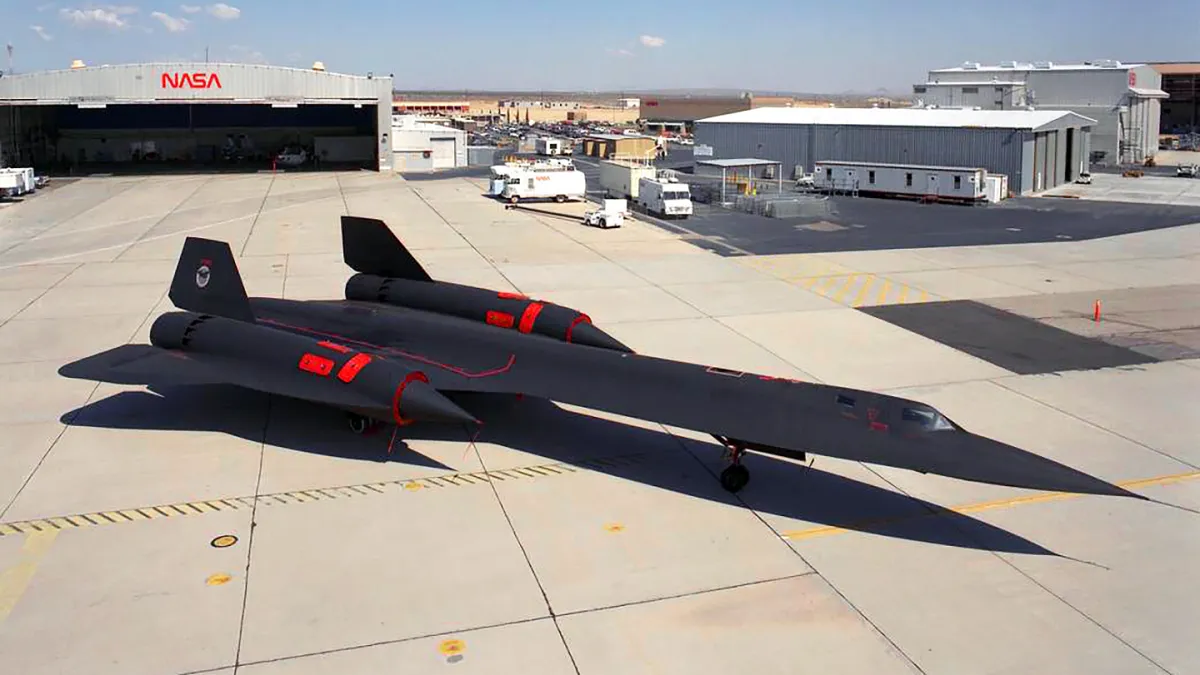
说到844号“黑鸟”的未来——这架SR-71“黑鸟”侦察机曾神秘地从美国国家航空航天局阿姆斯特朗飞行研究中心消失——恐怕很少有人比蒂姆·康纳斯更了解内情。20世纪90年代,康纳斯任职于美国国家航空航天局,担任该机构“黑鸟”项目的推进系统首席工程师。他曾深度参与844号机的项目工作,对这架标志性飞机能够正常运转的关键所在了如指掌。
When it comes to the future of Tail 844, the SR-71 Blackbird that mysteriously disappeared from NASA’s Armstrong Flight Research Center, few people have more insights than Tim Conners. When he worked at NASA in the 1990s, Conners was the lead propulsion engineer for the agency’s Blackbird program. He worked extensively on 844 and has an intimate knowledge of what made the iconic aircraft tick.
如今,他从内部人士的视角揭示了美国国家航空航天局为让“黑鸟”重返天空而开展的神秘工作,并推测要实现这一目标需要付出哪些努力,以及这架著名飞机在沉寂27年后可能为该机构承担怎样的飞行测试任务。
Now, he brings an insider perspective on NASA’s secretive work to get the Blackbird back in the air and speculates on what it would take to do so, as well as the famed jet’s possible flight test role for the agency after 27 years of dormancy.
上个月末,我们曾报道,阿姆斯特朗飞行研究中心上空拍摄的卫星图像显示,844号机至少从5月起就不知所踪。这一消息最早由史蒂夫·特里姆布披露,他是大都会机械的防务编辑,也是康纳斯的朋友。此前,美国国家航空航天局局长贾里德·艾萨克曼曾含蓄地暗示,该机构正计划研制一种新型高速高空X飞机,其轮廓立即令人们联想到“黑鸟”。
Late last month, we wrote about how satellite imagery taken over Armstrong showed that Tail 844 had been missing since at least May. The revelation was first made by Steve Trimble, ‘s defense editor and friend of It came after NASA Administrator Jared Isaacman cryptically teased plans for a new high- and fast-flying X-plane with a silhouette of an aircraft that immediately drew comparisons to the Blackbird.
就在本周,特里姆布报道称,美国国家航空航天局一直与前SR-71项目人员商谈重新参与该飞机项目一事。这些事件接踵而至,引发了广泛猜测:美国国家航空航天局是否计划让“黑鸟”重现天日?其目的又是什么?
Trimble reported just this week that NASA had been talking to ex-SR-71 program personnel about coming back to work on the aircraft. This confluence of events has led to rampant speculation about whether NASA was planning to resurrect the Blackbird and for what purpose?
在一次独家采访中,现任泰比里乌斯航空航天公司先进武器系统技术总监的康纳斯,向我们讲述了他对美国国家航空航天局“黑鸟”相关披露的看法,并介绍了该机构目前正在进行的工作及其进展程度。部分问答为清晰起见略作编辑。
In an exclusive interview with , Conners, now technical director for advanced weapons systems at Tiberius Aerospace, gave us his take on NASA’s Blackbird revelations and insights into what NASA is working on and how far along they are in the process. Some of the questions and answers have been slightly edited for clarity.
问:请谈谈您与SR-71项目的渊源。这个项目是如何开始的?持续了多久?您负责什么工作?
Q: Tell me about your background with the SR-71 program. How did it begin? How long did it last? And what did you do?
A:这基本上是我在20世纪90年代初担任NASA德赖登[飞行研究中心]工程师时,机缘巧合落到我头上的工作。当时空军退役了该型机队,NASA接收了三架机体。NASA获得了两架A型机和一架教练机。显然,尾号844(这是NASA的编号)是目前备受关注的对象。但这些飞机是在20世纪90年代初运抵德赖登的。
A: So that basically fell in my lap when I was an engineer at NASA’s Dryden [Flight Research Center] back in the early ’90s when NASA took delivery of three of the airframes when the Air Force was retiring the fleet. So NASA got two A models and a trainer. Obviously, tail number 844, which is NASA’s designation, is the one that’s getting all of the attention right now. But those came to Dryden in the early ’90s.
由于抽签的运气,我隶属于推进组。由于多种原因,我们人手不足,而“黑鸟”项目需要一名工程师。当时我已在NASA工作了大约三四年,因此被指派负责为即将开展的研究飞行准备NASA方面的工作。因此,我有几年的时间来熟悉情况。顺便说一下,那是一份兼职工作。作为推进工程师,我还负责NASA的F-15机队,这占据了我大量的时间,但它确实给了我足够的时间来熟悉飞机的运行方式,至少是从推进的角度来看。
By luck of the draw, I was in the propulsion group. We were short-staffed for a number of reasons, and they needed an engineer on Blackbird. And I had been with NASA for about three or four years at that point, and I got tapped to prepare the NASA side of the mission for the upcoming research flights. So I had a few years to get familiar. That was a part-time job, by the way. I also owned the F-15 fleet at NASA as a propulsion engineer, and that was occupying a lot of my time, but it did give me an adequate amount of time to get familiar with the way that the airplane operated, at least from the propulsion standpoint.
然后,我们在1996年开始执行研究任务。我于1998年离开NASA,但我能够支持该项目,包括两年的飞行测试以及为这两年所做的所有准备工作。Q:请多谈谈你在“黑鸟”项目中的角色。
And then we began doing research missions in ’96. I left NASA in ’98, but I was able to support the program through two years of flight testing and all the years of preparation for those two years. Q: Tell me more about your role with the Blackbirds.
A: 我曾担任NASA方面的首席推进工程师。NASA的做法是:他们会从工业界和政府相关部门中指派相应的负责人来负责纪律监督工作。Dryden研究所的纪律监督人员的主要职责是确保所有实验设备能够安全地与飞机机体集成在一起,并保证我们能够安全、成功地执行各项测试任务。我负责推进系统的相关工作,同时也负责整个系统的性能评估。
A: I was lead propulsion engineer on the NASA side. So what NASA would do is they would assign disciplinary leads across from their industry and government counterparts. So Dryden’s disciplinary leads, their job was basically to make sure that any experimental packages were integrated safely with the airframe, and that we could execute the proposed test missions safely and successfully. I owned propulsion and I also owned performance.
还记得洛克希德公司开发的“Linear Aerospike”火箭发动机吗?该发动机的重量约为2万到2.5万磅,被安装在SR-71飞机的尾部。显然,这种设计会带来空气阻力问题。因此,我的工作之一就是确保飞机在携带该发动机的情况下仍能顺利穿过音速边界,从而达到预定的测试条件。
So if you recall the Lockheed Linear Aerospike rocket engine activity, that package weighed 20,000 to 25,000 pounds and was mounted externally on the back of the SR-71. That was a drag issue, obviously. So part of my role was to make sure that we could actually accelerate through the transonic drag rise with that package and get out to the target test conditions.
Q: 公众非常希望看到SR-71再次飞行。最大的疑问是:为什么还要让SR-71再次执行飞行任务呢?使用现代飞机、火箭或无人飞行器,有哪些实验或研究是无法更有效地完成的呢?能否请您详细解释一下NASA希望SR-71再次飞行的原因?
Q: There is a tremendous amount of interest in seeing the Blackbird fly again. The biggest question seems to be why? What kinds of experiments or research would an SR-71 provide that couldn’t be done more effectively with a modern aircraft, rocket or unmanned vehicle?
A: 这确实是一个大家都在关注的问题。为什么还要让SR-71再次飞行呢?虽然我只是猜测,但我对未来的发展方向有了一定的了解。请稍等片刻,我会试着解释一下。
Can you walk us through some of the reasons NASA would like to see it in the skies again? A: Yeah, that’s a question that everybody’s been asking. Why? I’m speculating, although I do have a good feel for where this is going. So bear with me.
他们这样做大概不是为了——或者说试图为了——空气动力学方面的原因。如今,在这个速域下,你可以整天进行基于CFD(计算流体力学)的建模,且精度极高。这不需要太多时间和金钱。你无法做到的是,准确呈现一种新型发动机与高速机身的集成状态。你可以做概念建模。当然,要得出最终的安装答案很难,特别是如果涉及一种长时运行的发动机。我认为这就是他们的意图所在。我相信他们基本上是在开发一个高速发动机试验平台。这对我来说最讲得通。
They probably are not going to do this for — or trying to do this — for aerodynamic reasons. You can do CFD [computational fluid dynamics]-based modeling in this speed regime all day long and very accurately in this day and age. It does not take a lot of time or money to do that. What you cannot do is an accurate representation of a new type of engine integrated into a high-speed airframe. You can do the conceptual modeling of it. Of course, it’s difficult to get the final installed answer, especially if it involves an engine that operates at long duration. That is where I think they’re going with this. I believe that they’re developing basically a high-speed engine test bed. That would make the most sense to me.
问:这是否意味着用更现代的飞机、火箭或无人飞行器无法做到这一点?
Q: That’s something you couldn’t do with a more modern aircraft or rocket or unmanned vehicle?
答:这是个好问题。但你知道,其中大约三分之二的工作量仅仅是研发机身。这取决于你要研发的发动机尺寸。
A: That’s a good question. But you know, probably two-thirds of that battle is just developing the airframe. It does depend on the size of the engine that you’re after.
显然,如果这是一台威廉姆斯发动机或同级别尺寸的发动机,你可能只需一架定制无人机就能完成测试。那不会太贵。但如果你的目标是测试某种载人级或超大型发动机,比如J58级别的发动机,还有什么比利用一架已被验证能在该速度下飞行的机身更好的方法呢?
Obviously, if this were a Williams engine or that size class, you could get by with probably a bespoke drone to do your testing. That wouldn’t be that expensive. If your goal is to test something that’s man-rated or very large, like a J58-size engine, what better way to do it than use an airframe that’s already proven to fly at that speed?
问:你是否受邀加入NASA的一个团队,负责让一架喷气式飞机重返蓝天?还有谁受邀了?他们在组建什么样的团队?
Q: Were you asked to join a team at NASA tasked with getting a jet back in the air? Who else was asked, and what kind of team were they building?
答:我没有收到正式邀请。今年早些时候我收到一条半开玩笑的短信,内容是:“嘿,康纳斯,想不想帮忙让‘黑鸟’再次飞起来?”发信人是掌握内部消息的人。那是我第一次听说这事。那是在春天,但之后没有人正式联系过我。
A: I did not receive an offer. There was a tongue-in-cheek text that I got earlier in the year that said, ‘Hey, Conners, how would you like to help get the Blackbirds flying again?’And that was from somebody who was positioned with inside information. That is where I first heard of this. This was back in spring, but nobody formally reached out to me.
据我所知,目前唯一被“点名”的退休人员是迈克·雷利亚。迈克曾是“黑鸟”的机组长,他们想找他回来倒也合情合理。但并没有正式的录用通知,我实话告诉你:要是有人找我去干这活,我觉得我没法拒绝。问:你知道这个项目的想法源自何处,由谁负责吗?答:我也不清楚。我也挺想知道的。
I believe that the only one that’s been tagged so far, as far as a retiree, was Mike Relja. Mike was a crew chief on the Blackbird, and that makes sense that they would potentially want to pull on him. But there was no formal offer, and I tell you what: If somebody approached me to work it, I don’t think I could turn them down. Q: Do you know where the idea for this project came from and who is in charge? A: I don’t have an answer. I’d love to know as well.
问:你能透露些关于这个项目的情况吗?你了解的最新进展是什么?
Q: What can you tell me about this effort? What are the latest developments in this project that you know of?
答:据我所知,他们正考虑近期进行通电测试。这是个相当大的步骤。当然,这不是发动机通电,而是给机身接外部电源,看看哪些系统还活着、哪些挂了,然后再决定下一步。这本该是第一步。
A: So what I’m hearing is that they’re looking at doing power-on testing fairly soon. That’s pretty big. So of course that’s not engine power on. That’s external power applied to the airframe, seeing which systems still live, which ones don’t, and then moving from there. So that would be an expected first step.
这是个令人鼓舞的进展。这意味着美国宇航局(NASA)已经完成了打开所有设备舱、检查内部结构、确保机身至少从目视检查角度通过了适航性检查的工作。问:他们真的让一些系统运转起来了吗?
It’s an encouraging step. That means NASA would have gotten beyond cracking open all the bays, inspecting the interior, making sure that the thing at least passes visual inspection for airworthiness from that standpoint. Q: Have they actually gotten any systems working?
答:没有,他们做的是目视检查,实际上是给机身“通电”。[让系统运转]将是下一步,但据我所知即将开始。问:时间表是怎样的?答:据称将在未来几周内进行。问:真的吗?工作在哪里进行?
A: No, they’ve done the visual inspection, actually, putting electrons on the airframe. [To get systems working] would be the next step, but it is forthcoming, from what I understand. Q: What is the timeline? A: That’s supposed to happen within the next couple weeks. Q: Really? Where is this work taking place?
答:这个我不太确定。但我推测是在[NASA的]阿姆斯特朗飞行研究中心。问:接下来会发生什么?
A: That I do not know for sure. Although I assume it’s happening at [NASA’s] Armstrong [Flight Research Center]. Q: So what is going to happen?
A:这是个好问题。让我告诉你我最近听到的情况,然后你可以自己把线索串联起来。JP-7。大家都在问燃料的事。我想大家都知道,NASA 曾囤积大量 JP-7 燃料,那是 90 年代初从空军那里接收的。数量多到需要一个专用储罐,就像爱德华兹空军基地山脊上那些巨大的喷气燃料储罐一样。
A: That’s a good question. Let me tell you about what I heard more recently, and then you can begin to connect the dots. JP-7. People ask about the fuel. I think it’s pretty well known that NASA had a huge amount of JP-7 stockpiled that they received from the Air Force back in the early ’90s. So much that it was in a dedicated tank, like one of the giant jet fuel tanks at Edwards Air Force Base. You know, the tanks up on the ridge.
据我所知,那批储备不幸在约 20 年前被废弃了,而 JP-7 是一种特种燃料。显然,它的挥发性很低。当我探究后续可能的解决方案时,听起来这并不是个无法逾越的障碍。我得到的印象是,相关方面已经在与炼油厂就替代燃料或替代品进行对话。所以我从得知燃料没了而感到沮丧,转变为对潜在的替代方案感到鼓舞。
From what I understand, that supply unfortunately was discarded about 20 years ago, and JP-7 is a unique fuel. Obviously, low volatility. When I poked at what might be the way forward there, it didn’t sound like that was a showstopper. I got the impression that there’s been dialogue underway with refineries for a replacement or a surrogate that would work. So I went from being deflated, hearing that the fuel was gone, to being encouraged that potentially there was a surrogate workaround.
但这引出了关于发动机本身的问题,那边的反馈则更令人沮丧,因为看起来发动机确实已无法维修使用。我不认为这是基于实际试车得出的结论,而是基于检查。这大概不足为奇。它们已经闲置了 27 年。这引发了关于机身如何获得动力的反复讨论。而如果你把这些线索串联起来,就会发现机身将被用作发动机试验平台。
But that led to the question regarding the engines themselves, so the feedback there was more discouraging in that it looks like the engines are indeed unserviceable. I don’t believe that is based on an actual attempt to run them. It is based on inspection. Probably no surprise. They’ve sat idle, you know, for 27 years. That is what led to questions going back and forth regarding how the airframe would be powered. And that’s what led into where, if you connect the dots, that’s where the airframe would be used as an engine test bed.
所以需要不同的发动机,它们必须是高马赫数涵道系统。我们可以推测哪家发动机公司可能在开发这些系统,但我不想透露太多,因为我不想让我们失去获得的内部消息。
So different engines, they would have to be high-Mach bypass systems. We can speculate on which engine company might be developing those systems, but yeah, I don’t want to give it too much away because I don’t want us to lose the inside information that we got.
问:他们是在研发一种完全不同的发动机来给“黑鸟”提供动力吗?
Q: Are they working on a completely different engine to power Blackbird?
A: 我不敢确定。我认为如果J58发动机不能作为“黑鸟”的动力选项,要么就把它重新封存起来放弃,要么就引进目前我们还不知情的正在研发中的发动机。但别无选择。所以我们要用什么?这可不是装上F100或F110就行了。那些根本不够用。
A: I don’t know that for sure. I think if the J58s are not an option for powering the Blackbird, you either button it back up and walk away from it, or you go bring in engines that are already under development that we’re not privy to at this point in time. But there’s no other option. So what are we going to use? It’s not like we can slap in F100s or F110s. They’re not going to cut it.
Q: 显然,将一架在户外暴晒多年的飞机修复到能承受3马赫飞行严酷考验的状态,是一项极其艰巨的任务。在您看来,这项工程最大的障碍是什么?
Q: Obviously, restoring an aircraft sitting out in the elements for years into one able to withstand the rigors of Mach 3 flight is one hell of an undertaking. In your mind, what are the biggest hurdles to this endeavor?
A: 第一肯定是发动机。第二是任何由弹性体材料制成的部件。塑料、线缆、连接器护套。所有这些东西都会随时间降解氧化。你可以想象磨损的线路和破损的绝缘层会造成多大的灾难。“黑鸟”的优势在于,所有那些外壳和连接器都是为持续3.2马赫、一小时以上的飞行强度而设计的,所以它们不会迅速劣化。问题是:27年里它们劣化了多少?所以,如果答案是“没有显著劣化”,那么除了发动机之外,我们可能已经解决了让飞机复飞的最大疑问之一。
A: Number one would be the engines for sure. Number two would be anything that’s made of elastomerics. Plastics, wiring. Covering connectors. All that stuff degrades and oxidizes with time. You can imagine what frayed wiring and broken wiring insulation – what kind of havoc that would create. What Blackbird has going for it is that all those casings and connectors were built for the rigor of sustained Mach 3.2 flight for an hour, an hour plus, so they are not going to deteriorate quickly. The question is: Have they deteriorated in 27 years? So, if the answer is not a significant amount, then we’ve probably addressed one of the biggest questions – other than the engines – regarding reviving the airplane.
Q: 您认为NASA会尝试基本保持844号机原始配置飞行,还是会对其进行深度改装,亦或是基于它制造新机型?
Q: Do you think NASA is going to attempt to just fly Tail 844 largely in its original configuration, or will they deeply modify it or build something new based on it?
A: 完全未知。他们肯定有能力改装机身,对吧?他们在90年代为了搭载线性气动尖刺实验包就做过,那是对机身结构的大规模改装。他们成功了。阿姆斯特朗飞行研究中心在这方面仍有相当深厚的技术积累,所以如果他们想对钛合金结构进行改装,我认为他们有能力做到。
A: Completely unknown. They definitely have the ability to modify the airframe, right? They did it before in the ’90s to carry the Linear Aerospike package. That was a huge undertaking on the airframe itself. They did it successfully. Armstrong still has a pretty deep bench in that area, so if they wanted to take on modifying the titanium structure, I think they could do it.
这是个很好的问题。我认为这很可能需要借助空气动力学研究来解决。如果我是纳税人,我会倾向于通过计算研究来寻找答案。在我的日常工作中,涉及外部空气动力学问题时,我通常也会选择通过计算而非实际测试来获取结果。不过,当需要在这种速度范围内进行推进系统综合测试时,就真的需要来自实际运行条件下的测试数据了。问:也就是与数字建模相对的方式?
But it’s a good question. Again, that would probably point to aerodynamic studies, and if it were me and my dollar as a taxpayer, I would lean on computational studies to get those answers. That’s what I tend to do in my day job is forego testing in lieu of computational when it involves external aero, but it’s when you do the integrated propulsion in this speed regime, that’s really when you need test data from the actual operating conditions. Q: As opposed to digital modeling?
答:没错。举个例子,黑鸟侦察机的空气动力学数据库可能已经遗失了。虽然仍有一些简易的空气动力学模型存在,但那种能用于飞行员模拟器的高精度模型,如今应该也能较快地重新生成——以现在的计算能力来看,大概只需要几个月时间。因此我认为模拟能力完全可以在短时间内建立起来,而这也将成为飞行员训练的基础。
A: Yes. For instance, say the aerodynamic databases for Blackbird are gone, which they might be. I know there are simple aerodynamic models that still exist, but like a true high-fidelity model that would go into a piloted simulator, that could probably be regenerated fairly quickly. Probably on the order of months computationally in this day and age. So I think simulation capability could be stood up in fairly short order. That, of course, will be foundational for the pilot training task.
问:关于飞行员训练我们稍后再谈,现在我想先问问现代化改造的问题。如果NASA要为SR-71加装现代化组件,您希望看到哪些改进?从材料科学、航电系统、推进系统等方面来看,哪些改造最为合理呢?
Q: We’ll talk more about pilot training later, but first I want to ask about modernization. If NASA were to inject modernized features into the SR-71, what would you like to see? And what makes the most sense in terms of material science, avionics, propulsion and so on?
答:我并非材料专家。我觉得若能借助自适应飞行控制技术来优化机体结构,会非常有意思。也就是说,如果飞行控制系统能实现数字化,或许能促成许多有趣的飞行实验。不过我觉得这种可能性不大——当然我也可能判断有误。如果最终目的是将SR-71重新打造为推进系统测试平台,其实也没必要拆除原有的液压机械式飞行控制系统并替换为数字系统。
A: I’m not a materials expert. I think it would be really interesting to see how the airframe could be optimized using adaptive flight control capabilities. So, if the flight control system could be digitized, I think that would lead to some very interesting in-flight experiments. I doubt that that would be. I could be wrong, but if the goal is to get the airframe back up as a propulsion test bed, you don’t need to cut out the hydromechanical flight control system and replace it with a digital one.
话虽如此,我想看到的是我们几分钟前谈论的内容,那基本上是现代高速发动机技术。那么可以做什么呢?J58是低工作压力比系统。我认为,使用现代化的、数字控制的、多流、高马赫发动机所能做的事情将是真正的开拓性。
That all said, what I would like to see is what we talked about a few minutes ago, and that’s basically modern high-speed engine technology. So what could be done? The J58s were low operating pressure ratio systems. What could be done with a modern, digitally controlled, multistream, high-Mach engine, I think, would be truly trailblazing.
人们对这种速度制度感兴趣的原因之一是它多年来被忽视了。重点是高超音速飞行。如果你提出任何可以追溯到15年前的3.5马赫速度制度,它就会被忽视。高超音速飞行的浮华和魅力。高超音速技术在战术上对某些情况是很好的,但是高超音速技术的弱点现在变得越来越明显。
One of the reasons why there’s interest in this speed regime, it was neglected for a number of years. The focus was on hypersonics. If you proposed anything going back, say, 15 years in the Mach 3.5 speed regime, it was ignored. The glitz and glamor was on hypersonics. Hypersonics is great tactically for certain scenarios, but the weaknesses of hypersonics are now becoming apparent.
至于对抗措施,高超音速技术仍然占有一席之地。不要误会我的意思,但从可负担性的角度来看,每个系统都不可能是高超音速的。所以,现在你已经看到它在过去的,比如说,五年。许多在2马赫到4马赫范围内运行的系统都回到了现场,它们都适应那里是有原因的,对吧?您保持在限速以下,这需要更多异国情调的金属。
And as far as countermeasures, hypersonics still has a place. Don’t get me wrong, but every system cannot be hypersonic from an affordability standpoint. So, now you’ve seen it over the last, say, five years. A lot of systems are coming back on the scene that operate in the Mach 2 to Mach 4 regime, and there’s a reason they’re all fitting in there, right? You stay below the speed limit that requires more exotic metallics.
您将保持在钛制度中。当然,你可以飞行到[马赫] 3.5,并短暂飞行到[马赫] 4左右,因此这在战术上与许多军事目标和防御系统相关。所以就在这里。您知道,我们现在有一个潜在的飞行测试台,可以携带J58尺寸级别的发动机。
You stay in the titanium regime. You can fly, of course, up to [Mach] 3.5 with brief excursions up to about [Mach] 4, so that is tactically relevant against a lot of military targets and defensive systems. So here it is. You know we now have a potential flying test bed that can carry engines in the J58 size class.
问:这样的项目需要多少钱?在经济上真的可行吗?您认为需要多长时间?
Q: How much could a project like this cost, and is it really economically feasible? How long do you think it could take?
A: 我仔细考虑过这个问题,我认为这取决于具体由谁来执行这项工作。我不想贬低我的前同事们;我在NASA工作时对他们怀有深深的敬意。但我离开该机构的其中一个原因就是NASA变得越来越规避风险,这种做法导致了很多不必要的繁琐程序和浪费。在Dryden飞行研究中心,我们过去能够快速完成的工作,现在却无法再以高效或低成本的方式完成了。这确实让我很担忧。
A: I’ve been thinking that over, and I think it depends on who does it. I don’t want to disparage my former government brethren. I had great respect for the folks at NASA when I worked with them, but one of the reasons why I left the agency is because it was becoming so risk-averse. That was adding bloat to everything. And what we used to do quickly, we no longer could do quickly or cheaply at what was Dryden Flight Research Center, so that is what concerns me.
如果NASA能够恢复昔日的灵活性,如果Dryden/Armstrong研究中心能够重现30年前的高效运作状态,他们或许只需要几年时间就能完成这项任务。不过,这还是取决于他们对飞机机体需要进行哪些具体的改造。如果只是简单地更换发动机(并利用现有的接口进行连接),那么整个改造过程会快得多。
If NASA could operate with the agility that it had, if Dryden/Armstrong could operate with the agility it had 30 years ago, they could do this work in probably a few years. I would say again, it would depend on what exactly they need to do to the airframe. If it’s to resurrect the airframe and bolt in new engines using existing interface hardpoints, that would go much, much more quickly than doing extensive airframe modifications.
Q: 鉴于这架飞机自1999年以来一直处于闲置状态,那么在考虑重新让它投入使用之前,你首先会想检查或测试什么?
Q: Given that 844 has been sitting idle since 1999, what would be the very first thing you would want to inspect or test before even considering putting it back in the air?
A: 正如我听到的传闻所说,他们现在正在做这些检查。首先需要确认飞机上所有导电部件的状态——因为如果整个飞机电路出现短路,后果将非常严重。就好比一辆汽车的电池线被反接了一样:曾经我的车就被别人故意破坏过,结果在接下来的几个月里,由于电路受损(电线熔化、出现气泡),车子频繁出现故障。此外,如果电路受潮,也容易引发短路。
A: Exactly what I’m hearing the rumor is that they’re doing this. What is the condition of all the components in the airplane that are flowing electrons? Because if the entire airframe is shorted out, you know how it is. If you have a car where you’ve hooked up the battery cables backwards – I had a car once where somebody jumped in and did that. It ruined the car because I was chasing shorts constantly, constantly breaking down in the months that followed because the wiring was compromised, melted, bubbled all over the vehicle. And then it would get wet. You get shorts.
我认为,通电测试的目的就是为了确认整个飞机的电路系统是否仍然保持良好的导电性(即电路的连续性是否可靠)。这应该是第一步。接下来应该检查液压系统;毕竟这架飞机是采用液压驱动的,所以需要确认各个执行器等部件的状态如何。问:您刚才说目前正在进行相关工作?
That, I believe, is what one of the objectives of power-on testing is. To make sure continuity still exists, reliable continuity throughout the airframe. So that’s exactly the first step. I would say the second would be hydraulics. That vehicle is hydromechanical. So what is the state of the actuators and whatnot? Q: And you said that work is taking place now?
答:确实正在进行检查。这也是他们把该飞行器从阿姆斯特朗试验场的展示台上移走的原因之一。相关工作已经持续了几个月,目前看来至少有理由让人对下一步工作充满信心并继续推进。否则的话,他们直接把它拖回停放区就行了。问:下一步就是对各项系统进行测试,对吗?答:没错。
A: It’s certainly being inspected. That was one of the reasons why they pulled it off of the display pad at Armstrong. But that work has been going on for a couple of months, and it certainly seems that there was at least reason to be encouraged and to go forward with this next step. Otherwise, they would have just towed it back to the parking spot. Q: And the next step is testing the systems? A: That is correct.
问:我们之前也稍微提到过,在闲置了近三十年之后,让SR-71的J58发动机重新运转起来的可能性有多大呢?这些发动机最让人担忧的问题是什么?目前还剩下多少台可用的发动机呢?
Q: We touched on this a little before, but how realistic is it to get an SR-71’s J58 engines operational again after nearly three decades of inactivity? What would worry you most about those engines? How many are left?
答:这个问题问得好。就目前容易获取的发动机而言,爱德华兹空军基地的空军飞行测试博物馆里就有好几台。据我所知,它们一直被露天存放。不过放眼全球各博物馆中展出的“黑鸟”系列飞行器,几乎都配备了J58发动机;通常每架飞行器旁边都会展示一台同款发动机,因此可用的发动机数量其实不少。不过它们是否还能正常使用,这才是关键所在。
A: Well, that’s a good point. As far as [engines] that are readily available, there are several that are at the [Air Force Flight Test (AFFT) Museum at Edwards AFB]. I believe they’ve been stored outside. But if you consider all the museums around the world with Blackbirds on display, almost all of them have installed J58s, and there’s usually one sitting alongside the airframe on display, so there are plenty of engines. Whether or not they’re serviceable, that of course is the question.
对于一台数十年未曾运转过的燃气涡轮发动机来说,最大的问题恐怕就是轴承出现变形。这种变形肉眼可能难以察觉,但旋转中的涡轮机械可受不了轴承变形带来的影响。出于避免振动加剧的考虑,这确实是个大隐患。此外还有密封件的问题:它们很容易出现开裂;残留在内部的燃料则会变质成黏稠物,进而堵塞各种管路。要知道那款发动机完全依靠液压与机械方式运作,由于高温环境的影响,它根本没有配备数字控制系统。因此液压与燃油系统在该发动机的运行中起着至关重要的作用。
But probably the biggest problem with an engine – well, there are several with a gas turbine that sits unmoved for decades – it’s going to be that you’re going to flatten the bearings. Probably not visible to the eye, but rotating turbo machinery doesn’t like flats on the bearings. So for obvious vibration reasons, you got that. And you’ve got the seals. Seals are going to crack. Trapped fuel is going to turn to gunk and clog up lines. That engine was all hydromechanical, of course, or no digital controls on that because of the heat involved. So fuel hydraulics played a big role in that engine.
那些管路里很可能积满了黏性物质。我想这就是它们被判定为无法使用的原因吧。让我感到沮丧的是,我提出的几个问题都没得到答复,其中就包括:有没有人尝试启动过这些发动机,或者将其拆解研究呢?不过目前我甚至不确定是否存在拆解J58发动机的操作指南。我相信只要找对人,肯定能研究出来,但事情往往就是这样——把东西拆开容易,重新组装起来可就难多了。问:这么说现在已经没有相关的操作手册了?
There is likely a lot of goo in those lines. I believe that’s why they’ve essentially been written off as unserviceable. I was discouraged because one of the questions I asked that I didn’t get an answer to was: Did anybody try to run the engines or pull them apart? But I don’t even know if the instructions exist to unstack a J58 at this point. I’m sure it could be figured out with the right people, but you know how it is. Pulling something apart is a lot easier than putting it back together. Q: So there’s no manual for that anymore?
答:我不确定是否存在专门针对该发动机的说明书。就像我之前跟史蒂夫·特林布尔说的那样,相关的操作手册肯定是有的。你们应该都见过SR-71A的飞行员手册吧,写得相当出色。网上有很多副本,也能下载到PDF版本。那些手册内容详实、篇幅浩大。我知道该机型的相关印刷资料确实存在,原本由爱德华兹博物馆保管,后来应该已经归还给NASA了。所以说,相关资料其实并非完全缺失。
A: I don’t know if there’s a manual specific to that. Like I told Steve [Trimble] at , there certainly are operating manuals. You’ve probably seen the pilot’s manual for the SR-71A. It’s a beauty. There are a lot of copies online. You can get PDFs of those. They are very well-written, huge manuals. I know prints exist for the airplane. Those were in the keeping of the Edwards Museum. I believe those have been handed back over to NASA. So, it’s not like there’s a complete dearth of information.
我在NASA工作期间,负责接收空军终止项目后普拉特·惠特尼公司留下的所有与J58发动机相关的资料。那些资料装在两三个小盒子里,主要是纸质版的代码打印稿、数值数据记录,还有一些存储代码的磁带。数量其实很少。当时有人告诉我,我能拿到这些资料纯属偶然——空军发布销毁通知时有人疏忽遗漏了。那些资料当时就放在某人的办公桌下,所以说,很遗憾,这次资料交接其实并没有带来多少有价值的信息。
When I was at NASA, I was the person who received everything that Pratt & Whitney had left on the J58s when the Air Force decommissioned the program, and that information was in two or three smallish boxes and consisted of hard copy code printout or printout of numerical data, along with some magnetic reels of code. It was not much. And I was told at the time the only reason I received that information was somebody missed it when the Air Force gave the destruct notice. It was under somebody’s desk, so it was not much in the way of knowledge transfer, unfortunately.
问:您后来怎么处理那些资料呢?答:1998年我离开NASA时,就把它们留在那里了。问:后来那些资料怎么样了呢?
Q: What did you do with all that? A: I left it behind in 1998 when I left NASA. Q: What happened to it? A: I have no idea.
A: 我完全不知道。希望有人已经扫描了相关资料。不过,那些信息应该是关于 J58 燃料的,对吧?如果他们决定使用新的发动机,那么他们应该会拥有这些新系统的完整数字模型。我相信,利用计算工具,重新建立空气动力学数据库(包括进气系统的性能数据)是完全可行的。
Hopefully, somebody scanned it. But again, that was J58 info, right? So if they’re going with a new engine, they’ll have the full digital models for those new systems. And I do believe that recreating the aerodynamic database, including inlet performance, that kind of data can all be regenerated fairly quickly with computational tools.
Q: 我们之前稍微讨论过这个问题——重现用于“黑鸟”(Blackbird)飞机的 JP-7 燃料到底有多困难呢?当然,还需要专门的加油机来为这些飞机加油,对吧?
Q: We touched on this a little bit before, but how difficult would it be to reproduce the JP-7 fuel that powered the Blackbird? It would need designated tankers too, correct?
A: 我问过的一个问题是:这种燃料的配方是否仍然存在。得到的答案是,理论上任何炼油厂都应该能够制造出类似的替代燃料。其实 JP-7 的独特之处在于它的挥发性非常低。
A: So that was one of the questions I asked is whether or not that formulation exists still. The answer I got back was that essentially a refinery should be able to recreate a suitable surrogate. If you think about it, JP-7 was unique in that it had a very low volatility characteristic.
从我所做的冲压发动机相关研究中,我发现 Jet A 燃料的挥发性也同样很低(这是其设计上的特点)。因此,我认为 JP-7 与 Jet A 类或 JP-8 类燃料的化学性质应该相差不大。虽然 JP-8 与 JP-4 有很大的不同(美国空军最初使用的是 JP-4,后来在 90 年代改为使用 JP-8 以与海军的燃料标准保持一致),但 JP-8 的挥发性仍然较低。在 NASA,我们确实需要对所有使用 JP-8 的喷气式飞机的飞行性能进行重新测试,不过结果一切正常。
What I’ve learned about Jet A from some of the ramjet work that I’ve been doing is that it has a ridiculously low volatility too, of course, by design. So I don’t know that JP-7 is that far apart from the chemical characteristics of a Jet A-class fuel, JP-8-type fuel. JP-8 was a significant change from JP-4, so the Air Force was using JP-4 in their fleet, and then moved to JP-8 to be consistent in the ’90s with the Navy with their formulations. That’s a lower volatility fuel, and at NASA we had to recharacterize the flight performance of all of our jets with JP-8, but it worked fine.
关于飞机的可操作性问题(比如是否会出现发动机熄火、重新点火或飞行中断等问题),实际上并没有发生。虽然不能简单地下结论,但我认为:通过添加适当的添加剂,应该可以将 Jet A 燃料的挥发性降低到适合“黑鸟”飞机飞行的安全水平。
re concerned about operability – that we were going to have flameouts and engine relight and flight relay problems. Those did not materialize, so I don’t want to oversimplify it, but I am thinking that you might be able to take an existing Jet A and with the right additives knock down the volatility to a level that’s safe for flying in the Blackbird.
Q: 要让空中加油机能够为“黑鸟”飞机提供燃料,还需要做些什么准备呢?
Q: What would need to happen to have aerial refueling jets be able to handle fuel for the Blackbird?
A:黑鸟有专用的JP-7加油机。我不知道它们能否接管现有系统并进行清洗。这取决于配方,对吧?JP-7因其不良特性而臭名昭著。它有毒。
A: There were dedicated JP-7 tankers for the Blackbird. I don’t know if they can take an existing system and flush it. It would depend on the formulation, right? JP-7 was notorious for its unseemly characteristics. It was toxic.
我曾经站在黑鸟机翼下时,衬衫被滴到了燃油,最后不得不扔掉。我怎么洗都洗不掉那股JP-7的臭味。这是一种很奇怪的燃料。所以如果能弄到一种更符合现役燃料标准的燃料,我认为加油机支持不会成为阻碍,但你得知道那架飞机肯定需要加油机支持。Q:您说JP-7燃料臭。闻起来什么味?
I had a shirt that got dripped on when I was standing under the wing of the Blackbird once, and I had to throw it out. I could not get the stink out of that shirt from the JP-7. It was a weird fuel. So if you can get one that’s more aligned with the fuels used in the service, then I don’t believe that’s going to be a showstopper as far as tanker support, but you do know tanker support is going to be required for that airplane. Q: You said the JP-7 fuel stank. What did it smell like?
A:我只记得它让我直犯恶心。那天我一直闻到一股味儿,伸手一摸肩膀上有个污渍。我不记得那天剩下的时间发生了什么,只记得被那气味恶心坏了,后来洗衬衫怎么也洗不掉。
A: I just remember it turning my stomach. Like I kept smelling something as the day went on, and I reached over and saw a stain on my shoulder. I don’t recall what happened the rest of the day, but I just remember being repulsed by the odor and then not being able to get it out when I washed the shirt.
Q:除了燃料,SR-71还依赖庞大的专用设备、流体、人员和程序生态系统。今天要重建这些基础设施,哪些部分最难?
Q: Beyond the fuel, the SR-71 depended on a huge ecosystem of specialized equipment, fluids, personnel and procedures. Which parts of that infrastructure would be hardest to recreate today?
A:这是迈克·雷利亚在和史蒂夫·特林布尔交谈时指出的。问得好。你可能听说过,J58发动机的启动靠一台启动车,上面基本装了一排并排的别克12缸发动机。声音很迷人,但非常独特。不过启动嘛,无非是通过轴进行动力输出,或者用压缩空气。取决于发动机需求。所以我认为启动车的开发应该相当直接明了。
A: That was something that Mike Relja pointed out when he talked to Steve Trimble. That’s a good one. You probably heard that the J58s were started with a start cart that was basically a bank of Buick 12-cylinder engines, all next to each other. It’s a beautiful-sounding system, but very unique. But what is starting, you know, other than you’re either doing a power takeoff via shaft, or you’re using compressed air. It depends on what the engine demands. So I think the start cart development would be fairly straightforward.
但正如迈克所指出的,有很多专用设备,比如机翼分离时,是由特定脚手架固定的。将发动机从机翼上吊出需要专用设备。拆卸进气道锥体也需要专用托架。这些都不是不可克服的,但你不想等到最后一刻才意识到需要特殊设备。所以所有这些都必须纳入考量。
But there is a lot of specialized equipment, like Mike pointed out, the wings when they’re split up, they are held in place by a specific scaffolding. The way the engines were craned out of the wing required special equipment. Pulling the inlet spike off that required a special cradle. Those are not insurmountable, but you don’t want to wait till the last minute to realize you need unique equipment. So it’s all got to be taken into consideration.
问:博物馆里现存的SR-71能否实际作为844号机的备件来源,还是说拆解这些飞机会带来更多问题而非解决问题?那些机身是否保持了结构完整?
Q: Could existing SR-71s in museums realistically be used as sources of spare parts for 844, or would cannibalizing those aircraft create more problems than it solves? Were those airframes left structurally intact?
答:我认为那是关于“黑鸟”的协议。如果博物馆要展出一架,会有特定的保养和维护期望。与其说是维护,不如说是照料和保存。想想看,许多都在恒温恒湿设施的室内。我知道有几架就是这样保存的,包括图森这里的一架。那当然是保存含有弹性体和塑料部件的最佳场所。所以我认为令人鼓舞的是,这么多飞机都得到了如此妥善的保养。同样,关键在于哪些部件会最先失效,无论它们是在室内还是室外,我认为这正是NASA正在研究的课题。
A: I believe that was the agreement with the Blackbirds. If a museum were to put one on display, there was a certain expectation regarding care and maintenance. Not so much maintenance, but care and preservation. If you think about it, many of them are under [a] roof in climate-controlled facilities. I know several of them that are preserved like that, including one here in Tucson. That, of course, is the best place for preserving anything with elastomerics and plastic. So I think it’s encouraging that so many of them have been so well cared for. Again, it’s going to come down to which components, regardless of whether or not they’re indoor or outdoor, which components are going to fail first, and I believe that’s the exercise NASA is looking at.
然后你得开始四处奔波,寻找其中一些部件的供应链来源,你也知道航空航天领域的供应链噩梦。所以这不会是件容易的事。我不想装作很简单。但我认为这也不是不可克服的。问:所以这些飞机可以作为备件来源?答:当然,绝对可以。问:已经拥有“黑鸟”的人正在提供零件吗?
Then you’ve got to start beating down, chasing supply chain sources for some of this, and you know the nightmare that’s out there with supply chain and aerospace. So it’s not going to be an easy task. I don’t want to act like it is. I don’t think it’s insurmountable though. Q: So these aircraft can be used as sources of spare parts? A: Sure, absolutely. Q: Is anyone with a Blackbird already contributing parts?
A: 我知道爱德华兹空军博物馆正在尽力提供备件和图纸。我不清楚还有谁参与,虽然我认为第二架NASA SR-71A去了俄勒冈州的常青航空航天博物馆。我预计他们也会参与其中。
A: I know that the Edwards Air Museum is contributing what they can as far as spares and prints. I don’t know who else, although I believe the second NASA SR-71A went to the Evergreen Aviation & Space Museum in Oregon. I would expect them to be in the loop.
Q: 现代试飞员驾驶844号尾号飞机,或由该项目创建的任何飞机,难度有多大?今天培训飞行员驾驶该飞机最难的部分是什么?您认为他们会将其改装为无人机配置吗?
Q: How difficult will it be for modern test pilots to fly Tail 844, or whatever aircraft is created from this project? What would actually be the hardest part of training a pilot to fly the aircraft today? Do you think they will convert it into an unmanned configuration?
A: 好吧,除非采用数字骨干架构,否则将其改装为无人机将非常困难,正如我所说,我认为那将是一项巨大的工程。这并非没有先例。NASA与麦道公司曾在F-15E项目启动前,将几架F-15改装为全数字骨干架构。这是可行的,只是昂贵且不容易。
A: Well, that would be a difficult airplane to convert to unmanned, unless it went with a digital backbone, and like I said, I think that would be an enormous undertaking. It’s not unheard of. NASA, along with McDonnell Douglas, converted a couple of F-15s to all-digital backbones before the F-15E program began. It can be done. It’s just expensive. It’s not easy.
但飞行任务始于一台优秀的模拟机,对吧?飞行任务绝对是件大事。我在德莱登亲眼目睹过。也就是说,花了几年时间,大概两年。我认为对于德莱登的飞行员来说,这大概是准确的,他们非常专业,花了这么长时间才学会安全驾驶黑鸟,而且当时还有双座教练机可用,而这次我们没有。
But the piloting task starts with a good simulator, right? The piloting task is absolutely a big deal. I saw it firsthand at Dryden. That said, it took a couple years, probably two. I would say that’s about right for the Dryden pilots, who are pretty good at what they do, to learn to fly the Blackbird safely, and that was with the use of the two-seat trainer, which we’re not going to have this time.
所以我认为实现这一目标的关键是迅速开发出一套数字模拟系统,如果NASA已经开始这一过程,我不会感到惊讶。搞定模拟系统,再加上请仍在世的前飞行员试飞,以确保其符合他们对飞机独特特性的记忆。
So I think the key to this happening is getting a digital sim together very quickly, and it wouldn’t surprise me if NASA has begun this process already. Getting that together, plus getting the former pilots who are still with us in the seat to make sure that it aligns with what they recall as far as the unique features of the airplane.
我在空军“黑鸟”(Blackbird)模拟器上总共花费了100小时进行训练。虽然我不是飞行员,但我曾为飞行员和NASA执行高阻力飞行任务时提供飞行前的准备工作,因此我对这种飞机的飞行特性非常熟悉。这种飞机的操控难度确实非常高,但训练并非不可克服。正如我所说,我们需要使用一款性能优异、高保真的模拟器来进行训练;NASA在开发这类模拟器方面非常擅长,能够快速构建出模块化的模拟系统。在当今时代,我们应该能够很快地组装出一款适用于训练的高保真模拟器。
I have 100 hours of stick time on the Air Force Blackbird simulator. I’m not a pilot, but I used to pre-fly the maneuvers for the pilots and NASA on the high-drag missions, so I’m familiar with the way the airplane flies up and away, and it is a bear to fly. It is not easy. So training is not insurmountable. Like I said, it takes a good, high-fidelity sim. NASA is expert at building those kinds of simulators, modular simulators quickly. In this day and age, we should be able to put a high-fidelity sim together fairly quickly for training.
如果你还记得的话,“黑鸟”飞机的驾驶舱设计非常复杂:到处都是各种仪表和旋钮,简直就是一个“模拟噩梦”。我怀疑是否有人建议过使用全数字化的驾驶舱系统——因为那样的改造工作量实在太大了。不过,如果我们继续使用之前使用的纯模拟式驾驶舱,那么飞行员仍然需要花费大量时间来熟悉这些复杂的操作界面。我相信相关的训练系统应该仍然存在,只是这些系统可能是专门为“黑鸟”飞机设计的,需要重新进行整合和调试。
If you recall, the cockpit is an analog nightmare on a Blackbird. Breakers everywhere. Dials everywhere. I doubt that somebody suggested that we go with an all-digital cockpit. That would be so much work to do. But if we go for it with just a pure analog cockpit that we used previously, that’s going to require a lot of familiarity. I do believe that the training systems might still exist for that. It would just be for that airplane.
问: 是什么让“黑鸟”飞机如此难以操控呢?
It would just be getting them all cobbled back together.
答: “黑鸟”飞机的机体结构设计导致其抗过载能力较弱(即G力承受能力较低),因此必须非常小心地操控它;否则很容易使飞机的迎角超出安全范围。再加上其特殊的表面设计,很容易导致飞机发生俯仰失控。这正是我在模拟器中经常“撞机”的原因——因为我总是无法有效控制飞机的迎角(即α角)。
Q: What made the Blackbird so difficult to fly? A: It’s a low-G airframe, so you got to baby it. It’s easy to get an angle of attack out of range. And then with those chined surfaces, it’s easy to get a pitch-up with the airplane. That’s how I always managed to wreck it in the sim. I would let alpha get away from me.
问: 你知道是否有飞行员因为这项恢复“黑鸟”飞行能力的任务而被召回吗?
Q: Do you know if any of the pilots have been recalled for this effort to get this thing flying again?
答: 不,我不知道。
A: No, I don’t know.
问: 自从A-12“Oxcart”首次飞行以来,已经过去了近70年。在这段时间里,肯定还有其他高速飞行器被用于机密测试项目吧。考虑到如今在超音速飞行技术方面的研究进展,应该存在其他更先进的飞行平台吧。那么为什么“黑鸟”飞机仍然具有实际应用价值呢?为什么不使用这些新型飞行器呢?如果确实有其他更合适的飞行器可用,是不是因为“黑鸟”飞机的相关技术已经解密了呢?
Q: It has been close to 70 years since the A-12 Oxcart first flew. There had to have been other high-speed aircraft that at least came and went in the classified test environment. Considering all the work in hypersonics today, it isn’t hard to believe new platforms exist. Why would the SR-71 still have relevance here, and why not use one of those aircraft instead, they exist? If they do, is it because the SR-71 is declassified? A: Yeah, that could very well be what we’re looking at here.
A: 是的,这很可能是我们正在讨论的情况。这周就有朋友问过我这个问题。我们当时在讨论 SR-72 的相关情况,但它的具体位置我并不知道。我知道有些人在几年前参与过该项目的研发工作,之后就再没有任何消息了。也许是因为这个项目的保密级别太高,以至于相关技术根本无法被用于测试或公开。所以,我认为你的想法很对:Blackbird 已经不再属于保密项目了,而 Blackbird 上使用的发动机也可能不再被列为机密。
I’ve had friends ask that question this week. We were talking about the SR-72. Where is that at? I don’t know. I know people who went to work on it years ago. I’ve never heard anything since. So it could be that that’s so deep black that there’s no way that platform could be used as a test asset. So I think it’s precisely what you said. The Blackbird’s no longer classified, and that it’s possible that the engines that might be used in Blackbird wouldn’t be classified either.
Q: 那些发动机中的任何一种是否可以用于 SR-71 的重新研发呢?
Q: Would any of those engines be applicable for this SR-71 reboot?
A: 当然可以。
A: Certainly.
Q: 你知道这些发动机现在还存在于哪里吗?
Q: Do you know if they exist anywhere?
A: 不知道。不过从一些泄露的信息以及对该飞行器尺寸的描述来看,那种发动机应该具备合适的尺寸要求。
A: No. But from what was leaked or hinted at regarding the size of the vehicle, it would seem that whatever was the power plant for that aircraft, it would be about the right size.
Q: 你对近年来高速航空航天技术的发展有什么看法?
Q: What do you think generally about the renaissance of sorts in high-speed aerospace capabilities in recent years?
A: 我曾在雷神公司参与过 HAWC(高超音速吸气式武器概念)项目的研发,该项目后来发展成为 HACM(高超音速攻击巡航导弹)。我参与设计的一个部件是 HACM 上使用的进气口隔离装置,虽然该导弹目前尚未投入使用,但未来肯定会投入使用。这个项目让我见识到了开发这类系统所需的高精尖技术。
A: I worked on HAWC [Hypersonic Airbreathing Weapon Concept] at Raytheon, which became HACM [Hypersonic Attack Cruise Missile]. One of the systems that I helped design was the inlet isolator used on HACM, which is not operational yet, but it will be. But it’s an air breather by Raytheon. That gave me a lot of exposure to the level of exquisite technology that’s required to field a system like that. It is expensive.
这类技术的研发成本非常高,供应链管理也面临诸多挑战,因此每单位产品的价格都非常昂贵。正因为如此,人们才一直在努力开发成本更低的高超音速武器(比如 Castelion 公司的 Blackbeard 高超音速导弹)。虽然 Blackbeard 不属于吸气式发动机,但它的研发难度相对较低。不过,他们能够将成本降到如此低的水平,确实令人印象深刻。
It’s difficult. Supply chain is a challenge. There’s a reason why they cost what they do per unit. So you see the push to develop lower-cost hypersonic systems like Castelion’s Blackbeard [lower-cost hypersonic missile]. It’s not an air breather. So I think it’s an easier problem than what we dealt with at Raytheon with an air breather. But nevertheless, it’s impressive that they’ve gotten a price point down to what they’ve gotten, so you see that happening in hypersonics.
原文:你的飞行速度基本维持在同一水平,但武器价格正在下降。与此同时,有一大批弹药以 Mach 2 到 Mach 4 的速度进行飞行(具体原因我之前已经提到过)。这些弹药的每发成本以及每发弹药所产生的效果都非常低,因此才会出现这种情况。虽然降低飞行速度会牺牲一定的生存能力,但较低的价格使得你可以大量使用这些弹药,从而压倒对方的防御系统。
You’re kind of stuck in the same block of speed, but the price is dropping. And then meanwhile, you’ve got this massive group of munitions that are setting up camp in a Mach 2 to Mach 4 speed regime for reasons I mentioned. Those are running much cheaper per shot and per effect, which is why that’s happening. So that you give up something on survivability by pulling down into that speed range, but the price point allows you to volley at such a level that you overwhelm the defensive systems.
问: 如果 SR-71 再次翱翔天际,这难道不会成为这一代人最引人注目的航空事件之一吗?它肯定会激发许多年轻人及老年人的想象力。你对这件事的社会影响有什么看法?
Q: If an SR-71 took to the skies again, would it not be one of the highest-profile aviation moments in a generation? It would certainly capture the imagination of many young and old. What do you think about the social aspect of all this?
答: 我还没遇到过对这一想法不感兴趣的人;航空领域的所有人都认为这非常酷。我的一些对飞机了解不多的家人也都觉得这很棒。不过大家都在疑惑:我们为什么要这么做?有趣的是,尽管如此,大家仍然表示:“无论如何都要让 SR-71 再次飞起来——因为它是一架极具标志性的飞机,也是一架美丽的飞机,能够激励人们。”希望我们投入资金是有充分理由的……不过即使理由不够充分,大家也都希望它能再次翱翔天际。
A: I have yet to find anybody who isn’t excited by the prospect. Certainly, everybody within aviation thinks it’s cool. Some of my family who don’t know much about airplanes – they all think it’s cool. Everybody thinks it’s just super. That said, everybody also wonders why we’re doing it. But what’s funny is everybody still says, ‘Let’s do it anyway because it’s such an iconic airplane, beautiful airplane, an inspiration.’Hopefully, there would be a good reason to spend the money. But I think even if it’s a bad reason, everybody wants it to take to the skies again.
问: 如果让你来下注,蒂姆,你觉得 SR-71 重新投入使用的几率有多大?
Q: If you were a betting man, Tim, what would you say are the odds of this thing flying again?
答: 我认为有 25% 的可能性。
A: I would give it a 25% chance.
来源: 前 SR-71 工程师谈 NASA 的“黑鸟”(Blackbird)复兴计划
The post Former SR-71 Engineer Talks NASA’s Blackbird Revival Program