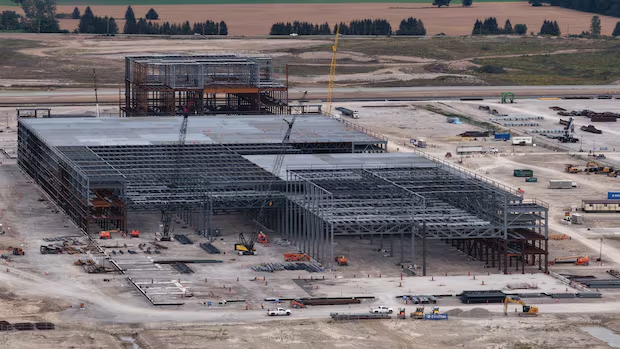
联邦和省级政府押注数十亿资金,赌电动汽车产业将迅速崛起。但此后,安大略省、魁北克省和不列颠哥伦比亚省的主要电动汽车和电池项目纷纷推迟、取消、暂停、大幅变更——甚至有一个项目破产——因为车企和供应商正在适应不及预期的需求。
The federal and provincial governments bet billions on the rapid rise of the electric vehicle industry. But major EV and battery projects in Ontario, Quebec and British Columbia have since been delayed, cancelled, suspended, substantially changed — and in one case, gone bankrupt — as automakers and suppliers adjust to weaker-than-anticipated demand.
最新的案例是大众旗下 PowerCo 在安大略省圣托马斯的大型电池工厂,由于“不断变化的市场需求”,生产时间被推迟两年至 2029 年。这些挫折引发了质疑:加拿大是否过早押注过大,赌电动汽车市场增长过快?批评者称,需求可能永远无法达到政府寻求吸引的电池生产规模所需的水平,而另一些人则认为,这只是向电气化转型这一数十年长征途中的暂时延误。一百万块电池,供何用?
The latest is Volkswagen's massive PowerCo battery plant in St. Thomas, Ont., where production has been pushed back two years to 2029, because of "evolving market demand." The setbacks are raising questions about whether Canada bet too big on how quickly the EV market would grow. Critics say demand may never reach the levels needed to support the scale of battery production governments sought to attract, while others argue these are temporary delays in the decades-long shift toward electrification. A million batteries, but for what?
曾任丰田高管、现已退休的麦克马斯特大学教授、研究汽车产业的 Grieg Mordue 表示,圣托马斯工厂凸显了加拿大电动汽车投资战略的两个问题:规模和选址。
Grieg Mordue, a former Toyota executive and retired McMaster University professor who studied the auto industry, says the St .Thomas plant illustrates two problems with Canada's EV investment strategy: scale and location.
该项目于 2023 年宣布时,PowerCo 称该工厂最终将生产足以供约 100 万辆电动汽车每年使用的电池芯。
When the project was announced in 2023, PowerCo said the plant would eventually make enough battery cells for roughly one million EVs a year.
Mordue 表示,这看似效率低下,因为大众的主要装配业务位于美国南部和墨西哥,这意味着在圣托马斯生产的电池必须长途跋涉才能到达它们要为其提供动力的车辆旁。
Mordue says that seemed inefficient since Volkswagen's major assembly operations are in the southern United States and Mexico, meaning batteries produced in St. Thomas would have to travel long distances to reach the vehicles they're intended to power.
他表示,欧洲也不是显而易见的目的地,因为大众在那里已拥有电池产能。
Europe isn't the obvious destination either, he says, because Volkswagen (VW) already has battery production capacity there.
即使加在一起,大众在北美的工厂产量也不足以为每年 100 万块电池提供明显的市场。
Even together, VW's North American plants don't produce enough vehicles to provide an obvious market for a million batteries a year.
“他们有了一百万块电池,”他说,“他们打算拿这些电池干什么?”大众及其 PowerCo 子公司未回应置评请求。
"They got a million batteries," he said. "What are they going to do with them?" VW and its PowerCo subsidiary did not respond to a request for comment.
大众汽车表示,这家工厂仍是其北美电池生产战略的核心,尽管生产进度有所推迟,但建设工作仍在继续。
VW has said the plant remains a cornerstone of its North American battery strategy and is continuing construction even as it pushes production back.
大众汽车还称,这一生产延迟将使其能够采用更先进的电池技术,并根据市场需求逐步扩大生产规模。
VW also said the delay will allow it to incorporate newer battery technology and scale production as demand develops.
Mordue认为,这对纳税人来说也可能是个积极的因素——因为政府需要支付的补贴金额会减少。
It could also have an upside for taxpayers, Mordue said — in the form of a smaller subsidy bill.
大众汽车获得的许多补贴都与该工厂的电池产量密切相关。由于生产计划被推迟至2029年,而这些补贴计划将从2030年开始逐步减少,并在2032年完全终止,因此政府实际需要支付的金额可能会远低于最初预计的数额。
Much of the support promised to Volkswagen is still tied to how many batteries the plant produces. With production now set for 2029 and with those incentives scheduled to start declining in 2030 and ending in 2032, Mordue says governments will likely pay "a whole lot less" than the original maximum.
加拿大创新、科学与经济发展部在一份声明中表示,联邦政府已为圣托马斯电池工厂的建设投入了7亿加元;安大略省则承担了政府同意提供的132亿加元补贴中的三分之一。
Innovation, Science and Economic Development Canada said in a statement that the federal government has so far contributed $700 million to the construction of the St. Thomas battery plant, noting Ontario is responsible for one third of the $13.2 billion governments have agreed to in production subsidies.
声明还称:“政府仍在与PowerCo公司就新的生产计划进行沟通。”
"The government remains engaged with PowerCo on their updated timelines," the statement said.
安大略省经济发展、就业创造与贸易部在截止日期前未对此作出回应。
Ontario's Ministry of Economic Development Job Creation and Trade did not respond by deadline.
不过,也有人认为,仅从当前电动汽车的市场需求来看,无法准确评估像圣托马斯电池工厂这样的投资项目的长期效果。
A bet on the long-term Still, others argue that looking at today's EV demand misses the time scale on which investments such as St. Thomas were made.
“这些投资项目的设计寿命通常为50至70年甚至更长,”加拿大清洁能源组织的政策与战略总监Joanna Kyriazis告诉CBC新闻。
"These investments are meant to last 50 to 70 years or more," Joanna Kyriazis, directory of policy and strategy at Clean Energy Canada told CBC News.
她指出,目前的生产放缓只是电动汽车行业转型过程中的暂时困难,而非加拿大电池产能过剩的迹象。
She said the current slowdown should be seen as growing pains in an industry that is still transitioning, rather than evidence Canada built too much battery capacity.
根据加拿大统计局的数据,2026年第二季度,仅搭载电池的电动汽车的新注册量同比增长了37.4%;如果将混合动力汽车也算在内,加拿大人在该季度购买了58,811辆零排放汽车,同比增长了26.7%。
There are signs Canada's EV market may already be recovering after a slowdown. New restgistrations of battery-only EVs rose 37.4 per cent in the second quarter of 2026, compared with the same time last year, according to Statistics Canada.
基里亚齐斯表示,这些投资旨在确保加拿大在全球汽车产业发生历史性变革(即从依赖汽油动力汽车向电动汽车转型的过程中)时仍能保持其竞争力。
When hybrids are included, Canadiansed 58,811 new zero-emission vehicles during the quarter, up 26.7 per cent. Kyriazis says the investments are about keeping Canada relevant as the global auto industry undergoes a historic shift from gasoline-powered vehicles.
“问题不在于是否能在北美汽车产业中维持自己的地位,而在于:加拿大是否真的拥有一个能够在21世纪生存下去的汽车产业?”她说。
"It's not a question of maintaining a place in the North American auto indstury. It's — is Canada going to have an auto industry that survives in the 21st century at all?" she said.
“全球汽车产业的发展方向已经非常明确;如果加拿大希望在未来拥有具有竞争力的汽车产业,就必须能够生产并销售价格具有竞争力的电动汽车及其零部件。”基里亚齐斯指出,这些电池的潜在市场并不仅限于电动汽车领域。随着电力网络的扩展,电池将越来越多地被用于储能,以帮助平衡电力供需。
"There's a clear direction that the global auto sector is going and if Canada wants to have a competitve auto sector into the future, we've got to be able to make and sell competitively priced electric vehicles and the parts that go into them." Kyriazis says the potential market for these batteries also extends beyond electric vehicles. As electricity grids expand, batteries will increasingly be needed to store power and help balance supply and demand.
汽油价格的下降以及新的政策激励措施正在推动电动汽车销量的增长。她说,圣托马斯工厂和温莎的NextStar工厂原本计划短期内生产用于电网储能的电池,因为当时北美的电动汽车市场还处于发展初期、尚未完全成熟。基里亚齐斯认为,美国目前对电动汽车发展的态度转变可能是暂时的,加拿大不应将一个长达数十年的产业战略建立在可能因未来政府政策变化而受到影响的基础上。
Gas prices and new incentives sparking more EV sales Gas prices are dropping. You can thank the 'winter blend' for that The St. Thomas site and a NextStar plant in Windsor, she said, "were looking at a short-term strategy of building batteries that would be used for grid-scale storage while EV update in North American started to sort of even out." Kyriazis argues the current U.S. retreat from electric vehicles could prove temporary and that Canada shouldn't base a decades-long industrial strategy on policies that could change again under a future administration.
有证据表明,投资电动汽车电池产业的决定其实并不算错误;建设国内电池生产能力的重要性依然存在。根据国际能源署的数据,去年中国生产了全球80%以上的电池组件,这使得北美和欧洲的政府不得不在这个仍高度依赖亚洲的产业中建立自己的供应链。那么,消费者们能否跟上这一技术发展的步伐呢?
There is evidence the EV battery bet may have been early rather than fundamentally misplaced. The wider justification for building domestic battery capacity hasn't disappeared either. China produced more than 80 per cent of the world's battery cells last year, according to the International Energy Agency, leaving governments in North America and Europe to build domestic supply chains in an industry that remains heavily concentrated in Asia.
圭尔夫大学的经济学教授罗斯·麦基特里克(Ross McKitrick)对“时间能够解决这个问题”持怀疑态度。他表示,虽然电动汽车(EV)已经形成了一个成熟的市场,但各国政府的政策制定是基于对市场需求的过高预期(这些预期远超实际需求)。
Will buyers catch up? University of Guelph economics professor Ross McKitrick is less convinced that time will solve the problem. He said EVs have an established market, but argues governments built their policy around expectations of demand far greater than what has so far emerged.
“政府试图强行推动这个市场的发展,”他说,“但相关数据并不符合实际情况。”麦基特里克指出:政府向汽车制造商提供了巨额补贴以支持他们生产电动汽车和电池,同时又向消费者提供了购买电动汽车的激励措施;然而这些措施显然不足以让电动汽车产业按照政府预期的规模持续发展下去。
"What the government's been trying to do is force that market into existence," he said. "The numbers just don't add up." McKitrick points to the billions governments offered manufacturers to build EVs and batteries, while simultaneously offering consumers incentives to buy the vehicles as evidence the industry wasn't able to sustain itself on the scale governments envisioned.
在2024年发表于《加拿大经济学杂志》(Canadian Journal of Economics)的一篇论文中,麦基特里克警告称:如果加拿大的电动汽车销售目标增长速度超过消费者的购买意愿,这可能会对汽车制造商乃至整个经济造成负面影响。
In a 2024 paper published in the Canadian Journal of Economics, McKitrick warned that if Canada's EV sales requirements rise faster than buyers' willingness to purchase them, it could hurt automakers and the wider economy. What on EarthWant to buy a used EV?
随着越来越多的电动汽车上路,我们是否有足够的维护和维修能力来确保这些车辆能够持续正常运行呢?
Here’s what to look out for What on EarthAs more EVs hit the road, will we have the mechanics to keep them running?
渥太华政府已于2026年取消了电动汽车销售的相关强制要求,并计划逐步废除这一联邦层面的法规。该国政府在2月份公布了新的排放标准,并计划持续到10月29日进行相关法规的公众咨询。
Ottawa scrapped EV sales requirements in 2026 and is moving repeal the broader federal mandate. It announced replacement emissions standards in February with consultations on the proposed regulations running until October 29.
尽管多年来政府一直提供各种激励措施来鼓励消费者购买电动汽车,但电动汽车在加拿大新车销售中的占比仍然很低。根据加拿大交通部(Transport Canada)的数据,2026年前三个月,电动汽车仅占新车销量的11.7%,而这一比例在2024年曾达到15.4%的峰值。
Electric vehicles still account for a minortiy of new vehicle sales in Canada, despite years of government incentives aimed at encouraging consumers to buy them. Electric vehicles accounted for 11.7 per cent of new light-duty vehicle sales in Canada in the first three months of 2026, according to Transport Canada, down from a peak of 15.4 per cent in 2024.
“目前,电动汽车仍然属于一个小众市场,”麦基特里克说,“只有部分家庭真正喜欢这种产品,并愿意为此支付更高的价格。”
"At this point, it's a niche market," McKitrick said. "Some households like the product and are willing to pay for it."