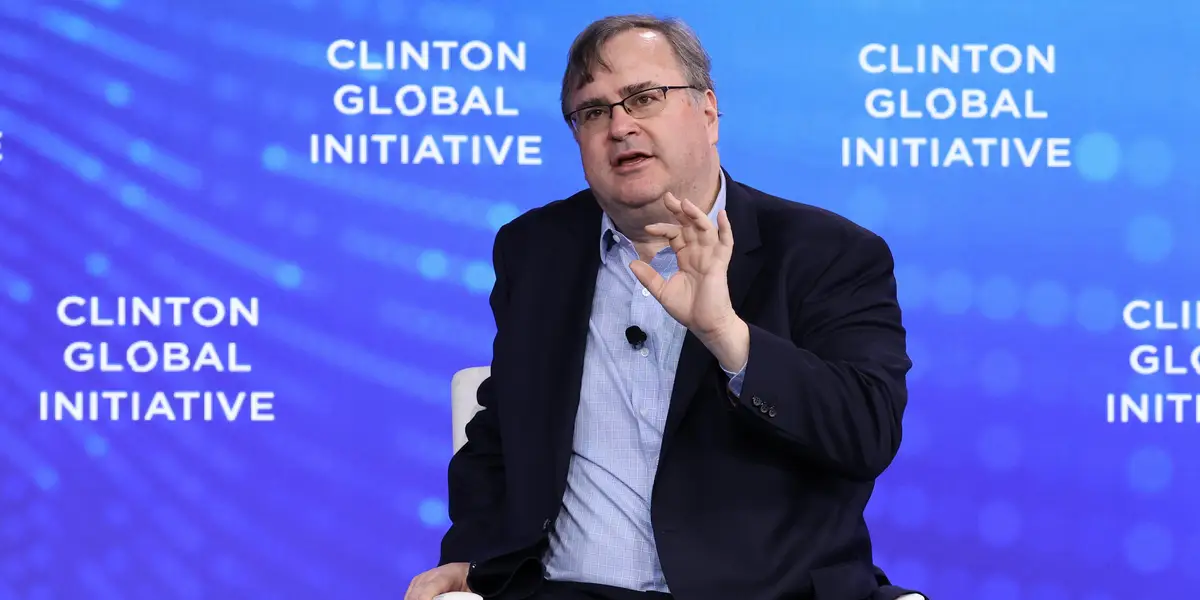
许多美国人对数据中心的大规模建设感到不满。但雷德·霍夫曼表示,他对此心存感激。这位领英联合创始人周五在“Newcomer”播客节目中发表了上述言论。霍夫曼将功劳归于AI基础设施建设背后的巨额资金,称其是“我们没有陷入衰退的唯一原因”。他表示,“其中大部分资金”并未流向数据中心建设所在地。“大部分资金分布在全国各地,”他说,“这很棒。”
Many Americans are bristling over the data center buildout. Reid Hoffman says he's thankful for it. The LinkedIn cofounder said so during an appearance on the "Newcomer" podcast that was released Friday. Hoffman credited the huge amount of capital behind the AI infrastructure buildout for being "the only reason we're not in a recession." He said "most of that capital" doesn't go to the areas where data centers are being built. "Most of that's more distributed across the country," he said. "That's great."
霍夫曼指出,除了推动AI繁荣,数据中心建设还为建筑工人、电工、木工、房地产经纪人和律师提供了工作机会。“人们以为所有这些资金注入‘只是流向了科技公司’,”他说,并补充道,“其中很大一部分实际上流向了数据中心建设。”
Hoffman said that in addition to powering the AI boom, data center construction also provides work for construction workers, electricians, carpenters, real estate agents, and lawyers. "All of this capital infusion, people think, 'Oh, that's just going to the tech companies,'" he said, adding that a "massive percentage of it is going towards data center construction."
随着中期选举临近,数据中心近期已成为引发两党愤怒的源头。共和党和民主党州长近期均采取行动遏制或限制建设。皮尤研究中心上周发布的一项民调(8月进行)显示,一半的农村美国人认为数据中心“主要对环境有害”——这一比例远高于1月份的32%。
Data centers have recently emerged as a source of bipartisan fury as midterm elections approach. Both Republican and Democratic governors have recently moved to curtail or restrict construction. In a poll released last week by the Pew Research Center, which surveyed people in August, half of rural Americans said data centers "are mostly bad for the environment" — a figure substantially higher than in January, when it sat at 32%.
与此同时,美国投资者押注巨资,寄希望于AI很快能实现盈利。数据中心将在其中扮演关键角色。对于OpenAI、Anthropic、Meta、Google等AI公司而言,这关乎生存。没有AI数据中心,它们就无法为所售产品提供算力。OpenAI首席执行官萨姆·奥特曼最近建议,新数据中心可建在远离居民区的地方,例如沙漠。
At the same time, US investors have mind-boggling amounts of money riding on the hope that AI will soon become profitable. Data centers will play a key role in that. And for AI companies like OpenAI, Anthropic, Meta, Google, and others, the issue is existential. Without AI data centers, they can't power the products they sell. OpenAI CEO Sam Altman has recently suggested that new data centers could be built far from where people live, such as in the desert.
对霍夫曼而言,问题很简单:数据中心建设者需要与当地社区公平合作,确保双方都能获得公平交易,他说道。
For Hoffman, the issue is simple: Data center builders need to work fairly with local communities to ensure that both sides get a good deal, he said.
至于他的衰退声明,美国经济仍处于坚实的基础上,即使在技术资本支出的快速增长之外。尽管9月就业报告令人失望,但失业率仍处于低位,表明劳动力市场处于中等水平,而不是衰退。总体而言,经济增长仍然强劲。第二季度实际国内生产总值(GDP)年增长率为2.2%;这一指标在衰退期间通常会下降。另一个经济衰退指标--实际个人收入减去转移支付--也比一年前有所上升,消费者支出仍在增长。
As for his recession statements, the US economy is still on solid ground, even outside the blistering pace of tech capital expenditures. Despite a disappointing September jobs report, unemployment remained low, suggesting a middling rather than a recessionary labor market. And, overall, economic growth is still strong. Real gross domestic product grew at a 2.2% annual rate in the second quarter; that measure typically declines during recessions. Real personal income minus transfers, another recession indicator, is also up from a year ago, and consumer spending is still growing.