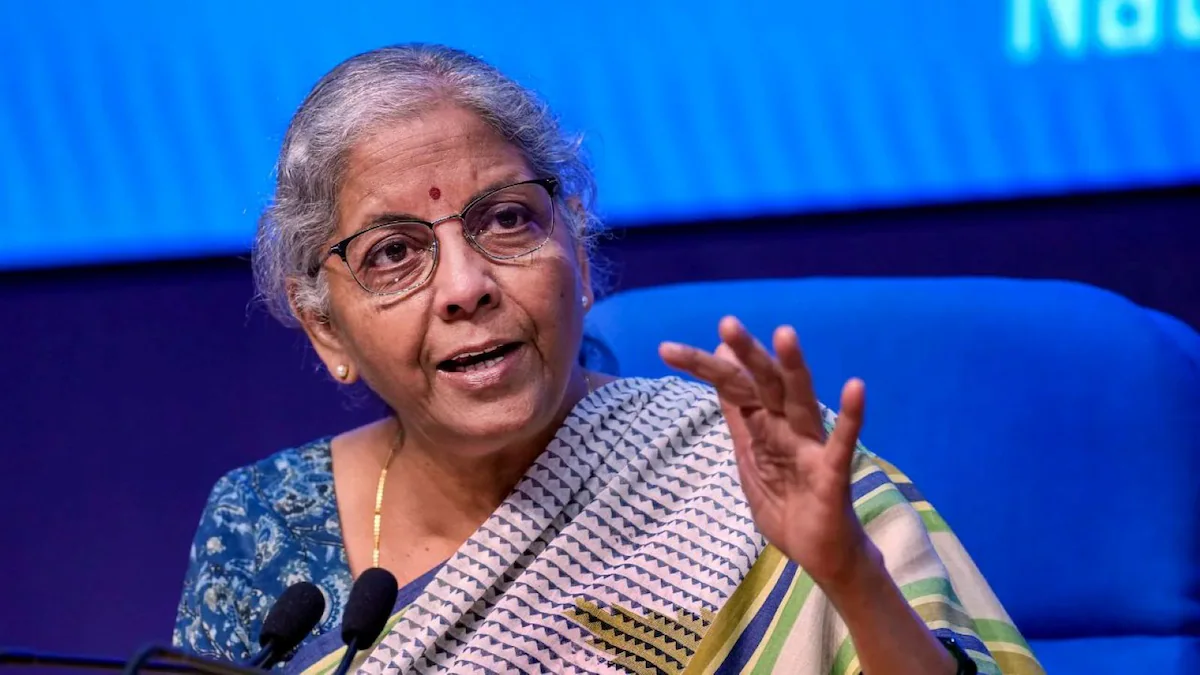
印度外长表示,该国自2014年以来建立的经济实力必须继续发展,以应对未来的冲击。她强调了绩效的六大支柱,包括最后一英里交付,Sapna Das于2026年10月3日,下午4:55:13在第五届考蒂利亚经济秘密会议上发表讲话时,联盟财政部长提出了一个简单的论点:印度今天的经济实力是自2014年以来一层一层刻意建立的,未来十年的冲击将要求同样的工作继续下去。
India's FM stated the nation's economic strength, built since 2014, must continue to be developed to face future shocks. She highlighted six pillars of performance, including last-mile delivery, acces Sapna Das October 3, 2026, 4:55:13 PM IST Addressing the 5th Kautilya Economic Conclave, the Union Finance Minister set out a simple argument: India's economic strength today was built deliberately, layer by layer, since 2014, and the coming decade of shocks will demand that the same work continue.
财政部长的讲话以其中心路线之一“kosha-purvah sarva-arambhah”为基础:所有事业首先取决于财政部。她说,教训是,一个在平静时期保护财政的国家在情况发生变化时保留了采取行动的自由。
The Finance Minister anchored her address in one of its central lines, "kosha-purvah sarva-arambhah": all undertakings depend first on the treasury. The lesson, she said, is that a state which guards its finances in calm years keeps the freedom to act when conditions turn.
FM谈应对全球冲突,她认为,其证据主要在于反事实:通胀螺旋式上升并没有站稳脚跟,燃油出口没有排队,银行业压力没有浮出水面,以及从未被迫进行的财政修正。她说,这些结果值得经济学家与总体增长率一样关注。
FM On Dealing With Global Conflicts Its evidence, she argued, lies largely in the counterfactual: the inflation spiral that did not take hold, the queues that did not form at fuel outlets, the banking stress that did not surface and the fiscal correction that was never forced. These outcomes, she said, deserve as much attention from economists as the headline growth rate.
她指出,过去四年的冲击分为两大类。旧有的脆弱性以更尖锐的形式回归:西亚反复出现的不稳定导致原油价格飙升、美国货币条件收紧导致全球资本流动以及贸易壁垒不断上升。涉及俄罗斯、乌克兰和伊朗的冲突,以及霍尔木兹海峡周围的混乱,增加了一些新的东西:对石油和天然气的物理流动及其价格的威胁。印度的故事站在哪里?
The shocks of the last four years, she noted, have come in two broad kinds. Older vulnerabilities have returned in sharper form: crude price spikes amid recurring instability in West Asia, tighter US monetary conditions pulling on global capital flows, and rising trade barriers. The conflicts involving Russia, Ukraine and Iran, along with the disruption around the Strait of Hormuz, added something new: a threat to the physical movement of oil and gas as well as to their prices. Where Does the India Story Stand?
她观察到,价格冲击可以通过货币和财政工具来缓解,但数量冲击考验缓冲库存和交付系统,从而考验国家本身的能力。所有这一切都来到了一个缓冲区更薄的世界。
A price shock, she observed, can be cushioned with monetary and fiscal tools, but a quantity shock tests buffer stocks and delivery systems, and therefore the capacity of the state itself. All of this has arrived in a world with thinner buffers.
引用2026年4月的《国际货币基金组织财政监测报告》,她指出,2025年全球公共债务升至GDP的近94%,预计到2029年将达到100%,这一水平此前仅在第二次世界大战后出现过。
Citing the IMF Fiscal Monitor of April 2026, she pointed out that global public debt rose to nearly 94% of GDP in 2025 and is projected to reach 100% by 2029, a level previously seen only after the Second World War.
她表示,在此背景下,印度已度过难关,基本面保持完好并不断增强。2027财年第一季度实际GDP增长7.8%,2026年8月CPI通胀率为4.82%,当季经常账户赤字为GDP的0.5%。银行不良贷款总额处于数十年低位,外汇储备约为7660亿美元。
Against this backdrop, she said, India has come through with its fundamentals intact and strengthening. Real GDP grew 7.8% in the first quarter of FY27, CPI inflation was 4.82% in August 2026, and the current account deficit was 0.5% of GDP in the quarter. Banks' gross NPAs are at multi-decadal lows, and foreign exchange reserves stand at about $766 billion.
动荡中表现的六大支柱 财政部长将这一表现归因于六大基础。第一是高效的“最后一公里”交付。
Six Pillars of Performance Amid Turmoil The Finance Minister attributed this performance to six foundations. The first is efficient last-mile delivery.
“人民银行账户-身份证-手机”三位一体和直接福利转账强化了将援助直接送达受益人的体系,而总理住房计划、清洁印度运动、乌贾瓦拉计划、阿育吠陀印度计划和总理加里布·卡利安·安纳计划等项目则解决了家庭脆弱性的不同来源。她表示,通过缓解这些压力,它们让人们有更多空间追求教育、生计和创业。
The Jan Dhan–Aadhaar–Mobile trinity and Direct Benefit Transfer have strengthened the systems that carry assistance directly to beneficiaries, while schemes such as PM Awas Yojana, Swachh Bharat, Ujjwala, Ayushman Bharat and PM Garib Kalyan Anna Yojana address different sources of household vulnerability. By easing these pressures, she said, they give people more scope to pursue education, livelihoods and enterprise.
第二大基础是将机会转化为生产性活动的能力,主要通过获得融资实现。总理MUDRA计划已批准超过5.2亿笔无抵押贷款,总理SVANidhi计划支持街头小贩。
The second foundation is the capacity to turn opportunity into productive activity, chiefly through access to finance. PM MUDRA Yojana has sanctioned over 52 crore collateral-free loans, and PM SVANidhi supports street vendors.
包括注资、处置不良资产和强化治理在内的严厉银行业改革,支撑起了一个金融体系,在该体系中,截至2026年8月的一年里,非食品信贷增长了18.8%。她补充道,应急信贷额度担保计划帮助企业在动荡时期满足营运资金需求并保住就业。
Tough banking reforms, including recapitalisation, resolution of stressed assets and stronger governance, have underpinned a financial system in which non-food credit grew 18.8% in the year to August 2026. The Emergency Credit Line Guarantee Scheme, she added, helped enterprises meet working-capital needs and preserve jobs during periods of disruption.
基础设施是第三。27财年预算提供了12.22亿卢比的资本支出,名义上几乎与该中心在2004 -05财年至2013 -14财年整个十年中支出的12.39亿卢比相当。包括用于创造资本资产的赠款在内,有效资本支出达到17.15亿卢比,占GDP的4.4%。
Infrastructure is the third. The FY27 Budget provides ₹12.22 lakh crore in capital expenditure, nearly matching in nominal terms the ₹12.39 lakh crore the Centre spent across the entire decade from FY2004–05 to FY2013–14. Including grants for creating capital assets, effective capital expenditure reaches ₹17.15 lakh crore, or 4.4% of GDP.
她说,结果是显而易见的:国家高速公路扩建了约61%,运营机场增加了一倍多,主要港口的货物装卸能力增加了近60%,印度铁路公司在2014年至2026年间投入了36,429公里的新轨道。总理GatiShakti协调了各个项目的规划,而SASCI的50年期无息贷款则支持和激励了各州的改革。
The results, she said, are visible: national highways have expanded by about 61%, operational airports have more than doubled, cargo-handling capacity at major ports is up nearly 60%, and Indian Railways commissioned 36,429 km of new track between 2014 and 2026. PM GatiShakti has coordinated planning across projects, while SASCI's 50-year interest-free loans have supported and incentivised reforms by States.
第四个基础是持续的改革心态,她将其描述为莫迪总理领导下的信念问题而不是强制问题。商品及服务税、破产法、四项劳工法和扬·维什瓦斯法案旨在使经济活动更简单、更可预测和更有成效。
The fourth foundation is a sustained reform mindset, which she described as a matter of conviction rather than compulsion under Prime Minister Modi. GST, the Insolvency and Bankruptcy Code, the four Labour Codes and the Jan Vishwas Acts have aimed to make economic activity simpler, more predictable and more productive.
第五是经济稳定,由2016年推出的灵活通胀目标框架、对价格、库存和农作物状况的持续监测以及通过价格稳定基金提供资金的缓冲提供支持。
The fifth is economic stability, supported by the flexible inflation targeting framework introduced in 2016, continuous monitoring of prices, stocks and crop conditions, and buffers financed through the Price Stabilisation Fund.
MSP增加、PM-KISAN和校准贸易措施平衡了农民的生计与家庭购买力,在霍尔木兹中断期间,家庭液化石油气和管道天然气需求得到了充分满足。她说,第六个因素支撑着所有其他因素:财政审慎。
MSP increases, PM-KISAN and calibrated trade measures balance farmers' livelihoods with household purchasing power, and household LPG and piped gas requirements were adequately met during the Hormuz disruption. The sixth, she said, sustains all the others: fiscal prudence.
当冲击限制了供给时,超出生产能力的刺激措施可能会助长通胀,并使债务持续时间超过冲击。印度的做法是,在可靠的整合道路上提供支持。27财年财政赤字预算为GDP的4.3%,国际货币基金组织预计印度一般政府债务将从2026年占GDP的83.4%降至2031年的77.7%,而全球趋势上升。
When a shock constrains supply, stimulus beyond productive capacity can feed inflation and leave debt that outlasts the disruption. India's approach has been calibrated support alongside a credible path of consolidation. The fiscal deficit is budgeted at 4.3% of GDP in FY27, and the IMF projects India's general government debt to fall from 83.4% of GDP in 2026 to 77.7% in 2031, against a rising global trend.
展望未来,财政部长将不确定性描述为全球经济的一个长期条件,弹性需要持续而不是一次性建立。他提出了四个优先事项。
Moving Forward Looking ahead, the Finance Minister described uncertainty as a standing condition of the global economy, with resilience something to be built continuously rather than once. She named four priorities.
第一是战略投入的结构自主权。仅为成本优化的供应链就隐藏着脆弱性,印度已经通过国家关键矿物任务、稀土矿和印度半导体任务2.0做出了回应,同时也在考虑小型模块化反应堆。
The first is structural autonomy in strategic inputs. Supply chains optimised for cost alone carry hidden fragility, and India has responded with the National Critical Mineral Mission, the Rare Earth Corridors and the India Semiconductor Mission 2.0, while also looking at small modular reactors.
二是全球开放。她认为,经济关系应该保持开放、可预测和基于规则的,各国通过对话和谈判达成的协议解决分歧,而不是让它们成为贸易和投资的障碍。
The second is global openness. Economic relationships, she argued, should remain open, predictable and rules-based, with nations resolving differences through dialogue and negotiated agreements rather than letting them become barriers to trade and investment.
她还呼吁建立一个反映当前增长方向的全球金融架构,在印度担任G20主席国期间加强多边开发银行的工作转化为发展中经济体更大、更快、更可预测的长期融资。
She also called for a global financial architecture that reflects where growth now lies, with the work on strengthening multilateral development banks under India's G20 Presidency translating into larger, faster and more predictable long-term finance for developing economies.
第三是技能。她表示,随着人工智能和前沿技术重塑工作场所,年轻入职者和现有员工都必须能够升级技能并进入新兴职位。
The third is skills. With AI and frontier technologies reshaping workplaces, she said young entrants and existing workers alike must be able to upgrade their skills and move into emerging roles.
行业应该通过与教育机构合作、学徒制和工作场所学习,更多地参与设计和提供培训,将数字和人工智能能力与专业知识和判断相结合。她补充说,必须在整个工作生涯中进行持续学习。
Industry should take a greater part in designing and delivering training, through partnerships with educational institutions, apprenticeships and workplace learning, combining digital and AI competencies with professional knowledge and judgement. Continuous learning, she added, must be accessible throughout a working life.
第四是私人投资现在必须引领这一周期,包括研究和创新。印度的研发支出占GDP的0.83%,而经合组织为2.7%,私营部门仅占该支出的36%。随着印度从“印度制造”转向“想象和印度制造”,这项耗资10万卢比(约110亿美元)的研究、开发和创新计划旨在改变这种平衡。“她补充说,在现代经济中,考蒂利亚的财政部包括财政空间、缓冲股票、稳健的银行和公民的信任,印度将继续加强其中每一项,努力到2047年实现维希特·巴拉特,以准备和信心迎接瞬息万变的时代。阅读:航空公司拒绝孟买机场取消T2航班的提议,警告可能会造成干扰和乘客麻烦
The fourth is that private investment must now lead the cycle, including in research and innovation. India spends 0.83% of GDP on R&D against 2.7% for the OECD, and the private sector accounts for only 36% of that spending. The ₹1 lakh crore (about $11 billion) Research, Development and Innovation Scheme is meant to shift this balance, as India moves from "Made in India" to "Imagined and Made in India." In a modern economy, she added, Kautilya's treasury includes fiscal space, buffer stocks, sound banks and the trust of citizens, and India will keep strengthening each of them as it works towards Viksit Bharat by 2047, meeting the age of flux with preparation and confidence. Read Also: Airlines reject Mumbai Airport's proposed flight cancellations at T2, warn of disruption and passenger trouble