当也门政府军成波撤离荷台达和摩卡之间红海沿岸城镇哈乌哈附近的前线时,赛义德·哈桑的两个儿子冲回家告诉父亲部队出现了异常调动。
When waves of Yemeni government forces started to flee the front lines near al-Khokha, a Red Sea town between Hodeidah and Mocha, two of Saeed Hassan’s sons rushed to alert their father about the unusual troop movements.
“我告诉他们这可能是战术撤退,没什么好担心的,”58岁的赛义德在也门南部城市穆卡拉的一套公寓里对半岛电视台记者说,他和几个亲戚家庭正在那里避难。
“I told them that it could be a tactical withdrawal and that there was nothing to worry about,” Saeed, 58, told Al Jazeera at a flat in Yemen’s southern city of Mukalla, where he and several related families have taken refuge.
到9月9日晚,儿子们回来证实大批士兵正在撤离阵地。赛义德决定离家亲自查看。“撤退的士兵和军事装备数量之巨大让我震惊,”他说。
By that evening of September 9, his sons returned and confirmed that large numbers of soldiers were withdrawing from their positions. Saeed decided to leave his house and see for himself. “I was shocked by the huge number of soldiers and military equipment that was withdrawing,” he said.
当晚,赛义德决定逃离家园,但首先得说服弟弟穆罕默德及其家人同行。
By the evening, Saeed decided to flee his home, but first he had to persuade his brother Mohammed and his family to join him.
“只有当他们出去拍下撤退视频给我看时,我才相信了,”47岁的穆罕默德对半岛电视台记者说。
“I only believed them when they went out, filmed the withdrawal and showed me the video,” Mohammed, 47, told Al Jazeera.
大致同一时间,一枚导弹击中附近的一个流离失所者营地,造成数人受伤。穆罕默德的儿子沙基尔去查看情况,另一爆炸发生时他险些丧命。“他看见一个伤者的腿被炸断了,”穆罕默德说。
About the same time, a missile hit a nearby camp for displaced people, wounding several. Mohammed’s son Shaker went to see what had happened and narrowly escaped death when another explosion hit the area. “He saw a wounded man whose leg had been severed,” Mohammed said.
一周前,也门伊朗支持的胡塞武装在荷台达和泰兹两个西部省份,对沙特支持的也门政府军发动了最大规模军事攻势之一。胡塞武装猛烈炮击政府控制区,随后其战士推进。
A week earlier, Yemen’s Iran-backed Houthis had launched one of their largest military offensives against forces loyal to the Saudi-backed Yemeni government in the western governorates of Hodeidah and Taiz. The Houthis heavily shelled government-held areas before their fighters advanced.
9月9日,政府军从摩卡撤军——摩卡是政府“国民抵抗部队”的主要基地——使胡塞武装占领了这座沿海城市及包括哈乌哈在内的其他地区。次日,胡塞武装完成了对也门红海海岸的攻势,基本控制了曼德海峡。
On September 9, government forces withdrew from Mocha, the main base of the government’s National Resistance Forces, allowing the Houthis to seize the coastal city and other areas, including al-Khokha. The following day, the Houthis completed their offensive on Yemen’s Red Sea coast, essentially taking control of the Bab al-Mandeb strait.
担心胡塞武装即将抵达他们的城镇,赛义德和穆罕默德的家人尽快逃离了哈乌哈。自2018年从荷台达港附近的农村地区流离失所后,这里成了他们的家。自2014年9月胡塞武装攻占首都萨那、迫使也门政府军南逃以来,荷台达一直是也门战争双方的关键攻击目标。
Fearing that the Houthis were about to arrive in their town, Saeed’s and Mohammed’s families fled al-Khokha as fast as they could. It had become their home after they were displaced from the countryside near the port of Hodeidah in 2018. Hodeidah has been a key target of both sides in Yemen’s war since Houthi forces captured the capital, Sanaa, in September 2014, forcing Yemeni government forces to flee south.
对赛义德和穆罕默德的家人来说,这意味着又一次从战区逃离的旅程。
For Saeed’s and Mohammed’s families, it meant another journey out of a warzone.
“我们只带走了能拿得动的东西,”赛义德谈到他第二次流离失所时说。
“We just took the things that we could carry,” Saeed said about his second displacement.
穆罕默德和妻子靠做服装生意为生,但无法带走存放在家里的成堆货物。他们只带了证件、一些私人衣物和几件轻便行李。
Mohammed and his wife made a living trading clothes, but they could not carry the piles of merchandise stored at their home. They took only their documents, some personal clothing and a few other light belongings.
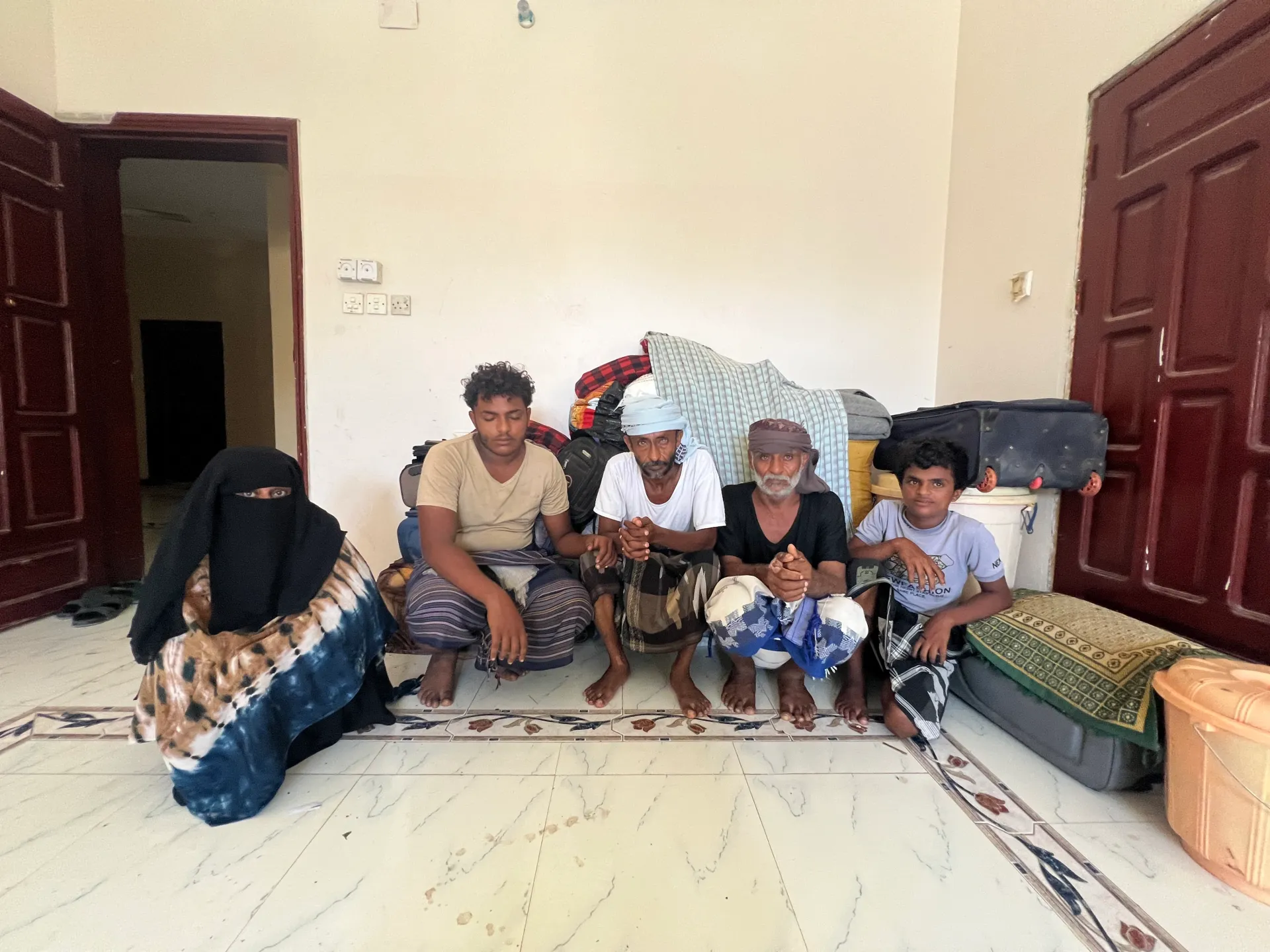
赛义德(左)和穆罕默德每天都在亚丁湾沿岸城市穆卡拉寻找工作,他们逃离胡塞武装的攻势后最终来到了这里 [赛义德·巴塔蒂/半岛电视台] 兄弟俩原计划在邻城摩卡过夜,第二天返回村庄收拾剩余财物。但胡塞武装推进的速度迫使他们尽快撤离。
Saeed, left, and Mohammed go out every day in search of jobs in Mukalla, a city on the Gulf of Aden where they ended up after fleeing a Houthi offensive [Saeed Al-Batati/Al Jazeera] The brothers planned to spend the night in neighbouring Mocha before returning to their village the following day to collect the rest of their belongings. But the speed of the Houthi advance forced them to move as soon as possible.
“我对她说:‘咱们先带走能拿的行李,明天再回来取剩下的,’”穆罕默德说。
“I told her, ‘Let’s take whatever luggage we can, and we’ll come back for the rest tomorrow,’” Mohammed said.
赛义德把行李装上他的小皮卡,带着妻子、两个儿子和儿媳、女儿及外孙离开了。
Saeed loaded luggage into his small pick-up truck and left with his wife, his two sons and their wives, his daughter and her baby.
穆罕默德和妻子、一位亲戚及行李坐上另一辆皮卡。途中他又搭载了三名看似正在逃亡的士兵。两家人于晚上9点半左右出发。
Mohammed travelled in another pick-up with his wife, a relative and their luggage. He later picked up three men who appeared to be fleeing soldiers. The families departed about 9:30pm.
刚走不久,他们就得知当地人拆毁了他们用瓦楞铁皮和帆布搭建的房屋,连同财物一并偷走。在路上,赛义德看到士兵们在周围爆炸声和枪声中丢弃武器逃窜。“我看到士兵们丢下全新的大炮,甚至连一炮都没开过,”他说。
Shortly after they left, they were told locals had dismantled their homes, built from corrugated metal sheets and tarpaulin, which were stolen along with their belongings. On the road, Saeed saw soldiers abandoning their weapons as explosions and gunfire erupted around them. “I saw soldiers leaving behind brand-new cannon that had not even fired a single shot,” he said.
这些家庭在没有水的情况下逃离家园,指望沿途能找到水。但杂货店空空如也,没过多久,穆罕默德卡车上的一个轮胎爆了,情况变得更糟。
The families had fled their homes without any water, expecting to find some along the way. But grocery stores were empty, and a while later, the situation got worse when a tyre on Mohammed’s truck blew out.
他的弟弟等不及,独自继续前往摩卡。“车快翻了,我们差点丧命。我用另一个已经快散架的轮胎换下了坏的,”他说。
His brother couldn’t wait and continued towards Mocha without him. “The car was about to flip over, and we could have died. I replaced the damaged tyre with another one that was already crumbling,” he said.
“爆炸声越来越猛烈,和我在一起的三个人不断催我快走,生怕胡塞武装追上来。”萨伊德约在午夜抵达摩卡,却发现这座城市已被遗弃。一辆辆载着从战场撤退士兵的车辆驶过,绕过摩卡,直奔亚丁湾沿岸的港口城市亚丁。萨伊德决定跟随他们,但一路上,他和家人目睹了惨不忍睹的场景。
“The explosions were intensifying, and the three people with me kept asking me to hurry, fearing that the Houthis would catch up with us.”Saeed arrived in Mocha about midnight, only to find the city abandoned. Vehicle after vehicle carrying retreating soldiers from the battlefields drove by, bypassing Mocha and heading straight for Aden, a port city on the Gulf of Aden. Saeed decided to follow them, but along the way, he and his family witnessed harrowing scenes.
在胡塞武装的导弹和无人机袭击中阵亡的士兵遗体躺在路边,旁边是被遗弃的武器和弹药。这家人险些被袭击撤退部队的导弹击中。
The remains of soldiers killed in Houthi missile and drone attacks lay on the roadside alongside abandoned weapons and ammunition. The family narrowly escaped missiles targeting the retreating forces.
“我看到士兵们脱下军装,其他人则扔掉武器或将其埋在沙子里,”穆罕默德说。他认为士兵们怕被胡塞武装俘虏,所以试图隐瞒身份。
“I saw soldiers taking off their military uniforms while others threw away their weapons or buried them in the sand,” Mohammed said. He believed the soldiers feared being captured by the Houthis so were trying to hide their identities.
“妻子看到一具上半身尸体吓得哭了出来。我们看到老老少少沿着公路逃难,而逃窜的士兵有时开着空车从他们身边驶过,连停下来接人都不愿意。”与此同时,穆罕默德也在向南行驶。离开图巴布区,第二天早上接近拉斯阿拉和南部省份时,他卡车上那个已经快散架的备用轮胎也瘪了。
“My wife cried in shock when she saw the upper half of a person’s body. We saw young and old people walking along the road while fleeing soldiers sometimes passed them in empty vehicles without stopping to pick anyone up.”Meanwhile, Mohammed was also driving south. After leaving the Thubab district and approaching Ras al-Arah and the southern governorates the following morning, the disintegrating replacement tyre on his truck also went flat.
饥饿、口渴且在失眠一夜后精疲力竭,穆罕默德沿着公路拖着轮胎寻找修理店。惊恐的司机们从他身边驶过,拒绝耽误行程停下来载他去下一个村庄。直到下午3点左右,他才回到家人身边。
Hungry, thirsty and exhausted after a sleepless night, Mohammed carried the tyre along the road in search of a repair shop. Panicked drivers passed him by, refusing to delay their journey by stopping and giving him a ride to the next village. He did not return to his family until about 3pm.
“商店都关门了,我们找不到水。我妻子下车站在路边,向人们讨水喝,”穆罕默德说。“只有一个带着大家庭出行的人停下来,往她捧起的双手里倒了一些水。” 萨伊德抱着孙子,孙子的父亲在家人逃离时正在海上,未能及时赶回与他们汇合 [萨伊德·巴塔提/半岛电视台] 此时,摩卡已落入胡塞武装手中,他们正向图巴布区推进。爆炸声震动着这一带。
“Shops were closed, and we could not find water. My wife got out of the car and stood by the road, asking people to give us some water,” Mohammed said. “Only one person who was travelling with a large family stopped and poured some water into her cupped hands.”Saeed carries his grankchild, whose father was at sea when the family fled and could not return in time to join them [Saeed Al-Batati/Al Jazeera] By now, Mocha was in the Houthis’ hands, and they were advancing towards the Thubab district. Explosions were rocking the area.
萨伊德比哥哥早出发约三小时,于上午10点左右抵达通往也门南部省份的交通拥堵的主入口。部署在那里保卫亚登的武装力量,阻止撤退的士兵携带武器通过。
Saeed, who was about three hours ahead of his brother along the same road, approached the traffic-jammed main entrance to Yemen’s southern governorates by 10am. Armed forces deployed there to defend Aden were preventing retreating soldiers from crossing with their weapons.
萨伊德在一家餐馆排队两个多小时,为家人买了一份鸡肉饭。“物价翻了一倍,食物也不够吃。只是勉强充了饥,”他说。
Saeed queued for more than two hours at a restaurant to buy a meal of chicken and rice for his family. “The prices had doubled, and the food was not enough. It just kept our hunger at bay,” he said.
傍晚时分,萨伊德进入亚登,在引导下来到一所收容流离失所者的学校。八个家庭挤在一个房间里。
By evening, Saeed had crossed into Aden, where he was guided to a school sheltering displaced people. Eight families were crammed into a single room.
“他们告诉我们只允许女性留在房间里休息,所以我把家人留在那里,自己睡在外面露天的地方,”萨伊德说。
“They told us that only women were allowed to stay in the room, so I left my family there so they could get some rest, and I slept outside in the open,” Saeed said.
9月10日深夜,穆罕默德抵达亚登郊外,因找不到补给,一名士兵给了这家人一瓶水。
Mohammed arrived at the outskirts of Aden by the night of September 10, and after finding no provisions, a soldier gave the family a bottle of water.
“看到我们可怜,得知我们滴米未进、滴水未喝,他就把水给了我们,”穆罕默德说。
“He felt sorry for us and gave us the water when we told him that we had not eaten or drunk anything,” Mohammed said.
他还在南部城市郊外遇到了成群结队的士兵,其中许多人试图丢掉手中的步枪。
He was also met by throngs of soldiers outside the southern city, many of them trying to get rid of their rifles.
“我看到一些士兵以500沙特里亚尔(约合133.33美元)的价格出售武器,还有人直接弃枪而逃。他们吓坏了,”穆罕默德说。
“I saw some soldiers selling their weapons for 500 Saudi riyals [$133.33] while others simply abandoned them. They were terrified,” Mohammed said.
9月11日,穆罕默德终于在亚丁找到了一间旅馆房间,旅途劳累的他倒头便睡,睡得很沉。
On September 11, Mohammed finally managed to find a hotel room in Aden, where, exhausted from the journey, he fell straight into a deep sleep.
兄弟俩将他们的经历描述为奇迹。他们说出发时卡车燃气很少,但车辆竟然在不加一次燃料的情况下,将他们从胡凯达送到了约300公里(185英里)外的亚丁。
The brothers described their experience as a miracle. They said they had little fuel for their gas-run trucks when they set out but the vehicles managed to take them about 300km (185 miles) from al-Khokha to Aden without stopping for fuel once.
“燃油警示灯亮了,车里只剩半瓶燃气了,”赛义德说。他满脸白须,讲述旅程时露出了笑容。他的兄弟描述了类似的经历。
“The fuel warning light was on, and the car had only half a cylinder of gas left,” Saeed said. His face, covered with a white beard, broke into a smile as he recounted the journey. His brother described a similar experience.
9月12日下午,兄弟俩通过亚丁以东的一个检查站,前往邻省阿比扬,在劳达尔投亲靠友。
On the afternoon of September 12, the brothers passed through a checkpoint east of Aden and headed to neighbouring Abyan governorate, where they stayed with a relative in Lawdar.
此时他们的车已无燃气,无法继续前往南部城市穆卡拉。他们不得不等待两天凑齐足够的燃料,于9月14日启程前往穆卡拉。
By now, their cars were without gas, so they could not continue their journey to the southern city of Mukalla. They had to wait two days to source enough fuel to leave, and on September 14, they set off for Mukalla.
次日(9月15日)凌晨2点,赛义德的车在舒卜瓦省沿海地区胡拉抛锚。由于修理厂关门,他叫醒了一位在家睡觉的当地修理工,对方修好了他的车。
By 2am the next day, Saeed’s car broke down in Hura, a coastal area of Shabwa governorate. With repair shops closed, he woke up a local mechanic at his home who repaired his vehicle.
两家人最终于9月16日抵达穆卡拉西郊的最终目的地,距离逃离家园已过去一周。
Both families eventually reached the western outskirts of Mukalla, their final destination, on September 16, a week after fleeing their homes.
两兄弟及其家人现租住一套三居室公寓,月租400沙特里亚尔(约合106.66美元)。他们还支付了400里亚尔押金和200里亚尔(约合53.33美元)中介费,给帮他们找房子的当地房产中介。
The two brothers and their families now rent a three-room flat for 400 Saudi riyals ($106.66) a month. They paid another 400 riyals for a deposit and 200 riyals ($53.33) in commission to a local estate agent who found them the flat.
抵达两周来,两兄弟均未能找到工作,正靠积蓄维持生计,他们担心积蓄很快就会耗尽。
In the two weeks since their arrival, neither brother has managed to find work and are surviving on their savings, which they fear will run out soon.
“没人帮过我们,今天我们连早饭都没吃。为了省钱我们不得不减少进食,”穆罕默德说。“我出去找过任何工作,但找不到。我是个日工,什么都能干,养蜂、爬棕榈树或搬石头。”
“No one has helped us, and we haven’t even had breakfast today. We skip meals to save money,” Mohammed said. “I went out looking for any job, but I couldn’t find one. I am a day labourer and can do anything, keeping bees, climbing palm trees or carrying stones.”
穆罕默德的妻子法蒂玛说,流离失所以来,她最大的担忧是偿还债务,因为她失去了家园和生计 [萨伊德·巴塔提/半岛电视台]管理流离失所者营地执行单位,这个记录和追踪也门流离失所情况的政府机构,在上周发布的最新报告中表示,自9月初以来,已有197,906人,即29,519个家庭流离失所。
Fatima, Mohammed’s wife, says her biggest concern since being displaced is paying off her debt after she lost her home and livelihood [Saeed Al-Batati/Al Jazeera] The Executive Unit for the Management of Displaced Persons Camps, a government body that documents and tracks displacement in Yemen, said in its latest report last week that since early September, 197,906 people, or 29,519 families, had been displaced.
这一数字较两周前的约10万人有所上升,大多数流离失所者来自塔伊兹省。
This figure was up from about 100,000 people two weeks earlier with most of the displaced coming from Taiz governorate.
该政府单位在穆卡拉的负责人穆罕默德·阿瓦德告诉半岛电视台,各年龄段的流离失所者抵达该省时,几乎只穿着身上的衣服。由于流离失所者连最基本的生活必需品都缺乏,阿瓦德说,他的单位正与穆卡拉当地当局合作建立营地。
Mohammed Awadh, the head of the government unit in Mukalla, told Al Jazeera that displaced people of all ages had arrived in the governorate with little more than the clothes on their backs. With the displaced lacking even the most basic necessities, Awadh said his unit is working with local authorities in Mukalla to establish a camp.
“流离失所者抵达穆卡拉时撇下了所有财物。因此,他们甚至需要最基本的援助,”他说。“其中有老人、病弱者,以及孕妇和哺乳期妇女,”他说。
“The displaced people arrived in Mukalla leaving everything they owned behind. Consequently, they are in need of even the most basic assistance,” he said. “Among them are the elderly, the infirm, and pregnant and nursing women,” he said.
穆罕默德的妻子法蒂玛说,她最大的担忧既不是住宿也不是缺食,而是如何偿还一直追讨欠款的服装商贩。
Mohammed’s wife, Fatima, said her biggest concern is neither accommodation nor a lack of food but how to repay the clothing traders who have been chasing her for owed money.
“我最大的担忧是偿还我欠服装商贩的1200万里亚尔(约合8000美元)债务,”法蒂玛说。“我去清真寺祈祷,祈求真主帮助我。我不想在还清债务前死去。”
“My biggest concern is paying back my 12-million-riyal [$8,000] debt to the clothing traders,” Fatima said. “I go to the mosque and pray that God will help me. I don’t want to die before paying it back.”