“好了,大家好。我是珍妮,”一位留着卷发、戴着眼镜的红发女孩说道,她双手交叉放在身前,羞涩地对着宿舍里的摄像头打招呼。
"Okay, hi everyone. I’m Janie," says a curly-haired, bespectacled redhead, clasping her hands in front of her as she shyly addresses a camera from her dorm room.
“今天是阿拉巴马大学‘冲刺周’的第一天,”珍妮接着说。接着,她一一列举身上每件衣物的来源:百褶裙来自Abercrombie,针织上衣来自J. Crew,袜子来自Target,运动鞋来自Nike。
"It’s day one of rush at the University of Alabama," Janie continues. Then, she lists off where she got each item of clothing she’s wearing: a pleated skirt from Abercrombie, a knit top from J. Crew, socks from Target and sneakers from Nike.
这是珍妮·B在其TikTok账号@jani.b086上发布的第一个视频,一炮而红。该视频发布于8月8日,此后播放量已超过12万次。评论区挤满了宠溺这位大学新生的网友——“可爱”这个词至少被十几位评论者使用过。
It’s Janie B's first video on her TikTok account, @jani.b086, and it’s a hit. The video, posted on Aug. 8, has since amassed over 120,000 views. Its comment section is full of users doting over the college freshman — the word "adorable" is used by at least a dozen commenters.
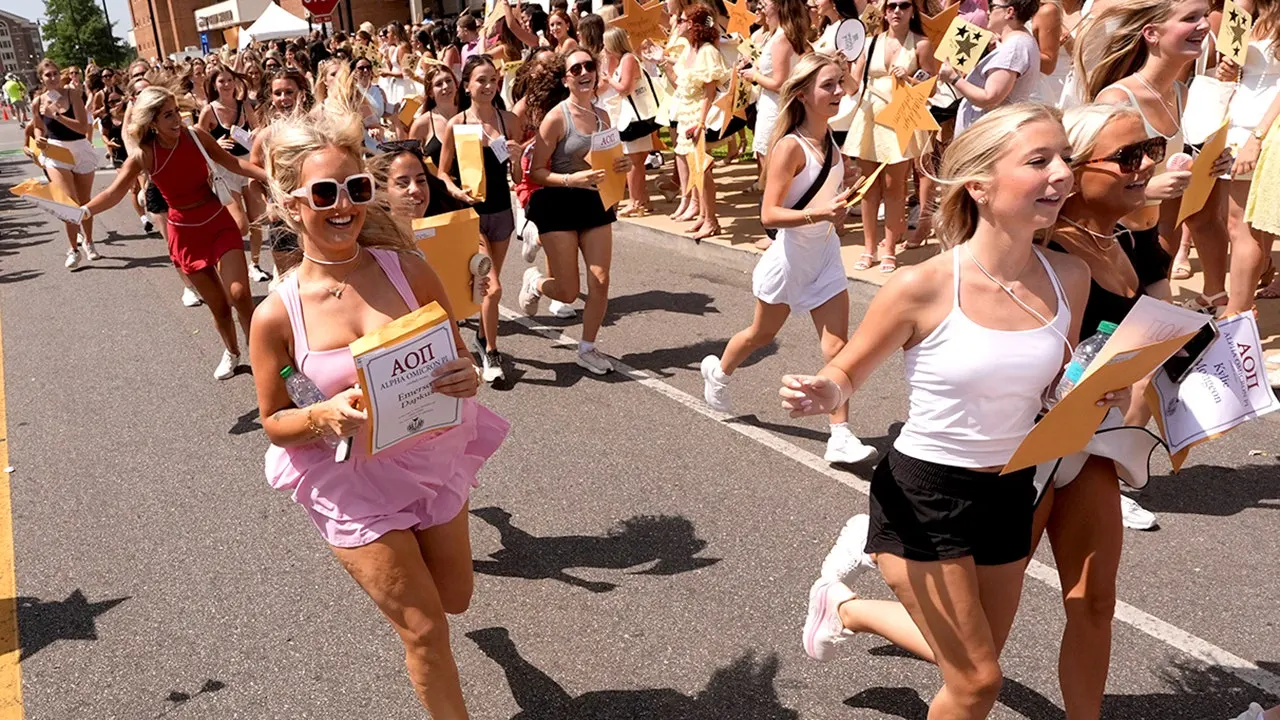
珍妮的“每日穿搭”视频,网络上通称“OOTD”,是成千上万潜在新成员(PNMs)记录她们参加大学女性联谊会招新流程的热门视频形式,这一年度TikTok现象被称为“RushTok(冲刺周Tok)”。 家长斥巨资聘请冲刺周教练助子女进入精英大学希腊社团 但珍妮不同于今年记录“Bama Rush”经历的其他RushTok女孩。她并不就读于阿拉巴马大学。她没有参加联谊会招新。她甚至没买过J. Crew的上衣或Nike的运动鞋。因为珍妮不是真人。
Janie’s "outfit of the day" video, known online as an "OOTD," is a popular video format for the thousands of potential new members (PNMs) who document their experience going through the recruitment process for college sororities in an annual TikTok phenomenon known as "RushTok." PARENTS DROP EYE POPPING FEES ON SORORITY RUSH COACHES TO GET KIDS INTO ELITE COLLEGE GREEK LIFE But Janie isn’t like the other RushTok girls who vlogged their Bama Rush experience this year. She doesn’t go to the University of Alabama. She didn’t rush a sorority. She didn’t even get her top from J. Crew or her sneakers from Nike. That's because Janie isn’t real.
珍妮账号上每个视频的每一个细节,从宿舍房间、穿搭,到珍妮本人,全都是由人工智能生成的。
Every detail of every video on Janie’s account, from her dorm room, to her outfits, to Janie herself, was generated by artificial intelligence.
风险投资公司Andreessen Horowitz的投资合伙人奥利维亚·摩尔创造了珍妮,作为一项实验,旨在了解消费者对AI生成内容的反应。摩尔仅花费100美元的额度,就制作了一周的视频,内容是这位虚假的RushTok网红参与“Bama Rush”,随后她观察受众如何争论珍妮是真人还是假人。
Olivia Moore, an investment partner at venture capital firm Andreessen Horowitz, created Janie as an experiment to understand how consumers react to AI-generated content. For only $100 in credits, Moore produced a week's worth of videos of her fake RushTok influencer participating in Bama Rush and observed as her audience argued whether Janie was real or not.
实验结果显示,部分观众能迅速识别出由人工智能生成的内容;即便知道“珍妮”并非真实存在,仍有不少人愿意继续观看她的视频。
The experiment showed how quickly some viewers could detect AI-generated content and how willing some were to continue watching even after they knew Janie wasn't real.
摩尔目前任职于安德森·霍洛维茨基金会的消费投资团队,负责投资那些开发消费级人工智能产品的企业。她表示自己一直对“人们如何创作、解读并理解人工智能生成的内容”深感兴趣。“目前图像、视频及音频生成模型的发展速度极快,其生成的内容也越来越接近真人水平。我认为未来六个月内我们很可能就会跨越‘恐怖谷’现象。”摩尔在接受福克斯新闻数字频道采访时说道。
“这意味着,人类如何识别由人工智能生成或辅助生成的内容,以及我们该如何与之互动,将变得愈发重要。未来这类内容会大量涌现,而且在多数情况下,我们很难通过各类渠道将其与真人创作的内容区分开来。”她继续说道。
Moore is on the consumer investing team at Andreessen Horowitz where she invests in companies building consumer AI products. She says she has been fascinated by "how people make and interpret and understand AI content." "The image, video, audio models are getting very human-like, very fast. I think we probably cross the uncanny valley in the next six months," Moore said in an interview with Fox News Digital. "And so it means that how we as humans are able to detect AI-generated or AI-assisted content and how we interact with it is just going to become even more important because we're going to have a flood of this content, and it's going to be, in many cases, indistinguishable across all of our channels," she continued. Moore said she created Janie as an experiment to see how consumers react to AI.
摩尔称,她创造“珍妮”这一虚拟形象,就是为了测试消费者对人工智能的反应。
"Philosophically, that's an interesting question for me. What do people feel about AI content?
“从哲学层面来讲,这对我而言是个很有趣的课题:人们对人工智能生成的内容有何感受?在不知道内容由AI生成时他们又是什么反应?当他们原本喜欢、钟爱、厌恶或感兴趣的内容竟是人工智能的产物时,他们的感受又会如何呢?”加利福尼亚州立法要求为人工智能生成的虚假内容添加数字水印为打造这个虚拟网红,摩尔主要借助了ChatGPT与MiniMax工具。
What do they feel when they don't know it's AI? What do they feel when something they liked, or loved, or hated or were interested in turned out to be AI?" CALIFORNIA LAW PUTS DIGITAL FINGERPRINTS ON AI FAKES Moore primarily used ChatGPT and MiniMax to breathe life into her fake influencer.
她从网上找来一段阿拉巴马大学宿舍的真实视频并上传至ChatGPT,随后向系统下达指令:让“珍妮”拥有一头蓬松的红发、一副眼镜,并展现出20世纪60年代的风格。ChatGPT随即生成了“珍妮”站在真实宿舍场景中的静态图片,这位“RushTok”网红就此诞生——至少从技术层面来说是这样。
She pulled a real video of a University of Alabama dorm room off of the internet and uploaded it to ChatGPT. Then, she prompted Janie to have frizzy red hair, a pair of glasses and style from the 1960s. ChatGPT produced a still image of Janie in the real dorm room photo, and the "RushTok" influencer was born — or generated, at least.
在制作每条TikTok视频时,摩尔都会将“珍妮”的静态图片输入到AI视频生成模型MiniMax H3中以实现动画效果。她还会利用ChatGPT生成相关提示词输入至MiniMax,以此设定“珍妮”的动作表现、说话方式以及台词内容。
For each TikTok, Moore animated Janie by feeding the still dorm room image into AI video model MiniMax H3. She used ChatGPT to produce prompts to feed into MiniMax, shaping how Janie would move, what she would sound like and the scripts she would follow.
摩尔过去五年一直关注这一年度热潮,最终选择RushTok作为向全世界介绍她创造的AI网红的平台。她表示,出于几个原因,这里堪称她实验的“绝佳试验场”:珍妮不会推销任何商品,也不会伤害任何人;RushTok本身流量巨大,对新创作者的准入门槛也较低。此外,还有许多其他大学迎新季相关账号也参与了这一潮流,观众们便能在真实人类发布类似内容的同时看到珍妮的身影。
Moore chose RushTok to introduce her AI influencer to the world after watching the annual phenomenon for the past five years. She said it was "the perfect testing ground" for her experiment for several reasons. Janie wouldn't be selling anything or hurting anyone, and RushTok naturally draws high traffic and has a low barrier to entry for new creators. With other PNMs participating in the trend, audiences would experience Janie alongside real humans posting similar content.
在阿拉巴马大学迎新季的第一天,摩尔发布了一段穿搭展示视频,正式向外界介绍了珍妮。评论区的反应则褒贬不一。
On the first day of Alabama Rush, Moore introduced Janie to the world with an OOTD video. Reactions to Janie were split in the comments.
“我觉得25岁以下的人基本都能立刻认出她是AI,”摩尔说道,“而年龄稍大些的群体——也就是阿拉巴马大学迎新季的主要受众——则大多被她蒙骗了,纷纷送上祝福与美好祝愿。”到了实验的第二天,大多数观众已经察觉到了珍妮的真实身份。据摩尔介绍,人们纷纷在Reddit上讨论珍妮,还在TikTok上制作相关解说视频,并在评论区纠正那些误以为珍妮是真人的网友。
"I would say anyone under maybe 25 immediately clocked her as AI," Moore said. "But anyone in the older demographic, which is much of the Bama Rush audience, was, I would say, fooled by her and just wishing her luck and sending her good thoughts in the process." By the second day of the experiment the audience was mostly onto her. Moore said people took to Reddit to discuss Janie, created commentary videos on TikTok and corrected anyone who thought Janie was real in her comment section.
“到了第二、第三天,评论区依然有不少人说着暖心的话。也有人会留言提醒他们:‘嘿,这是AI哦。’而那些人则会回应:‘我不在乎,她看起来太可爱了,真心希望她能成功。’”随着观众逐渐识破真相,摩尔不得不调整策略。她发现只要内容足够有趣,人们依然愿意观看AI生成的内容。于是她开始在视频中埋下暗示线索,随后便看到不少“数字侦探”在评论区得意地指出这些线索。
"By day two, day three, the comments were filled with still some people who were saying really nice things. And people would comment and tell them, 'Hey, this is AI.' And they'd be like, 'I don't care. She seems so sweet. Like I want her to succeed.'" As the audience caught on, Moore said she had to change her strategy. She realized that people were still willing to watch AI-generated content as long as it was entertaining enough.
据称,CNN、NBC、CBS等媒体都在采访这位走红的AI“女演员”蒂莉·诺伍德,这一举动引发了不少评论家的质疑。摩尔指出,人类识别AI的能力提升速度,其实已经超过了AI生成技术的进化速度。
So, she started dropping hints in the videos and watched as digital sleuths would proudly point out clues in her comment section. CNN, NBC, CBS INTERVIEWING VIRAL AI 'ACTRESS' TILLY NORWOOD RAISES EYEBROWS AMONG CRITICS Moore said that humans are getting better at detecting AI quicker than AI generation is improving.
“目前的情况有点像一张图表,上面有两条斜率不同的曲线。一条曲线反映的是人工智能达到真正类人水平的速度——过去一年里这一指标有了显著提升。另一条曲线则代表人类识别人工智能内容的能力提升速度,”摩尔说道。“至少目前来看,后一条曲线的斜率更高,上升势头更猛。普通人类依然能够分辨出哪些是AI生成的视频,哪些是由真人制作的视频。”虽然人类总体上能够识别AI内容,但摩尔指出,TikTok在大多数情况下未能及时检测出视频中的AI成分。
"We're kind of in a graph with two competing lines of different slopes. So one of them is like, how fast is AI approaching true human-like quality? And that has gotten a lot better over the past year. The other line is how fast are humans getting better at detecting AI?" Moore said. "It seems like, at least for now, that latter curve is higher slope. It's inflecting faster. The average human can still tell an AI video from a truly human video." While humans could generally detect the AI content, Moore claimed TikTok , for the most part, did not immediately detect AI in most of the videos.
在实验中,摩尔决定上传视频时并不标注其为AI生成。她共上传了20个AI生成的视频,结果TikTok最初仅标记出8个含有AI生成内容。截至本文发稿时,TikTok已在20个视频中的16个上显示了“AI生成内容”的警示标识。
For the experiment, Moore decided to not label her videos as AI when she uploaded them. Of the 20 AI-generated videos she uploaded, Moore said TikTok only initially flagged 8 as containing AI-generated media. As of the date of this publication, TikTok displays an AI-generated media warning on 16 of the 20 AI videos.
“各大平台很难大规模检测这类内容,尤其是随着AI模型与检测策略不断演变,人们总能找到让内容逃过检测的方法,”摩尔说道。
"The platforms themselves are going to have a hard time detecting this content at scale, especially when the models are changing and the strategies are changing, and people are always gonna find ways to make this undetectable," Moore said.
实验的最后,摩尔发布了一段自己出镜的视频,向观众介绍自己的身份以及创作“Janie”的初衷。令她惊讶的是,这条视频收获了大量正面评论。
Moore ended her experiment with a video of herself explaining to the audience who she was and why she decided to create Janie. She was shocked by the positive comments she received on the post.
“我认为目前大众对人工智能的态度仍偏负面。不过,如果人们觉得自己没有被欺骗,而是被允许了解相关技术、甚至能亲自尝试制作,同时还能从这些内容中获得娱乐体验,他们的态度就可能彻底转变,变得非常积极,”摩尔对福克斯新闻数字频道说道。
"I think consumer sentiment towards AI is still quite negative. But if people feel like they aren't being tricked, they're being let in on it, they are being told how to do this themselves, they're being entertained by the content that's created, that can completely flip and the feelings can be very, very positive," Moore told Fox News Digital.
摩尔预测,未来会有更多消费者开始使用AI工具来制作足以以假乱真的内容,不过这些内容仍需与真人创作的内容竞争,才能赢得观众的情感认同与兴趣。
Moore predicts that more consumers will start using AI tools to create human-passing content, but she says it will have to compete with human content to gain emotional investment and be as interesting and entertaining to viewers.
“我理解为何人们会对人工智能感到恐惧,因为到目前为止,当他们看到人工智能生成的内容时,那些内容往往试图欺骗他们,而非诚实地告诉他们如何获得同等价值,”摩尔说道。
"I understand why people are fearful of AI because, so far, if they see AI content, it's usually something that's kind of trying to trick them versus something that is honest with them and shows them how they could get the same value," said Moore.
“我们这些使用人工智能的人若能坦诚直率地说明自己的使用方式,以及人类自身在其中发挥的作用有多大,或许就能迎来这样一个世界:人工智能仅成为另一种工具,帮助人类去做那些更具‘人性’的事情。”阿拉巴马泛希腊协会则拒绝就摩尔的实验发表评论。
"The more that we are kind of honest and straightforward as people using AI around how we use it and how much of us as humans still goes into that, it'll hopefully lead to a world where AI is just another tool that allows humans to do things that are even more human." The Alabama Panhellenic Association declined to comment on Moore's experiment.