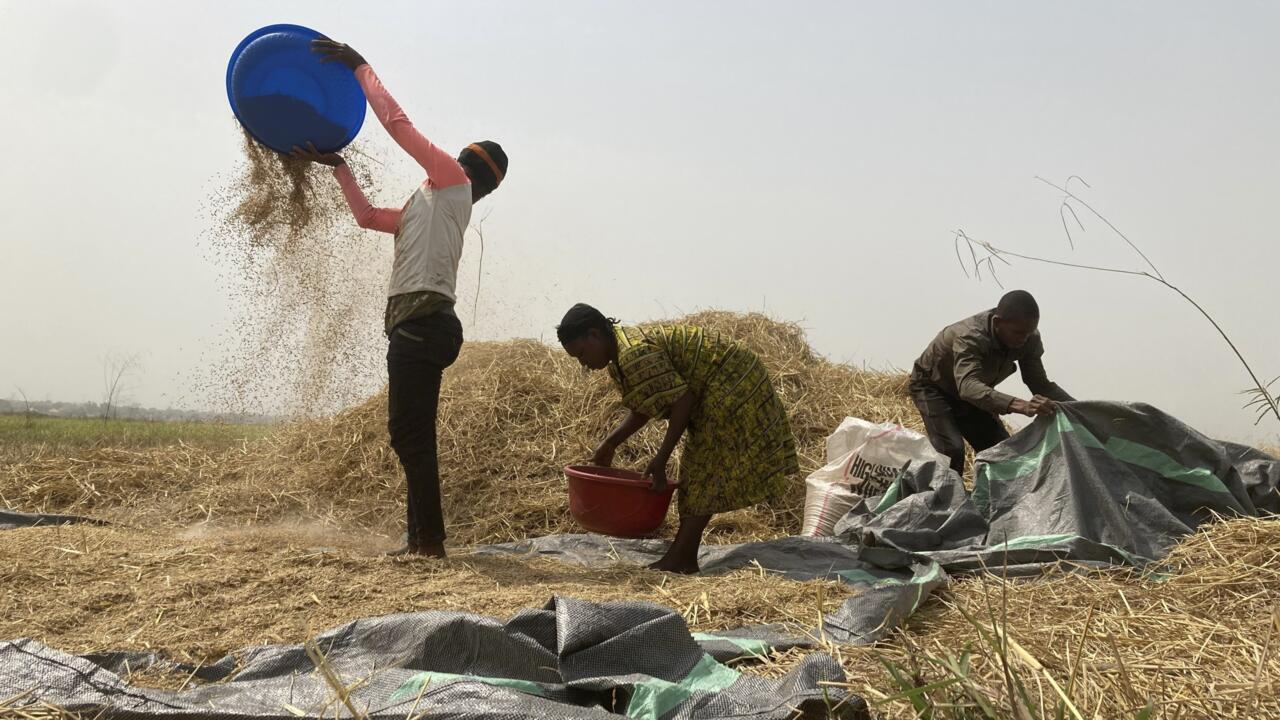
数千年前,西非的农民将一种野生稻类植物驯化成了可供种植的农作物。然而这种稻子非常难以收割;随着时间的推移,全球范围内广泛种植的亚洲稻逐渐取代了它。不过,非洲稻能够在一些极其恶劣的生长环境中存活下来——它能够适应干旱、水深、贫瘠的土壤以及各种害虫和极端的高温。如今,中国的研究人员可能找到了一种方法,使非洲稻那些独特的优良特性更容易被育种者所利用。
Thousands of years ago, farmers in West Africa took a wild ancestor of rice and turned it into a crop of their own. But it was difficult to harvest and, over time, globally dominant Asian rice pushed it aside. Yet African rice survived in some of the region's harshest growing conditions, coping with drought, deep water, poor soil, pests and punishing heat. Now, researchers in China may have found a way to make its hard-won traits easier for breeders to harness. Put the two plants side by side and the untrained eye would struggle to tell them apart.
如果将这两种稻子放在一起,外行人很难区分它们:“它们看起来非常相似,但实际上它们的进化路径是不同的,”纽约大学的进化生物学家迈克尔·普鲁加纳纳(Michael Purugganan)告诉RFI电视台。他多年来一直致力于研究水稻的驯化过程。普鲁加纳纳指出,亚洲稻大约在9000年前在中国的长江流域被驯化,而西非农民驯化非洲稻的时间则要晚得多。
“They're going to look very similar to each other, but they evolved differently,” Michael Purugganan, a New York University evolutionary biologist who has spent years studying the domestication of rice, told RFI. Asian rice, , was domesticated along China's Yangtze River around 9,000 years ago – thousands of years before West African farmers domesticated , Purugganan said. Yet far less is known about how that second domestication happened. “We don't know as much as we do about Asian rice, largely because the archaeology in that part of the world is not as well developed as in Asia,” Purugganan explained.
然而,关于非洲稻的驯化过程,我们了解得仍然很少:“我们对非洲稻的了解远不如对亚洲稻的了解深入,主要是因为该地区的考古研究工作不如亚洲地区完善,”普鲁加纳纳解释道。近年来,针对这种作物起源的基因研究才刚刚开始加速发展。非洲稻主要仍然种植在西非;虽然有一些非洲稻随着被奴役的非洲人跨越大西洋,后来在美洲也得到了种植。
Genetic research into the crop's history has also gathered pace only in recent years. African rice largely remained in West Africa, although some crossed the Atlantic with enslaved Africans and was grown for a time in the Americas. Asian rice followed a very different path. It spread around the world and eventually came to dominate even in Africa, where it increasingly replaced the indigenous crop farmers had developed. There were practical reasons for the shift.
亚洲稻的传播路径则完全不同——它最终传播到了世界各地,并在非洲取代了当地农民原本种植的本土稻种。这种替代现象背后有着实际的原因:非洲稻的收割过程非常麻烦:成熟的稻谷会在收获前脱落,而且其茎秆在生长季末会变得脆弱,导致稻田中的植株倒伏。
African rice can be frustrating to harvest, shedding ripe grain before it can be collected and collapsing in the field as its stems weaken late in the growing season. But the plant held on in some of West Africa's most difficult growing environments, including dry uplands and areas of deep water, said Koichi Futakuchi, a veteran rice scientist at the Africa Rice Centre, a pan-African research body based in Cote d’Ivoire.
不过,位于科特迪瓦的泛非研究机构——非洲水稻中心的资深水稻专家二口幸一指出,这种水稻依然能在西非一些极为恶劣的种植环境中存活,包括干旱的高地以及水深较深的地区。
Scientists have recognised its potential for decades. One African rice line, CG14, “possesses resistance to multiple stresses in Africa such as iron toxicity, drought, deep water, striga [a parasitic weed] and nematodes [microscopic worms that attack roots]”, Futakuchi said.
数十年来,科学家们一直认可这种水稻的潜力。二口幸一介绍道,其中一种名为CG14的非洲水稻品系“具备抵御非洲地区多种逆境的能力,比如铁中毒、干旱、深水环境、独脚金内酯杂草以及根结线虫等危害”。真正的难点在于如何将这些优良特性更多地引入亚洲水稻中。
The challenge has been getting more of those qualities into Asian rice. Chocolate and rice among key EU imports facing climate threats Early riser One particularly useful trait comes down to something surprisingly simple – what time of day the plant flowers. Rice is particularly vulnerable to extreme heat when it flowers, and some types of African rice flower early in the morning, before temperatures climb later in the day. Futakuchi and his colleagues screened 2,093 African and Asian rice samples in Benin and Nigeria.
清晨开花这一特性其实并不算什么新发现。二口幸一称,早在20世纪70年代,人们就在少数非洲水稻品系中发现了这一特性。真正较新的动向则是:研究人员开始不再局限于亚洲水稻,转而从其他水稻品种中寻找可用于改良亚洲水稻的基因。
A total of 64 flowered early across different years, seasons and locations. Of those, 15 samples showed more than 80 percent of their flowering before 9am, making them candidates for breeding rice that can escape the worst of heat stress. Early-morning flowering itself is not a new discovery. The trait was identified in a few African rice lines in the 1970s, Futakuchi said. What is relatively new is the broader push to look beyond Asian rice for genes that could improve it.
“直到最近10到15年,人们才开始考虑将野生稻的基因引入亚洲水稻;如今,又有人试图把非洲水稻等其他驯化品种的基因也引入亚洲水稻。”普鲁加南说道。正是这种可能性促使他开展了自己的研究。
“It's only been in the last 10 or 15 years that people have been thinking about getting genes from wild rice species into Asian rice, and now from other domesticated species, such as African rice, into Asian rice,” Purugganan said. This possibility drove his own research.
“我对非洲稻米产生兴趣,是因为我认为非洲稻米中可能存在一些基因,有助于改良亚洲稻米,尤其是提升其在恶劣环境下的适应能力。”不过,将这一设想付诸实践却困难重重。育种专家既要提取非洲稻米的优良特性,又要避免保留那些最初导致农民对其兴趣缺缺的缺点。
“My interest in African rice stemmed from the idea that in African rice, we may have genes that can help improve Asian rice, especially in adapting to much more stressful environments.”Putting that idea into practice is complicated. Breeders need to capture the useful traits of African rice without carrying across the characteristics that made it less attractive to farmers in the first place.
在马达加斯加,一碗仅需9美分的粥正在有效缓解儿童营养不良问题。至于“非洲新稻米”项目,科学家们已然成功实现了非洲稻米与亚洲稻米的杂交。
Porridge is staving off child malnutrition in Madagascar - for nine cents a bowl New Rice for Africa Scientists have already succeeded in bringing the two species together.
上世纪90年代,由塞拉利昂植物育种专家蒙蒂·琼斯领导的西非稻米发展协会团队,将非洲稻米与亚洲稻米进行杂交,最终培育出了被称为“Nerica”的非洲新稻米品种。
In the 1990s, a team led by Sierra Leonean plant breeder Monty Jones at the West Africa Rice Development Association, or WARDA, crossed African and Asian rice to create what became Nerica – New Rice for Africa.
琼斯凭借此项成果荣获2004年世界粮食奖。据非洲稻米研究所介绍,此后又陆续培育出82个Nerica品种:其中18个适合旱地种植,60个适应雨养低地环境,还有4个则适合灌溉地区种植。
Jones shared the 2004 World Food Prize for the work. AfricaRice said 82 Nerica varieties have since been developed: 18 for upland cultivation, 60 for rainfed lowlands and four for irrigated environments.
不过,要实现非洲稻米与亚洲稻米的杂交并非易事。富塔库奇解释称,具体结果取决于所选的亲本品种,有时只能获得少量种子,甚至完全得不到种子。
But simply crossing an African rice plant with an Asian one can be difficult. Depending on which plants are paired, the result may be only a few seeds – or none at all – Futakuchi explained.
培育Nerica还需借助一种名为“胚拯救”的技术:将杂交产生的胚取出后置于实验室中培育,才能确保其存活。
Creating Nerica also required a technique known as embryo rescue, in which hybrid embryos are removed and grown in the laboratory so they can survive.
“虽然亚洲稻米与非洲稻米能够杂交,但这种杂交过程并不简单,”普鲁加南说道,“杂交后代仍会出现一定程度的不育现象。”富塔库奇补充道,所有旱地种植的Nerica品种均以CG14这一非洲稻米品系作为亲本,而所有低地种植品种则使用TOG5681作为亲本。
“Even though you can cross Asian and African rice, it's not an easy cross to make,” Purugganan said. “You still get some infertility.”All the upland Nerica varieties use the same African rice line, CG14, as a parent, while all the lowland varieties use another, TOG5681, Futakuchi said.
随后,这些杂交后代又先后两次与亚洲稻米进行回交。当育种者希望引入某一种特定的非洲稻米特性时,回交法确实效果显著;不过经过多次回交后,最终培育出的植株会越来越接近亚洲稻米的特征。
The offspring were then bred back twice with Asian rice. Backcrossing works well when breeders want to transfer one useful African trait, but the resulting plants become increasingly like the Asian species.
“想要让稻米具备如此强的非洲环境适应能力,仅靠回交法是无法实现的,”富塔库奇说道。
“Such high adaptability to African environments cannot be brought to with the backcrossing approach,” Futakuchi said.
从加沙到乍得,种子们在北极的“末日避难所”中得以保存。中国的一项最新研究揭示了不同品种水稻杂交失败的一个原因。
From Gaza to Chad, seeds find refuge in Arctic 'doomsday' vault Spear, shield and armour New research from China has uncovered one reason those crosses can fail.
南京农业大学的一个研究团队近日在期刊上发表报告称,他们发现了非洲稻与亚洲稻杂交时难以产生可育后代的一个原因。
A team at Nanjing Agricultural University recently reported in the journal that it had discovered one reason African and Asian rice can struggle to produce fertile offspring when they are crossed.
虽然其中的生物学机制颇为复杂,但基本原理并不难理解。这一机制由三部分组成:一种毒素以及两种解毒剂,它们的作用类似于长矛、盾牌和盔甲。毒素充当“长矛”,专门攻击那些缺乏相应保护机制的生殖细胞;而两种解毒剂则分别起到“盾牌”和“盔甲”的作用,抵御毒素的攻击。
While the biology may be complicated, the basic idea isn’t. The system has three parts – a toxin and two antidotes – that work rather like a spear, a shield and a suit of armour. The toxin acts as the spear, attacking reproductive cells that lack the right protection, while the two antidotes act as the shield and armour, defending against the attack.
这样一来,植物体内便发生了一场基因层面的较量:缺乏保护机制的生殖细胞会被摧毁,而受到保护的细胞则得以存活,并更有可能将自身的基因传递给下一代。
The result is a genetic contest inside the plant. Reproductive cells without the right genetic protection can be destroyed, while protected cells survive and are more likely to pass their genes to the next generation.
不过,发现这一机制并不意味着科学家已经克服了两个水稻品种间的所有障碍。导致杂交不育的其他因素依然存在,目前这项研究也尚未培育出可供农民种植的新水稻品种。
Identifying that system does not mean scientists have overcome every barrier between the two species. Other causes of sterility remain, and the research has not yet produced a new variety of rice ready for farmers to plant.
对育种工作者而言,这一发现有望为他们打开利用非洲稻的大门。Futakuchi认为,这样一来他们就能更广泛地利用非洲稻的各种优良特性,而无需反复将杂交后代再与亚洲稻进行杂交。
For breeders, this could open up much more of African rice. Futakuchi believes they could “exploit a wider range” of the crop and use more of its useful traits without repeatedly crossing the offspring back with Asian rice.
塞内加尔最受欢迎的渔获正逐渐向北迁移,导致众多渔民被困。可供研究的资源极为丰富:非洲稻研究所保存着4000多份基因各异的非洲稻样本,这是全球规模最大的非洲稻基因库。
Fishermen left stranded as Senegal's most sought-after catch moves north The potential pool is vast. AfricaRice maintains more than 4,000 genetically distinct samples of African rice – the world's largest collection.
目前,科学家们正对这些样本进行筛选,以寻找有助于水稻适应恶劣生长环境的特性,以及蛋白质、微量元素等营养价值较高的品种。Futakuchi指出,这一新发现有望加速相关研究工作。
Scientists are already screening them for traits that could help rice withstand difficult growing conditions, as well as for nutritional qualities including protein and micronutrients. Futakuchi said the new discovery could accelerate that work.
这在非洲可能尤为宝贵,因为那里的大部分水稻作物依赖降雨,且可能同时面临多重压力。更好地利用非洲稻也有助于该大陆迈向水稻自给自足。当被问及谁将受益时,二口表示:“当然是非洲的农民。”
That could be particularly valuable in Africa, where much of the rice crop depends on rainfall and can face several pressures at once. Better use of African rice could also help the continent move towards rice self-sufficiency. Asked who stood to benefit, Futakuchi said: “Of course, farmers in Africa.”