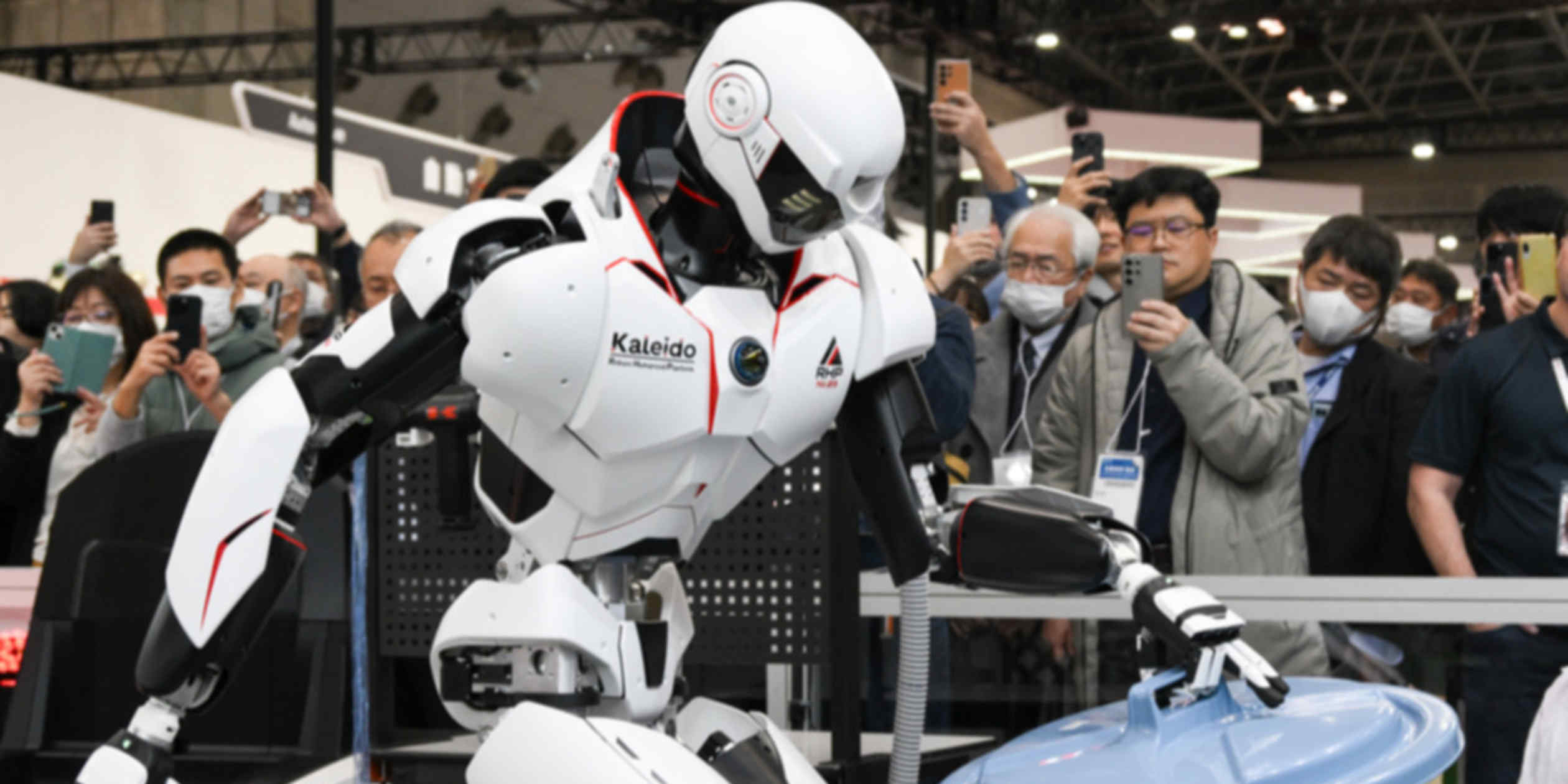
东京讯——川崎重工业计划最早于2030年推出一款由人工智能驱动的完全自主型人形机器人。这一计划得以实现,得益于日本正在研发的物理人工智能平台。
TOKYO -- Kawasaki Heavy Industries plans to release a fully autonomous humanoid robot powered by artificial intelligence as soon as 2030, which will be made possible with a physical AI platform being developed in Japan.
自2015年起开始研发的“Kaleido”机器人初期将承担一些简单任务,比如在工厂和仓库内巡逻以及搬运零部件。随后该机器人将逐步升级,最终能够胜任产品组装等其他工作。
The Kaleido robot, which has been under development since 2015, will initially handle simple tasks, such as patrolling factories and warehouses and transporting parts. The machine will gradually be updated, allowing it to take on product assembly and other tasks.
目前,川崎重工业已开始向汽车及半导体行业的现有客户推介Kaleido机器人。
Kawasaki Heavy has already begun pitching Kaleido to existing customers in the automotive and semiconductor industries.
该机器人将采用总部位于东京的Noetra公司研发的物理人工智能技术,而川崎重工业正是这家公司的投资方,这也将是Noetra的物理人工智能技术的首次实际应用。
The robot will use physical AI being developed by Tokyo-based Noetra which counts Kawasaki Heavy as an investor, marking the first planned adoption of Noetra's physical AI. Noetra is poised to release the physical AI platform around fiscal 2030.
Noetra预计将在2030财年左右发布其物理人工智能平台。
Initially, Kaleido will be operated through a combination of remote human control and AI.
初期阶段,Kaleido将采用远程人工操控与人工智能相结合的方式运行。随着Noetra平台的不断完善,其自主运行范围也将逐步扩大,最终目标是实现完全自主运作。
The scope of autonomous operations will be expanded in stages as the Noetra platform progresses. The goal is to have Kaleido eventually achieve fully autonomous operations.
今年5月,川崎重工业宣布与英伟达在物理人工智能领域展开合作。通过将Noetra的技术成果与此次合作所得资源相结合,川崎重工业希望加速开发能够精准完成复杂动作的完全自主型系统。
In May, Kawasaki Heavy announced a collaboration with Nvidia in physical AI. By combining Noetra's technology with the fruits of its partnership with Nvidia, Kawasaki Heavy hopes to accelerate development of fully autonomous systems capable of performing complex movements with high precision.
除Kaleido外,川崎重工业还将推出轮式移动机器人及四足机器人。公司计划到2040年让数万台此类机器人投入实际使用,其中包括目前已在日本投入使用的医院运输机器人。
In addition to Kaleido, Kawasaki Heavy will also roll out models that move on wheels as well as quadruped robots. The company aims to have tens of thousands of units in operation by 2040, including transport robots for hospitals that are already in operation Japanese competitor Yaskawa Electric, a leading industrial robot manufacturer, entered the humanoid robot sector last year by acquiring a startup connected to Tokyo's Waseda University.
日本另一家领先的工业机器人制造商安川电机去年收购了一家与东京早稻田大学相关的初创企业,从而进军人形机器人领域。目前安川电机正在研发适用于人形机器人的轻量化、高输出功率电机。
Yaskawa is developing lightweight, high-output motors suited for humanoid robots.
据日本政府资助的新能源产业技术综合开发机构(NEDO)统计,日本占据了全球工业机器人市场66%的份额。
Japan accounts for 66% of the global market share for industrial robots, according to the Japanese government-backed New Energy and Industrial Technology Development Organization (NEDO).
但在包括人形机器人在内的服务机器人领域,日本的市场份额仅为12%,处于落后状态。
However, for service robots, which include humanoid machines, Japan's share wallows at 12%.
日本计划借助Noetra的物理人工智能技术以及本国强大的制造业实力,努力追赶在人机机器人领域处于领先地位的美国与中国。
Japan plans to use Noetra's physical AI and the country's strong manufacturing expertise to catch up with the U.S. and China, which hold the lead in humanoid robots.