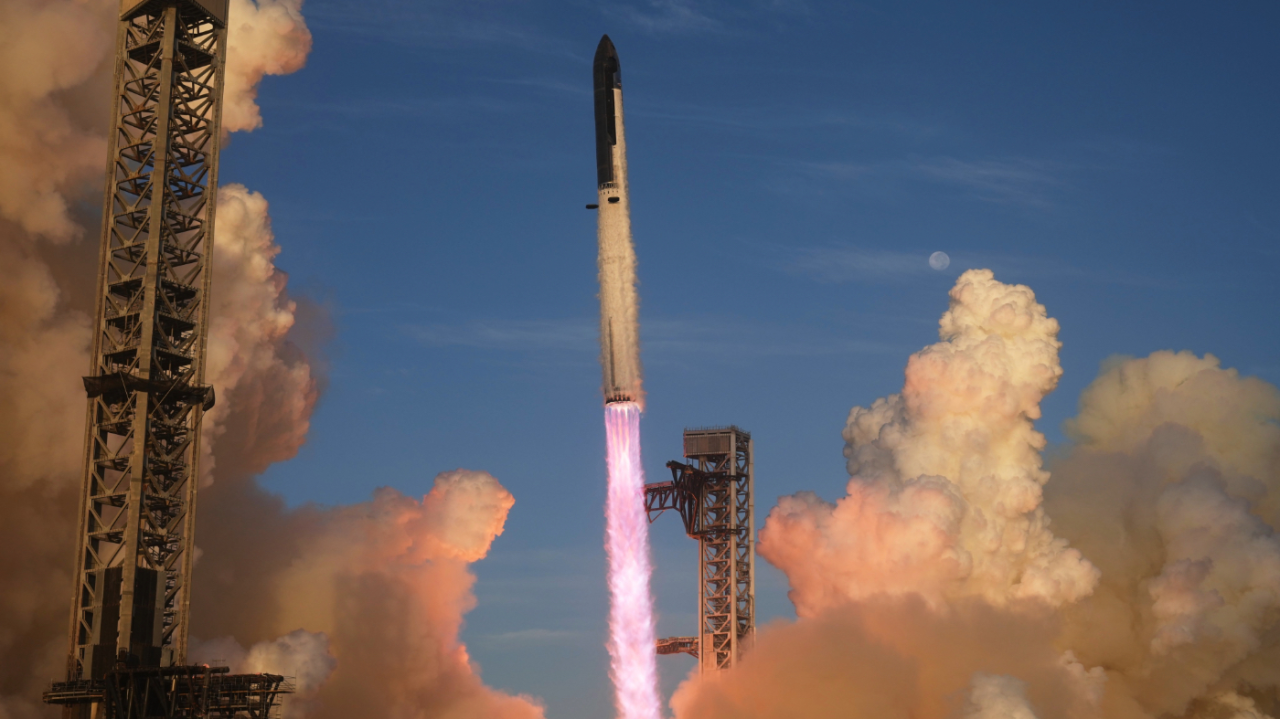
最近,SpaceX星舰的第14次试飞顺利完成,实现了多项具有里程碑意义的成果。这些成果不仅对阿耳忒弥斯计划至关重要,也对这家公司的长远发展意义非凡。此次试飞中,星舰首次成功进入近地轨道。这一成就对SpaceX打造月球与火星运输系统的目标而言意义重大——正如已故著名科幻作家罗伯特·海因莱因所言:“一旦进入地球轨道,你就相当于完成了通往太阳系任何地方的半程旅程。”
Test 14 of the SpaceX Starship concluded recently with several milestones achieved that are important not only for the Artemis program but for the long-term fortunes of the company. For the first time, the Starship achieved low Earth orbit. The feat was important for SpaceX’s goals of establishing a transportation system for the moon and Mars since, as the late, great science fiction writer Robert Heinlein said, "Once you get to Earth orbit, you’re halfway to anywhere in the solar system."
此外,星舰还成功部署了26颗可正常使用的星链卫星,这一成绩也证明该运载火箭不仅能作为实验性火箭使用,还能成为创造经济效益的重要资产。由于超重型助推器与星舰均未被回收,此次试飞的具体成本尚不得而知;不过据估算,单次商业版星舰发射的成本约为9000万美元。PJ Media则预测,此次发射的26颗第三代星链卫星在5年使用寿命内有望为SpaceX带来26亿至39亿美元的营收。
The Starship also deployed 26 operational Starlink satellites, an accomplishment that established the launch vehicle as a money-making asset and not just as an experimental rocket. It is unknown what the test cost, since the Super Heavy and the Starship were not recovered. But one estimate for a commercial Starship launch pegged the figure at $90 million. PJ Media suggested that the 26 V3 Starlink satellites deployed will generate $2.6 billion to $3.9 billion in revenue over a five-year lifespan.
不过试飞过程中也出现了一些小问题,这说明星舰要成为完全具备实用能力的航天器,SpaceX仍需付出诸多努力。首先,超重型助推器的一台发动机出现了故障,虽然最终助推器仍成功将星舰送入轨道并落入墨西哥湾,但着陆时的冲击力超出了工程师们的预期。随后,星舰上的两台发动机也相继失灵,导致地面控制团队一度决定中止入轨程序。
Some glitches occurred along the way, however, which shows that SpaceX has some work to do before Starship becomes a fully functional operational spacecraft. First, one of the Super Heavy’s engines failed. It was still able to deploy the Starship successfully and then splash down in the Gulf, but with a harder landing than SpaceX engineers would have liked. Then, two of the Starship engines failed, causing the SpaceX ground crew to initially decide to abort the orbital insertion.
不过随后控制人员决定让其余发动机持续工作更长时间,最终成功将这艘巨型航天器送入了轨道。尽管如此,SpaceX工程师们还是决定将原定10小时的飞行任务缩短至约3小时,并提前让星舰坠海。可以说,这次试飞只能算是一次“不圆满的成功”。在星舰真正成为能助力人类探索月球、火星乃至更遥远星空的实用型航天器之前,SpaceX还有大量工作要做。
However, ground controllers subsequently decided to burn the remaining engines longer and thus send the enormous spacecraft into its first orbital flight. However, the SpaceX engineers decided to cut the mission short from 10 hours to about three and splashdown the Starship early. Call it another incomplete success. SpaceX still has a lot to do before Starship becomes the operational spacecraft that will open up the moon, Mars and beyond to human exploration.
首要任务是SpaceX的工程师们查明“超重型火箭”及其搭载的“星舰”发动机出现故障的原因,并找到解决方案以确保它们每次都能稳定运行。“星舰”必须证明自己能够维持在轨道上运行,且时间不限于短短几小时,至少要能持续数天。它还必须证明自己在轨道上具备机动能力。只有具备这两项能力,才能执行旨在测试“星舰”与“猎户座”飞船对接情况的“阿耳忒弥斯3号”任务。
The first thing that needs to happen is for SpaceX engineers to discover why the engines on the Super Heavy and the Starship itself failed and to develop a solution so that all of them run reliably every time. The Starship has to prove that it can maintain an orbit, not just for a few hours, but for at least several days. It has to prove that it can maneuver while in orbit. Both capabilities are necessary before the Artemis III mission that will test rendezvous and docking between the Starship and the Orion spacecraft.
该任务还将安排“猎户座”飞船与蓝色起源公司的“蓝色月亮”着陆器进行对接。此外,SpaceX还需实现从让“超重型火箭”与“星舰”落入大海到利用“机械夹爪”将其重新捕获并送回发射台的转变,从而实现可重复使用。为验证“星舰”执行登月及火星任务的能力,SpaceX必须证明它能在近地轨道上完成燃料加注。这一加注过程需要发射多艘作为燃料运输船的“星舰”,并使其与原本计划执行深空任务的“星舰”实现对接。
The mission will also feature a rendezvous and docking between the Orion and the Blue Origin Blue Moon. SpaceX has to transition from splashing down the Super Heavy and the Starship in the ocean to catching them both with the “chopsticks” back at the launch pad to facilitate reusability, To prove the Starship’s capability for moon and Mars missions, SpaceX must demonstrate that it can be refueled in low Earth orbit. The refueling effort will involve the launch of multiple Starships configured as tankers and their rendezvous and docking with the original vehicle bound for deep space.
最后,在1972年“阿波罗17号”任务后首次载人登月计划——“阿耳忒弥斯4号”实施前,“星舰”必须证明自己既能在月球表面着陆,同样也能从月面起飞。为达成上述所有目标,SpaceX必须提高“星舰”的发射频率。第14次试飞是在第13次试飞约两个月后进行的。若要如期完成“阿耳忒弥斯3号”与“阿耳忒弥斯4号”任务,就必须将“星舰”的发射间隔缩短至数周。
Finally, before Artemis IV, the first crewed moon landing since Apollo 17 in 1972, can happen, Starship must show that it can land on the moon and, just as importantly, take off from the lunar surface. To accomplish all of these things, SpaceX must increase the launch cadence for Starship. Test 14 took place about two months after the 13th test. The time between Starship launches must be compressed to at least weeks if the schedules for Artemis III and Artemis IV are to be met.
尽管当今世界危机重重:海外战火纷飞且战事传闻不断,国内政治纷争激烈,但在德克萨斯州最南端的星舰基地博卡奇卡,却正发生着一件令人惊叹的事情。
Still, in the midst of all the troubles besetting the world, with wars and rumors of additional wars abroad and political rancor at home, something remarkable is taking place at Starbase’s Boca Chica site, at the very southern tip of Texas.
阿波罗17号离开月球时,宇航员吉恩·塞尔南说道:“当我们离开金牛座-利特罗谷的月球表面时,我们正如来时一般离去;若上帝保佑,我们也会带着全人类的和平与希望再度归来。”可惜塞尔南未能亲眼看到“阿耳忒弥斯4号”实现他的誓言。谁能想到,那个肩负着人类重返月球重任的关键人物,竟是一位书呆子气十足且性格古怪的南非移民——在人类最后一次踏上月球时,他甚至还不到两岁。
When Apollo 17 departed from the moon, astronaut Gene Cernan said, "As we leave the Moon at Taurus-Littrow, we leave as we came and, God willing, as we shall return: with peace and hope for all mankind." Cernan did not live to see Artemis IV fulfill his vow. Who would have thought that the crucial man for the return to the moon would be a nerdy, eccentric immigrant from South Africa who was not even two years old when human beings last walked on the moon?
历史正是由这些看似毫无可能的人物与事件所铸就的。马克·R·惠廷顿长期撰写有关太空政策的文章,他出版的太空探索研究著作包括《为何重返月球如此艰难?》《月球、火星及其他》以及最近的《美国为何要重返月球?》。他还在“Curmudgeons Corner”博客上分享见解。
Thus, history is made by unlikely people and events. Mark R. Whittington, who writes frequently about space policy, has published a political study of space exploration entitled “Why is It So Hard to Go Back to the Moon?” as well as “The Moon, Mars and Beyond” and, most recently, “Why is America Going Back to the Moon?”He blogs at Curmudgeons Corner.