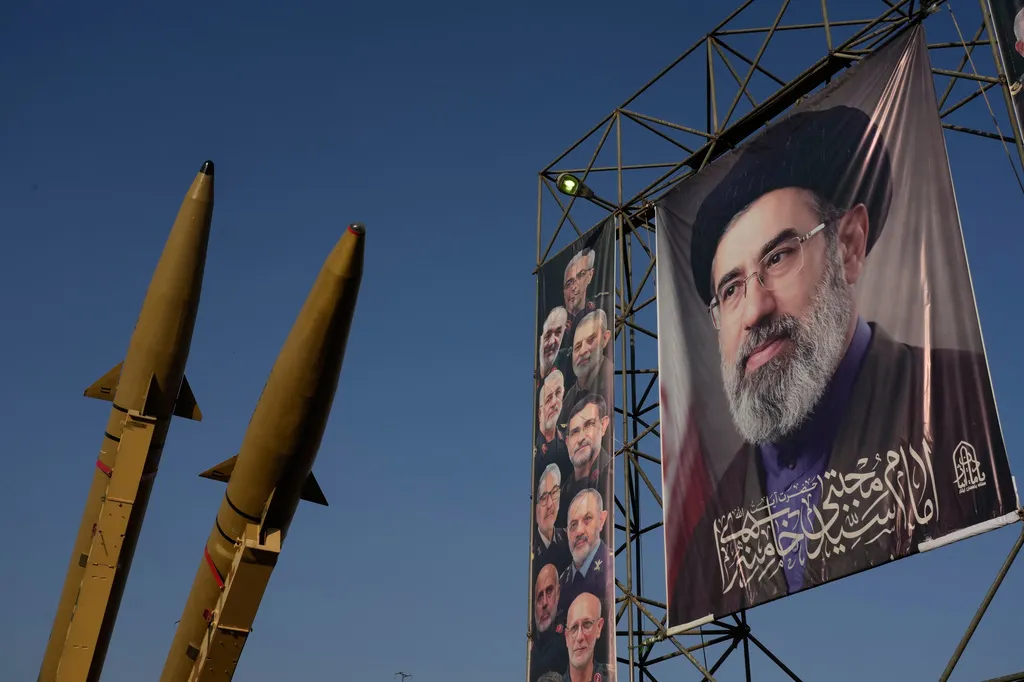
阿亚图拉·阿里·哈梅内伊和阿里·拉里贾尼遇害六个月后,伊斯兰共和国既未重建曾经围绕最高领袖的中央集权体系,也未陷入混乱。它已进入一个更加不透明的第二阶段统治:强制性机构仍在运作,但权力更加内敛、更多由安全部门传递,且更难转化为对各个战场的可靠控制。
Six months after the killings of Ayatollah Ali Khamenei and Ali Larijani, the Islamic Republic has neither rebuilt the centralized hierarchy once concentrated around the supreme leader nor fallen into chaos. It has entered a more opaque second phase of rule: coercive institutions still function, but authority is more insulated, more mediated by security bodies, and harder to translate into reliable control across every theater.
莫杰塔巴·哈梅内伊担任最高领袖的正式职务,重大任命仍以其名义发布。但公开证据显示,他并未行使其父那种可见的、个性化的权威。结果是一个更以安全为中心的伊朗,外界无法再安全地推断中央对各条战线行动的时机、升级和解读控制得有多紧。
Mojtaba Khamenei holds the formal office of supreme leader, and major appointments continue to be issued in his name. But the public evidence does not show him exercising the visible, personalized authority associated with his father. The result is a more security‑centered Iran, one in which outsiders can no longer safely infer how tightly the center controls the timing, escalation and interpretation of actions across every front.
自就职以来,莫杰塔巴未曾有经独立确认的公开露面,也未发布过经认证的任命后讲话视频或音频。8月10日,总统马苏德·佩泽希齐扬称曾与莫杰塔巴会晤约七小时,但该会晤未有独立记录为证。
Mojtaba has not made an independently confirmed public appearance since taking office, and no authenticated video or audio of him speaking after his appointment has been released. On Aug. 10, President Masoud Pezeshkian said he had spent about seven hours with Mojtaba in a meeting that has not been independently documented.
正式权力继续通过机构行使:一份以莫杰塔巴名义发布的法令指定穆赫辛·礼萨伊为最高领袖在最高国家安全委员会的代表,随后佩泽希齐扬任命礼萨伊为秘书。同一天,侯赛因·塔伊布——一名被分析人士描述为与莫杰塔巴关系密切的前伊斯兰革命卫队情报局长——也以最高领袖名义发布的法令被任命为动员军指挥官。
Formal authority has continued to be exercised through institutions: A decree issued in Mojtaba’s name designated Mohsen Rezaei as the supreme leader’s representative to the Supreme National Security Council, after which Pezeshkian appointed Rezaei as secretary. On the same day, Hossein Taeb — a former Islamic Revolutionary Guard Corps intelligence chief described by analysts as close to Mojtaba — was appointed Basij commander by a decree issued in the supreme leader’s name.
领导层被斩首、指挥结构受损、经济封锁和地区压力并未导致体制崩溃。它们造就了一个幸存的体系,其中安全部门和伊斯兰革命卫队如今是最显眼、最核心的战时机构。
Leadership decapitation, a damaged command structure, economic siege, and regional pressure did not produce collapse. They produced a surviving system in which the security services and the Islamic Revolutionary Guard Corps are now the most visible and central wartime institutions.
伊斯兰革命卫队并未陷入混乱消亡。它变得更加关乎国家生存,但未必形成了更透明或更顺畅的指挥体系。高层指挥官损失、分散的代理人战场,加上战时决策的不透明性,使外界看到的证据表明:决策者拥有更大自由裁量权,而外界对谁授权何事的可见度更低。在霍尔木兹、沙特阿拉伯、伊拉克、叙利亚、黎巴嫩和也门等地的不一致行为,并不一定证明存在自主的区域指挥。
The Islamic Revolutionary Guard Corps did not disappear into chaos. It became more central to the state’s survival, but not necessarily a more transparent or frictionless command system. Senior command losses and scattered proxy theaters, together with the opacity of wartime decision‑making, have left outsiders with evidence of more discretion and less visibility into who authorizes what. Uneven behavior across Hormuz, Saudi Arabia, Iraq, Syria, Lebanon, and Yemen does not necessarily prove autonomous regional commands.
这可能反映了不同的局部制约、特定代理人的能力、可否认性要求、选择性或延迟指导、战时授权,以及外界对指挥过程可见度的降低。结果是形成了一套由伊朗大致共识指导塑造的“授权胁迫”体系:德黑兰的战略意图可能依然宽泛,但具体授权、时机和局部行动的力度校准更难推断。公开证据无法确立代理人叛变。
It may reflect distinct local constraints, proxy‑specific capabilities, deniability requirements, selective or delayed guidance, wartime delegation, and reduced outside visibility into the command process. The result is a system of delegated coercion shaped by broadly understood Iranian guidance: Tehran’s strategic intent may remain broad, but the specific authorization, timing and calibration of local action are harder to infer. The public evidence does not establish proxy rebellion.
更有依据的当前担忧是“授权升级”——合作伙伴追求重叠目标,理解的指导原则既能保持可否认性,又使克制和降级更难核实。伊朗“斩首”后的体制现指向三条合理轨迹:安全巩固。穆杰塔巴保留正式权威,一小群狂热领导层恢复连贯指挥。指标将包括跨战场信号一致、任命产生持久且可见的指挥链、以及能够确保遵从的谈判渠道。
The more supportable immediate concern is delegated escalation — partners pursuing overlapping objectives understanding guidance that can preserve deniability while making restraint and de‑escalation harder to verify. Iran’s post‑decapitation system now points toward three plausible trajectories: Security consolidation. Mojtaba retains formal authority while a small and fanatical leadership restores coherent command. Indicators would include consistent cross‑theater signaling, appointments that produce a durable and visible chain of command, and a negotiating channel capable of delivering compliance.
隔离安全均衡——当前基线。穆杰塔巴隐身幕后;关键机构调停决策;胁迫被授权;升级不均。这类似于当前模式:秘密、选择性升级和安全任命,恢复了战时重心,却未恢复阿里·哈梅内伊的个人主义指挥。
Insulated security equilibrium — the current baseline. Mojtaba remains unseen; key institutions mediate decisions; coercion is delegated; escalation is uneven. This resembles the present pattern: secrecy, selective escalation and security appointments that have restored a wartime center of gravity without restoring Ali Khamenei’s personalist command.
在压力下的碎片化。经济压力和军事损失导致公开的精英争端、不可控的代理人行动或相互矛盾的命令。这将需要出现明显的倒戈、精英内部冲突,或内部安全控制的持续丧失。
Fragmentation under pressure. Economic stress and military losses produce open elite disputes, uncontrollable proxy actions, or contradictory orders. This would require visible defections, intra‑elite conflict, or a sustained loss of internal‑security control.
伊朗通过一个更不透明、以安全为中心的体系和更多授权的强制手段,在“斩首”行动中幸存下来。这并不意味着它是一个失败国家,也不是伊斯兰革命卫队指挥官的联邦。这只是让伊斯兰共和国更难被读懂。对华盛顿和地区首都而言,教训不是德黑兰失去了对其盟友的控制,而是威慑和外交不再能主要通过德黑兰发布的声明来判断。
Iran has survived decapitation through a more opaque, security‑centered system and more delegated coercion. That does not make it a failed state or a federation of Islamic Revolutionary Guard Corps commanders. It just makes the Islamic Republic harder to read. For Washington and regional capitals, the lesson is not that Tehran has lost control of its allies. It is that deterrence and diplomacy can no longer be judged chiefly by statements issued from Tehran.
来自穆杰塔巴办公室的信息、霍尔木兹海峡的行动,以及也门的代理人升级,可能仍服务于同一宏大战略——但不能自动将其视为单一、及时且中央精心校准决策的证据。伊朗既未恢复旧秩序,也未解体陷入混乱。它正通过一个不透明、以安全为中心的体系生存下来,该体系的权威在顶层仍具形式性,但其强制手段在实践中更难读懂、也更授权下放。
A message from Mojtaba’s office, an action in Hormuz, and a proxy escalation in Yemen may still serve the same broad strategy — but they cannot automatically be treated as evidence of a single, timely, and centrally calibrated decision. Iran has neither restored its old order nor disintegrated into chaos. It is surviving through an opaque, security‑centered system whose authority remains formal at the top, but whose coercion is now harder to read and more delegated in practice.
夏尔贝尔·A·安图恩是驻华盛顿的记者和作家,专攻美国外交政策,重点关注中东和北非。
Charbel A. Antoun is a Washington-based journalist and writer specializing in U.S. foreign policy, with a focus on the Middle East and North Africa.