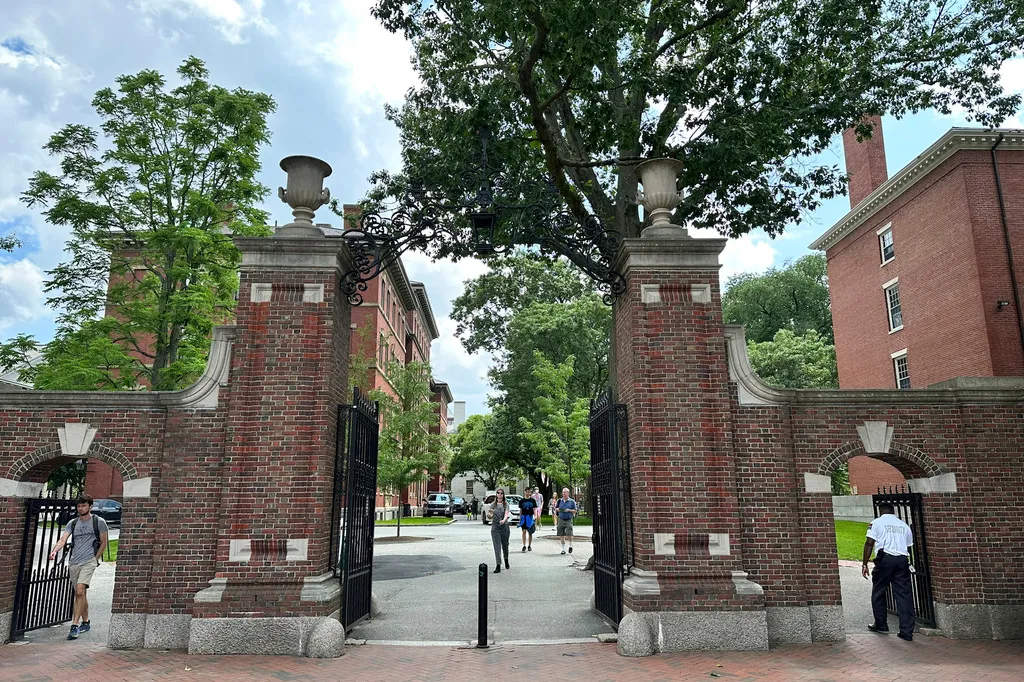
大法院录取裁决后的三个入学班级:数据显示了什么作者:Jasmine Davis-Randolph 和 Murphy,观点撰稿人资料照片——2023年6月29日星期四,学生们穿过马萨诸塞州剑桥市哈佛大学的一扇大门。
3 classes after Supreme Court’s admissions ruling: What the data show by Jasmine Davis-Randolph and Murphy, opinion contributors FILE - Students walk through a gate at Harvard University, Thursday, June 29, 2023, in Cambridge, Mass.
今年秋天,高校迎来了最高法院终结种族感知录取政策后录取的第三个新生班级。然而,就在该裁决的影响逐渐显现之际,部分图景却变得更加难以看清。
This fall, colleges are welcoming the third class admitted since the Supreme Court ended race-conscious admissions. Yet just as the effects of that decision are coming into view, part of the picture is becoming harder to see.
新研究发现,在全国范围内,种族或族裔被记录为“未知”的一年级新生比例,从裁决前的3.3%上升至2024年的4%,常春藤盟校加精英院校(Ivy Plus)和历史黑人大学(HBCUs)的增幅更大。尽管总体增幅不大,但这增加了解读招生格局变化的难度,也让人难以判断机会是在扩大还是在收窄。
New research finds that, nationally, the share of first-year students whose race or ethnicity was reported as “unknown” rose from 3.3 percent before the ruling to 4 percent in 2024, with larger increases at Ivy Plus institutions and Historically Black Colleges and Universities. Although the overall increase was modest, it complicates efforts to understand how the admissions landscape is changing and whether opportunity is expanding or narrowing.
公众讨论的焦点多集中在少数高度择优录取高校的入学人数变化上。卢米纳基金会与招生研究员、Class Action 的 James Murphy 合作,于今年发布了两份报告,为全美高等教育的现状提供了更宏观的视角。第一份报告追踪了3000多所院校的入学变化。第二份报告于6月发布,探讨种族或族裔被记录为“未知”的一年级新生增加的情况,以及这对解读这些变化意味着什么。
Much of the public discussion has focused on enrollment changes at a small group of highly selective colleges. Lumina Foundation partnered with admissions researcher James Murphy at Class Action on two reports released this year that offer a broader view of what is happening across higher education. The first traces enrollment changes across more than 3,000 institutions. The second, released in June, examines the increase in first-year students whose race or ethnicity was recorded as unknown and what it means for interpreting those changes.
Murphy 分析了3000多所院校、350多万名首次入学新生的联邦数据,将2024级新生与2022年和2023年的平均水平进行了对比。
Murphy examined federal data from more than 3,000 institutions and more than 3.5 million first-time enrollments to compare the 2024 entering class with the average of 2022 and 2023.
在常春藤盟校及同级院校(Ivy Plus institutions),代表性不足的有色人种学生比例下降了4.33个百分点——降幅近19%。黑人学生入学率下降了25%,西班牙裔学生入学率下降了约15%。在州旗舰大学,代表性不足的有色人种学生入学率增长了8%。白人和亚裔美国学生的入学率在大多数院校群体中基本持平,尽管亚裔美国学生在常春藤盟校及同级院校的入学率有所上升。
At Ivy Plus institutions, the share of underrepresented students of color fell by 4.33 percentage points — nearly 19 percent. Black enrollment fell by 25 percent, and Hispanic enrollment fell by about 15 percent. At state flagship universities, enrollment of underrepresented students of color increased by 8 percent. White and Asian American enrollment remained relatively flat across most institutional groups, although Asian American enrollment increased at Ivy Plus institutions.
墨菲将这些模式描述为“级联效应”,即最具选择性院校的入学率下降与选择性较低院校的入学率上升同时发生。数据无法告诉我们任何个别学生在裁决前本会入读哪所院校。但它们确实提出了一个重要问题:如果高素质学生越来越多地就读于毕业率较低或毕业后收入较弱的院校,而非他们原本可能就读的院校,这将对他们的长远结果产生什么影响?
Murphy describes these patterns as a “cascade effect,” in which declines at the most selective institutions coincide with increases at less selective institutions. The data do not tell us where any individual student would have enrolled before the ruling. They do raise an important question: If highly qualified students increasingly attend institutions with lower completion rates or weaker post-graduation earnings than institutions they might otherwise have attended, what will that mean for their long-term outcomes?
“已知的未知”将问题从学生入读何处转移到了我们能多清晰地了解入读者是谁。在所有院校中,种族被报告为未知的大一新生比例从裁决前的3.3%上升至2024年的4%。超过95%的大一新生仍有报告的种族或族裔,但增幅分布不均。在常春藤盟校及同级院校,未报告比例从3.2%上升至5.8%。在历史黑人大学(HBCUs),该比例从3.2%上升至4.9%。公立四年制院校和州旗舰大学的增幅最小。只有约四分之一的院校未报告比例上升超过1个百分点。
Known Unknowns shifts the question from where students enrolled to how clearly we can understand who enrolled. Across all institutions, the share of first-year students whose race was reported as unknown increased from 3.3 percent before the ruling to 4 percent in 2024. More than 95 percent of first-year students still had a reported race or ethnicity, but the increase was uneven. At Ivy Plus institutions, non-reporting rose from 3.2 percent to 5.8 percent. At Historically Black Colleges and Universities, it rose from 3.2 percent to 4.9 percent. Public four-year institutions and state flagships saw the smallest increases. Only about a quarter of all institutions saw non-reporting rise by more than 1 percentage point.
该报告还超越了入学层面进行分析。在拥有申请、录取和入学数据的115所高校中,申请人中未报告种族的比例增加了0.7个百分点,这与全国入学层面的增幅基本持平。在这个规模较小、无代表性的群体中,录取标准较低的院校在裁决前后均拥有最高的未报告率,且增幅最大。与此同时,未报告者的录取率略高于整体申请人群。
The report also looks beyond enrollment. Among 115 colleges and universities with data on applications, admissions and enrollment, non-reporting among applicants increased by 0.7 percentage points, essentially the same increase seen in enrollment nationally. In that smaller, nonrepresentative group, less selective institutions had the highest non-reporting rates before and after the ruling and the largest increase afterward. At the same time, non-reporters were admitted at somewhat higher rates than the applicant pool overall.
这些发现难以用简单的解释说明。部分学生可能认为不报告种族能给自己带来优势。另一些学生可能对裁决允许的内容感到困惑,或对高校将如何使用其信息感到不确定。“未知”类别也可能反映身份认同的变化、所提供分类的局限性,或机构报告中的错误。报告发现,未报告比例的增加与任何特定种族或族裔群体入学份额的变化之间几乎不存在相关性。因此,我们无法推断这些学生是谁,也不能利用“未知”类别来修正其他群体的数据。
Those findings resist a simple explanation. Some students may believe that not reporting their race gives them an advantage. Others may be confused about what the ruling permits or uncertain about how colleges will use their information. The “unknown” category can also reflect changing identities, the limits of the categories offered, or errors in institutional reporting. The report found little to no correlation between increases in non-reporting and changes in the enrollment share of any particular racial or ethnic group. We therefore cannot assume who these students are or use the unknown category to revise the numbers for another group.
《海辛格报告》对裁决后录取文书的考察,为我们了解学生如何应对这一变化提供了相关视角。部分学生继续撰写种族如何塑造了他们的经历,而另一些学生则选择不强调背景中的这一方面。录取文书无法解释“未知”类别的增加,但这些差异显示了学生们正在解读关于披露何种信息的新信号,而这些信号有时令人困惑。
The Hechinger Report’s examination of admissions essays after the ruling offers a related glimpse into how students are navigating the change. Some students continued to write about how race shaped their experiences, while others chose not to emphasize that part of their backgrounds. Admission essays cannot explain the increase in unknowns, but the differences show students interpreting new and sometimes confusing signals about what to disclose.
更多信息对于理解入学机会的变化是否会导致毕业率和经济流动性的变化至关重要。谁入学、在哪里入学、以及谁获得了学历证书,这些都是理解裁决长期影响的关键因素。
Additional information will be important for understanding whether shifts in access lead to shifts in completion and economic mobility. Who enrolls, where they enroll, and who completes a credential are all critical to understanding the ruling’s longer-term effects.
学生、院校以及支持他们的专业人士正在应对一个发生变化的招生环境。全国大学招生咨询协会的指导可以帮助咨询师和招生专业人士了解不断演变的招生实践,并帮助学生做出明智的选择。
Students, institutions and the professionals who support them are navigating a changed admissions environment. Guidance from the National Association for College Admission Counseling can help counselors and admissions professionals understand evolving admissions practices and help students make informed choices.
我们仍然只有裁决后一年的完整全国入学数据。预计会有更多联邦招生数据发布,最终可能让研究人员考察谁在申请、谁被录取、谁入学,尽管目前尚不清楚所有这些数据何时会变得可用。
We still have only one year of complete national post-ruling enrollment data. Additional federal admissions data are expected and could eventually allow researchers to examine who applies, who is admitted and who enrolls, although it remains unclear when all of those data will become available.
随着本学年的展开,又一届新生将为这幅仍在形成中的图景增添新的内容。
As this school year unfolds, another entering class will add to a still-developing picture.
接下来几年的数据将告诉我们,目前看到的模式是暂时的调整还是持久的变化,以及最终学生入学地点的变化是否会转化为大学毕业人群的变化及其随之而来的经济机会变化。
The next several years of data will tell us whether the patterns we’re seeing are temporary adjustments or lasting changes and, ultimately, whether changes in where students enroll translate into changes in who completes college and the economic opportunities that follow.
Jasmine Davis-Randolph博士是卢米纳基金会的研究战略官,该基金会是一个独立基金会,致力于帮助美国人在高中后继续学习。James Murphy是Class Action的高级研究员,该组织致力于通过包容而非排他来重建公众信任。
Jasmine Davis-Randolph, Ph.D., is the strategy officer for research at Lumina Foundation, an independent foundation that helps Americans keep learning beyond high school. James Murphy is a senior fellow at Class Action, which works to rebuild public trust through inclusion over exclusivity.