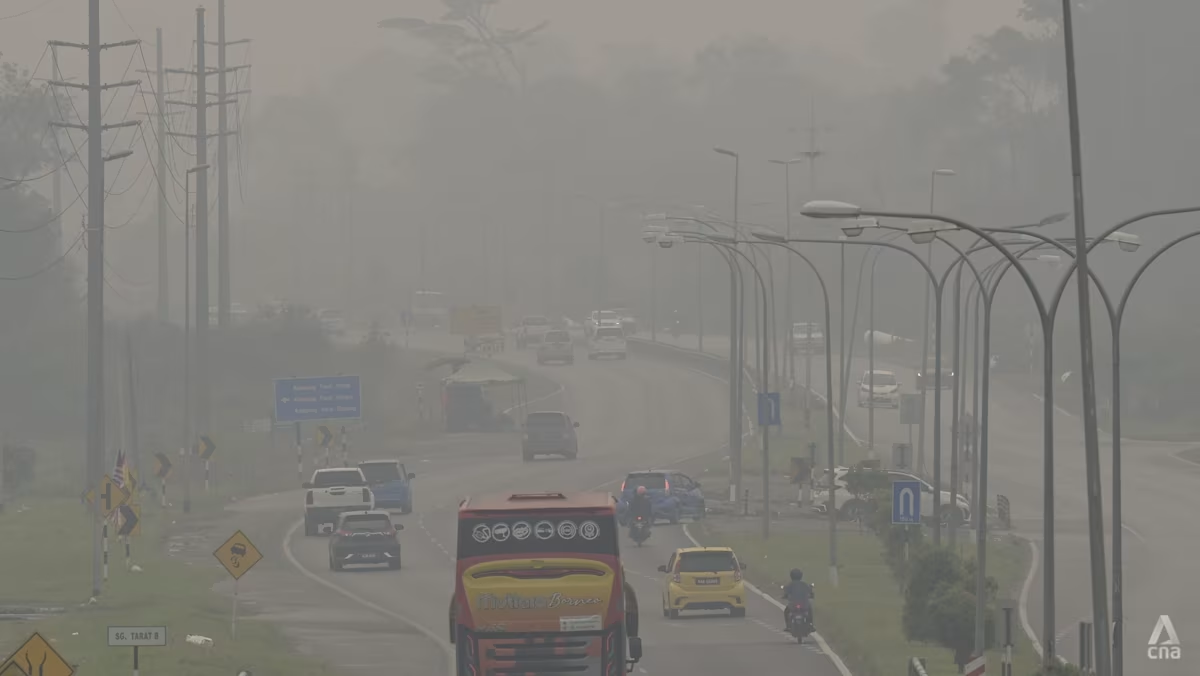
吉隆坡:东马最近经历了多年来最严重的霾害,迫使砂拉越在一个县宣布进入紧急状态。户外活动被取消,航班受阻,学校停课。三天后,随着极端状况缓解,紧急状态解除。
KUALA LUMPUR: East Malaysia recently experienced its worst haze in years, forcing Sarawak to declare a state of emergency in one district Outdoor events were cancelled, flights disrupted and schools closed. state of emergency was lifted three days later as extreme conditions eased.
九月份,砂拉越各地的空气质量在中度和非常不健康水平之间波动。
Over September, air quality has fluctuated between moderate and very unhealthy levels across Sarawak.
砂拉越进入紧急状态引发了关于当局对这场危机准备程度如何的质疑。马来西亚是否正从应急反应转向真正的超前预判?
Sarawak’s state of emergency raises questions about how prepared authorities were for the crisis. Is Malaysia moving from emergency reaction to genuine anticipation?
经过数十年的跨境霾害,马来西亚当然比过去准备得更充分。已有既定的霾害行动计划、空气质量阈值、卫星监测以及停课或限制户外活动的程序。
After decades of transboundary haze, Malaysia is certainly better prepared than it once was. There are established haze action plans, air-quality thresholds, satellite monitoring and procedures for closing schools or restricting outdoor activities.
这些是重要的改进。但一个等到污染变得危险才全面动员的体系,在很大程度上仍属于被动应对体系。
These are important improvements. But a system that waits for pollution to become dangerous before mobilising fully is still largely a reactive system.
分级应对 今年的这起事件应推动更分级的应对方式。热点、天气模式、风向和降雨量可在烟雾演变为公共卫生紧急事件前提供宝贵预警。
A GRADUATED APPROACH This year’s episode should encourage a more graduated approach. Hotspots, weather patterns, wind direction and rainfall can provide valuable warning before smoke becomes a public health emergency.
因此,联邦和州当局应建立明确的升级级别,使消防资源、医疗准备、公共传播和防护措施能在记录到最严重空气质量读数前就已启动。
Federal and state authorities should therefore establish clear escalation levels, allowing firefighting resources, medical preparedness, public communications and protective measures to be activated well before the most severe air quality readings are recorded.
这对沙巴和砂拉越尤为重要。它们靠近印尼加里曼丹,使其特别容易受到婆罗洲其他地区火灾的影响。
This is especially important in Sabah and Sarawak. Their proximity to Indonesia's Kalimantan makes them particularly exposed to fires elsewhere on the island of Borneo.
一个永久性的婆罗洲霾害协调机制,汇集联邦机构、东马两州、气象和环境部门、卫生机构及灾害管理机构,可将分散的信息转化为统一的预警和响应系统。但光向内看,马来西亚能取得的成效是有限的。
A permanent Borneo haze coordination mechanism, bringing together federal agencies, both East Malaysian states, meteorological and environmental authorities, health agencies and disaster management bodies, could turn scattered information into a common early warning and response system. But there is a limit to what Malaysia can achieve by looking inward.
受限于主权 影响东马的大部分霾害源自印尼的火灾。在此,马来西亚的影响力天然受限于主权原则。未经雅加达同意,吉隆坡无法派遣执法人员或消防员进入印尼领土,东盟(ASEAN)也不能仅因烟雾跨越国界就对成员国进行罚款。
CONSTRAINED BY SOVEREIGNTY Much of the haze affecting East Malaysia originates from fires in Indonesia. Here, Malaysia’s leverage is inherently constrained by sovereignty. Kuala Lumpur cannot send enforcement officers or firefighters into Indonesian territory without Jakarta’s consent, nor can the Association of Southeast Asian Nations (ASEAN) simply fine a member state because smoke has crossed a national boundary.
这就是为什么马来西亚呼吁东盟重审跨境霾害协议在政治上可以理解,但应采取务实态度。只有成员国做好落实准备,更强有力的文件才有用处。东盟共识、协商与不干涉的传统将继续限制任何执法机制的效力。尽管如此,马来西亚仍拥有可行使的外交筹码。
This is why Malaysia’s call for ASEAN to revisit its transboundary haze agreement is politically understandable but should be approached realistically. A stronger document is useful only if member states are prepared to implement it. ASEAN’s traditions of consensus, consultation and non-interference will continue to place limits on any enforcement mechanism. Malaysia nevertheless has diplomatic leverage that it can exercise.
第一是将议题区域化。霾害不应仅被框架为另一场马印争端。新加坡、文莱和泰国部分地区也可能受影响,而印尼自身因火灾遭受巨大的健康、环境和经济损失。
The first is to regionalise the issue. The haze should not be framed merely as another Malaysia-Indonesia dispute. Singapore, Brunei and parts of Thailand can also be affected, while Indonesia itself suffers enormous health, environmental and economic losses from fires.
受影响东盟国家组成的联盟将赋予该议题更大的政治分量,而不会将其演变成针对印尼的运动。
A coalition of affected ASEAN states would give the issue greater political weight without turning it into an anti-Indonesia campaign.
第二是透明度。马来西亚不应仅要求印尼“制止霾害”,而应推动系统性共享卫星热点数据、特许经营权信息、调查结果和执法行动。这样讨论就不再是相互指责,而是确立责任。
The second is transparency. Instead of simply asking Indonesia to “stop the haze”, Malaysia should press for systematic sharing of satellite hotspot data, concession information, investigation results and enforcement actions. The discussion then becomes less about exchanging accusations and more about establishing responsibility.
这正是企业问责显得尤为重要的地方。若发现马来西亚关联企业对印尼火灾负责,马来西亚应对其展开调查,而非自动为其辩护。
This is where corporate accountability becomes particularly important. If Malaysian-linked companies are found responsible for fires in Indonesia, Malaysia should investigate them rather than automatically defend them.
应鼓励雅加达对其管辖下的公司适用同一原则。一个在国内展现问责制的政府,在向他国要求问责时将处于强得多的地位。
Jakarta should be encouraged to apply the same principle to companies under its jurisdiction. A government that demonstrates accountability at home is in a much stronger position to demand it from others.
非零和对抗 马来西亚也可以更建设性地利用其与印度尼西亚庞大的经济和外交关系。两国拥有广泛的贸易、投资、劳工和民间联系。
NOT A ZERO-SUM CONFRONTATION Malaysia can also use its considerable economic and diplomatic relationship with Indonesia more constructively. The two countries have extensive trade, investment, labour and people-to-people links.
9月16日,副首相阿末扎希宣布,马来西亚将寻求与印度尼西亚建立高层协调机制,以应对跨境霾害。他驳回了要求马来西亚向印尼索赔的呼声,并表示预防措施是关键。
On Sep 16, Deputy Prime Minister Ahmad Zahid Hamidi announced Malaysia will seek a high-level coordination mechanism with Indonesia to manage transboundary haze. He dismissed calls for Malaysia to demand compensation from Indonesia, and said preventative measures are key.
因此,霾害外交无需以零和对抗的方式进行。吉隆坡可以提供技术合作、卫星信息、灭火援助和泥炭地管理专业知识,同时期待雅加达给予更大的透明度和执法力度。
Haze diplomacy therefore need not be conducted as a zero-sum confrontation. Kuala Lumpur can offer technical cooperation, satellite information, firefighting assistance and peatland-management expertise, while expecting greater transparency and enforcement from Jakarta.
这可以说比单纯的公开外交施压更有效。印尼不太可能对邻国的说教做出积极回应,但它有自己的充分理由来减少火灾的频发。
This is arguably more effective than public diplomatic pressure alone. Indonesia is unlikely to respond well to being lectured by a neighbour, but it has strong reasons of its own to reduce recurring fires.
与此同时,东盟应减少发表又一份关切声明,而更多地致力于使其现有机制发挥作用。更好的卫星和气象数据共享、快速反应议定书、统一报告标准、特许经营权透明度以及更系统的企业问责制,将赋予区域霾害框架大得多的实用价值。
ASEAN, meanwhile, should concentrate less on producing another expression of concern and more on making its existing mechanisms operational. Better satellite and meteorological data-sharing, rapid-response protocols, common reporting standards, concession transparency and more systematic corporate accountability would give the regional haze framework considerably more practical value.
真正的教训 归根结底,马来西亚无法控制印尼国内发生的事情。但它可以控制威胁探测的速度、保护民众的有效性以及动员东盟的有效性。
THE REAL LESSON Ultimately, Malaysia cannot control what happens inside Indonesia. But it can control how quickly it detects the threat, how effectively it protects its population and how effectively it mobilises ASEAN.
这或许才是今年这场紧急事件真正带来的教训。马来西亚必须停止把雾霾视为每年都会意外出现的灾害。它是一种反复出现的地区性风险,可以被预测、提前准备,并通过外交手段加以应对。
That is perhaps the real lesson from this year’s emergency. Malaysia needs to stop thinking of haze as an annual surprise. It is a recurring regional risk that can be forecast, prepared for and diplomatically managed.
目标不应是在天空再度灰暗时,又一次在与印度尼西亚的争论中占据上风。目标应是让下一次雾霾事件的危害更小、干扰更少,并最终使其后果更可预测。
The objective should not be to win another argument with Indonesia when the skies turn grey. It should be to make the next haze episode less severe, less disruptive and, eventually, more predictable in its consequences.
这既需要国内采取更好的消防灭火措施,也需要在国外坚持不懈地开展以证据为依据的外交努力。
That requires both better fire-fighting at home and more persistent, evidence-based diplomacy abroad.
欧爱孙是马来西亚太平洋研究中心首席顾问、新加坡国际事务研究所高级研究员。
Oh Ei Sun is Principal Adviser at Pacific Research Center of Malaysia and Senior Fellow at Singapore Institute of International Affairs.