印度的玩具店提供了一个意想不到的晴雨表,可用以衡量其与中国的经济关系。文/尼基尔·伊纳姆达尔走进一家印度玩具店,除了给孩子挑选一件新的心头好玩具,你或许还能窥见这个国家是如何为改善与其强大邻国中国那岌岌可危的经济关系而奋斗的。
India’s toy shops provide an unlikely barometer by which to measure its economic relationship with China. By Nikhil Inamdar Take a walk into an Indian toy shop and as well as picking up a new favourite plaything for a child, you might just get an insight into how the nation is battling for a batter economic relationship with its all-powerful neighbour China.
六年前,为了推动本地制造并阻劣质玩具入市,印度将进口玩具关税从20%提高到60%,最终升至70%。
Six years ago, in an attempt to push local manufacturing and keep substandard toys out of its market, India raised tariffs on imported toys from 20% to 60% and eventually to 70%.
零售商们强烈反对,称国内企业永远无法赶超外国货。但高额关税与质量管控标准的组合拳奏效了。
Retailers were up in arms and said that domestic firms could never match the foreign-made stuff. But the combination of higher customs duties and quality control standards worked.
印度玩具进口额从2020年的近3亿美元骤降三分之一至今年的1亿美元,同期出口额则从约1.29亿美元增至2亿美元。此外,该国成功大幅降低了对中国的依赖,后者曾占据本地玩具市场70%的份额。
Indian imports of toys fell by a third from nearly $300mn in 2020 to $100mn this year, while exports rose from around $129mn to $200mn in the same period. Moreover, the country was able to drastically reduce its dependence on China, which held a 70% share of the local toy market.
在印度试图重新平衡与这个体量更大的邻国日益失衡的贸易关系、却屡屡碰壁的背景下,玩具行业脱颖而出,成为罕见的成功案例。有专家称,这种不对称关系现已位居世界前列。
The sector stands out as a rare exception in India's otherwise unsuccessful attempts to rebalance an increasingly lopsided trading relationship with its larger neighbour, which some experts say, is now among the most asymmetric in the world. Even as diplomatic ties between the two countries completely broke down following the Galwan Valley clashes in 2020 and Delhi announced a slew of anti-dumping duties and a ban on Chinese apps such as Tik Tok, its trade deficit with Beijing has only ballooned - from $44bn in 2020 to an eye-popping $112bn this year.
即使两国外交关系在2020年加勒万河谷冲突后彻底破裂,新德里宣布征收一系列反倾销关税并禁用TikTok等中国应用,其对华贸易逆差却只增不减——从2020年的440亿美元膨胀至今年惊人的1120亿美元。
"India's economic dependence on China continued to deepen while political, security, and investment ties were at their lowest point," Kevin Zongzhe Li, a Washington-based Fellow at the Asia Society Policy Institute's Centre for China Analysis, told the BBC.
亚洲协会政策研究所中国分析中心驻华盛顿研究员凯文·宗哲·李告诉BBC:“在政治、安全和投资关系触底之时,印度对中国的经济依赖反而持续加深。”
More worryingly, exports to China remained below pre-pandemic level even as imports doubled in this period.
更令人担忧的是,同期印度对华出口仍低于疫情前水平,而进口额却翻了一番。
"China now supplies over 30% of India's industrial imports, and India depends on it for more than 100 critical products.
“中国目前供应了印度超过30%的工业进口商品,而印度在100多种关键产品上依赖中国。而且这种失衡正在加剧,”总部位于新德里的全球贸易与研究倡议组织(GTRI)的阿贾伊·斯里瓦斯塔瓦表示。
And the imbalance is worsening," says Ajay Srivastava of the Delhi-based Global Trade and Research Initiative (GTRI).
斯里瓦斯塔瓦指出,如果进口速度持续加快,双边贸易逆差可能飙升至1340亿美元,这将使北京对印度工业拥有更大的影响力。
If the rapid pace of imports continues, bilateral deficit could jump to $134bn, giving Beijing even more leverage over Indian industry, according to Srivastava.
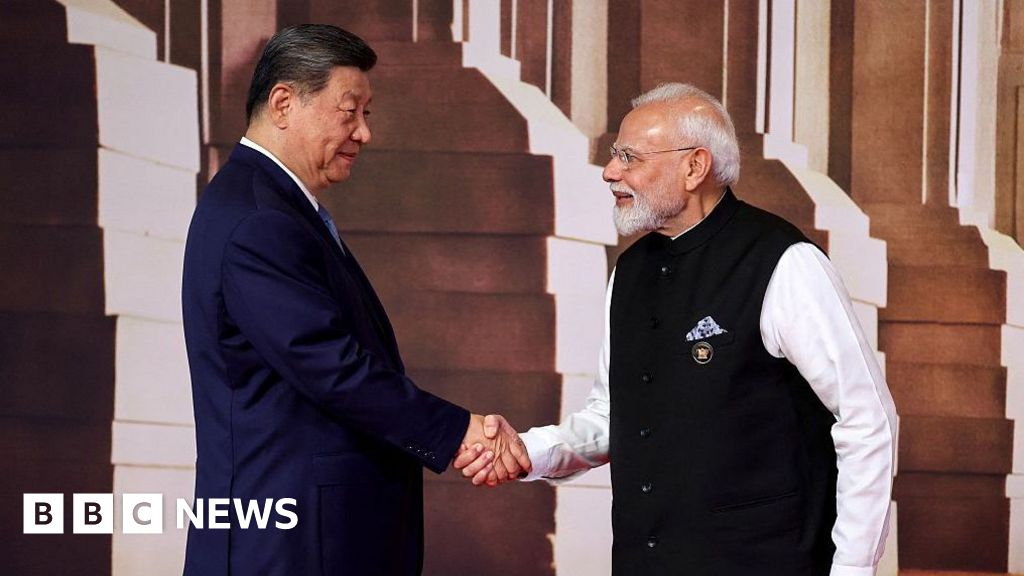
今年9月,在德里举行的金砖国家峰会期间,随着这两个亚洲大国关系逐步缓和,印度总理纳伦德拉·莫迪与中国国家主席习近平承诺将解决这些“结构性贸易失衡和供应链问题”。
On the sidelines of the Brics summit in Delhi in September, amid a deepening thaw between the Asian giants, Prime Minister Narendra Modi and Chinese President Xi Jinping vowed to address these "structural trade imbalances and supply chain issues".
但专家们向BBC表示,鉴于中国进口商品已深深嵌入印度的工业经济,这对新德里来说将是一项艰巨的任务。
But given how deeply entrenched Chinese imports have become to India's industrial economy, this will be a formidable task for Delhi, experts told the BBC.
这主要是因为印度不仅依赖中国消费最终产品,而且越来越依赖中国生产工业商品。
That's primarily because India depends on China to not merely consume end-products, but increasingly to produce industrial goods.
诚然,印度已经减少了对智能手机和太阳能设备等制成品进口的依赖,目前其生产的iPhone已占全球总量的四分之一以上。
To be true, India has reduced its reliance on imports of finished goods such as smartphones and solar equipment, and now produces more than a quarter of the world's iPhones.
“然而,印度的生产仍主要以组装为主,并且严重依赖进口零部件,尤其是来自中国的零部件,”斯里瓦斯塔瓦说。
"Yet, production remains largely assembly-based and depends heavily on imported components, particularly from China," says Srivastava.
工业机械、电池原料、化学品、太阳能电池和制造设备的情况也是如此。
It's the same story with industrial machinery, battery inputs, chemicals, solar cells, and manufacturing equipment.
根据观察研究基金会(ORF)智库的数据,仅电气机械和电子产品就占进口总额的36%,其次是机械和设备,占21.7%,而有机化学品和塑料也占有重要份额。
Electrical machinery and electronics alone account for 36% of imports, followed by machinery and mechanical appliances at 21.7%, while organic chemicals and plastics also have a significant share, according to the Observer Research Foundation (ORF) think tank.
ORF新经济外交中心的研究员索米娅·博姆尼克表示:“如果这些供应中断,不仅会影响消费,还会直接扰乱生产本身。”她认为,这反映出印度难以用本土生产替代中国提供的工业投入品。
"Their interruption would not merely affect consumption; it would disrupt production itself," according to Soumya Bhowmik, a Fellow at ORF's Centre for New Economic Diplomacy, who argues that this reflects India's difficulty in substituting Chinese inputs with local production. Besides a growing reliance on inputs and raw material, Chinese imports to India are also being propelled by other macroeconomic trends.
除了对投入品和原材料的依赖日益增加外,其他宏观经济趋势也在推动中国对印度的出口。
China has huge excess capacity in sectors from steel to solar panels and electric vehicles, while its slowing economy cannot absorb the output.
中国在从钢铁到太阳能电池板和电动汽车等多个领域拥有巨大的过剩产能,而其放缓的国内经济无法消化这些产出。
Manufacturers are therefore increasingly turning to overseas markets, selling goods cheaply.
因此,制造商越来越多地转向海外市场,以低价销售商品。预计中国的贸易顺差将连续第二年突破1万亿美元。
China's trade surplus is expected to top $1tn for a second straight year. A lot of these goods are coming to Indian shores because it is rapidly expanding manufacturing across segments of the economy, but also as "Western markets impose tariffs and other restrictions", says Srivastava.
斯里瓦斯塔瓦表示,大量此类商品涌入印度,一方面是因为印度正在快速扩大经济各领域的制造业,另一方面是因为“西方市场施加了关税和其他限制”。另一方面,无法进入中国市场仍然是印度企业面临的主要挑战。
On the other hand, lack of access to the Chinese market remains a major challenge for Indian companies. "Indian products face a variety of tariff and non-tariff hurdles in China that make it difficult to scale exports," says Li.
李指出:“印度产品在中国面临各种关税和非关税壁垒,这使得扩大出口变得困难。”
"If normalisation [of ties] continues without a serious push for reciprocal market access, India risks a situation where the political relationship improves but the economic dependency stays the same."
“如果关系正常化进程持续,但未能认真推动市场准入的对等开放,印度将面临政治关系改善但经济依赖度不变的局面。”斯里瓦斯塔瓦表示,减少可避免的进口并改善出口表现的长期解决方案在于加强制造业。
The long term solution to both reducing avoidable imports and improving exports performance will be to strengthen manufacturing, says Srivastava. But that requires sector-specific industrial policy and stronger fundamentals – affordable power and credit, efficient logistics and stable regulations – areas where India still falls short.
但这需要针对特定行业的产业政策以及更坚实的基础——包括可负担的电力和信贷、高效的物流以及稳定的监管环境——而这些正是印度目前仍然不足的领域。
India has also recently softened foreign direct investment rules, which could open the door to Chinese companies wanting to expand Indian investments.
印度最近也放宽了外国直接投资规则,这可能会为希望扩大在印投资的中国企业打开大门。但他补充说,这些投资同样需要仔细审查。
But these too will need careful vetting, he adds. "Investment that merely expands distribution networks or assembles products using Chinese parts could increase imports and deepen dependence.
仅仅扩大分销网络或使用中国零部件组装产品的投资,可能会增加进口并加深依赖。因此,审批应优先考虑技术转让、本地附加值提升、国内零部件生产以及印度的出口。李表示,从更直接的角度来看,印度可以专注于在特定领域提高对中国的出口,以缓解贸易失衡问题。例如,随着中国人口老龄化及医疗成本上升,制药行业可能是一个自然的选择。
Approvals should therefore prioritise technology transfer, local value addition, domestic component production and exports from India." More immediately, India could focus on targeting higher exports to China in specific sectors to reduce its trade asymmetry, says Li. Sectors like pharmaceuticals could be a natural fit with China's population aging and healthcare costs rising. "But narrowing a $112 billion deficit won't come from finding niche export sectors alone," he adds.
但他补充道:“但要减少1120亿美元的逆差,仅靠寻找小众出口行业是远远不够的。”
"The key question is whether Beijing is ready and willing to make concessions on market access as part of the broader normalisation.
“关键问题在于,北京是否准备好并愿意在更广泛的正常化进程中对市场准入做出让步。否则,印度就需要找到自身的筹码,以推动这一对话。”
Alternatively, India will need to find its own leverage to force that conversation."
在Instagram、YouTube、X上关注BBC News India
Follow BBC News India on Instagram, YouTube, X and