东京旨在提高H3火箭的发射频率,使其成为“可靠运载工具”并具备国际竞争力。日本“火星与月球探测器”(MMX)任务计划于10月20日发射,旨在首次从火星卫星火卫一采集样本并返回地球。日本航天机构负责人指出,随着轨道竞争日益激烈,且日本探测器正准备启程前往火星卫星,日本正加倍致力于提升自主进入和运营太空的能力。
Tokyo aims to increase H3 launch frequency to make rocket a ‘trusted vehicle’ and internationally competitive Japan’s MMX mission, due to launch Oct. 20, seeks first-ever sample return from Mars’ moon Phobos Japan is doubling down on its ability to reach and operate in space on its own terms, the head of the country's space agency said, as competition in orbit intensifies and a Japanese probe prepares to depart for the moons of Mars.
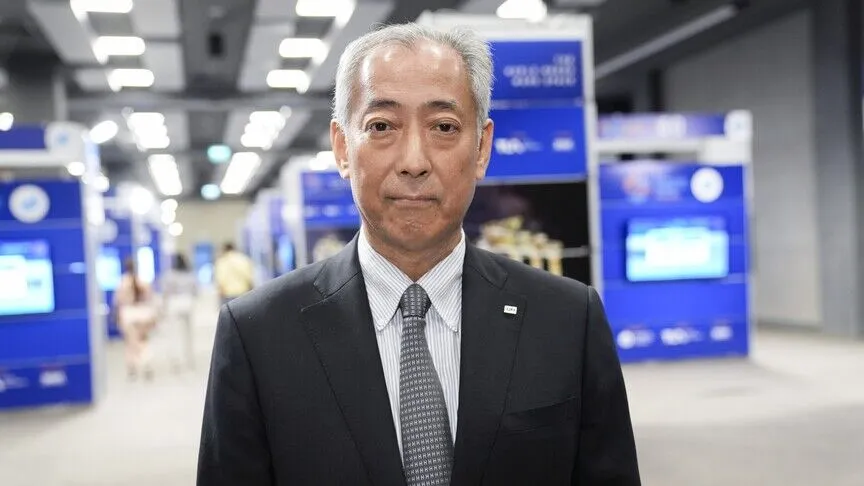
日本宇宙航空研究开发机构(JAXA)总裁山川弘志在安塔利亚接受阿纳多卢通讯社采访时表示:“我们希望专注于太空自主权。这意味着,例如,自主进入太空和在太空中的自主活动。”安塔利亚是第77届国际宇航大会(IAC 2026)的举办地。
"We'd like to focus on the autonomy regarding space. That means, for example, autonomous access to space and autonomous activity in space," Hiroshi Yamakawa, president of the Japan Aerospace Exploration Agency (JAXA), told Anadolu in Antalya, host of the 77th International Astronautical Congress (IAC 2026). "Those two are very important for Japan.
他说:“这两点对日本至关重要。因此,我们正在开发火箭技术和卫星技术。”
That's why we are developing rocket technology and also satellite technology," he said.
自2018年4月起领导JAXA的山川表示,这些能力服务于日本国家太空政策在三个领域的目标:太空安全、太空经济和太空探索。
Yamakawa, who has led JAXA since April 2018, said these capabilities serve Japan's national space policy goals in three areas: space security, the space economy and space exploration.
他补充道:“我们希望进一步增强这些技术能力,以实现国家太空政策,并为我们的日常生活、经济和国家安全做出贡献。”
"We would like to further strengthen those technological capabilities to realize national space policies and contribute to our daily life, economy and national security," he added.
日本的太空计划可追溯至1955年,当时由工程师糸川英夫领导的东京大学团队在东京附近的国分寺试射了一枚名为“铅笔”的23厘米实验火箭。“已是现役火箭”为了在由SpaceX等全球行业巨头主导的日益激烈的商业发射领域确保主权发射能力,日本正在加大其旗舰H3运载火箭的运营力度。
Japan's space program dates back to 1955, when a University of Tokyo team led by engineer Hideo Itokawa test-fired a 23-centimeter experimental rocket known as the "Pencil" in Kokubunji near Tokyo. ‘Already an operational rocket' To secure sovereign launch capabilities amid an increasingly competitive commercial launch sector dominated by global industry players like SpaceX, Japan is ramping up operations of its flagship H3 launch vehicle.
H3火箭是JAXA与三菱重工联合开发的项目,旨在取代H-IIA火箭,于2024年初首次成功发射。这款液体燃料火箭被设计为日本主要的重型运载主力。
First launched successfully in early 2024 as a joint project between JAXA and Mitsubishi Heavy Industries to replace the H-IIA, the liquid-fueled rocket is designed as Japan's primary heavy-lift workhorse.
在谈到日本计划如何保持竞争力时,山川指出,该航天器即将迎来一个重要的里程碑飞行。
Addressing how Japan plans to maintain competitiveness, Yamakawa pointed to the upcoming milestone flight of the vehicle.
“自主进入太空对日本的航天活动至关重要,而H3火箭正是这项努力的核心,”他说。“我们本月将发射第10枚H3火箭。这意味着我们的H3火箭已经是一款投入使用的火箭。”他还补充说,JAXA计划提高任务执行频率。
“Autonomous access to space is vital for Japanese space activities, and the H3 rocket is at the heart of that endeavor,” he said. “We will launch H3 rocket number 10 this month. And that means our H3 rocket is already an operational rocket.”He added that JAXA aims to step up the frequency of missions.
“我们希望进一步加快发射节奏——也就是说,在不久的将来增加发射次数——从而让H3火箭成为一款值得信赖且具备国际竞争力的航天器。”第10次H3火箭发射计划于10月20日在日本西南部的种子岛宇宙中心进行,并将搭载火星卫星探索(MMX)航天器。
“We would like to further increase the launch cadence -- I mean the number of launches in the near future -- so that we can make the H3 rocket a trusted vehicle and also an internationally competitive rocket.”The 10th H3 launch is scheduled for Oct. 20 from the Tanegashima Space Center in southwestern Japan and will carry the Martian Moons eXploration (MMX) spacecraft.
“可变形机器人”驶向火星 山川将MMX称为日本行星探索的一个里程碑。
‘Transformable robot’ heads for Mars Yamakawa described MMX as a milestone for Japanese planetary exploration.
“这将是世界上首次从火星卫星火卫一返回样本的任务。能够迈向下一步,真的令人兴奋,”他说。
"It will be the world's first sample return mission for Martian moon Phobos. And it's so exciting to ... move on to the next step," he said.
MMX的设计目标是研究火星的两颗小型卫星——火卫一和火卫二,在火卫一上着陆,采集至少10克表面物质并带回地球,预计于2031年返回。美国国家航空航天局(NASA)、欧洲空间局(ESA)、法国国家空间研究中心(CNES)和德国航空航天中心(DLR)都是该任务的合作伙伴,航天器上还搭载了一台由法国和德国机构共同制造的小型火星车“Idefix”。
MMX is designed to study both of Mars' small moons, Phobos and Deimos, land on Phobos, collect at least 10 grams of surface material and bring it back to Earth, with the return planned for 2031. NASA, the European Space Agency, France's CNES and Germany's DLR are partners in the mission, and the spacecraft carries a small rover, Idefix, built by the French and German agencies.
科学家们希望这些样本能帮助确定这两颗卫星是被捕获的小行星,还是由火星上的一次巨大撞击抛入轨道的碎片。
Scientists hope the samples will help settle whether the two moons are captured asteroids or debris thrown into orbit by a giant impact on Mars.
山川表示,这项任务或能揭示火星卫星、火星本身乃至整个太阳系的起源与演化。他还强调了其中的工程挑战。
Yamakawa said the mission could shed light on the origin and evolution of the Martian moons, of Mars itself and of the solar system as a whole. He also stressed the engineering challenge.
“从工程角度来看,它实际上是一种可变形机器人,因为它会改变自身的形状和功能,”他说。
"From an engineering point of view, it is really a kind of transformable robot, because it will change its shape and function," he said.
他解释说,航天器将在每个阶段分离自身的一部分:抵达火星后分离一个模块,在触地登陆火卫一后释放用于着陆的硬件,最终在返回地球时将携带样本的舱体抛入地球大气层。
He explained that the spacecraft will shed parts of itself at each stage: separating a module after arriving at Mars, releasing hardware used for the landing once it has touched down on Phobos, and finally dropping a capsule carrying the samples into Earth's atmosphere on its return.
该任务延续了日本宇宙航空研究开发机构(JAXA)的“隼鸟”号和“隼鸟2”号探测器的足迹,这两颗探测器曾从小行星“丝川”和“龙宫”带回样本。太空碎片是“最大问题”山川的这番言论发表几周前,美国空军部长特洛伊·迈因克在9月表示,美国太空军拥有“具备在轨太空控制武器,能够防御联合部队免受敌对对手行动”,这是美国官方首次承认在轨部署武器。
The mission follows JAXA's Hayabusa and Hayabusa2 probes, which brought back samples from the asteroids Itokawa and Ryugu. Space debris 'the biggest issue' Yamakawa's remarks come weeks after US Air Force Secretary Troy Meink said in September that the US Space Force has "on-orbit space control weapons capable of defending the Joint Force against hostile adversary action," the first official US acknowledgment of weapons in orbit.
中国外交部回应称,敦促华盛顿停止扩大其在太空的军事部署并准备在那里发动战争;而克里姆林宫发言人德米特里·佩斯科夫则表示,太空“必须不受任何武器影响”。1967年的《外层空间条约》禁止在轨道上部署核武器和其他大规模杀伤性武器,但并未明确禁止常规武器。
China's Foreign Ministry responded by urging Washington to stop expanding its military buildup in outer space and preparing for war there, while Kremlin spokesman Dmitry Peskov said space "must be free of any weapon." The 1967 Outer Space Treaty bans nuclear weapons and other weapons of mass destruction in orbit but does not explicitly prohibit conventional weapons.
当被问及太空地缘政治紧张局势的加剧以及地球之外发生冲突的可能性时,山川从保持轨道可用性的角度来界定太空安全。
Asked about rising geopolitical tensions in space and the possibility of conflict beyond Earth, Yamakawa framed space security in terms of keeping orbit usable.
“对日本而言,太空安全意味着外层空间的可持续利用。例如,最大的问题就是太空碎片,”他说。
"Space security in Japan means a sustainable use of outer space. For example, the biggest issue is the space debris," he said.
“太空碎片与在轨卫星的碰撞将对所有人构成重大挑战。”他表示,JAXA利用地面站、望远镜和雷达追踪碎片,并始终专注于防止与运行中的卫星发生碰撞。“这是最大的问题,也是参与讨论的最重要事项,”他补充道。日本与土耳其合作的“前景广阔领域”作为2026年国际宇航大会(IAC 2026)的主办国,山川对土耳其在航天探索领域的近期进展表示赞赏,并提到了土耳其于2024年初首次执行载人航天任务前往国际空间站(ISS),以及成功发射本国制造的Turksat 6A通信卫星。“我认为土耳其最近在航天领域取得了巨大进步,”他说。
"Space debris collision with active satellites will be a big issue for everybody." He said JAXA tracks debris using ground stations, telescopes and radars, with a constant focus on preventing collisions with operational satellites. "That's the biggest issue, and also that's the most important thing to engage," he added. ‘Promising area' for Japan-Türkiye cooperation Welcoming the host nation of IAC 2026, Yamakawa commended Türkiye's recent strides in space exploration, citing the country's first human spaceflight mission to the International Space Station (ISS) in early 2024 and the deployment of its domestically built Turksat 6A telecommunications satellite. “I think Türkiye has made big progress recently in the space arena,” he said.
他强调,两国在轨道和卫星领域已有合作历史,例如国际空间站上的日本实验舱“希望”(Kibo),土耳其的微型卫星此前已通过该实验舱发射;此外,双方在灾害管理和地球观测领域也持续共享卫星数据。
He underscored that the two nations already share a history of orbital and satellite cooperation, pointing to the Japanese Experiment Module (Kibo) on the ISS, through which Turkish microsatellites have previously been deployed, alongside ongoing satellite data sharing for disaster management and Earth observation.
“我认为航天是未来进一步合作的广阔领域,”他表示,并补充说,深化与土耳其的合作是日本参加此次大会的目标之一。
“I think space is a promising area for further collaboration,” he said, adding that further developing cooperation with Türkiye is one of Japan’s objectives at the congress.