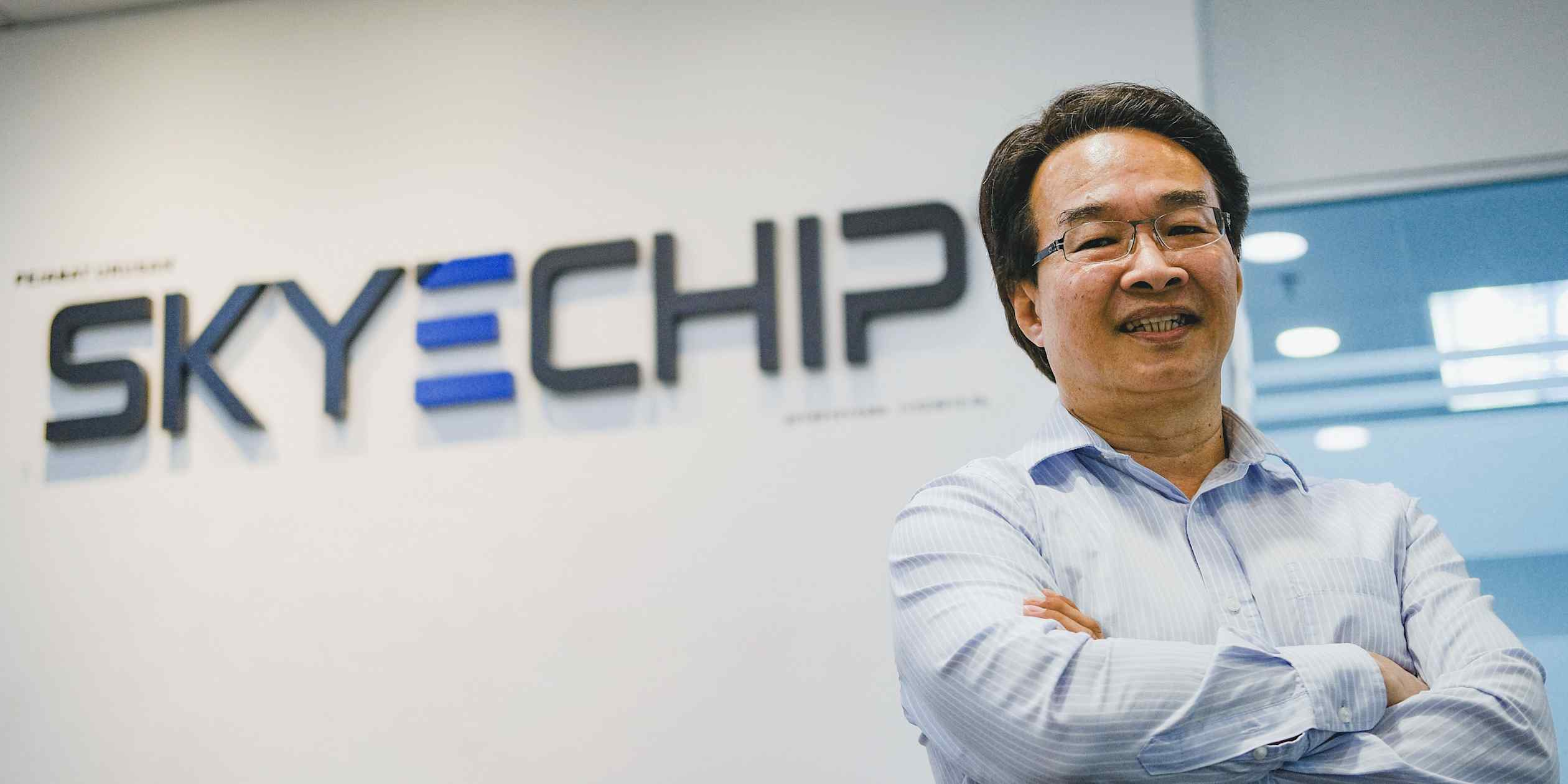
吉隆坡 —— 据其首席执行官透露,马来西亚芯片设计公司 SkyeChip 正瞄准那些寻求生产定制 AI 处理器的日本企业,押注东京为打造更强大的半导体产业所做的努力,将为其这类小型公司带来机遇。
KUALA LUMPUR -- Malaysian chip designer SkyeChip is targeting Japanese companies that are looking to produce custom AI processors, according to its chief executive, betting that Tokyo's efforts to build a stronger semiconductor industry will open up chances for smaller companies like his.
SkyeChip 专注于半导体知识产权和定制芯片设计,于 5 月在马来西亚上市,目前市值约 52.4 亿林吉特(约合 12.8 亿美元)。迄今为止,其大部分业务来自美国和中国市场,这两个市场在 4 至 6 月季度占其总收入的近 97%。
SkyeChip, specializing in semiconductor intellectual property and custom chip design, listed in Malaysia in May and currently has a market capitalization of around 5.24 billion ringgit ($1.28 billion). Most of its business has so far come from U.S. and Chinese markets, which accounted for nearly 97% of its total revenue in the April-June quarter.
周一,这家马来西亚公司宣布,已作为 17 家首批“设计解决方案合作伙伴”之一,加入 Rapidus 协作开放快速生态系统。旨在 2027 年于日本实现先进 2 纳米芯片量产的 Rapidus,正牵头建立这一框架,以连接半导体开发和制造领域的企业及研究机构。其首个举措是汇聚设计公司,协助客户开始为其晶圆厂开发芯片。
On Monday, the Malaysian company said it has joined the Rapidus Collaborative Open Rapid Ecosystem as one of 17 inaugural "design solution associates." Japan's Rapidus, which aims to mass-produce advanced 2-nanometer chips in the country in 2027, is leading the framework to connect companies and research institutions across semiconductor development and manufacturing. Its first initiative is bringing together design companies that can help customers begin developing chips for its foundry.
创始人兼首席执行官 Fong Swee Kiang 在周一的公司声明中表示:“我们期待与 Rapidus 合作,帮助客户更快地将先进 AI 和 HPC(高性能计算)硅产品推向市场。这是 SkyeChip 从马来西亚走向全球硅 IP 和硅产品公司征程中的重要里程碑。”
"We look forward to working with Rapidus to help customers bring advanced AI and HPC (high-performance computing) silicon to market faster. This is an important milestone in SkyeChip's journey to become a global silicon IP and silicon products company from Malaysia," founder and CEO Fong Swee Kiang said in a company announcement on Monday.
Fong 在 6 月接受《日经亚洲》采访时分享了他与日本企业合作的雄心。他表示,日本近期在先进芯片制造和算力基础设施方面的投资,为这家总部位于槟城的公司提供了供应专有技术和开发定制芯片以满足客户需求的机会。
Fong shared his ambitions to partner with Japanese companies in an interview with Nikkei Asia in June. He said Japan's recent investments in advanced chipmaking and computing infrastructure offer opportunities for the Penang-based company to supply proprietary technology and develop chips tailored to customers' requirements.
我们可以看到日本正在投资晶圆代工[产业],一家非常前沿的晶圆厂,并且在IC(集成电路)设计方面也做了更多工作,”他说,指的是Rapidus等晶圆代工企业。“我们希望日本能成为我们的客户群之一。”这一推动反映了Fong的观点,即碎片化的半导体供应链为那些原本难以与成熟全球巨头竞争的公司创造了机会。随着主要经济体追求国内芯片能力,他看到了更多潜在客户和市场,面向较小的设计公司。“这一趋势,半导体的去全球化,也为像我们这样的小公司打开了新机遇,”他说。
"We can see that Japan is investing in the foundry [industry], a very cutting-edge foundry, and also doing a lot more in IC (integrated-circuit) design," he said, referring to contract chip manufacturing businesses like Rapidus. "We are hoping Japan will be one of our customer bases." The push reflects Fong's view that fragmented semiconductor supply chains create opportunities for companies that would otherwise struggle to compete with established global players. As major economies pursue domestic chip capabilities, he sees more potential customers and markets for smaller designers. "That trend, the deglobalization of semiconductors, also opens up new opportunities for smaller companies like us," he said.
SkyeChip的Fong表示,公司正推动向日本市场多元化发展。
SkyeChip's Fong says the company is pushing to diversify into Japan.
SkyeChip开发硅知识产权、可复用的设计构建模块(授权用于集成到芯片中)以及定制专用集成电路(ASIC)。其策略是将这些业务结合起来,利用专有技术争取更复杂的定制芯片项目。
SkyeChip develops silicon intellectual property, reusable design building blocks licensed for incorporation into chips, and custom application-specific integrated circuits (ASICs). Its strategy is to combine those businesses, using proprietary technology to secure more complex custom-chip projects.
他说,这种方法旨在帮助公司避开低端芯片供应商主要靠价格竞争的拥挤市场。“我们更愿意利用我们与AI和高性能计算相关的技术,开辟出自己的利基市场。”SkyeChip通过5月的上市筹集了3.52亿林吉特。Fong将首次公开募股描述为公司发展历程中的又一里程碑,表示筹备工作有助于强化治理并建立长期员工激励机制。
He said the approach is intended to help it avoid crowded markets where low-end chip suppliers mainly compete on price. "We would rather use our technology, which is relevant to AI and high-performance computing, and carve out our niche." SkyeChip raised 352 million ringgit through its May listing. Fong described the initial public offering as another milestone in the company's evolution, saying preparations had helped strengthen governance and establish long-term employee incentives.
SkyeChip报告称,截至6月30日的季度收入为4960万林吉特,净利润为1390万林吉特。硅IP占季度收入的52.9%,定制ASIC业务占46.9%。美国贡献了54.6%的销售额,中国贡献了42.1%,这凸显了日本客户拓展业务的潜力,目前业务高度集中在这两个市场。
SkyeChip reported revenue of 49.6 million ringgit and net profit of 13.9 million ringgit for the quarter ended June 30. Silicon IP accounted for 52.9% of quarterly revenue and custom ASIC work for 46.9%. The U.S. generated 54.6% of sales and China 42.1%, highlighting the potential for Japanese customers to broaden a business concentrated in those two markets.
方转向全球芯片巨头时表示:“我们的营收与他们的营收相比,我们每年获得的仅相当于他们的一小部分。我们仍然需要强大的客户合作伙伴关系以及强有力的政策支持。” 方表示,马来西亚可受益于这种需求,以及“中国加一”和“台湾加一”供应链转移。他补充道,该国数十年的半导体活动培养出了能够从事复杂设计工作的工程师,为更多本土科技企业奠定了基础。
Turning his attention to global chip giants, Fong said: "Our revenue compared to their revenue, we are only like a fraction of what they are getting on a yearly basis. We still need to have strong customer partnership and also strong policy support." Malaysia could benefit from that demand alongside "China-plus-one" and "Taiwan-plus-one" supply-chain shifts, Fong said. Decades of semiconductor activity in the nation have produced engineers capable of sophisticated design work, providing a base for more homegrown technology businesses, he added.