共和党与以色列之间强大的联盟——在唐纳德·特朗普总统的第二个任期内多次得到重申——其根源在于半个多世纪前保守派基督教作为一股政治力量的崛起。
The Republican Party’s powerful alliance with Israel — repeatedly reaffirmed during President Donald Trump’s second term — is rooted in conservative Christianity’s rise as a political force more than half a century ago.
比利·格雷厄姆牧师与理查德·尼克松总统的关系,帮助福音派政治进入了白宫。格雷厄姆后来对其政治牵连感到后悔,尤其是在水门事件之后,但大门已经打开。20世纪70年代末,杰里·法尔韦尔领导的“道德多数”运动将保守派福音派动员成一个强大的共和党选民群体,罗纳德·里根将其纳入了他的保守派联盟。以色列在这一身份认同中变得越来越核心,许多福音派人士通过圣经而非纯粹战略的视角来看待对犹太国家的支持。
The Reverend Billy Graham’s relationship with President Richard Nixon helped bring evangelical politics into the White House. Graham later regretted his political entanglement, particularly after Watergate, but the opening remained. In the late 1970s, Jerry Falwell’s Moral Majority mobilised conservative evangelicals into a potent Republican constituency that Ronald Reagan incorporated into his conservative coalition. Israel became increasingly central to that identity, with many evangelicals viewing support for the Jewish state through a biblical rather than purely strategic lens.
像约翰·哈吉这样的电视布道者和“基督徒联合支持以色列”等组织后来建立了一个制度化的网络,将宗教信仰转化为政治压力。最初只是福音派接触共和党总统的渠道,最终演变为一种持久的政治基础设施。
Leaders such as televangelist John Hagee and Christians United for Israel later built an institutional network that translated religious conviction into political pressure. What began as evangelical access to Republican presidents became a durable political infrastructure.
对基督教锡安主义者而言,这一联盟的意义超越了宗教上的亲近感。许多人认为以色列是圣经预言的核心,包括对世界末日的解读以及对耶稣基督再临的预期。这些信仰将对以色列的支持从一种外交政策偏好提升为一种宗教承诺。随着福音派选民成为共和党的核心选民群体,政客们有了强烈的选举动机去拥抱这种承诺,从而使神学、政党忠诚和战略利益更加紧密地结合在一起。政治继承者 今天的共和党领导人继承了这一体系。
For Christian Zionists, this alliance is about more than religious affinity. Many view Israel as central to biblical prophecy, including end-times interpretations and the anticipated return of Jesus Christ. These beliefs elevated support for Israel from a foreign-policy preference to a religious commitment. As evangelical voters became a core Republican constituency, politicians had strong electoral incentives to embrace that commitment, bringing theology, party loyalty and strategic interests into closer alignment. The political heirs Today’s Republican leaders inherited that system.
美国众议院议长、路易斯安那州的迈克·约翰逊体现了其当代影响力。他援引圣经段落将美国和以色列之间的关系描述为不仅仅是传统的战略伙伴关系。他的议长职位使他对立法、国会支出和有关美国对以色列军事援助的辩论具有相当大的影响力。
Mike Johnson of Louisiana, the speaker of the US House of Representatives, embodies its contemporary influence. He has invoked biblical passages to portray the relationship between the US and Israel as more than a conventional strategic partnership. His speakership gives him considerable influence over legislation, congressional spending and debates over US military assistance to Israel.
德克萨斯州参议员特德·克鲁兹一再以明确的基督教术语阐述他对以色列的支持。阿肯色州参议员汤姆·科顿代表了该联盟的民族主义、鹰派版本。他试图用联邦术语中的“犹太和撒玛利亚”取代“约旦河西岸”,这说明了圣经语言如何进入政府政策。
Senator Ted Cruz of Texas has repeatedly framed his support for Israel in explicitly Christian terms. Senator Tom Cotton of Arkansas represents a more nationalist, hawkish version of the alliance. His effort to replace “West Bank” with “Judea and Samaria” in federal terminology illustrates how biblical language can enter government policy.
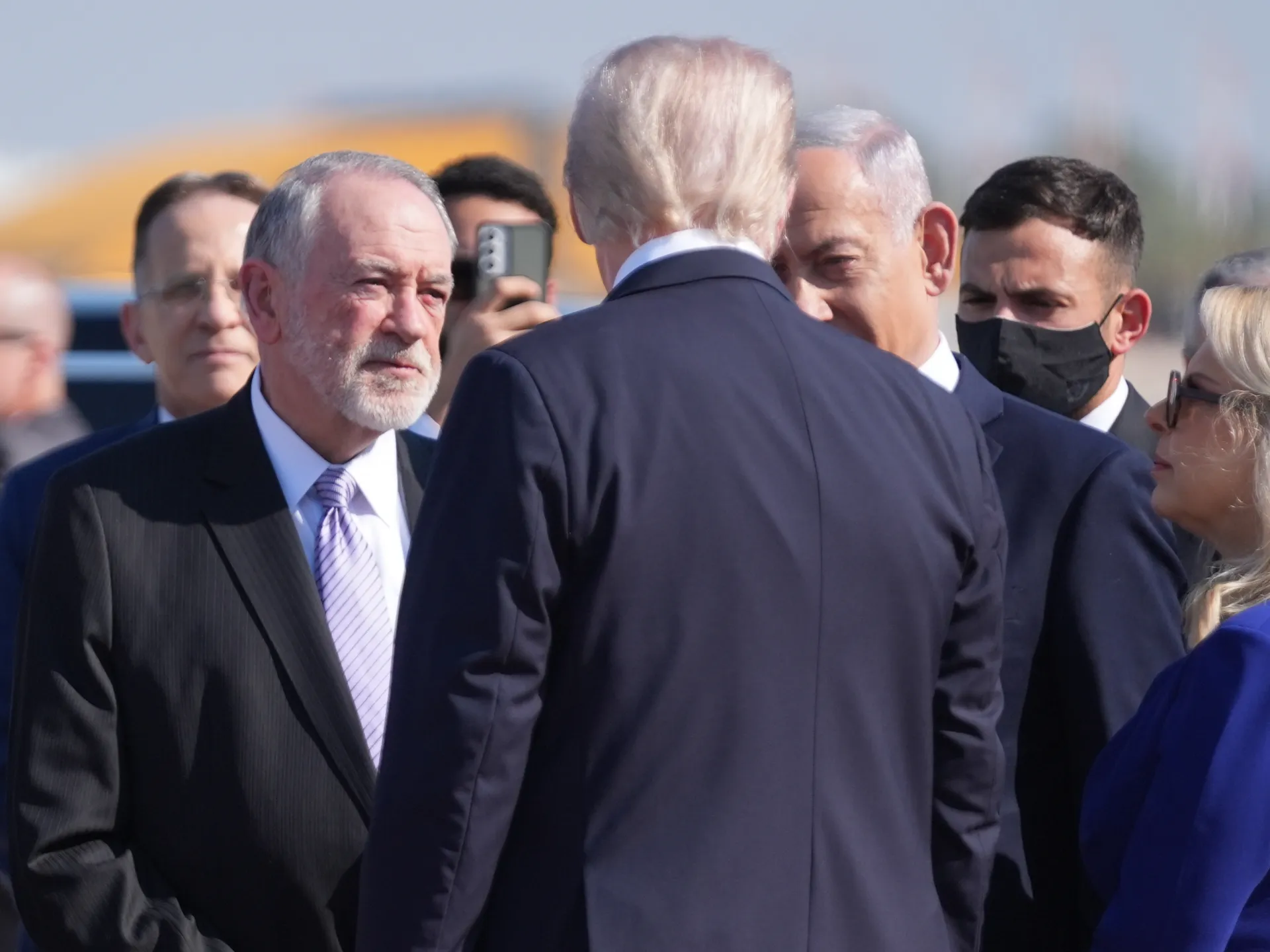
前阿肯色州州长迈克·赫卡比(Mike Huckabee)现任特朗普驻以色列大使,代表了福音派基督教和共和党政治的相同交集。他对以色列定居点的辩护和对传统领土术语的拒绝反映了圣经主张具有重大政治分量的世界观。
Former Arkansas Governor Mike Huckabee, now Trump’s ambassador to Israel, represents the same intersection of evangelical Christianity and Republican politics. His defence of Israeli settlements and rejection of conventional territorial terminology reflect a worldview in which biblical claims carry substantial political weight.
这些人物并没有创建联盟;他们是联盟当前的守护者。他们的影响力超出了言辞。国会关于军事援助、外交保护和制裁的投票将政治承诺转化为政策。基督教犹太复国主义组织通过教会网络、游说、基层动员和与民选官员的直接接触来维持这种影响力,即使其他共和党人质疑海外承诺,也保持其优先事项的突出地位。
These figures did not create the alliance; they are its current custodians. Their influence extends beyond rhetoric. Congressional votes on military assistance, diplomatic protection and sanctions translate political commitments into policy. Christian Zionist organisations sustain that influence through church networks, lobbying, grassroots mobilisation and direct engagement with elected officials, keeping their priorities prominent even when other Republicans question overseas commitments.
特朗普和美国优先的复杂性唐纳德·特朗普总统加强了与以色列的福音派联盟,同时在共和党外交政策中引入了一支竞争力量:美国优先。
Trump and the America First complication President Donald Trump strengthened the evangelical alliance with Israel while introducing a competing force into Republican foreign policy: America First.
其政府承认耶路撒冷为以色列首都并将美国大使馆迁至该地,实现了基督教锡安主义者的长期优先目标。然而,特朗普的联盟中也包括那些对外国纠葛、海外军事干预和大规模对外援助持怀疑态度的选民。这在共和党共识内部造成了紧张关系。
His administration’s recognition of Jerusalem as Israel’s capital and relocation of the US embassy fulfilled a longstanding Christian Zionist priority. Yet Trump’s coalition also includes voters sceptical of foreign entanglements, overseas military interventions and extensive foreign assistance. This creates a tension within the Republican consensus.
对于基督教锡安主义者而言,支持以色列可能构成一种《圣经》义务。而对于一些“美国优先”共和党人来说,问题在于这种承诺是否推进了明确界定的美国利益。两者的立场虽有重叠,但并不完全相同。
For Christian Zionists, support for Israel can constitute a biblical obligation. For some America First Republicans, the question is whether that commitment advances a clearly defined American interest. The positions overlap but are not identical.
当对以色列的支持可能引发更大规模的战争、额外的部队部署或美国在中东的长期介入时,这种紧张关系会进一步加剧。伊朗战争恰恰暴露了这一矛盾,迫使共和党人直面支持以色列与“美国优先”反对长期海外军事介入之间的冲突点。宗教保守派可能认为《圣经》承诺具有决定性意义,而更具孤立主义倾向的共和党人则质疑其财政成本、潜在的美国人员伤亡以及华盛顿代表其他国家所承担的责任。
The tension sharpens when support for Israel risks a wider war, additional deployments or prolonged US involvement in the Middle East. The Iran war has exposed precisely this contradiction, forcing Republicans to confront the point at which support for Israel collides with America First opposition to prolonged military involvement abroad. Religious conservatives may regard biblical commitments as decisive while more isolationist Republicans question the financial costs, potential American casualties and responsibilities Washington assumes on behalf of other countries.
特朗普试图兼顾这两类选民群体,但他们相互竞争的利益诉求变得越来越难以调和。
Trump has sought to accommodate both constituencies, but their competing priorities have become increasingly difficult to reconcile.
代际裂痕 一个更具深远影响的挑战可能正在年轻共和党人中浮现。
The generational crack A more consequential challenge may be emerging among younger Republicans.
皮尤研究中心三月的一项调查发现,总体而言,共和党人对以色列的高于,比例为58%对41%。然而,在18至49岁的共和党人中,57%的人持负面看法。年长的共和党人则明显更持正面态度。皮尤中心五月的一项独立调查显示,18至29岁倾向共和党的美国人中,42%对以色列人持正面看法,而65岁及以上人群中这一比例为83%。尽管这两项调查测量的群体和问题有所不同,但两者都揭示了一个显著的代际分歧。
A Pew Research Center March survey found that Republicans overall viewed Israel more favourably than unfavourably, by 58 percent to 41 percent. Among Republicans aged 18 to 49, however, 57 percent held unfavourable views. Older Republicans remained substantially more favourable. A separate Pew survey in May found that 42 percent of Republican-leaning Americans aged 18 to 29 viewed Israelis favourably, compared with 83 percent of those aged 65 and older. Although the surveys measured different populations and questions, both revealed a pronounced generational divide.
这些调查结果并不意味着年轻的共和党人已经放弃以色列或反对美以关系。他们确实表明,联盟的支持者正在变得不那么一致。
These findings do not mean younger Republicans have abandoned Israel or oppose the US-Israel relationship. They do suggest that the constituency underpinning the alliance is becoming less uniform.
原因超出了意识形态范围。美国年轻人通过社交媒体、报道加沙和平民苦难的图片来应对冲突。一些人质疑基于宗教的外交政策承诺是否符合美国利益。其他人支持以色列,同时反对以色列政府的特定政策。对以色列的不利看法不应自动等同于对以色列人的敌意或对双边关系的拒绝。
The reasons extend beyond ideology. Younger Americans encounter the conflict through social media, reporting on Gaza and images of civilian suffering. Some question whether religiously grounded foreign-policy commitments serve American interests. Others support Israel while opposing particular Israeli government policies. Unfavourable views of Israel should not automatically be equated with hostility towards Israelis or rejection of the bilateral relationship.
然而,在以色列问题上分歧日益严重的一代人可能不太容易接受将对国家的支持视为对保守身份的不容置疑考验的呼吁。
Nevertheless, a generation increasingly divided over Israel may prove less receptive to appeals treating support for the country as an unquestionable test of conservative identity.
不断变化的共和党遗产以色列已发展成为不仅仅是外交政策的优先事项。对于数百万保守派来说,对以色列的支持一直是共和党宗教和道德认同的一部分。
A changing Republican inheritance Israel has developed into more than a foreign-policy priority. For millions of conservatives, support for Israel has been part of the Republican Party’s religious and moral identity.
这一遗产仍然强大,但其基础正在发生变化。年轻的共和党人是在伊拉克和阿富汗战争、特朗普的民族主义、对外国干预的怀疑以及以色列对加沙的战争中成长起来的。他们的问题不仅涉及神学,还越来越涉及国家利益:美国支持以色列能达到什么目的,代价是什么,宗教信仰何时应该屈服于战略考虑?
That legacy remains powerful, but its foundations are shifting. Younger Republicans came of age during the wars in Iraq and Afghanistan, Trump’s nationalism, scepticism towards foreign intervention and Israel’s war on Gaza. Their questions increasingly concern not only theology but also national interests: What does US support for Israel accomplish, what does it cost and when should religious conviction yield to strategic considerations?
此类问题可能会重塑联盟,而不会立即解散联盟。福音派组织保留着大量资源、接触政治领导人的机会以及动员选民的能力。他们的国会盟友拥有相当大的影响力,民意的变化并不会自动转化为新的政党纲领或国会投票。
Such questions may reshape the coalition without immediately dismantling it. Evangelical organisations retain substantial resources, access to political leaders and the capacity to mobilise voters. Their congressional allies hold positions of considerable influence, and changing public opinion does not automatically translate into new party platforms or congressional votes.
然而,年长的福音派选民与年轻共和党人之间日益扩大的分歧,构成了一个更长期的挑战。基督教锡安主义曾取得巨大成功,以至于其基本前提已成为共和党的正统观念。但是,当新一代开始质疑这些根本假设时,一个依靠宗教信仰、机构影响力和党派忠诚维系的联盟将更难维持。
Yet the growing divide between older evangelical voters and younger Republicans presents a longer-term challenge. Christian Zionism succeeded so thoroughly that its premises became Republican orthodoxy. But an alliance sustained by religious conviction, institutional influence and partisan loyalty becomes harder to preserve when a new generation questions those underlying assumptions.
几十年来,对以色列的支持可以同时被表述为外交政策和信仰。但越来越多的年轻共和党人可能要求不同的理由,即基于可证明的美国利益,而非仅仅基于宗教义务。共和党对以色列的支持能否经受住这一转变的考验,可能会成为该党不断演变的身份认同的一项决定性考验。
For decades, support for Israel could be presented simultaneously as foreign policy and faith. Increasingly, younger Republicans may demand a different justification, one grounded in demonstrable US interests rather than religious obligation alone. Whether Republican support for Israel can survive that shift may become a defining test of the party’s evolving identity.