在这座长期习惯了闷热潮湿的夏季的沿海城市,停电可以重塑一整天的生活。
In this coastal city long accustomed to sweltering, humid summers, the absence of electricity can reshape an entire day.
停电时,风扇和空调就会安静下来。睡眠变得困难。学生们争先恐后地在天黑之前完成作业。孩子们涌上街头,而年轻人则漂向大海,寻找流动的空气和凉爽的海水。在医院内,治疗不能推迟到灯重新亮起,电力的重量完全不同。
When the power cuts out, fans and air conditioners fall silent. Sleep becomes difficult. Students race to finish their homework before darkness arrives. Children spill onto the streets while young men drift towards the sea in search of moving air and cooler waters. Inside hospitals, where treatment cannot be postponed until the lights come back on, electricity carries a different weight altogether.
也门的权力危机早于当前战争。即使在冲突之前,也只有约55%的人口能够获得各种来源的电力,这是中东和北非使用率最低的国家之一。
Yemen’s power crisis predates the current war. Even before the conflict, only about 55 percent of the population had access to electricity from all sources, which is among the lowest rates in the Middle East and North Africa.
自2015年以来,基础设施遭到破坏,燃料短缺以及发电和配电系统老化,使供应变得更加脆弱。
Since 2015, damage to infrastructure, fuel shortages and ageing generation and distribution systems have left supplies even more fragile.
在亚丁,发电站继续面临反复关闭,使居民长时间断电。据报道,向亚丁运送燃料的油轮的保险费增加也使危机恶化。
In Aden, power stations continue to face repeated shutdowns, leaving residents without electricity for long periods. Insurance premium increases on tankers carrying fuel to Aden have also reportedly made the crisis worse.
在亚丁的一个社区,一名男子在电网下行走,长期频繁的停电已经成为日常生活的一部分。[Belal Khaled/半岛电视台]国际货币基金组织(IMF)今年发布的一项评估称,由于结构性弱点和燃料短缺导致频繁停电,亚丁每天仅获得两到六个小时的电力。
A man walks beneath a web of power lines in a neighbourhood in Aden, where long and frequent power cuts have become part of daily life. [Belal Khaled/Al Jazeera] An assessment by the International Monetary Fund (IMF) published this year said Aden was receiving just two to six hours of electricity a day as structural weaknesses and fuel shortages caused frequent outages.
当太阳在城市上空落下时,一天的第二部分开始了。家庭和企业陷入黑暗,只有电池和太阳能系统供电的小灯点缀。居民通常不知道最近的停电会持续多久,也不知道停电后还会持续多久。
As the sun sets over the city, a second part of the day begins. Homes and businesses slip into darkness, punctuated only by small lights powered by batteries and solar systems. Residents often do not know how long the latest blackout will last, or how long the power will stay on once it comes back.
夏季时,亚登气温逼近摄氏40度(华氏104度),其后果难以避免。年中接受采访的市民表示,由于长期停电困扰这座城市,他们的家已变得近乎无法居住。炎热并不总会随日落而消退。
During the summer, when temperatures in Aden climb towards 40 degrees Celsius (104 degrees Fahrenheit), the consequences are hard to escape. Residents in the city interviewed in the middle of the year said their homes had become almost unbearable during the prolonged power cuts that plague the city. The heat does not always disappear when the sun goes down.
日落后,亚登大部陷入黑暗,仅有零星灯光来自电池供电设备或替代能源系统。[Belal Khaled/Al Jazeera]“有时来电时我们正睡着,醒来才能用上电。我们的生活已系于电力的来去,”一位居民说。对她的家庭而言,停电不仅以小时计,更以麻烦计。孩子们无法入睡,食物在温热的冰箱里变质,家务只能搁置。
After the sun sets in Aden, most of the city falls into darkness with only scattered lights coming from devices powered by batteries or alternative energy systems. [Belal Khaled/Al Jazeera]“Sometimes the power comes back while we are asleep, so we wake up to use it. Our lives have become tied to when electricity comes and goes,” one resident said. For her family, an outage is measured not just in hours but in problems. Children are unable to sleep, food spoils in warm refrigerators and housework must wait.
屋内热得难耐时,优素福便前往海边。他说,大海不再仅是休闲之地,更成了躲避城市难熬酷暑的避难所。
When the heat inside becomes too much, Youssef heads for the coast. The sea, he said, is no longer just a place of recreation but a refuge from the unbearable heat of the city.
“断电数小时,屋里实在待不住,”他说,“没风扇没空调,湿气让体感更糟,所以我们来海边。” 傍晚时分,青年与家庭聚集在滨海长廊。有人游泳,有人只是坐在水边,等待城市降温。但大海无法解决亚登的电力危机。数小时后,优素福回家,有时发现房屋仍如离开时一般。“有时回来电还没来,又得重新开始等,”他说。
“When the electricity is off for hours, it is very difficult to stay inside,” he said. “There is no fan and no air conditioning, and the humidity makes the heat worse, so we come to the sea.”Towards the end of the day, young men and families gather along the waterfront. Some swim. Others simply sit beside the water and wait for the city to cool. But the sea cannot solve Aden’s electricity crisis. Hours later, Youssef returns home and sometimes finds the house exactly as he left it. “Sometimes we get back and the power is still out, and we start waiting all over again,” he said.
对穆罕默德、赛义德和阿卜杜拉这样的孩子而言,停电改变了童年的发生地。家里太热时,他们便转移到街上,在房屋间奔跑,或与其他孩子坐在一起,直到深夜。
For children like Mohammed, Saeed and Abdullah, blackouts have changed where childhood takes place. When their homes become too hot, they move into the street, running between houses or sitting with other children until late.
一个孩子在亚丁的一个社区里行走,那里的一代人在成长过程中只知道电力是时有时无的,而不是日常生活中恒常的一部分。[Belal Khaled/Al Jazeera]“屋里太热了,所以我们下来在街上玩,”其中一个男孩说。“我们踢足球或者和朋友们坐在一起。停电的时候外面比较好。”对他们来说,停电不是什么特别的事件。这是他们成长过程中生活的一部分。
A child walks through a neighbourhood in Aden, where a generation has grown up knowing electricity as something that comes and goes rather than being a constant part of daily life. [Belal Khaled/Al Jazeera]“It gets hot inside the house, so we come down and play in the street,” one of the boys said. “We play football or sit with our friends. Outside is better when the electricity is off.”For them, a blackout is not an extraordinary event. It is part of the life they have grown up with.
影响延续到了教室里。在亚丁,联合国开发计划署记录了7000多名学生和教师在停电期间在黑暗、闷热的教室里挣扎。在八所学校和一个教育办公室安装太阳能系统提供了帮助。一名教师报告说,一些学生因高温晕倒。
The effects follow them into the classroom. In Aden, the United Nations Development Programme documented more than 7,000 students and teachers struggling in dark, stifling classrooms during power cuts. The installation of solar systems at eight schools and an education office has helped. One teacher reported that some students had fainted due to the heat.
在家里,备考可能要靠一盏充电灯或一个小型太阳能系统(如果他们有的话)。
At home, preparing for exams can depend on a rechargeable lamp or a small solar system if they have one.
在医院里,别无选择,只能硬熬过黑暗。手术室、重症监护室、实验室、医用冰箱和透析机都依赖持续供电。
In hospitals, there is no option but to simply wait out the darkness. Operating theatres, intensive care units, laboratories, medical refrigerators and dialysis machines all depend on continuous power.
世界卫生组织(WHO)表示,反复停电扰乱了也门各地的救命医疗服务,迫使医疗机构依靠市电、发电机和太阳能系统的组合来维持运转。
The World Health Organization (WHO) says recurring power cuts disrupt lifesaving health services across Yemen, forcing facilities to rely on combinations of grid electricity, generators and solar systems.
2025年,世卫组织向全国177家医疗机构提供了约433万升(114万加仑)燃料,以维持发电机和基本设备运转。
In 2025, the WHO supplied about 4.33 million litres (1.14 million gallons) of fuel to 177 health facilities across the country to keep generators and essential equipment running.
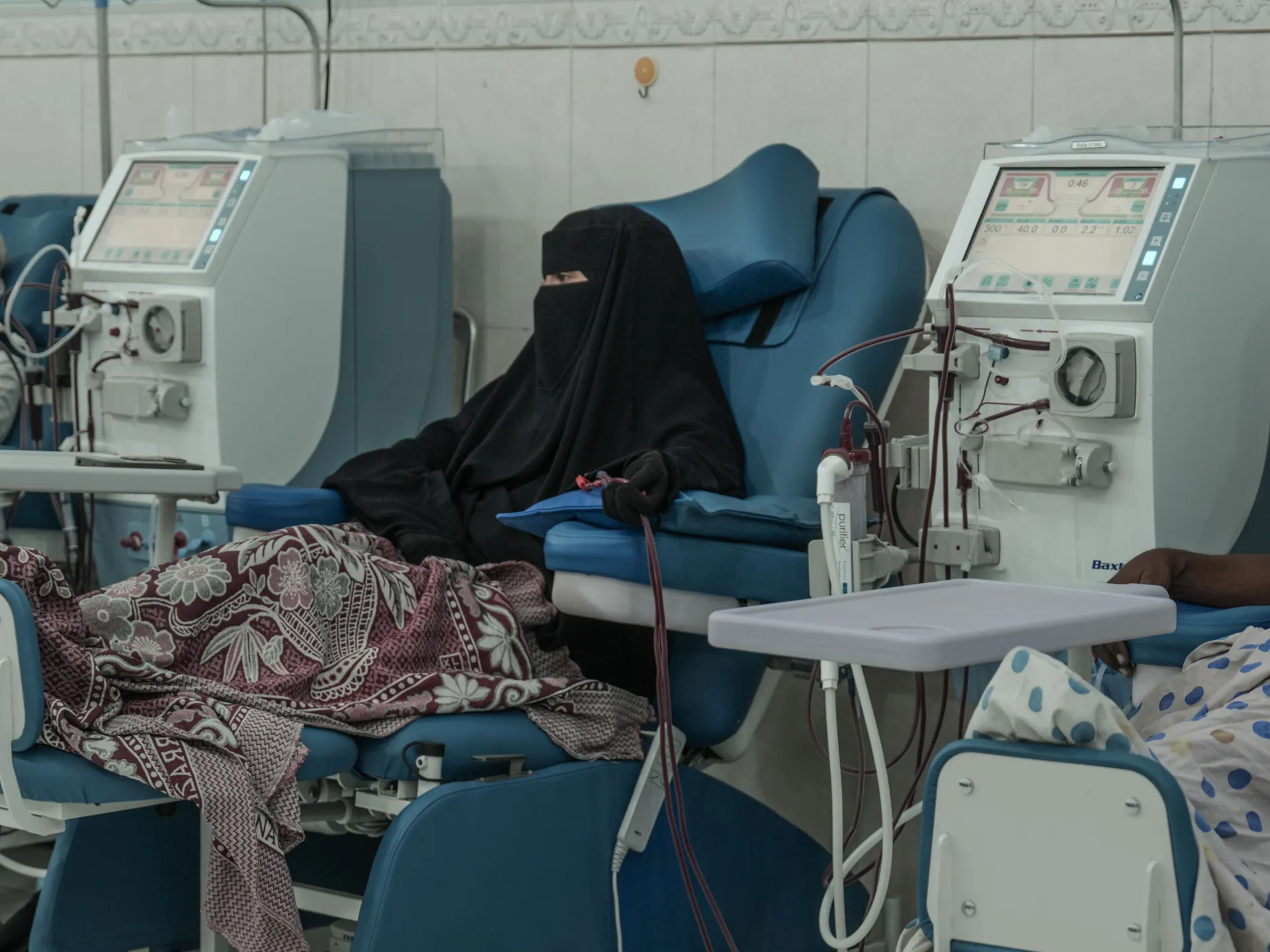
亚丁一家医院内的保温箱。在医疗机构,停电扰乱手术室、重症监护室、保温箱、实验室和依赖持续供电的关键设备。[Belal Khaled/Al Jazeera]肾病患者扎伊娜·艾哈迈德看着管子将她的血液输送到透析机。
An incubator inside a hospital in Aden. At health facilities, power cuts disrupt operating rooms, intensive care units, incubators, laboratories and vital equipment that depend on continuous electricity. [Belal Khaled/Al Jazeera] Zeina Ahmed, a kidney patient, watches tubes carry her blood to a dialysis machine.
“对在家里的人来说,停电意味着寒冷和黑暗。而对我们在这里的人来说,首先想到的是能不能做透析,”她说。
“For people at home, a power cut means heat and darkness. For us here, the first thing we think about is whether we will be able to have our dialysis or not,” she said.
“我知道我需要这场透析才来医院。如果推迟了,我就会一直想着什么时候能做,机器能不能继续运转。”经过多年电网供电不稳定,太阳能电池板、蓄电池和发电机已成为也门景观中熟悉的一部分。它们安装在屋顶上,为买得起的家庭、企业和学校提供电力。
“I come to the hospital knowing that I need this session. If it is delayed, I keep thinking about when I will get it and whether the machines will continue to work.”After years of unreliable grid supply, solar panels, batteries and generators have become familiar parts of Yemen’s landscape. They sit on rooftops, providing power to the homes, businesses and schools that can afford them.
据世卫组织称,也门超过一半的家庭现在以某种形式依赖太阳能,而医院和其他医疗机构越来越多地采用太阳能系统,以维持基本服务运行。
More than half of Yemen’s homes now rely on solar power in some form, according to the WHO, while hospitals and other health facilities are increasingly adopting solar systems to keep essential services running.
买得起大功率电池板和蓄电池的家庭能使用更多电器。其他人可能只有足够的电力供一盏灯、一台风扇或一个手机充电器使用——这是对抗黑暗和酷热的一层脆弱屏障。
Families who can afford to buy larger panels and batteries can power more appliances. Others might have just enough electricity for a light, a fan or a phone charger – a fragile shield against the dark and the heat.