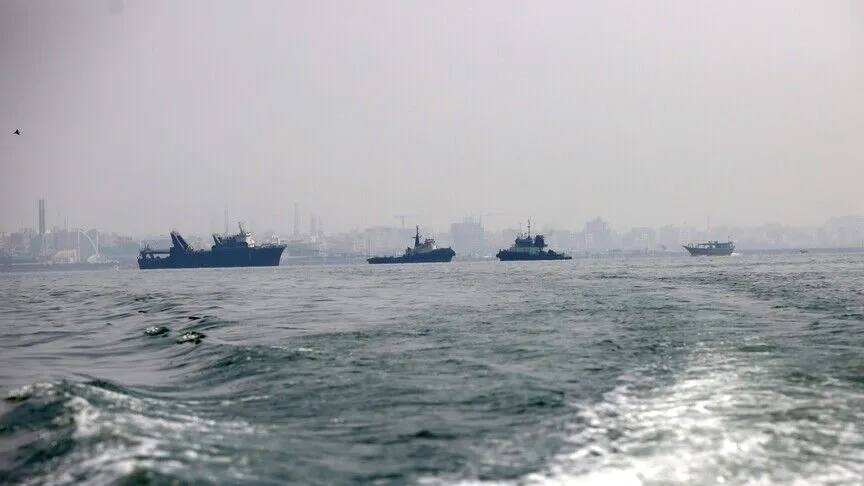
伊朗坚称霍尔木兹海峡仍处于关闭状态,但持续有石油运输的证据却与此形成对比,这凸显了不受限制的海上航行与在出口体系受扰情况下运输货物之间的区别。
Iran’s insistence that the Strait of Hormuz remains closed contrasts with evidence of continuing oil shipments, highlighting the distinction between unrestricted navigation and cargoes moving through a disrupted export system.
据伊朗国家通讯社IRNA报道,伊朗议会议长穆罕默德·巴盖尔·卡利巴夫周日表示,《伊斯兰堡备忘录》规定的七项条件得到满足前,这条水道不会重新开放。
Iranian Parliament Speaker Mohammad Bagher Ghalibaf said Sunday that the waterway would not reopen until seven conditions under the Islamabad memorandum were fulfilled, according to state news agency IRNA.
他说,美国方面的提议已通过中间人转达,德黑兰将在推进外交的同时保持军事戒备。IRNA的报道没有列出这七项条件的具体内容。
He said US proposals had been conveyed through intermediaries and that Tehran would pursue diplomacy alongside military preparedness. IRNA’s account did not enumerate the seven conditions.
提供海事数据的情报机构Kpler利用截至9月29日可获得的数据称,9月1日至28日,来自海湾地区的非伊朗原油和凝析油出口量最低达到每日1650万桶,与战前平均水平相当。
Regional exports recover through different exits Kpler, an intelligence firm providing maritime data, using data available on Sept. 29, put non-Iranian crude and condensate exports from the Middle East Gulf region at a minimum of 16.5 million barrels per day over Sept. 1–28, matching their pre-war average.
其中60%,即每日990万桶,经霍尔木兹海峡运输;23%在阿曼湾沿岸装载,17%经红海运出。
Of that volume, 60%, or 9.9 million barrels per day, crossed Hormuz, while 23% loaded on the Gulf of Oman coast and 17% departed through the Red Sea.
尽管仍有一些船只通过海峡,但经确认的运输量仍比战前水平低四分之一以上。
Although some vessels continue passing the strait, confirmed flows remained more than a quarter below pre-war levels.
各国数据显示,经霍尔木兹海峡运输的已确认沙特原油从8月的每日70万桶升至9月的每日280万桶。
Country-specific figures show confirmed Saudi crude crossing the strait rose from 0.7 million barrels per day in August to 2.8 million in September.
Kpler还认定,9月阿联酋的原油出口量为每日320万桶,伊拉克为每日260万桶。这些数字统计的是按原产国划分的出口量,而非船舶通过海峡的次数;阿联酋的总量还包括绕行路线。
Kpler also identified September regional crude exports of 3.2 million barrels per day from the UAE and 2.6 million from Iraq. These measure country-origin exports rather than ship passages, and the UAE total includes bypass routes.
Kpler表示,自7月美国重新实施封锁以来,经霍尔木兹海峡运输的伊朗原油仍接近于零。
Iranian crude crossings have remained near zero since July following the reimposition of the US blockade, according to Kpler.
美国能源信息署数据显示,2025年上半年,霍尔木兹海峡每日运输的石油为2090万桶。这一历史数据涵盖原油和石油类液体,统计范围比Kpler计算的9月数据更广。
Hormuz carried 20.9 million barrels per day of oil in the first half of 2025, according to the US Energy Information Administration. That historical figure covers crude and petroleum liquids, a broader category than Kpler’s September measure.
Windward发现可见船只与流动石油之间的差距 可见船只的通行量仍远低于战前水平。
Windward finds a gap between visible ships and moving oil Visible ship passages remain sharply below pre-war levels.
海事情报公司Windward在9月29日发布的评估报告中记录,9月16日至23日期间有55艘船只通过自动识别系统(AIS)被观测到,这一数字比战前每周约910艘的基准水平低约94%。然而,关闭自动识别系统发射器的船只并未被计入可见船只数量,因此这一百分比并不能反映所有实际通行量的下降幅度。
Maritime intelligence firm Windward’s Sept. 29 assessment recorded 55 AIS-visible transits during Sept. 16–23, about 94% below its pre-war benchmark of roughly 910 a week. However, ships operating with their Automatic Identification System transmitters switched off are missing from the visible count, so that percentage does not establish the decline in all actual passages.
通过结合卫星探测数据与Vortexa的货运数据,Windward估计,9月20日至22日期间有2672万桶原油经霍尔木兹海峡运出。
Using satellite detections alongside Vortexa cargo data, Windward estimated that 26.72 million barrels of crude exited through Hormuz during Sept. 20–22.
这相当于三天内平均每天约890万桶,但Windward强调,船队活动属于阶段性高峰,而非持续性的出口水平。其中约三分之二随后通过船对船转运方式移动。
That equates to approximately 8.9 million barrels per day across the three days, but Windward stressed that convoy movements represented peaks rather than a sustained export rate. Roughly two-thirds subsequently moved through ship-to-ship transfers.
Windward还报告称,9月份沙特海湾港口发生了55起原油轮装载事件,其中50起涉及超大型原油运输船,该数据援引自Vortexa。几乎所有装载活动都是在关闭AIS的情况下进行的。这些是装载事件,而非穿越霍尔木兹海峡的不同船只数量。
Windward also reported 55 crude tanker loading events at Saudi Gulf ports in September, including 50 involving very large crude carriers, citing Vortexa data. Almost all loaded with AIS switched off. Those are loading events, rather than counts of distinct ships crossing Hormuz.
这些数据表明,在评估该海峡的通行状况时,必须区分船只数量、货量以及码头活动。
The figures illustrate why ship counts, cargo volumes and terminal activity need to be distinguished when assessing the strait’s status.
油轮穿梭运输确保货物持续流动 Kpler于9月21日发布的另一份分析指出,经霍尔木兹海峡的穿梭贸易正在扩大,货物在阿曼湾的油轮之间进行转运。
Tanker shuttles keep cargoes moving A separate Kpler analysis published Sept. 21 described an expanding shuttle trade through Hormuz, with cargoes transferred between tankers in the Gulf of Oman.
船只先将石油运出海湾,再将其移交给其他船只继续运输。富查伊拉和索哈尔已成为重要的转运点,但其配套服务面临运力限制。
Ships carry oil out of the Gulf before handing it to other vessels for onward transport. Fujairah and Sohar have become important transfer points, although their supporting services face capacity constraints.
Kpler警告称,转运活动并不等同于穿越霍尔木兹海峡的货量:同一批货物可能经过多次转运,导致相同的原油在转运统计数据中重复出现。
Kpler warned that transfer activity is not equivalent to the volume crossing Hormuz: a cargo can undergo several transfers, causing the same barrels to appear repeatedly in transfer statistics.
追踪可能漏报过境,也可能产生虚假过境记录。关闭信号发射器可能掩盖真实移动,而定位信号失真可能生成实际上并未发生的过境记录。
Tracking can miss crossings or create false ones Switching off transmitters can conceal real movements, while distorted positioning signals can generate apparent crossings that never occurred.
在另一项于8月开展的研究中,Windward将642条霍尔木兹海峡通行记录中的393条(即61.2%)判定为与GPS干扰有关的虚假移动。
In a separate August study, Windward classified 393 of 642 logged Hormuz transits, or 61.2%, as false movements associated with GPS jamming.
其核验方法将通行记录与每日主动发送AIS信号的船舶基准名单进行比对,并排除了无信号航行的船舶。因此,该结果反映的是这一追踪数据集中的误差,而非所有穿越霍尔木兹海峡船舶的完整数量。
Its verification method compared transit logs with a daily baseline of vessels actively transmitting AIS and excluded vessels operating without signals. The result therefore concerns errors in that tracking dataset rather than a complete count of all ships crossing Hormuz.
Kpler同样利用卫星图像、船舶吃水变化、港口信息和目的地核查来验证移动情况。其近期出口总量代表已确认的最低数量,并可能随着证据陆续出现而修订。
Kpler likewise uses satellite imagery, vessel draught changes, port information and destination checks to verify movements. Its recent export totals represent minimum confirmed volumes and can be revised as evidence arrives.
绕行路线受到物理条件限制。沙特东西输油管道将原油输送到红海沿岸的延布,而阿联酋阿布扎比原油管道则连接霍尔木兹海峡以外的富查伊拉。
Bypass routes have physical limits Saudi Arabia’s East-West pipeline carries crude to Yanbu on the Red Sea, while the UAE’s Abu Dhabi Crude Oil Pipeline connects to Fujairah outside Hormuz.
这些路线降低了对海峡的依赖,但仅凭管道容量无法确定抵达买方的石油数量。
These routes reduce dependence on the strait, but pipeline capacity alone does not determine how much oil reaches buyers.
在7月的一项评估中,Kpler将延布的装船基础设施列为沙特进一步扩大绕行出口的限制因素,估计码头可持续装运能力约为每日450万至500万桶。若要进一步扩大出口,不仅需要改善港口条件,也需要提升管道沿线的输送能力。
In a July assessment, Kpler identified Yanbu’s loading infrastructure as a constraint on further Saudi bypass exports, estimating sustainable terminal capacity at around 4.5 million to 5 million barrels per day. Further expansion would require improvements at the ports as well as along the pipelines.
持续运输也面临物流限制。通过穿梭运输和海上转运维持货流,需要更多船舶和装卸作业。
Continuing flows come with logistical constraints Maintaining shipments through shuttles and offshore transfers requires more vessels and handling.
Kpler估计,将转运作业从阿曼湾转移至印度西部,会使船舶往返航程从约17天延长至21天。若改在马来西亚近海转运,航程将增至约38.5天,从而降低每艘油轮可提供的运输能力。
Kpler estimated that shifting transfer operations from the Gulf of Oman to western India would extend round voyages from roughly 17 to 21 days. Using offshore Malaysia would increase them to about 38.5 days, reducing the transport capacity each tanker provides.