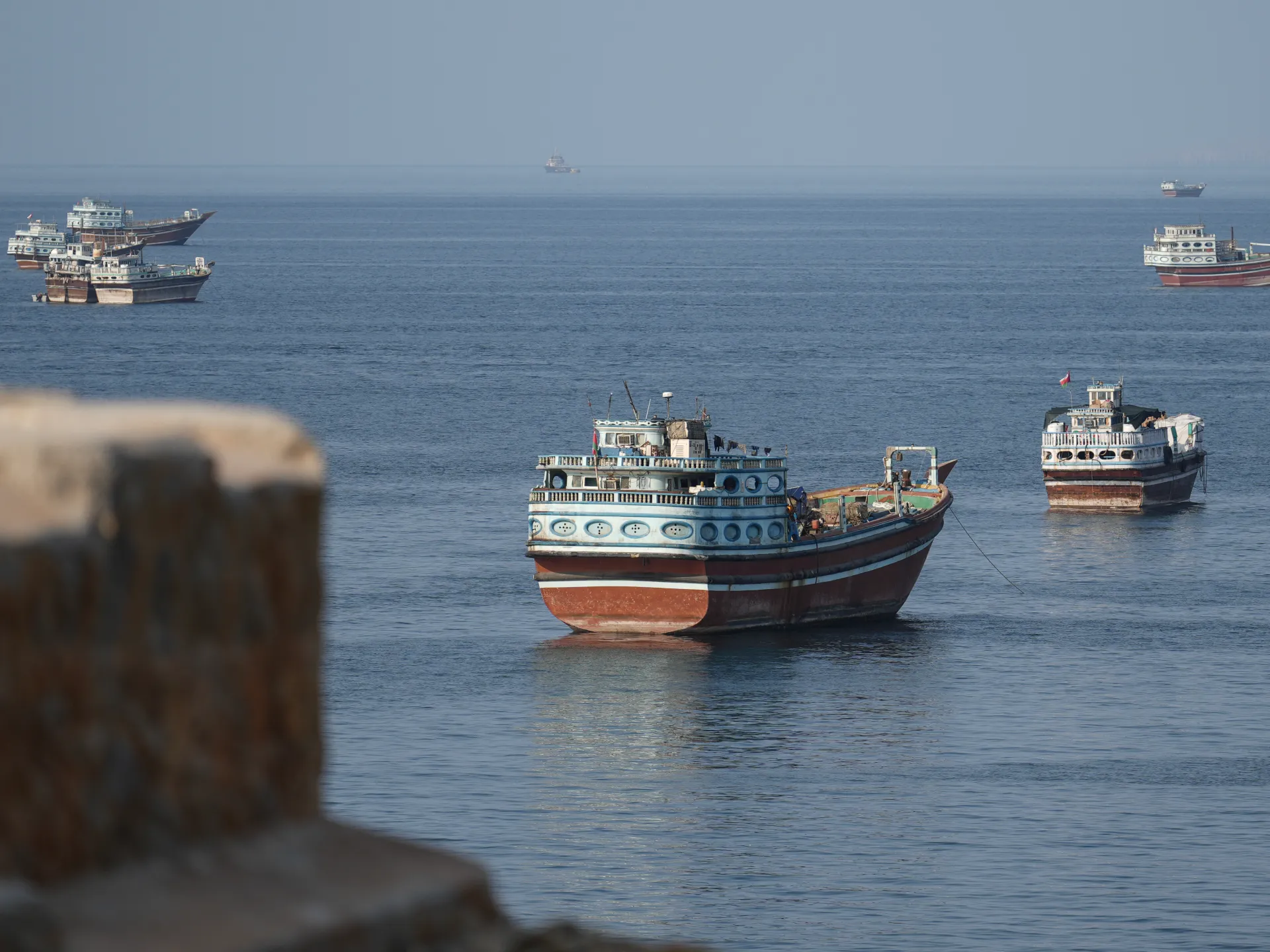
在2月美国和以色列对伊朗开战前,也曾出现过类似情况,尽管德黑兰试图封锁霍尔木兹海峡并袭击船只。
seen before the US-Israel war on Iran began in February, despite Tehran’s attempts to blockade the Strait of Hormuz and attack vessels.
据海事追踪公司Kpler的初步数据,9月最后一周,该地区原油出口量有四天超过战前水平,达到每日1950万至2250万桶。战前,该地区平均出口量约为每日1800万桶。
Crude exports from the region exceeded pre-war levels on four days in the final week of September, reaching between 19.5 and 22.5 million barrels per day (bpd), according to provisional data from maritime tracking firm Kpler. Before the war, exports averaged about 18 million bpd.
迄今为止,该地区石油出口量激增主要被归因于美国船只为油轮驶出霍尔木兹海峡提供护航,同时船对船转运活动不断增加,降低了船只成为伊朗导弹和无人机目标的风险。分析人士称,油价持续高企,是因为保险费率仍然处于高位——这源于市场对伊朗发动袭击的担忧——同时市场已将重新爆发热战的可能性纳入考量。
This surge in oil exports from the region has so far largely been attributed to US ships shepherding tankers out of the Strait of Hormuz, coupled with increasing ship-to-ship transfers that reduce the risks of being targeted by Iranian missiles and drones. Meanwhile, the fact that oil prices have remained high has been explained by analysts as the result of still-elevated insurance rates — driven by fears of Iranian attacks — and a market factoring in the possibility of a return to a hot war.
但Kpler的一名高级分析师上周为高油价下石油出口增加提出了另一种解释。她认为,海湾国家可能正在向伊朗付款,以获准让石油通过——这可能使德黑兰获得货物价值中相当大的一部分。战前,全球五分之一的石油和天然气出口经过霍尔木兹海峡。这一解释站得住脚吗?这对战争和油价意味着什么?Kpler分析师说了什么?
But a senior Kpler analyst last week offered a different explanation for the rise in oil exports at high prices. Gulf countries, she suggested, may be paying Iran to allow their oil through – potentially handing Tehran a significant portion of the value of the cargo. Before the war, one-fifth of the world’s oil and natural gas exports passed through the Strait of Hormuz. Does this explanation hold up, and what does it mean for the war and oil prices? What did the Kpler analyst say?
Kpler政策与地缘政治风险主管米歇尔·布罗哈德 recently 表示,一些国家可能正在向伊朗付款,以获准通过霍尔木兹海峡。
Michelle Brohard, head of policy and geopolitical risk at Kpler, recently said some countries could be paying Iran for passage through the Strait of Hormuz.
她上周在接受能源分析师罗里·约翰斯顿采访时说:“我怀疑有人正在支付一笔‘过路费’,从而让这些船只安全通行。”
“I suspect there is a toll that’s being paid, which is giving these ships safe passage,” she said in an interview last week with energy analyst Rory Johnston.
她还补充道:“我还怀疑,这些国家知道,无论从美国为船只护航的角度看,还是从向伊朗支付货物价值10%或20%的角度看,这种做法都不可持续。”
“I also suspect that these countries know that this is unsustainable from a perspective of [the] US escorting [ships], and also unsustainable from them paying Iran 10 percent of their cargo, or 20 percent of their cargo,” she added.
“所以,你开始看到一场我所谓的竞赛:赶在战争重启之前,尽可能多地运出去,而且越快越好。”这一说法尚未得到独立核实,而布罗哈德提出这一说法时,将其描述为推测,而非有证据支持的结论。
“So you’re starting to see like what I would call like a race to get out as much as possible, as quickly as possible before the war restarts.”The claim has not been independently verified, and Brohard presented it as speculation rather than a finding backed by evidence.
但早在3月,航运期刊《劳氏日报》就报道称,伊朗伊斯兰革命卫队(IRGC)已经实施了一种“收费站”制度,以控制经由该海峡的船舶通行。
But as early as March, the shipping journal Lloyd’s List reported that Iran’s Islamic Revolutionary Guard Corps (IRGC) had already imposed a “toll booth” system to control vessel traffic through the strait.
战争期间,特朗普政府曾多次表示,根据与华盛顿达成的任何潜在协议,伊朗都不会被允许收取过境费。
The Trump administration, during the course of the war, has repeatedly said Iran will not be permitted to charge a toll under any potential agreement with Washington.
海峡关闭导致全球燃料成本飙升,并使世界各地的农业部门面临考验。霍尔木兹海峡的通行情况如何?海事追踪机构报告称,中东石油外运量正在不断增加。
Closure of the strait has caused global fuel costs to soar and has tested agricultural sectors across the world. What does traffic in the Hormuz look like? Oil is increasingly getting out of the Middle East, marine trackers report.
9月最后一周,七日均值升至每日约1800万桶以上,这是2月美国和以色列对伊朗的战争开始以来首次超过战前水平。
In the last week of September, the seven-day average climbed above the roughly 18 million bpd recorded before the US-Israel war on Iran began in February – the first time since the conflict started.
克普勒表示,不包括伊朗的原油出口量也已恢复至9月平均每天至少1650万桶。
Kpler said crude exports excluding Iran had also recovered to at least 16.5 million bpd as an average over September.
石油出口量持续增长的态势延续到了10月。伊拉克国有油轮公司周六宣布,该公司已使用一艘超大型油轮(VLCC)通过霍尔木兹海峡运送了200万桶原油;其总经理称,这是该公司数十年来首次进行此类作业。
The pattern of increasing oil exports has continued into October. Iraq’s state-owned Oil Tanker Company on Saturday announced that it had transported two million barrels of crude on a very large crude carrier (VLCC) through the Strait of Hormuz, in what its director general said was the company’s first such operation in decades.
克普勒表示:“如今有40%的石油绕开霍尔木兹海峡,穿越该海峡的大部分原油都在海上更换油轮”,其中很大一部分石油通过沙特阿拉伯和阿联酋的管道输送。
According to Kpler, “40 percent now bypass Hormuz, and most crude crossing the strait changes tankers offshore”, with much of it flowing through Saudi Arabia and the United Arab Emirates pipelines.
出口数据还包括经红海转运的货物,红海正日益成为霍尔木兹海峡的重要替代通道。
The export figures also include supplies moved through the Red Sea, which has become an increasingly important alternative to the Strait of Hormuz.
此外,Kpler的数据不包括任何可能关闭自动识别系统应答器、避免被发现而穿越关键通航路线的船只。然而,伊朗否认了有关其已失去对该海峡控制权的说法。
Moreover, the Kpler figures exclude any vessels that may have crossed the key transit route with their automatic identification system transponders turned off to avoid detection. Iran, however, disputes suggestions that it has lost control of the waterway.
伊斯兰革命卫队高级指挥官阿里·法达维周表示,沿美国监督的航线通行的每天只有300万至400万桶石油,并将这一数量形容为与战前运输量相比“微不足道”。
Senior IRGC commander Ali Fadavi said on Sunday only three to four million bpd were travelling along a US-supervised route and described that amount as “negligible” compared with pre-war traffic.
战事爆发七个月前,该海峡每天通常有约125艘大型商船通行,其中包括油轮、气体运输船、散货船和集装箱船。目前油价是多少?
Before the war erupted seven months ago, the strait routinely saw about 125 large commercial vessels a day, including tankers, gas carriers, bulk carriers and container ships. Where are oil prices right now?
随着中东出口恢复,油价略有回落。上周,七国集团还宣布决定从紧急储备中释放1亿桶石油。
Oil prices have eased marginally as exports from the Middle East recover. Last week, the Group of Seven countries also announced a decision to release 100 million barrels of oil from emergency reserves.
但原油价格仍明显高于战前水平。周一,布伦特原油价格约为每桶101.59美元,下跌0.71%;美国西得克萨斯中质原油价格下跌1.2%,约为每桶90.05美元。
But crude prices remain significantly higher than pre-war levels. Brent crude was trading at about $101.59 a barrel on Monday, down 0.71 percent, while US West Texas Intermediate fell 1.2 percent to about $90.05.
Wealth Club首席投资策略师苏珊娜·斯特里特表示:“尽管该地区出口重新增长,但长期而言,很大程度上仍取决于能源供应的安全。”她指出,“局势仍然紧张”。
“Despite exports from the region resurging, much will depend, longer-term, on the security of energy supplies,” said Susannah Streeter, chief investment strategist at Wealth Club, noting that the “situation is still tense”. “The Strait of Hormuz remains a major flashpoint, with the attack on another tanker on Sunday keeping worries bubbling about the potential for further disruption to supplies, particularly if shipping companies become increasingly reluctant to risk sending vessels through the crucial chokepoint.”
“霍尔木兹海峡仍是主要的紧张爆发点。周日又一艘油轮遭袭,使人们持续担忧供应进一步中断的可能性,尤其是在航运公司越来越不愿冒险让船只通过这一关键瓶颈的情况下。”英国海事贸易行动办公室(UKMTO)负责监测航运交通,该办公室称,周一,一艘正在通过霍尔木兹海峡的油轮收到伊斯兰革命卫队的命令,要求其返航,否则可能成为袭击目标。Kpler分析师的说法有依据吗?
On Monday, an oil tanker transiting the Strait of Hormuz was instructed by the IRGC to turn back or risk being targeted, according to the United Kingdom Maritime Trade Operations (UKMTO) group that monitors shipping traffic. Does the Kpler analyst’s claim hold weight?
学者阿卜杜勒·哈利克表示,虽然开普勒分析师布罗哈德关于已建立过境费安排的推测可能“合理”,但最好将其描述为“非正式安全机制,而非正式海上征税”。
Academic Abdul Khalique says while Kpler analyst Brohard’s speculation that a transit-fee arrangement has been put in place may be “plausible”, it is best described as an “informal security mechanism rather than a formal maritime levy”.
“没有公开证据证实存在系统性的、国家运营的伊朗收费制度,”利物浦约翰摩尔斯大学海事中心主任哈利克告诉半岛电视台。
“No public proof confirms a systematic, state-run Iranian toll system,” Khalique, head of the Liverpool John Moores University Maritime Centre, told Al Jazeera.
他说,《联合国海洋法公约》(UNCLOS)保障通过国际海峡的过境通行权,“这使得正式征税在法律上存疑”。
He said the United Nations Convention on the Law of the Sea (UNCLOS) safeguards transit passage through international straits, “rendering formal tolls legally dubious”.
IG集团首席市场分析师克里斯·博尚普告诉半岛电视台,布罗哈德推测的情景“部分”可能发生。
Chris Beauchamp, chief market analyst at IG Group, told Al Jazeera that Brohard’s suspected scenario was “in part” possible.
“中东地区的一切似乎都在暗中进行,从美国护航船只到伊朗悄悄收费,”他告诉半岛电视台。
“Everything appears to be happening under the radar in the Middle East, from the US convoying ships to Iran quietly charging tolls,” he told Al Jazeera.
9月,美国政府还对一家数字资产公司BitBank实施了制裁,称该公司被伊朗霍尔木兹安全海事服务局——一个由该国政府设立、负责收取允许船只安全通过海峡费用的机构——用于向德黑兰转移资金。
In September, the US government also imposed sanctions on a digital assets firm, BitBank, that it said had been used by Iran’s Hormuz Safe Marine Services Authority — a body set up by the country’s government to collect fees for allowing the safe transit of vessels through the strait — to transfer money to Tehran.
然而,博尚普表示,石油出口目前面临的最大挑战是他所谓的“航运问题”。
However, Beauchamp said the biggest challenge for oil exports was now what he called the “problem of shipping”.
“海湾地区的接驳系统在输出石油方面发挥了巨大作用,但这需要大量船只,这推高了运费,同时也减少了该地区以外的供应,”他补充道。
“The shuttle system in the Gulf is doing wonders in getting oil out, but it requires plenty of ships, and that has pushed freight rates higher while also reducing supply beyond the region itself,” he added.
根据博尚普的说法,亚洲买家也被迫从更远的地方寻找原油,“延长了运输时间”。
According to Beauchamp, Asian buyers are having to find crude from further away too, “lengthening transit times”.
“这以前是一个供应故事,现在却关乎航运的底层机制。虽然不那么引人注目,但可以说它更重要,也更难解决,”他说。“船不是一夜之间就能造出来的。”
“Previously a supply story, this is now one about the underlying mechanics of shipping. While less exciting, it is arguably much more important and trickier to solve,” he said. “Ships don’t get built overnight.”