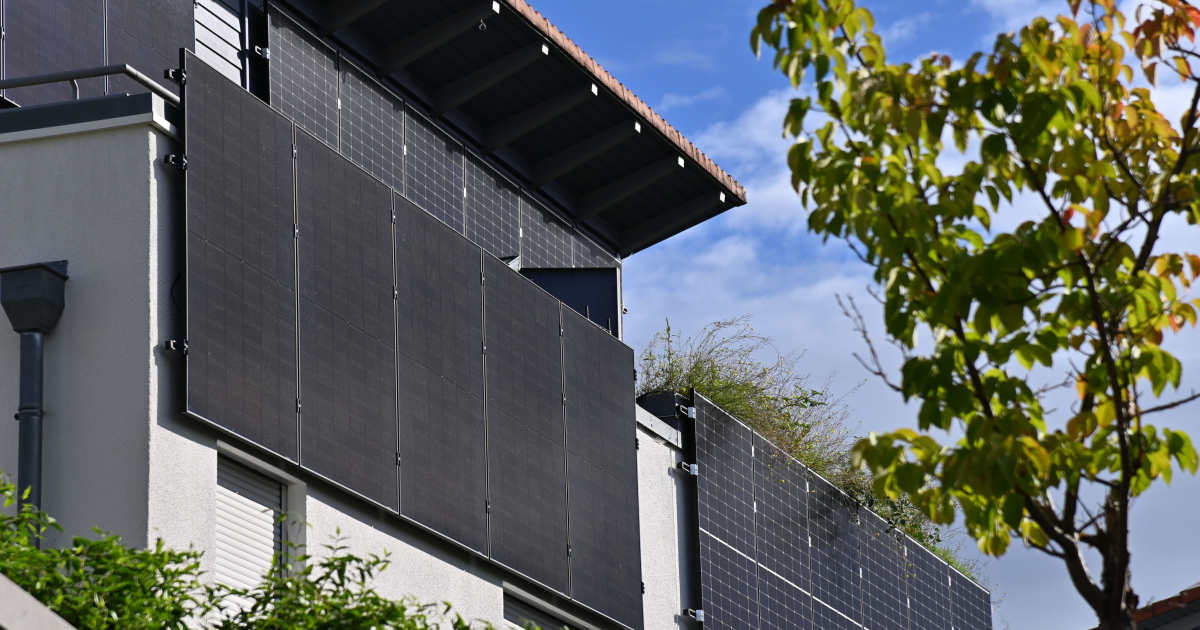
Grist Climate Desk尽管阳光是免费且丰富的资源,但将其能量转化为实际可用能源对房主来说仍然是一项极具挑战性的任务。虽然过去十年间太阳能的成本下降了90%以上,但安装太阳能电池板仍然需要投入大量资金。此外,仅仅将电池板安装在屋顶上并不够——房屋可能还需要进行电力系统的升级改造。
Grist Climate Desk As free and abundant as sunlight may be, harnessing its power remains stubbornly difficult for homeowners. While the cost of solar energy has plummeted more than 90 percent in the last decade, panels remain a significant investment. And it’s not as easy as just slapping panels on a roof, as your home may need electrical upgrades too.
其实情况并非如此不可改变。像德国这样的国家已经大力推广“阳台太阳能”技术(也称为“插电式太阳能”技术):这种技术使用体积更小、成本更低的太阳能装置,可以直接连接到家庭的电源插座上。这种技术可以部分替代家庭所需的电力,每年为用户节省数百美元的费用,同时也让那些拥有阳台或后院的租户也能使用太阳能。更重要的是,房屋从电网中获取的电力越少,对电网系统的压力就越小——尤其是在高温天气里,当所有人都在使用耗电量大的空调时。
It doesn’t have to be this way. Countries like Germany have encouraged the proliferation of balcony solar also known as plug-in solar: smaller, cheaper arrays that hook into a home’s electrical outlets. This offsets some of a residence’s energy use, saving users hundreds of dollars a year and opens up solar energy to renters with balconies or backyards. As a bonus, the less power homes have to draw from the grid, the less stress they put on the system, especially during heat waves when everyone is running energy-hungry air conditioners.
上周三,加利福尼亚州正式加入了推广阳台太阳能的行列:州长加文·纽森签署了一项法案,允许这个美国人口最多的州居民使用这项技术。加利福尼亚州因此加入了犹他州、缅因州等少数几个认识到该技术潜力的州行列——这些州都看到了这项技术在应对能源成本上升问题、推动清洁能源发展方面的作用。
This past Wednesday, California officially got in on the balcony-solar action as Gov. Gavin Newsom signed a bill allowing residents of the nation’s most populous state to adopt the technology. It joins a handful of states like Utah and Maine in seeing the potential of the technology to generate clean electricity and save residents money as energy costs rise.
“在可再生能源发电的地点直接使用这些电力,确实是非常理想的。”
“It’s really ideal to use renewable electricity exactly where it’s generated.”
“这项技术非常重要且极具影响力,”提出该立法的州参议员斯科特·维纳(Scott Wiener)在周四的新闻发布会上表示。“这项法案消除了人们使用插电式太阳能设备所面临的最大障碍——即必须与PG&E或其他电力公司协商签订并网协议。”
“This technology is very important and very powerful,” state Senator Scott Wiener, who authored the legislation, said during a press conference Thursday. “And what this bill does is eliminate the massive barrier to people using plug-in solar, which is that you’d have to go and negotiate an interconnection agreement with PG&E or the other utility.”
插电式太阳能设备的普及标志着电力系统运行方式的根本性变革。传统上,电力公司依靠燃烧煤炭、天然气等化石燃料来发电;当需求增加时(比如人们在下班后回家并开启电器时),电力公司会相应增加发电量,从而维持供需平衡。
The proliferation of plug-in solar marks a fundamental shift in how the electrical grid operates. Historically, utilities have generated electricity by burning fossil fuels like coal and natural gas. When demand rose, like when people returned home at the end of the day and switched on appliances, they’d just ramp up production.
然而,对于风能和太阳能等可再生能源来说,这种机制并不适用。如果需求保持稳定,但太阳已经落山,电力公司就无法通过太阳能板产生足够的电力;同样,如果风力突然减弱,风力发电也会受到影响。因此,除了建设更多的风能和太阳能发电设施外,电力公司还配备了大型蓄电池,用于储存这些能源以供后续使用。这种做法使得电力系统更加灵活——即使在夜间或风力较弱的情况下,系统仍能持续供电。
This kept the system in a sort of equilibrium, a constant balance of supply and demand. That, though, doesn’t quite work the same with renewables like wind and solar. If demand is holding steady and the sun is setting, a utility isn’t generating as much electricity with its panels. Same with wind, if the skies suddenly calm. So in addition to building out wind and solar farms, utilities are deploying huge batteries to save that energy for later use. This creates a more flexible grid that can still hum with electricity when things are dark or calm.
这种转变正让你——消费者——成为电网中更积极的参与者。多年来,安装太阳能设备的家庭一直将多余的能源送回电网。虽然插电式太阳能系统产生的电量可能远不及屋顶铺满光伏板的效果,但它仍然有助于提升电网的灵活性。它不是向系统供电,而是减少了从电网中取用的电力。如果这种模式能在整座城市推广,这些微小的减幅将积少成多,从而抵消人工智能数据中心和电气化带来的部分需求增长。
This transformation is turning you, the consumer, into a more active participant in the grid. For years now, homes with solar have sent excess energy back to the grid. While plug-in solar might generate a fraction of what you’d get from a roof covered in panels, it can still help make the grid more flexible. Instead of feeding the system, it reduces the amount of electricity drawn from the grid. Scaled across a whole city, these small reductions can add up, offsetting some of the growth in demand from things like AI data centers and electrification. (Think induction stoves needing electricity instead of natural gas, and EVs charging instead of burning fuel.)“This is one of the most immediate, concrete, tangible, real, and affordable things that we can do to start to get control of our high energy costs, but also save our planet,” Bernadette Del Chiaro, senior vice president for California at the nonprofit Environmental Working Group, said during the press conference.
(比如,感应炉使用电力而非天然气,电动汽车充电而非燃烧燃料。)“这是我们能采取的最直接、最具体、最切实可行且最经济的方式之一,既能开始掌控高企的能源成本,又能拯救我们的地球,”非营利组织“环境工作小组”加州分部的高级副总裁伯纳黛特·德尔基亚罗在新闻发布会上表示,“所以这真是一举两得。”简而言之,插电式太阳能有助于在用电高峰时段缓解电网拥堵——天气炎热、大家同时开启空调时,往往也有充足的阳光照射到光伏板上。
“So it’s really a twofer.”Basically, plug-in solar could help reduce congestion in the system at peak times—when it’s hot out and everyone’s running their AC, there’s also plenty of sun to strike the panels.
它正将住宅和公寓变成一个由微型发电厂组成的分布式网络。“在可再生能源被产生的地方直接使用,无疑是理想的选择,”气候解决方案非营利组织“减排计划”中专注于建筑环境的资深科学家阿曼达·史密斯表示。
It’s turning homes and apartments into a distributed network of tiny power plants. “It’s really ideal to use renewable electricity exactly where it’s generated,” said Amanda Smith, a senior scientist focusing on the built environment at Project Drawdown, a climate solutions nonprofit.
电网互动性的增强,伴随着电力账单的持续飙升。基础款的插电式太阳能系统只需花费几百美元,通过节省能源,大约四年就能收回成本(所在州的能源成本越高,投资回报周期就越短)。然而,对许多家庭来说,这仍然是一笔不小的投入,因此理想情况下,州政府也应提供补贴,鼓励民众采用这项技术。
This increased interactivity in the grid comes as utility bills continue to skyrocket Basic plug-in solar systems will set you back a few hundred dollars, and you can potentially make back that money with energy savings in around four years (The higher the energy costs in your state, the quicker you’d get that return on your investment.) Still, for a lot of households, that’s a major investment, so ideally a state also provides rebates for people to adopt the technology.
随着加利福尼亚州如今也加入了插电式太阳能的行列,其他州很可能也会紧随其后。“这件事之所以如此重要,真正关键的原因在于,这是普通人参与太阳能光伏发电最经济实惠的方式,”史密斯说道。“无论加利福尼亚州未来发生什么,我认为都会对许多其他州的未来市场产生影响。因此,这里将成为一个值得重点关注的关键市场。”
With California now aboard the plug-in solar train, your state may well follow. “The big reason this is a big deal really is because it’s the most affordable way for people to actually participate with solar PV,” Smith said. “Whatever happens in California is going to influence, I think, a lot of other future state markets. So it’s going to be a key one to watch.”