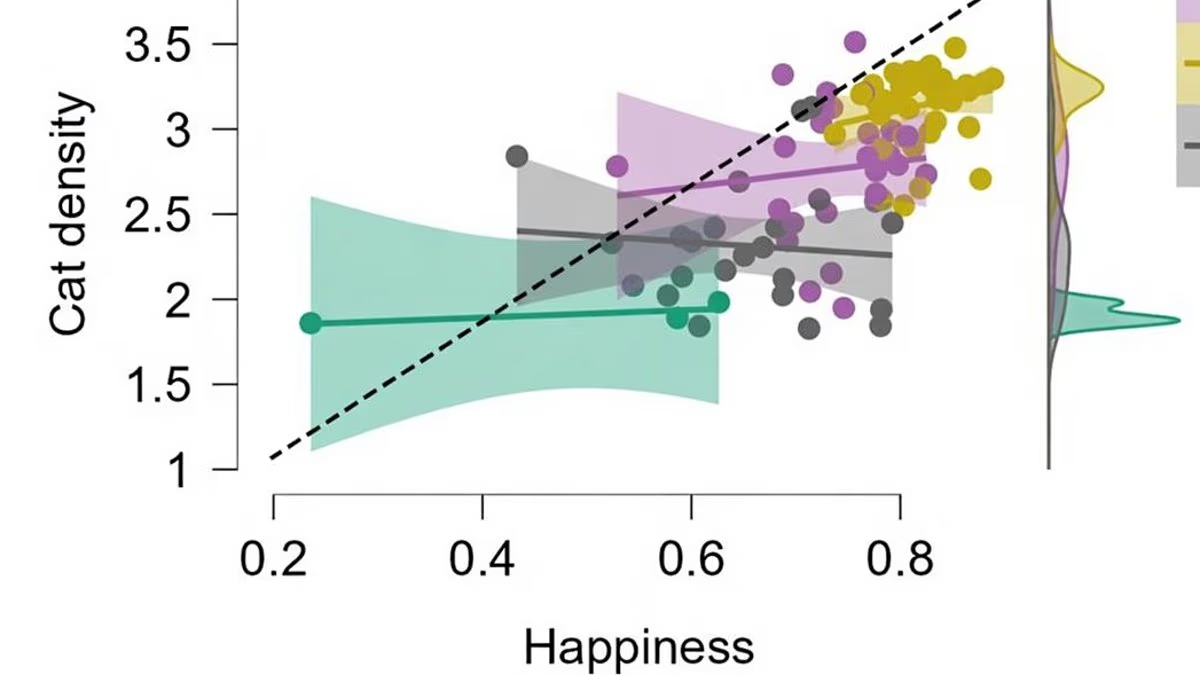
科学家们发现了一个意想不到的“幸福关键”:更多的猫!在一项新的研究中,研究人员调查了财富、猫的数量以及弓形虫(一种由猫携带的常见寄生虫)的传播情况之间的关系。研究结果发表在《Plos One》期刊上,发现人均猫数量较多的国家,其国民的幸福感也较高。
Scientists have uncovered an unlikely key to happiness: more cats! In a new study, researchers investigated the relationship between wealth, cat numbers, and the prevalence of Toxoplasma gondii, a common parasite carried by felines. Analysis, published in the journal Plos One, revealed that countries with more cats per person had higher levels of happiness.
其中一个可能的解释是:猫能够提供陪伴和情感支持,从而提升人们的幸福感。
And one explanation could be that cats provide companionship and emotional support, making people happier overall.
该研究的合著者、拉脱维亚大学的因德里基斯·克拉姆斯(Indrikis Krams)博士在接受《每日邮报》(Daily Mail)采访时说:“我们的研究发现,每万人拥有更多猫的国家,其国民报告的幸福感通常更高。这种关联非常显著;即使在统计模型中考虑了其他多个变量后,猫的数量与国民幸福感之间的正相关关系依然存在。”
Co-author Dr Indrikis Krams, of the University of Latvia, told the Daily Mail: 'Our study found that countries with more cats per 10,000 inhabitants tended to have higher levels of reported happiness. 'The association was quite strong, and cat density remained positively associated with national happiness even when several other variables were considered in our statistical model.'
经济学家们早就注意到国家幸福感与社会经济因素(如收入、国内生产总值(GDP)和医疗支出)之间存在密切关联。为了探究是否还有其他更复杂的因素在起作用,研究人员进一步研究了养猫行为可能带来的影响。
A new study shows that the more cats per person a country has, the happier its population tends to be (illustrated) Economists have long documented strong correlations between national happiness levels and socioeconomic factors such as income, Gross Domestic Product (GDP), and medical spending. To see if other, more complex, factors could also be at play, the researchers decided to look at the possible impacts that cat ownership might be having.
他们收集了包括英国、美国、澳大利亚、加拿大、中国和俄罗斯在内的93个国家的全国性数据,发现每万人拥有的猫数量与国民幸福感之间存在显著的正相关关系。研究人员认为,猫可能通过提供社交和情感上的支持来提升整个国家的幸福感。例如,先前的研究已经证明宠物能够减轻孤独感、提供陪伴、缓解压力并改善情绪。
The researchers gathered national data from 93 countries, including the UK, US, Australia, Canada, China and Russia. They discovered a 'strong' association between the number of cats per 10,000 inhabitants and levels of reported happiness. One possible explanation is that cats provide social and emotional benefits that increase happiness at the national level, they said. For example, previous studies have demonstrated that pets reduce loneliness, offer companionship, reduce stress and improve mood.
不过,也有可能的是,猫的数量实际上只是其他真正导致幸福感提升的因素的体现罢了。
However, it might also be the case that cat density is simply an indicator of other factors that really lead to increased happiness.
另一方面,研究人员发现,对猫传播的常见寄生虫弓形虫(标记为IgM)的暴露程度越高,幸福感水平越低。克拉姆斯博士表示:“在人们拥有资源和生活条件、能够饲养伴侣动物的社会中,可能已经具备与更高幸福感相关的特征。”
On the other hand, researchers found that higher exposure to Toxoplasma gondii, a common parasite spread by cats (labelled IgM), leads to lower levels of happiness 'Societies in which people have the resources and living conditions that allow them to keep companion animals may already have characteristics associated with greater well-being,' says Dr Krams.
“因此,猫可能有助于提升幸福感,但猫的密度也可能在一定程度上反映了更广泛的社会和经济状况。我们的研究无法区分这两种可能性。”然而,研究人员的分析还揭示了一个非常重要的问题。
'Therefore, cats may contribute to happiness, but cat density may also partly be an indicator of broader social and economic conditions. Our study cannot distinguish between these possibilities.' However, the researchers' analysis also revealed a very important catch.
尽管猫的数量与幸福感的提升相关,但携带寄生虫暴露程度较高的国家,整体幸福感反而更低。
While cat levels were associated with increased happiness, countries with higher exposure to the parasites they carry were sadder overall.
弓形虫是一种极为常见的寄生虫,全球约有10%至30%的人口在不知情的情况下被感染。
Toxoplasma gondii is an exceptionally common parasite, and about 10 to 30 per cent of the global population are infected without knowing it.
然而,猫是唯一能让该寄生虫完成其生命周期的物种,感染通常通过猫的粪便传播。
However, cats are the only species in which the parasite can complete its lifecycle, and the infection is most commonly spread through their faeces.
研究人员发现,一个国家中感染该寄生虫的人口比例越高,该国的整体幸福感水平就越低。
The researchers discovered that the more people in a country were infected by the parasite, the lower the national level of happiness became.
虽然这并不能证明弓形虫直接导致不幸福,但研究人员认为,背后可能存在某种生物学机制在起作用。
While this doesn't prove that Toxoplasma gondii causes unhappiness, the researchers suggest that there could be a biological mechanism working behind the scenes.
克拉姆斯博士说:“先前的研究已将弓形虫感染与情绪、认知和行为的变化联系起来,并与多种神经精神疾病相关。”越来越多的研究表明,潜伏性感染可能与多种疾病的发展有关,包括精神分裂症、强迫症、自闭症谱系障碍、焦虑症、抑郁症和人格障碍。
Dr Krams says: 'Previous research has linked T. gondii infection with changes in mood, cognition and behaviour, and with several neuropsychiatric conditions.' A growing body of research suggests that latent infection could be associated with the development of conditions including schizophrenia, obsessive-compulsive disorder, autism spectrum disorders, anxiety disorders, depression, and personality disorders.
克拉姆斯博士表示:“可能的机制包括免疫和炎症反应,以及对参与情绪和情绪调节的神经递质系统和神经回路的影响。”
'Possible mechanisms include immune and inflammatory responses and effects on neurotransmitter systems and neural circuits involved in mood and emotional regulation,' says Dr Krams.
科学家认为猫可以通过缓解孤独感、减轻压力和改善情绪来提高幸福感。然而,他们的研究无法表明这是因果关系还是相关性(库存图片)令人惊讶的是,该研究还发现,拥有更多猫的国家的寄生虫感染水平并没有更高。事实上,猫的密度与较低的弓形虫总体暴露率有关。
Scientists think that cats could improve happiness by alleviating loneliness, reducing stress, and improving mood. However, their study cannot show whether this is a case of causation or correlation (stock image) Surprisingly, the research also found that countries with more cats didn't have higher levels of parasite infections. In fact, cat density was associated with lower overall rates of Toxoplasma gondii exposure.
研究人员认为,这可能是因为猫密度较高的国家往往比人均猫较少的国家更富有。
The researchers suggest this may be because countries with higher cat density tend to be wealthier than those with fewer cats per capita.
合著者、图尔库大学的马库斯·兰塔拉博士告诉《每日邮报》:“我们的研究表明,这种明显的悖论可能可以用猫饲养方式的差异来解释。
Co-author Dr Markus Rantala, of the University of Turku, told the Daily Mail: 'Our study suggests that this apparent paradox may be explained by differences in how cats are kept.
“在较富裕的国家,猫密度往往很高,猫更有可能生活在室内,吃商业准备的食物,并接受兽医护理。这些情况降低了他们被感染和脱落T菌的机会。刚地卵囊。“这表明最重要的因素可能是猫的饲养方式,而不是街上猫科动物的数量。
'In wealthier countries, where cat density tends to be high, cats are more likely to live indoors, eat commercially prepared food, and receive veterinary care. These conditions reduce their chances of becoming infected and shedding T. gondii oocysts.' This suggests that the most important factor may be the way that cats are kept, rather than the sheer number of felines on the streets.