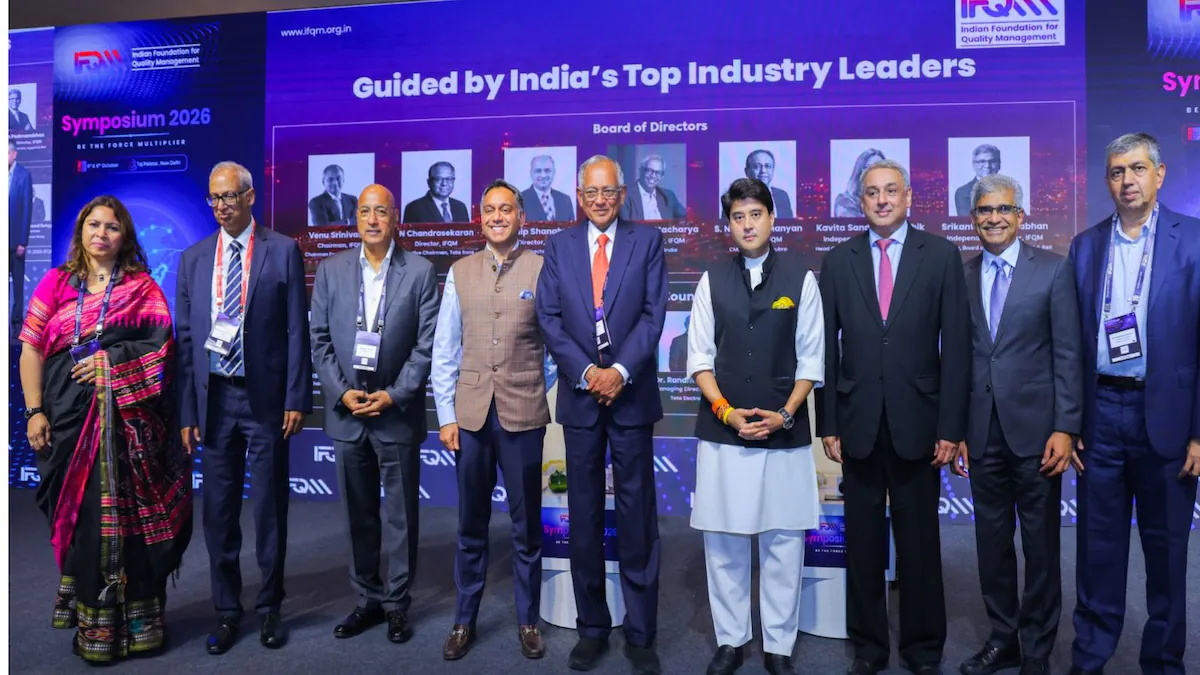
印度正在努力建设8至9座半导体制造厂,并制定6G技术标准,通信与东北部地区发展部部长乔蒂拉迪蒂亚·M·辛迪亚在德里举行的2026年IFQM研讨会上表示,该消息由ANI通讯社报道。辛迪亚称,其中一座半导体制造厂将建在阿萨姆邦。他还表示,政府正与印度理工学院合作制定6G技术标准,印度目标是占据全球6G专利的10%。
India is working towards setting up 8-9 semiconductor fabrication plants and developing standards for 6G technology, Union Minister for Communications and Development of North Eastern Region Jyotiraditya M Scindia said at the IFQM Symposium 2026 in New Delhi, according to ANI. Scindia said one of the semiconductor fabrication plants is coming up in Assam. He also said the government is working with IITs to develop standards for 6G technology, with India aiming to account for 10% of global 6G patents.
在为期两天的研讨会上,辛迪亚表示,印度有望成为质量、创新和自力更生的全球标杆。他在题为“赋能发达印度——通过技术、数字创新和包容性连接实现无边界发展”的演讲中,强调了技术和行业主导的倡议在印度“2047年发达印度”愿景中的作用。
Speaking at the two-day symposium, Scindia said India could emerge as a global reference point for quality, innovation and self-reliance. He was speaking on "Powering Viksit Bharat – Scale without Boundaries to Advance Development through Technology, Digital Innovation and Inclusive Connectivity", highlighting the role of technology and industry-led initiatives in India's Viksit Bharat@2047 vision.
此次会议汇集了政策制定者、行业领袖、首席执行官、全球质量专家和学者,共同讨论印度成为发达经济体并巩固其全球市场地位的努力。质量需融入企业文化拉尔森·图布罗公司主席兼首席执行官S·N·苏布拉马尼亚扬表示,印度还需要改善基础设施质量,并将质量作为组织文化的重要组成部分。“在基础设施领域,以高质量完成项目至关重要。”
The event brought together policymakers, industry leaders, CEOs, global quality experts and academics to discuss India's efforts to become a developed economy and strengthen its position in global markets. Quality needs to become part of business cultureLarsen & Toubro Chairman and Managing Director S N Subrahmanyan said India also needs to improve the quality of its infrastructure and make quality an integral part of organisational culture." In infrastructure, doing projects with quality is critical.
“我们尚未达到那个阶段,从全球实践中仍有许多值得学习的地方,”他说。Subrahmanyan表示,每位员工都应参与提升质量与创新,并补充道,像IFQM这样的举措可以帮助印度公司更贴近全球标准。塔塔集团控股公司执行主席N·钱德拉塞卡兰表示,印度在构建可持续基础设施和制度方面取得了显著进展,同时制造业、精密制造以及对教育和技能的投入也支撑了经济增长。
We are still not there yet; there is a lot to learn from global practices," he said. Subrahmanyan said every employee should be involved in improving quality and innovation, adding that initiatives such as IFQM could help Indian companies move closer to global standards. Tata Sons Executive Chairman N Chandrasekaran said India had made significant progress in building sustainable infrastructure and institutions, while manufacturing, precision manufacturing and investment in education and skills had supported economic growth."
据ANI报道,钱德拉塞卡兰说:“印度在打造可持续的世界级基础设施和制度方面取得了巨大进步。”他还补充说,在全球不确定性背景下,印度的经济表现得益于基础设施的扩展、制造业的发展以及对人力资本的投资。Venu Srinivasan受到表彰。IFQM主席Venu Srinivasan在该活动中获得了国际质量学院的认可。Srinivasan因通过质量原则和方法推动治理进步而荣获Marcos E J Bertin治理质量奖章。
India has made tremendous progress in developing sustainable world-class infrastructure and institutions," Chandrasekaran said, according to ANI. He added that India's economic performance amid global uncertainty had been supported by infrastructure expansion, manufacturing and investment in human capital. Venu Srinivasan honouredIFQM Chairman Venu Srinivasan was recognised by the International Academy for Quality at the event. Srinivasan received the Marcos E J Bertin Quality in Governance Medal for his contribution to advancing governance through quality principles and methods.
该奖项由IAQ受托人Sunil Sinha和IAQ主席Raul Molteni颁发。Molteni表示,该学院正从传统的质量管理迈向“为人道主义而设的质量”,同时强调了印度在推动全球质量议程方面日益重要的作用。Srinivasan还讲述了TVS摩托车公司与全面质量管理(TQM)的合作历程,并回顾了三十多年前日本质量专家在帮助该公司完善质量体系方面所发挥的作用。
The award was presented by IAQ Trustee Sunil Sinha and IAQ President Raul Molteni. Molteni said the academy was moving beyond traditional quality management towards "quality for humanity", while highlighting India's growing role in advancing the global quality agenda. Srinivasan also spoke about TVS Motor Company's journey with Total Quality Management and recalled the role played by Japanese quality experts in helping the company strengthen its quality systems more than three decades ago.
他表示,戴明奖应被视为一个组织TQM之旅的起点而非终点,这一过程还应延伸至建立利益相关者之间的信任并加强治理。IFQM与KIT签署谅解备忘录IFQM还与卡尔斯鲁厄理工学院(KIT)签署了一份谅解备忘录,以加强产业与学术界之间的合作。IFQM首席执行官兼董事Soumitra Bhattacharya在Srinivasan的见证下,与KIT的Gisela Lanza教授(博士、工程师)交换了该谅解备忘录。
He said the Deming Prize should be viewed as the beginning rather than the end of an organisation's TQM journey, with the process extending to building trust among stakeholders and strengthening governance.IFQM, KIT sign MoUIFQM also signed a memorandum of understanding with the Karlsruhe Institute of Technology to strengthen cooperation between industry and academia.IFQM CEO and Director Soumitra Bhattacharya exchanged the MoU with Prof Dr-Ing Gisela Lanza of KIT in the presence of Srinivasan.
此次合作将聚焦于质量、创新、研究和能力培养,同时将学术专长与印度产业不断变化的需求相结合。印度着眼于超越规模本次研讨会的首日讨论了制药与生命科学、基础设施和电子领域的相关议题。各场会议探讨了印度努力超越仿制药制造、在基础设施领域建立全球领导地位、增强中小微企业的竞争力,以及将本国打造为值得信赖的全球电子中心等方面的举措。
The partnership will focus on quality, innovation, research and capability building, while connecting academic expertise with the evolving requirements of Indian industry. India looks beyond scaleThe first day of the symposium featured discussions on pharmaceuticals and life sciences, infrastructure and electronics. The sessions examined India's efforts to move beyond generic manufacturing, build global leadership in infrastructure, strengthen the competitiveness of MSMEs and establish the country as a trusted global electronics hub.
其他会议则聚焦于技术驱动转型、人工智能、质量与创新、全球竞争力以及中国在全球经济中不断变化的作用。一场专为首席执行官设置的会议探讨了董事会层面的决策如何转化为车间层面的卓越质量和运营效率,讨论重点包括员工参与、领导层承诺和创新。本次研讨会凸显了日益受到重视的I利用技术、质量和创新扩大印度的规模,以增强印度企业在全球市场的竞争力
Other sessions focused on technology-led transformation, artificial intelligence, quality and innovation, global competitiveness and China's evolving role in the global economy. An exclusive CEO session examined how decisions at the boardroom level can translate into quality and operational excellence on the shop floor, with discussions focusing on employee participation, leadership commitment and innovation. The symposium highlighted the growing emphasis on combining India's scale with technology, quality and innovation to strengthen the competitiveness of Indian businesses in global markets