几年前,华盛顿的民主党人曾流传一张图表,显示经济在他们执政时总是表现更好,而在共和党人掌控白宫时则表现更差。从统计学角度看,这在过去几十年里确实属实——但大多无关紧要。原因在于,经济周期与总统任期有点像移动的板块:它们会重叠,但几乎从不完美契合。总统并不会真正创造出冠以其名的经济;他们只能或善或拙地对经济做出反应。
A few years ago, Democrats in Washington were circulating a chart showing that the economy always does better when they’re in charge and worse when Republicans hold the White House. This is statistically true — at least in the past few decades — but mostly irrelevant. And that’s because economic cycles and presidencies are sort of like shifting tectonic plates: They overlap, but they almost never perfectly align. Presidents don’t actually create the economies that attach to their names. They only react to them, ably or not.
这有两个原因。首先,经济动荡通常在人们感受到之前很久就已悄然发生,而数据往往需要数年才能追上现实。1992年,老布什竞选连任时,据估计经济按季度计算的增长率在1.4%至2.7%之间——这被视为帮助克林顿大获全胜的衰退证据。然而数年后,修正后的数据显示,虽然增长放缓,但实际增速稳稳维持在4%以上,复苏早已开始。
There are a couple of reasons for this. The first is that economic upheavals are generally underway long before people feel them, and it takes years for the data to catch up. In 1992, when George H.W. Bush was running for reelection, the economy was estimated to have grown, quarter by quarter, at rates between 1.4 and 2.7 percent — evidence of the recession that helped Bill Clinton roll to victory.
(到克林顿上任第一年结束时,经济增速已达5.6%。)你可以对其他总统做同样的练习,基本教训都是一样的:总统任期总是由他们继承的潜在趋势塑造的,即使这些趋势在当时并不可见。
Years later, though, revised numbers showed that growth rates, while flat, had actually been solidly above four percent and that the recovery was already underway. (By the end of Clinton’s first year, the economy was growing at 5.6 percent.) You could run this same exercise for other presidents, and the basic lesson would be the same: Presidencies are always shaped by the underlying trends they inherit, even if they’re not visible at the time.
第二个原因是,经济会受到与总统国内政策毫无关联的外部冲击。1979年的伊朗革命急剧恶化了早于卡特政府就已存在的能源危机。2001年的恐怖袭击瘫痪了小布什执政下的经济,而2020年新冠疫情的爆发则对特朗普第一任期造成了同样的打击。所有这些总统都面临痛苦的衰退,但他们对触发衰退的事件几乎没有任何控制力——就像他们无法控制一颗冲向地球的小行星一样。
The second reason is that economies are subject to external shocks that have nothing to do with a president’s domestic policy. The Iranian revolution in 1979 sharply worsened an energy crisis that predated the Carter administration. The terrorist attacks of 2001 paralyzed George W. Bush’s economy, and the onset of the Covid pandemic in 2020 did the same to Donald Trump’s first term. All of these presidents confronted painful recessions, but they had about as much control over the events that triggered those recessions as they might have had over an asteroid hurtling toward Earth.
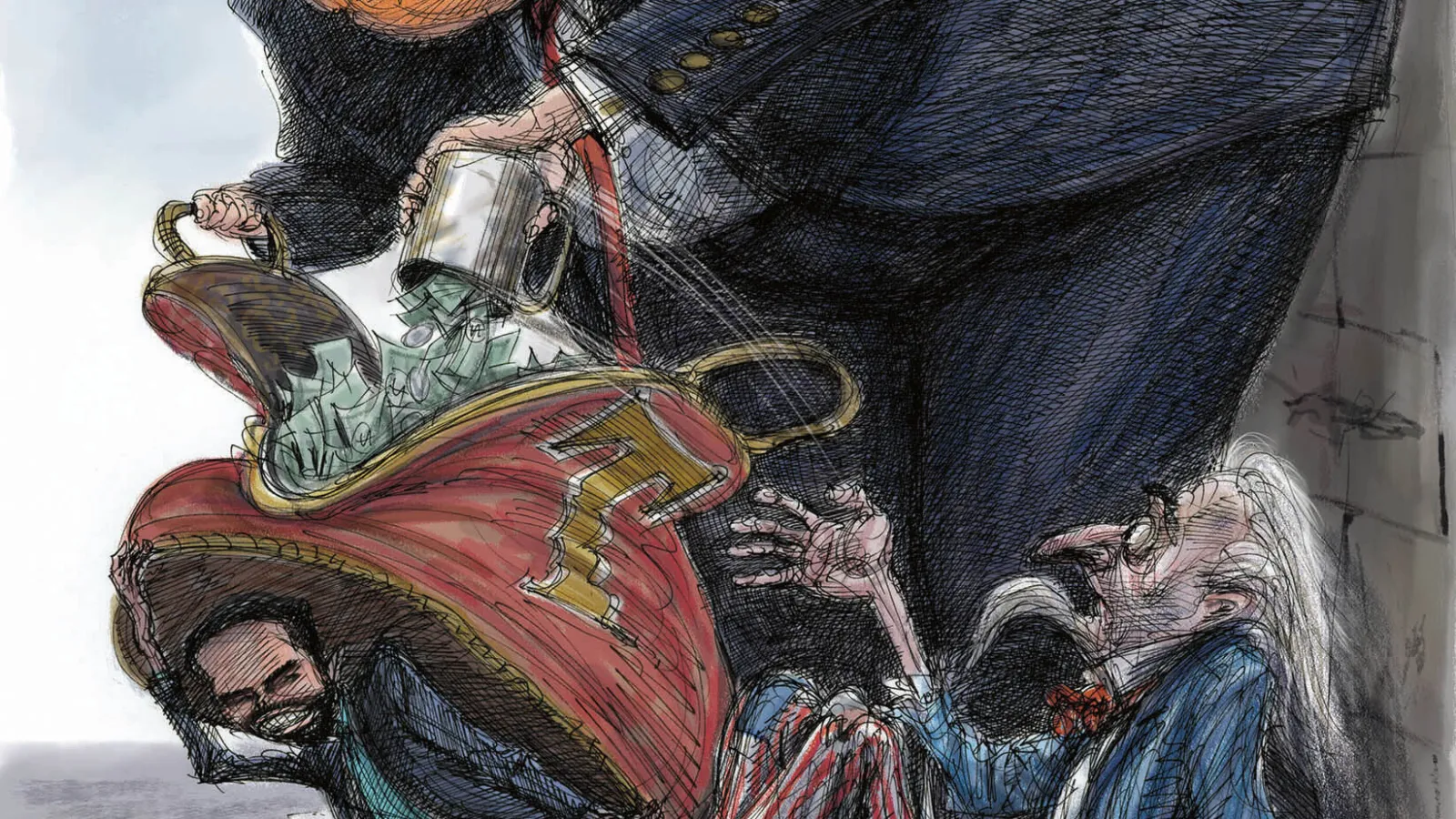
至少,在特朗普第二个任期之前,情况一直是如此。而这一任期——正如许多其他方面一样,以至于说这句话几乎成了陈词滥调——标志着与以往我们所见的一切截然不同。至少自一个世纪前的伍德罗·威尔逊以来,特朗普是第一位真正创造出自己专属经济地狱的总统:他采取了一系列无人要求、且只有最愚蠢的意识形态分子才会建议的激进措施。在我们这一代人中,特朗普是唯一一位在接手一个本已根基稳固、运行良好的经济时,却立即为其指明了一条驶向冰山群的方向的总统。
At least that’s how it was before Trump’s second term, which in this way — as in so many other ways that it’s become almost cliché to say it — marks a departure from everything we’ve seen before. Unlike any president since at least Woodrow Wilson a century ago, Trump actually has created his very own economic hellscape, by embarking on a series of radical steps that no one asked for and that only the most boneheaded ideologues would have advised. Trump is the only president in our lifetimes to be placed at the helm of a fundamentally seaworthy economy and immediately chart a course for the nearest field of icebergs.
请记住,到2024年特朗普重新夺回白宫时,经济终于从疫情时期的低谷中复苏,增长和就业数据也在稳步上升。当时民主党人最常表达的担忧是,特朗普即将坐享拜登复苏成果的所有好处,并让这一切看起来像是自己的功绩。曾在克林顿政府任职的经济学家罗布·夏皮罗最近告诉我:“他接手的是一个良好的经济。他唯一要做的就是别把它搞砸。”结果证明,根本没人需要为此担心。
Remember that by the time Trump recaptured the White House in 2024, the economy was finally rebounding from its pandemic-era lows, with growth and employment numbers steadily rising. The fear you heard most often then among Democrats was that Trump was poised to reap all of the benefit from Biden’s recovery and make it look like his own. “He had a good economy,” Rob Shapiro, an economist who worked in the Clinton administration, told me recently. “All he had to do was not fuck it up.”Turns out no one should have worried about that.
特朗普实际上创造了自己专属的经济地狱:他采取了一系列无人要求、且只有最愚蠢的意识形态分子才会建议的激进措施。
Trump actually has created his very own economic hellscape, by embarking on a series of radical steps that no one asked for and that only the most boneheaded ideologues would have advised.
特朗普做的第一件事就是发动贸易战——这次不仅针对中国,而是针对全世界。他推行的庞大关税制度本可能成为一个有趣的实验,要不是当时通货膨胀已经持续高企的话——而通货膨胀主要由供应链中断引发,又因政府巨额开支而进一步加剧。特朗普其实知道这一点,他在竞选期间对此喋喋不休,但显然没人能让他明白,关税只会让一个暂时性问题变得长期化,因为它会推高进口和制造业的成本。
THE VERY FIRST THING Trump did was start a trade war — not just with China this time, but with the entire world. His vast tariff regime might have made for an interesting experiment were it not for the fact that inflation — caused mainly by supply-chain disruptions and exacerbated by massive government outlays — was already persistently high. Trump knew this, having talked endlessly about it during his campaign, but apparently no one could make him understand that tariffs were sure to make a temporary problem more permanent, by raising the cost of imports and manufacturing. (I’m not trying to pass myself off as some kind of Nobel laureate here, by the way — this is so basic that anyone who’s played Monopoly ought to be able to understand it. Even the Star Wars version.)
(顺便说一句,我并不是想把自己包装成什么诺贝尔奖得主——这个道理非常基础,任何玩过“大富翁”游戏的人都应该能理解,哪怕是“星球大战”版的游戏也行。)随着无休止的贸易战不断升级,特朗普又决定再附加一场与伊朗的实际战争,理由可能是阿亚图拉们正在残酷镇压本国人民,也可能是他们即将制造出核弹,又或者是因为以色列正在发动战争,而特朗普则患上了严重的“错失恐惧症”——这些解释在不同时期都被提出过,所以谁知道呢?
As the endless trade wars escalated, Trump decided to tack on an actual war with Iran, because the ayatollahs were brutally repressing their people, or maybe because they were on the brink of building a nuclear bomb, or possibly because Israel was starting a war and Trump had wicked FOMO — all of these explanations were offered at various times, so who knows?
我们唯一确定的是,特朗普主动选择的这场战争虽然军事上几乎没取得什么成果,却造成了经济灾难:它切断了流向亚洲和欧洲的石油供应,并导致美国国内能源价格飙升。和吉米·卡特一样,特朗普现在发现自己的经济被伊朗强硬派劫持为人质。但与卡特不同,特朗普实际上是亲手将自己推入了这场危机,仿佛选民们一直在热切期盼着这一幕。
What we do know is that Trump’s war of choice, while achieving very little militarily, has been an economic disaster, choking off the flow of oil to Asia and Europe and leading to soaring energy prices at home. Like Jimmy Carter, Trump now finds his economy held hostage by Iranian hard-liners. Unlike Carter, Trump actually plunged himself into the crisis, as if the electorate had been clamoring for it.
这两项政策决策中的任何一项,单独来看,很可能就足以危及当时仍十分脆弱的经济复苏。但同样需要考虑到的是,拜登执政最后一年曾一度强劲的增长就业数据,到了2025年却几乎停滞——这在很大程度上要归因于特朗普对移民问题采取的严苛打压措施,使得小企业更难找到熟练和未熟练的劳动力。此外还有联邦债务问题:早在特朗普上台之前,这已经是一个迫在眉睫的问题,而当利率再次上升时,其紧迫性更是急剧加剧。
Either of those two policy decisions on its own would likely have been enough to imperil a still-fragile recovery. But consider, too, that job growth, which had been brisk during Biden’s last year in office, slowed to a virtual standstill in 2025 — in no small part because of Trump’s draconian crackdown on immigration, which made it harder for small businesses to find labor, both skilled and unskilled. And then there’s the federal debt, which was a pressing issue long before Trump came along, but which becomes a hell of a lot more pressing when interest rates are rising again.
公共债务的利息支付已飙升至历史最高水平(约占国家收入的18%,而疫情前这一比例约为11%);同时,特朗普反复无常的外交政策也增加了外国投资者可能不愿继续购买美国债务的风险。
Interest payments on the public debt have soared to an all-time high (about 18 percent of national revenues, compared with something like 11 percent before the pandemic), and Trump’s erratic foreign policy raises the risk that foreign investors might not want to keep snapping up America’s debt.
几十年来,华盛顿一小群对预算问题忧心忡忡的人士一直警告说,债务和利率的上升将导致一个充满被迫紧缩和长期衰退的末日情景。而特朗普的出现,则让这种“末日”仿佛就发生在下周。
For decades, a small cadre of budget alarmists in Washington have warned of a doomsday scenario when rising debt and interest rates would lead to a dark period of forced austerity and prolonged recession. Leave it to Trump to make doomsday seem like next week.
很少有总统能称得上是经济领域的深度思想家,但通常他们上任时都会有一套宽泛而一致的理念——无论是供给学派、支持增长的经济观,还是货币主义或凯恩斯主义。然而,这位商业巨头出身的特朗普总统却显得毫无章法。他像任何一位保守派激进分子一样强烈反对税收和监管;像任何一位支持劳工的左翼人士一样保护主义;又像任何一位苏联集体主义者一样热衷于控制产业,甚至坚持要求政府持有私营公司的所有权。
FEW PRESIDENTS QUALIFY as deep thinkers in economics, but generally they come to office with some kind of broad, consistent idea of what they believe — supply-side or pro-growth, monetarist or Keynesian. Trump, the business-mogul president, manages to be all over the place. He’s as vehemently against taxes and regulation as any arch-conservative, as protectionist as any pro-labor leftist, as jazzed about controlling industries — insisting that the government take an ownership stake in private companies — as any Soviet collectivist.
纵观特朗普的经济政策,唯一贯穿始终的线索,与他整个总统任期一样,就是文化上的报复。职业官僚、移民、学术界、进步政府、跨国联盟——在特朗普的世界里,这些都是敌人,而用铁蹄踩在他们头上,就是他唯一真正的国内议程。他声称这对经济有益,而任何与之相反的数据都被他斥为受过教育的精英阶层编造的更多谎言。
The only through line in Trump’s economic policies, as with the rest of his presidency, is cultural retribution. Career bureaucrats, immigrants, academia, progressive governments, multinational coalitions — all of these are enemies in Trump’s world, and putting a boot on their necks is his only real domestic agenda. He proclaims this good for the economy, and any data to the contrary is dismissed as more lies from the educated elite.
事实上,经济学家会告诉你,特朗普重返白宫的第二年,经济的底层“基本面”——他们特别喜欢用这个词——依然相当稳固;我们的经济增长速度仍然相当可观。但他反复无常的糟糕管理却使两个既存问题变得更加严重。其一,尽管经济本身并未崩溃,但越来越多的美国人感到自己正被生活压得喘不过气来:工资增长放缓、物价上涨、债务成本增加,使得大多数家庭维持生计所依赖的财务平衡已经无法成立。
In fact, economists will tell you that the underlying “fundamentals” — they love that word — remain pretty solid in Trump’s second year back in office; we’re still growing at a decent clip. But his erratic mismanagement has made two existing problems far worse. One is that more Americans feel like they’re drowning, even if the economy itself isn’t; with slowing wage growth, higher prices, and more expensive debt, the financial equation that makes life possible for most families isn’t adding up as it should. (This while Trump and his family have made billions off the presidency, much of it from foreign investors in Trump’s burgeoning crypto empire.)
(与此同时,特朗普和他的家人却通过总统职位赚取了数十亿美元,其中很大一部分来自特朗普不断扩张的加密货币帝国中的外国投资者。)另一个问题是,经济如今更容易受到那些我们尚未预见到的灾难性冲击。当通货膨胀已经是个问题,而债务支付又占用了更大比例的财政收入时,一旦经济突然遭遇剧烈衰退——比如再次爆发疫情——政府实际上就无法再大规模增加支出。
And the other is that the economy is way more susceptible to the calamity we don’t see coming. When inflation is already a problem and your debt payments are eating up a larger share of revenue, government can’t really spend a ton more money in the event of a sudden, dramatic slowdown — like, say, another pandemic.
经济是可以修复的,尽管代价可能十分痛苦。但特朗普的总统任期,恐怕不行。
The economy can be fixed, if at a painful cost. Trump’s presidency, probably not.
保守派经济学家道格拉斯·霍尔特兹-埃金告诉我,他认为特朗普的经济政策就像一种“是,但是”式的经济模式。比如:“是的,我们干得不错,但还有关税。是的,形势很好,但现在他又想和伊朗开战。他简直是在自己给自己制造障碍。”不过,我觉得这种说法还是太客气了,因为它让特朗普的失误听起来像是笨手笨脚或无心之过,而实际上这些行为是蓄意且鲁莽的。
The conservative economist Douglas Holtz-Eakin told me that he thinks of Trump’s economy as the “yes but” economy. As in: “Yes, we’re doing great, but tariffs. Yes, things are great, but now he wants a war with Iran. He can’t get out of his own way.”This strikes me as too kind, though, because it makes Trump’s missteps sound bumbling and accidental, when in fact they’re willful and reckless.
特朗普并不是在自设障碍,他恰恰是在刻意做自己想做的事,至于后果,他才不管。我们正在经历的,是一种“自我毁灭式经济”。特朗普越是试图压制对手,就越会对我们其他人以及他自己的历史地位造成损害。
Trump isn’t getting in his own way; he’s doing precisely what he intends to do, consequences be damned. What we’re living through is the “self-own economy.”The more Trump tries to dominate his adversaries, the more damage he does to the rest of us — and to his legacy.
经济是可以修复的,尽管代价可能十分痛苦。但特朗普的总统任期,恐怕不行。在我写下这些文字时,选民尚未在中期选举中给出最终裁决;虽然可能性不大,但特朗普或许能打破我们的多数预期,像拜登在2022年那样控制住损失。(而如果他没有做到,他很可能还是会试图无视选举结果。)无论如何,选民对特朗普经济判断力的态度已经十分明确。
The economy can be fixed, if at a painful cost. Trump’s presidency, probably not. As I write this, voters haven’t yet delivered their verdict in the midterm elections; it’s possible, if unlikely, that Trump could defy most of our expectations and hold down his losses, as Biden did in 2022. (And if he doesn’t, it’s a pretty good bet he’ll try to negate the results anyway.) Either way, though, voters have made their feelings about Trump’s economic judgment clear.
在《纽约时报》九月中旬发布的一项民意调查中,令人震惊的是,只有14%的选民——以及仅29%的共和党人——认为现在的经济比一年前更好。共和党内部继任特朗普的角逐此刻已经开始,未来几个月,你将会看到更多共和党议员和州长像恐怖片中的配角一样,拼命躲避特朗普的关税和战争政策,因为他们担心如果不这样做,2028年共和党将面临怎样的命运。
In a New York Times poll published in mid-September, a stunning 14 percent of voters — and only 29 percent of Republicans — said the economy was better now than it was a year ago. The contest among Republicans to succeed Trump begins now, and you can expect to see more Republican lawmakers and governors running like monster-movie extras from Trump’s tariffs and war in the months ahead, for fear of what will happen to the party in 2028 if they don’t.
九月份我们已经看到了预演:犹他州参议员约翰·柯蒂斯是一位坚定的共和党人,他呼吁对唐纳德·特朗普小儿子与那位在巴哈马私人岛屿上为其婚礼后招待会买单的俄罗斯寡头之间的关系展开调查。
We saw a preview in September, when Utah Sen. John Curtis, a solid Republican, called for an investigation into Donald Trump Jr.’s ties to the Russian oligarch who paid for his post-wedding reception on a private island in the Bahamas.
这当然会激怒特朗普,但这次当他想要寻找敌人时,他真的应该先照照镜子。与近代以来的其他所有总统不同,他得到的正是他应得的经济状况——以及他应得的失败总统任期。
This will enrage Trump, of course, but when he goes looking for enemies this time, he really ought to find a mirror. Unlike every other president of the modern era, he’s gotten exactly the economy — and the failed presidency — he deserves.