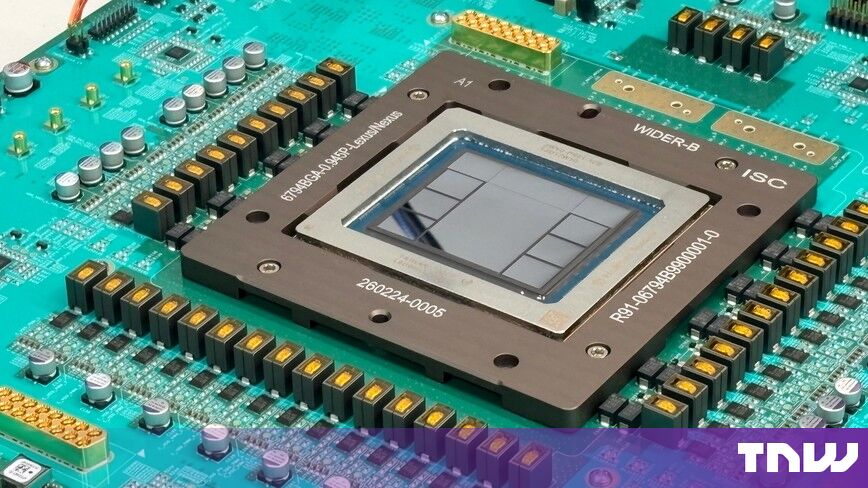
OpenAI 自己的 AI 模型修改了其 Jalapeño 芯片的部分内容,而工程师们有时也无法解释原因。Richard Ho 告诉 More Than Moore 的 Ian Cutress,其中一个例子是,他们节省了超过 13% 的芯片面积。Ho 负责 OpenAI 的硬件团队,此次采访于 9 月 30 日发布。
OpenAI’s own AI models changed parts of its Jalapeño chip, and its engineers could not always say why. In one example, they saved more than 13% of die area, Richard Ho told Ian Cutress of More Than Moore. Ho leads OpenAI’s hardware team, and the interview was published on 30 September.
“嗯,我仍然不完全信任它们,”Ho 对 More Than Moore 表示。
“Well, I still don’t 100% trust them,” Ho told More Than Moore.
OpenAI 于 6 月公布了其自研的 AI 芯片。该公司与 Broadcom 合作制造了这款芯片,用于运行其模型,而非训练模型。在 8 月的 Hot Chips 大会上,OpenAI 展示了该芯片与 Nvidia GB300 的基准测试结果。此次采访则聚焦于这款芯片的制造过程。Ho 于 2023 年加入 OpenAI,他是谷歌 TPU 项目的首批工程师之一。在此之前,他在 D.E. Shaw Research 负责建造 Anton 超级计算机。
OpenAI revealed its own AI chip in June. It built the chip with Broadcom to run its models, not to train them. At Hot Chips in August, it showed benchmark results against Nvidia’s GB300. The interview is about how the chip was made. Ho joined OpenAI in 2023. He was one of the first engineers on Google’s TPU programme. Before that, he built the Anton supercomputers at D.E.
当逻辑设计无法适配时,团队加快了开发节奏,Ho 表示。他们最初对芯片上可容纳逻辑量的估算略有偏差。为了不放弃性能,团队将这个问题交给了自己的模型。Ho 称,当时这些模型还只是未经精细调整的内部模型,尚未针对芯片设计进行优化,仅比公众可用的版本稍胜一筹。
Shaw Research. When the logic did not fit The team moved fast, Ho said. Its early estimates of how much logic would fit on the chip proved a little off. Rather than give up performance, it handed the problem to its models. At the time, he said, they were raw internal models, not fine-tuned for chip work. They were only slightly ahead of what the public could use.
模型处理的大部分代码是用 XLS 编写的,这是一种能将高级代码转换为芯片逻辑的工具。Chris Leary 目前也在 Ho 的团队中,他在谷歌任职期间曾将 XLS 作为开源项目发布。这种语言的读法更接近 Rust,而非大多数芯片使用的 Verilog 语言。Ho 表示,模型处理软件的能力优于 Verilog,因此 XLS 让它们能够更有效地进行设计推理。
Much of the code the models worked on was written in XLS, a tool that turns high-level code into chip logic. Chris Leary, now on Ho’s team, released it as open source while at Google. It reads more like Rust than Verilog, the language most chips are written in. The models handled software better than Verilog, Ho said, so XLS let them reason about the design.
无人能解释的修改 模型对源代码进行的一些修改并没有明确的理由。Ho 称,团队当时开发节奏太快,无法停下来分析这些修改为何会有帮助。“我们从概念上并没有完全理解它到底在做什么,”他说。
Changes nobody could explain Some of the models’ changes to the source code came without a clear reason. The team was running too fast to stop and work out why they helped, Ho said. “We didn’t quite understand conceptually what it was doing,” he said.
因此,每一次变更仍然会经过完整的验证流程,标准的设计工具也依然会对芯片进行最终确认。一枚芯片可能包含数亿个逻辑门。他表示,一个正确率仅为99.99%的模型,对于这种场景来说还不够准确。但他认为,只要团队保持谨慎,这仍然是一个值得承担的风险。他还补充说,他不会因为这些模型而裁员,反而会用它们来更高效、更快速地完成更多工作。
So every change still went through the full validation flow, and standard design tools still sign off the chip. A chip can have hundreds of millions of gates. A model that is right 99.99% of the time is not accurate enough for that, he said. He called it a risk worth taking, as long as the team stays cautious. He would not cut staff because of the models, he added. He would use them to do more, faster.
为整个舰队打造单一芯片 何也为该芯片最与众不同的设计选择进行了辩护。如今,行业内大多数公司会将推理任务拆分成不同阶段的独立硬件:预填充负责读取提示,而解码则负责生成答案。
One chip for the whole fleet Ho also defended the chip’s most unusual choice. Much of the industry now splits inference across separate hardware for each stage: prefill, which reads the prompt, and decode, which writes the answer.
但OpenAI则为整个流程构建了一个统一的模块。何表示,当工作负载的构成不断变化时,将数据中心的容量锁定在固定比例上存在风险。他承认,这种设计可能会带来一些只有在实际部署中才会显现的成本,而且超长的上下文内容也可能会遇到限制。
OpenAI built one part for all of it. Locking data centre capacity into a fixed ratio is risky when the mix of work keeps changing, Ho said. He conceded the design might carry a cost that only shows up in real deployment, and that very long contexts could hit limits.
该芯片将高带宽内存模块直接连接到核心,从而减少了数据传输量。何预计,包括GPU制造商在内的竞争对手将会效仿这一设计。尽管如此,OpenAI还是选择将其公开,即便该公司是英伟达最大的客户之一。
The chip links banks of high-bandwidth memory directly to its cores, so data moves less. Ho expects rivals, GPU makers included, to copy the idea. OpenAI chose to publish it anyway, even though it is among Nvidia’s biggest customers.
“因为我们仍然需要GPU,而且我们希望GPU能够变得更强大,”何说道。
“Because we still need GPUs, and we want GPUs to get better,” Ho said.
在他看来,行业真正的瓶颈并非功耗、内存或封装技术,而是由于过去几次技术泡沫带来的教训,高管和投资者无法看清人工智能未来的发展规模,因此他们的投入规模也太小了。目前,Jalapeño的第二代版本正在实验室中进行认证测试,而OpenAI也正逐步迈向量产阶段。
In his view, the industry’s real limit is not power, memory or packaging. It is that executives and investors, burned by past booms, cannot see how big AI will get, so their bets are too small. The second version of Jalapeño is now in the lab for qualification, as OpenAI moves toward volume production.