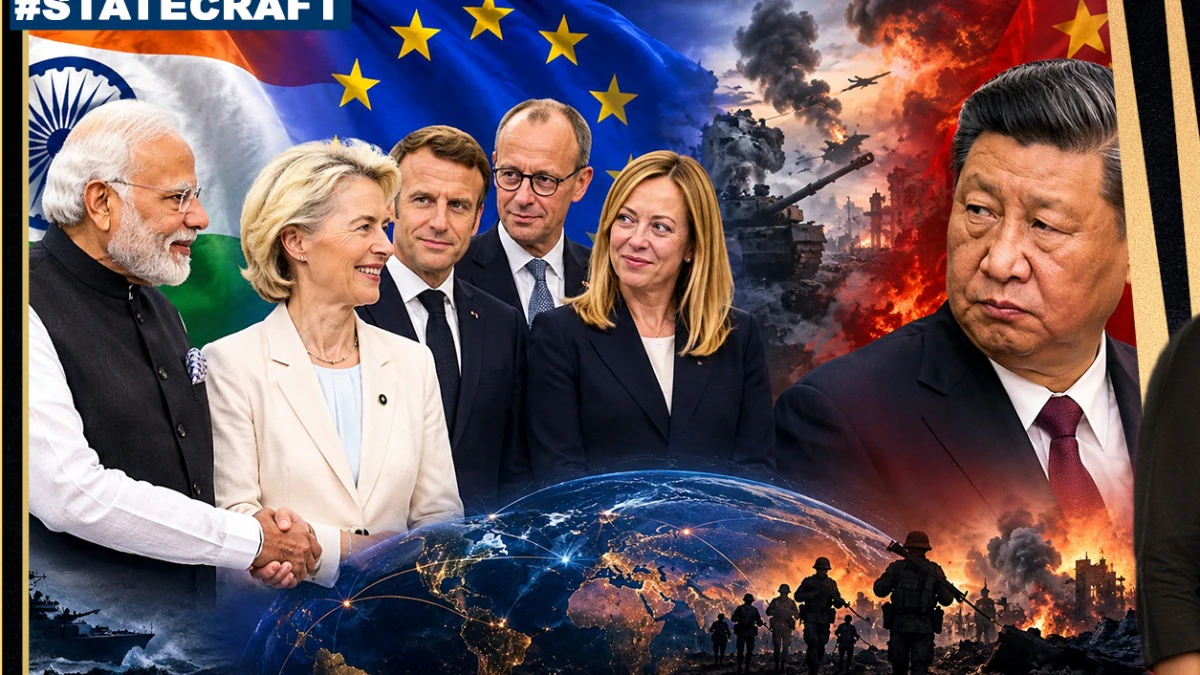
随着美国重塑联盟、俄罗斯发动战争、中国扩大影响力,欧洲正在面临依赖的极限。慕尼黑安全会议主席沃尔夫冈·伊辛格表示,随着双方应对日益不确定的全球秩序,印度可能成为值得信赖的战略伙伴。
As America reshapes alliances, Russia wages war and China expands its influence, Europe is confronting the limits of dependence. Munich Security Conference chairman Wolfgang Ischinger says India could become a trusted strategic partner as both sides navigate an increasingly uncertain global order.
欧洲正被迫重新考虑其对美国的依赖,而印度则继续奉行围绕战略自主的外交政策。对于前德国驻美国大使、慕尼黑安全会议主席沃尔夫冈·伊申格来说,这两种做法可能不同,但它们可能会越来越趋同。
Europe is being forced to rethink its dependence on the United States, while India continues to pursue a foreign policy built around strategic autonomy. For Wolfgang Ischinger, former German ambassador to the US and chairman of the Munich Security Conference, the two approaches may be different — but they could increasingly converge.
伊辛格在新德里发表讲话时表示,欧洲和印度面临着截然不同的战略环境,但有一个共同的基本目标:减少对任何单一大国的依赖。
Speaking in New Delhi, Ischinger said Europe and India face very different strategic circumstances, but share a fundamental objective: reducing dependence on any single power.
对于印度来说,战略自主权植根于其国土面积、历史和地缘政治地位。他认为,对于欧洲来说,自治始于欧盟27个成员国集体行动的能力。
For India, strategic autonomy is rooted in its size, history and geopolitical position. For Europe, he argued, autonomy begins with the ability of the European Union’s 27 members to act collectively.
伊辛格说:“相对而言,对于印度这样的大国来说,自治的意义与德国这样的小国不同。”
“Autonomy means something different for a huge country like India compared to a, in relative terms, very small country like Germany,” Ischinger said.
欧洲的战略警钟伊辛格表示,乌克兰战争和唐纳德·特朗普总统领导下的美国政策的变化从根本上改变了欧洲对战略依赖的理解。
Europe’s strategic wake-up call According to Ischinger, the war in Ukraine and changing US policy under President Donald Trump have fundamentally altered Europe’s understanding of strategic dependence.
他将这些事态发展描述为德国和更广泛的欧盟敲响了警钟,欧盟已经习惯于严重依赖美国的安全,几十年来严重依赖俄罗斯的能源。
He described the developments as a wake-up call for Germany and the wider European Union, which had become accustomed to relying heavily on the United States for security and, for decades, on Russia for energy.
伊辛格更进一步,暗示未来的历史学家可以将俄罗斯总统弗拉基米尔·普京和特朗普视为无意中推动欧洲实现更大自力更生的人物。
Ischinger went further, suggesting that future historians could view both Russian President Vladimir Putin and Trump as figures who unintentionally pushed Europe towards greater self-reliance.
他说:“俄罗斯有普京总统,美国有特朗普总统,他们帮助欧洲成长并自力更生。”
“There was President Putin in Russia, and there was this President Trump in the United States who helped Europe to grow up and become self-dependent,” he said.
这一言论反映了欧洲战略界更广泛的担忧:如果传统的跨大西洋关系永久改变,欧洲是否能够维持其安全和全球影响力。
The remark reflects a broader concern within European strategic circles: whether Europe can maintain its security and global influence if the traditional transatlantic relationship changes permanently.
伊辛格职业生涯的大部分时间都在处理美国和跨大西洋事务,他承认特朗普的做法让他这一代人感到震惊。
Ischinger, who has spent much of his career dealing with the US and transatlantic affairs, acknowledged that Trump's approach came as a shock to his generation.
他强调,传统安排--美国提供大部分安全保护,而欧洲盟友依赖华盛顿--不能再继续保持不变。
He stressed that the traditional arrangement — with the US providing the bulk of security protection while European allies depended on Washington — could no longer continue unchanged.
他认为,欧洲现在必须“承担自己的责任”,同时寻求维护跨大西洋关系。
Europe, he argued, must now “carry our own weight” while seeking to preserve the transatlantic relationship.
印度成为值得信赖的合作伙伴在此背景下,伊辛格将印度视为日益重要的欧洲合作伙伴。
India emerges as a trusted partner Against this backdrop, Ischinger sees India as an increasingly important European partner.
他表示,在国际体系日益波动的情况下,欧洲一直在寻找可以信任的国家,并认为印度因其规模、经济潜力和战略重要性而脱颖而出。“作为一名年轻的外交官,我了解到信任是外交的货币,”他说。对于伊辛格来说,这种信任可以为更深层次的印欧关系奠定基础。
He said Europe had been looking for countries it could trust amid growing volatility in the international system, and argued that India stood out because of its scale, economic potential and strategic importance. “Trust, I learned as a young diplomat, is the currency of diplomacy,” he said. For Ischinger, this trust could provide the foundation for a deeper India-Europe relationship.
他指出双方之间日益发展的经济关系,并认为合作应超越贸易,扩展到战略事务、冲突管理、技术和人工智能。他的言论也与欧洲对中国的态度形成了明显的对比。
He pointed to the growing economic relationship between the two sides and argued that cooperation should extend beyond trade into strategic affairs, conflict management, technology and artificial intelligence. His comments also offered a notable contrast with the European approach towards China.
中国:合作、竞争与对抗伊辛格拒绝通过单一视角看待中国的想法。
China: cooperation, competition and rivalry Ischinger rejected the idea of viewing China through a single lens.
他说,中国是一个不可避免的全球大国,在经济、科学、人工智能和军事事务方面的影响力日益增长。因此,适当的应对措施可能涉及合作、竞争和对抗的结合。
China, he said, is an unavoidable global power with growing influence in the economy, science, artificial intelligence and military affairs. The appropriate response, therefore, is likely to involve a combination of cooperation, competition and rivalry.
但他承认欧洲人对印度和中国的看法存在一个重要差异:他说,许多欧洲人对印度的信任比对中国的信任更放心。
But he acknowledged an important difference in European perceptions of India and China: many Europeans, he said, feel more comfortable placing their trust in India than in China.
随着欧洲在更加碎片化的国际体系中寻求新的战略伙伴关系,这种区别可能会变得越来越重要。
That distinction could become increasingly significant as Europe seeks new strategic partnerships in a more fragmented international system.
人工智能可能成为下一个核心问题人工智能成为对话中的另一个主要主题。
AI could become the next nuclear question Artificial intelligence emerged as another major theme in the conversation.
伊辛格将人工智能的未来描述为,对全球安全与和平的影响可能与核武器的发展一样重要。
Ischinger described the future of AI as potentially as consequential for global security and peace as the development of nuclear weapons.
他认为,国际社会最终制定了《核不扩散条约》等机制来解决核技术带来的危险。现在的挑战是类似的思维是否可以应用于高级人工智能。
He argued that the international community eventually developed mechanisms such as the Nuclear Non-Proliferation Treaty to address the dangers posed by nuclear technology. The challenge now is whether similar thinking can be applied to advanced AI.
他说,令人担忧的不仅仅是技术竞争,还在于缺乏有效的国际治理。
The concern, he said, is not simply technological competition but the absence of effective international governance.
前沿人工智能模型的兴起和人工超级智能的可能性提出了各国政府仍在努力回答的问题。
The rise of frontier AI models and the possibility of artificial superintelligence raise questions that governments are still struggling to answer.
对于伊辛格来说,印度和欧洲不能只专注于监管,同时仍然依赖其他国家来开发先进的人工智能。眼前的挑战还在于确保持续获得前沿模型。
For Ischinger, India and Europe cannot afford to focus exclusively on regulation while remaining dependent on others for advanced AI. The immediate challenge is also to ensure continued access to frontier models.
他警告说,如果无法获得这项技术,各国可能会很难影响管理这项技术的规则。
Without access to the technology, he warned, countries may struggle to influence the rules governing it.
这引发了一个更广泛的地缘政治问题:获取先进人工智能是否会像获取能源、资本和军事技术一样具有战略重要性?
That creates a wider geopolitical question: will access to advanced AI become as strategically important as access to energy, capital and military technology?
欧洲在乌克兰和伊朗问题上的困境也对美国在乌克兰战争尚未解决之际将军事注意力转向伊朗的决定提出了批评。
Europe’s dilemma over Ukraine and Iran Ischinger was also critical of the US decision to shift military attention towards Iran while the war in Ukraine remains unresolved.
他将这种情况与2003年美国入侵伊拉克的决定进行了比较,当时西方国家在9月11日袭击后在阿富汗周围动员起来。
He compared the situation with the US decision to invade Iraq in 2003 after Western countries had mobilised around Afghanistan following the September 11 attacks.
在他看来,教训是,各国应谨慎放弃一项商定的战略使命,转而从事另一项战略使命。
In his view, the lesson is that countries should be cautious about abandoning one agreed strategic mission for another.
他认为,美国对伊朗的军事关注消耗了原本可以支持乌克兰的资源,包括防空能力。
He argued that the US military focus on Iran had consumed resources that could otherwise have supported Ukraine, including air-defence capabilities.
伊辛格将与伊朗的冲突描述为一场“选择的战争”,而不是一场必要的战争,同时承认冲突对欧洲和印度的更广泛后果。能源安全尤其重要。
Ischinger described the conflict with Iran as a “war of choice” rather than a war of necessity, while acknowledging the wider consequences of the conflict for Europe and India. Energy security is particularly significant.
主要海上路线能源流动的中断给已经应对俄乌战争后果的欧洲经济体带来了压力。
The disruption of energy flows through key maritime routes has added pressure to European economies already dealing with the consequences of the Russia-Ukraine war.
加沙暴露了欧洲的外交政策分歧中东给欧洲战略影响力带来了另一个挑战。
Gaza exposes Europe’s foreign policy divisions The Middle East has presented another challenge for European strategic influence.
伊辛格认为,加沙战争暴露了欧盟内部的深刻分歧,并破坏了数十年来建立欧洲共同外交政策的努力。
Ischinger argued that the war in Gaza exposed deep divisions within the European Union and undermined decades of efforts to build a common European foreign policy.
欧洲各国政府没有以一个声音说话,而是在以色列、加沙和更广泛的中东问题上采取了不同的立场。
Instead of speaking with one voice, European governments have adopted different positions on Israel, Gaza and the wider Middle East.
对于地理上靠近欧洲的地区来说,他认为这种凝聚力的丧失尤其具有破坏性。
For a region geographically close to Europe, he considers this loss of cohesion particularly damaging.
他的评估很明确:欧洲目前在影响中东事件方面的作用和影响力有限。
His assessment was stark: Europe currently has only a limited role and limited influence in shaping events in the Middle East.
他认为,如果欧洲希望自己的声音发挥作用,就必须重建共同立场,并与以色列、阿拉伯国家、美国、土耳其和其他地区行为体接触。
He argued that Europe must rebuild a common position and engage with Israel, Arab states, the US, Turkey and other regional actors if it wants its voice to carry weight.
新的印欧战略方程式尽管欧洲面临挑战,伊辛格还是以乐观的态度结束了对印欧关系的评估。
A new India-Europe strategic equation Despite the challenges facing Europe, Ischinger ended his assessment of India-Europe ties on an optimistic note.
他表示,他对新德里的访问超出了他的预期,并强化了他的信念,即加强合作的巨大潜力。他认为,这种关系不应仅限于贸易。
He said his visit to New Delhi had exceeded his expectations and reinforced his belief that there was significant potential for closer cooperation. The relationship, he argued, should not be limited to trade.
印度和欧洲可以在冲突管理、经济发展、技术和人工智能方面合作,同时建立更广泛的战略伙伴关系。
India and Europe could work together on conflict management, economic development, technology and AI, while building a broader strategic partnership.
对于欧洲来说,这可能意味着随着与美国关系的发展,其值得信赖的合作伙伴网络将多元化。对于印度来说,它可以为不孤立地追求战略自治提供另一条途径。
For Europe, this could mean diversifying its network of trusted partners as its relationship with the US evolves. For India, it could offer another avenue for pursuing strategic autonomy without isolation.
更大的问题是印度和欧洲能否将日益增长的经济关系和相互信任转化为持续的战略合作。
The larger question is whether India and Europe can translate their growing economic relationship and mutual trust into sustained strategic cooperation.
正如伊辛格的评论所表明的那样,新兴的全球秩序可能会使这种伙伴关系变得越来越重要。
As Ischinger's comments suggest, the emerging global order may make that partnership increasingly important.