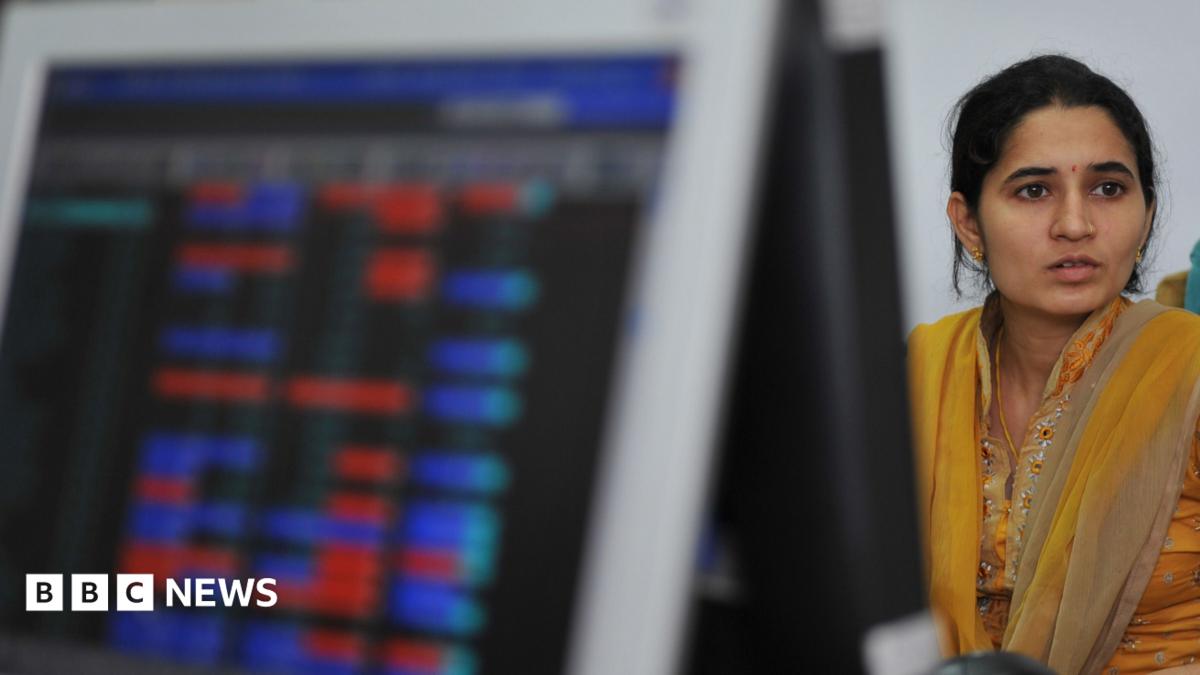
盖蒂图片社印度报道:2026年,印度主要股票市场表现堪称全球最差之一。作者:Nikhil Inamdar,地点:孟买,3小时前。尽管面临全球能源冲击、利率上升、关税不确定性以及天气相关干扰,印度经济仍以超过7%的令人艳羡的速度增长。
Getty Images India has one of the world's worst performing major equity markets in 2026 Nikhil Inamdar Mumbai 3 hours ago India's economy is growing at an enviable rate of over 7% despite global energy shocks, rising interest rates, tariff uncertainties and weather-related disruptions.
然而,这个全球增长最快的主要经济体,其主要股票市场在2026年的表现却同样糟糕。事实上,印度股市的回调在过去几周中反而愈发严重。
But the world's fastest growing major economy also has one of the worst performing major equity markets in 2026. The correction in Indian stocks has, in fact, only intensified in recent weeks.
据路透社报道,代表该国最大公司的基准指数Sensex和Nifty在连续八周下跌——创下25年来的最长连跌纪录——后,自周一以来仅略有回升。
The benchmark Sensex and Nifty indices, which represent the country's largest companies, have inched up slightly since Monday after posting losses for eight straight weeks - the longest losing streak in 25 years, according to Reuters.
将资金投入Nifty指数的印度散户投资者今年财富已缩水约15%。相比之下,如果他们投资韩国的Kospi指数,自1月以来本可获得62%的回报,过去两年更是高达170%。
Indian mom-and-pop investors who put their money into the Nifty have seen their wealth erode by about 15% this year. In comparison, they would have made 62% returns on Korea's Kospi index since January or 170% in the last two years.
总体而言,过去十年中外国投资者投入印度市场的资金(扣除其卖出或撤回的部分)已接近于零。根据伯恩斯坦研究的数据,仅在过去两年中,外国机构投资者就撤出了高达400亿美元。
On aggregate, the money foreign investors have put into Indian markets in the past decade - after subtracting what they sold or withdrew - is nearing zero. In the past two years alone, foreign institutional investors have withdrawn a staggering $40bn, according to data from Bernstein Research.
正是大量国内机构资金和零售资金流入共同基金等金融工具,才帮助市场避免了更大幅度的下跌。
It is the large pool of domestic institutional and retail money, flowing into instruments like mutual funds, that have helped the markets avoid a sharper fall.
2016年,国内共同基金的管理资产约为1250亿美元,而今年已增长至约9000亿美元;投资股票和共同基金的印度人数量也增长至1.5亿,是原来的三倍多。
Domestic assets under management of mutual funds have grown from about $125bn in 2016 to some $900bn this year, with the number of Indians parking money in stocks and mutual funds more than tripling to 150 million individuals.
这使得近期的市场下跌更加令人担忧——因为家庭本已因就业市场疲软、高通胀和消费乏力而陷入困境,如今他们的股票储蓄也遭受重创。那么,问题出在哪里?以下是印度繁荣经济未能提振其股票市场的五个原因。
This makes the recent fall in the markets more worrying - since households, already struggling from a weak job market, high inflation and faltering consumption, are now seeing their equity savings take a beating too. So, what's gone wrong? Here are five reasons India's booming economy isn't lifting its stock market.
Anadolu 通过 Getty Images 图片社报道:印度超过 90% 的原油需求依赖进口,中东冲突持续引发能源冲击。由于霍尔木兹海峡航运中断已持续第八个月,远超分析师预期,原油价格一直徘徊在每桶 90 至 100 美元之间。此外,目前尚不清楚局势何时才能恢复正常。
Anadolu via Getty Images India imports over 90% of its crude requirements Persistent energy shocks due to Middle East conflict Crude oil prices have hovered between $90 and $100 a barrel as the disruption to shipping through the Strait of Hormuz enters its eighth month, far longer than analysts had expected. Moreover, there's little visibility on when normalcy will return.
“这一单一变量往往会对市场产生相当负面的影响,”富兰克林·邓普顿印度资产管理公司的基金经理 Hari Shyamsunder 告诉 BBC。“市场还能承受每桶 70 至 90 美元的原油价格,但一旦价格突破每桶 100 美元,就会开始对通货膨胀等宏观经济指标,以及企业盈利和利润率造成压力。”印度超过 90% 的能源需求依赖进口——其中近一半的原油进口,以及液化石油气(LPG)和液化天然气(LNG)运输量的很大一部分,都经过霍尔木兹海峡。
"This single variable tends to influence the markets quite negatively," Hari Shyamsunder, a fund manager with Franklin Templeton Asset Management India, told the BBC. "Markets can absorb crude between $70 and $90, but when prices move above $100 a barrel, it starts putting stress on macro-economic variables such as inflation and also company earnings and margins." India imports over 90% of its requirements - nearly half of its crude oil imports, along with a large share of its liquified petroleum gas (LPG) and liquified natural gas (LNG) shipments, come through the Strait of Hormuz.
尽管德里已实现能源来源多样化,开始利用俄罗斯石油市场,但美国总统唐纳德·特朗普最近威胁要对与莫斯科进行贸易的国家征收高达 100% 的关税,使问题进一步复杂化。
While Delhi has diversified its energy sources, tapping Russian oil markets, US President Donald Trump recently threatened up to 100% tariffs on countries doing trade with Moscow, further complicating matters.
全球利率上升:随着油价上涨,通货膨胀也在加剧,导致全球利率随之上升。美国国债的实际收益率已超过 5%,接近 25 年来的最高水平。
Rising global interest rates With oil prices rising, inflation is going up and, as a result, interest rates are on the rise globally. The effective yield on US government bonds is above 5%, or at near 25-year highs.
这些投资通常被视为无风险投资。因此,当利率上升时,外资往往从印度股市等风险较高的新兴市场资产中撤出,转而追逐美国国债等更安全的投资。
These are often considered risk-free investments. As a result, foreign money tends to leave riskier emerging market assets such as Indian equities and chase safer investments like US bonds when interest rates rise.
卢比贬值:对于外国投资者而言,回报乏力的问题因卢比走弱而进一步加剧。以经汇率调整后的美元计算,由于印度货币贬值,他们的投资遭受了损失。
Falling rupee eign investors, the problem of muted returns has been compounded by a weaker rupee. In currency-adjusted dollar terms, they have suffered because of the fall in the Indian currency.
过去十年间,Nifty 指数的年化美元回报率仅为 6%——这一表现远称不上有吸引力,尤其与其他多个竞争市场相比更是如此。
The Nifty has delivered just 6% annualised dollar returns over the past decade - hardly attractive, especially in comparison with several other competing markets.
彭博社(通过盖蒂图片社) 与新兴市场其他国家相比,印度股票相对于其盈利水平仍然昂贵。印度股票虽然价格较低,但相对仍显昂贵。股票估值一直是另一个主要担忧。
过去两年的市场调整已经缩小了印度股票相对于其他新兴市场经济体股票的溢价。
Bloomberg via Getty Images Indian stocks are still expensive relative to their earnings compared to other emerging markets Indian stocks are cheaper, but still relatively expensive Stock valuations have been another major concern. The market correction over the last two years has reduced the premium that Indian stocks held over their emerging market competitors.
“目前股票的价格低于过去十年来的平均水平,”Shyamsunder表示,并补充说,过去几年,印度股票相对于其他新兴经济体股票的溢价已大幅收窄。
"Stocks are cheaper than they have been on average for the last ten years," says Shyamsunder, adding that the premium that Indian shares commanded over other emerging economies has shrunk substantially in the past few years.
然而,与盈利水平相比,这些股票仍然昂贵,尤其是因为韩国和台湾等国家的公司从人工智能(AI)的爆发式增长中受益,从而推高了利润。
However, they are still expensive relative to their earnings, especially since companies in countries such as South Korea and Taiwan have benefited from a huge boom in artificial intelligence (AI) which has pushed up their profits.
AI,或者说更广泛的新经济,是印度增长故事中一个关键的缺失环节。
The missing AI piece dia, AI, or the new economy broadly, is a major missing piece of its growth story.
“印度许多大型上市公司代表的是一个已经过去的经济时代,”伯恩斯坦研究公司最近在一份报告中指出。“大多数公司并未投资于未来,而是在巩固过去的成就,往往期望政策能继续保护它们免受全球竞争的影响。”而印度的小型公司尚未达到足以吸引外国机构资金的规模。
"Many of India's large caps [big companies] represent a bygone economic era," Bernstein Research said in a note recently. "Most are not investing in the future, but consolidating their past, often expecting policy to continue shielding them from global competition." And its smaller companies are yet to reach a scale that will attract foreign institutional funds.
尽管印度公司正在投资数据中心和芯片制造,但该国尚未诞生像OpenAI、Anthropic甚至中国的DeepSeek这样的全球巨头——而AI价值链中最大的利润份额正是集中在这些领域。
While Indian companies are investing in data centres and chip fabrication, the country has not produced a global giant like OpenAI, Anthropic or even China's DeepSeek - this is where the largest share of the profits in the AI value chain lie.
伯恩斯坦认为,只有当印度能够在这些新兴领域建立起具有全球竞争力的产业,外国投资者才会真正重返印度市场。
Foreign investor interest will only return to India meaningfully if it can build globally competitive industries in these emerging areas, according to Bernstein.
我们在航天、国防、半导体和深度科技创新等领域已看到这一趋势的早期迹象,但大多数领域规模仍然太小,难以在本十年中大部分时间内对资本配置决策产生实质性影响。NurPhoto 通过 Getty Images 提供 尽管市场出现回调,国内储蓄流入共同基金的规模并未减少。那么接下来会怎样呢?有许多即时因素将影响印度市场未来的走势。
"We are seeing early signs of this in areas such as space, defence, semiconductors, and deep-tech innovation, but most remain too small to materially influence capital allocation decisions over much of this decade." NurPhoto via Getty Images Domestic savings into mutual funds haven't reduced despite the market correction So what's next? There are many immediate factors that will influence how Indian markets behave going forward.
经纪公司 CareEdge 表示:“地缘政治紧张局势的缓解以及相对有吸引力的估值,可能有助于外国投资组合投资者(FPI)资金流入的复苏。”不过,贸易紧张局势和能源价格上升仍然是“未来企业业绩面临的一项挑战”。
"Easing geopolitical tensions and relatively attractive valuations could support a revival in FPI [foreign portfolio investor] inflows," according to CareEdge, a brokerage, though trade tensions and higher energy prices remain a “challenge for corporate performance going ahead”.
目前,尽管外国投资者可能已经放弃,但印度储户虽然日益焦虑,却并未减缓每月向共同基金投入资金的速度。
For now, while foreign investors may have given up, Indian savers, even though increasingly more anxious, haven't slowed their monthly investment flows into mutual funds.
真正的考验在于,这种韧性能否在未来更深的市场回调中得以维持。
The real test will be whether this resilience survives a deeper correction in the future.
在 YouTube 上关注 BBC 新闻印度频道,以及印度 BSE Sensex 股票市场。
Follow BBC News India on YouTube, India BSE Sensex Stock markets