埃克斯茅斯码头的每个人都知道,水里有一枚未爆炸的德国炸弹。码头上的老水手们从二战结束起就在这么说。但码头曾多次疏浚,却从未发现任何异常。这说法开始听起来像个老掉牙的传说。这片水域十分繁忙:直到上世纪90年代末,这里还是一个商业港口,后来被改造成私人游艇的停泊地。按理说,一枚炸弹很难一直隐藏下去。
Everyone at Exmouth Marina knew there was an unexploded German bomb in the water. Old hands at the dock had been saying so since the end of the second world war. But the marina had been dredged and re-dredged and nothing had ever come up. It had started to sound like an old wivestale. The marina is a busy stretch of water: a commercial port until the late 1990s that had since been converted into a home to private yachts. A bomb, youd think, would have a hard time staying hidden.
然而,在2026年1月14日星期三的午后,也就是二战结束81年后,埃克斯茅斯码头经理史蒂夫·霍金-汤普森接到了一艘疏浚船船员的电话,对方告诉他最好赶紧上船来看看。“我当时想:‘天哪,我们遇到点麻烦了,’”霍金-汤普森最近对我说道。
But in the middle of the afternoon on Wednesday 14 January 2026, 81 years after the end of the second world war, Steve Hockings-Thompson, the manager of Exmouth Marina, got a call from the crew of a dredging vessel telling him hed better come out to the boat. “I thought: ‘Oh crikey. Weve got a bit of an issue here,`” Hockings-Thompson told me recently.
他登上了那艘疏浚船。这是一艘低矮的驳船,负责将码头底部的淤泥和其他杂物打捞到甲板上,甲板看起来像一个巨大的钢制筛网。甲板上躺着一大块金属,上面裹满了泥浆和碎石。当霍金-汤普森走近,看到其独特的圆锥形轮廓时,他立刻意识到这是一枚炸弹——而且个头不小。疏浚船上装载着2万升柴油,如果炸弹爆炸,后果将不堪设想。
He went out to the dredger, a squat barge that hauls silt and other debris from the marina floor on to a flat deck that resembles a steel sieve. Sitting on the deck was a huge hunk of metal, caked in mud and stones. As Hockings-Thompson got closer and saw its distinctive conical shape, he knew it was a bomb – a big one. The dredger was loaded with 20,000 litres of diesel fuel, so if the bomb detonated, it would be disastrous.
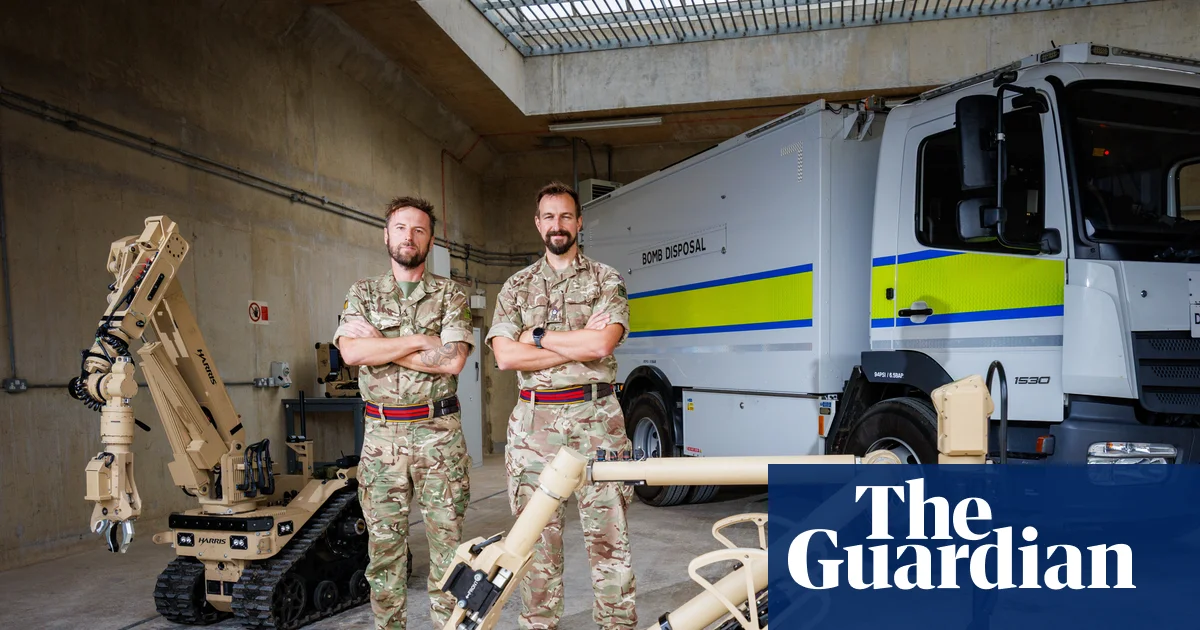
他立即报警,警方迅速赶到现场。“然后,”他说,“场面彻底失控了。”为了处理这枚爆炸物,他们呼叫了军队。这一请求由位于牛津郡小镇迪科特沃克斯霍尔军营的指挥中心接收。这里是第11爆炸物处理与搜索团(11EOD)的总部,这是一支专业的陆军部队,负责各类炸弹拆除工作——从恐怖组织放置的简易爆炸装置,到二战时期的弹药,无所不包。
He called the police, who quickly came to the scene. “And then,” he said, “all hell broke loose.”To deal with the explosives, they called in the army. The call was picked up at the control centre at Vauxhall Barracks in Didcot, a small town in Oxfordshire. This is the headquarters of the 11 Explosive Ordnance Disposal and Search Regiment (11EOD), a specialist army division responsible for all kinds of bomb disposal – from improvised devices planted by terrorist groups to second world war-era munitions.
当埃克斯茅斯炸弹的消息传来时,负责管理该团作战行动的大卫·安德鲁·博伊斯少校感到十分困惑。“当时我们正在谈论‘那枚炸弹’,而此前我被告知它重50公斤,”他回忆道。“结果电话里有人告诉我,它其实是250公斤。我当时就想:一枚50公斤的炸弹,大小就像个灭火器;而250公斤的炸弹,则像个大热水箱——你们怎么会把这两者搞混呢?”
When the Exmouth bomb was called in, Maj Andrew Boyce, who was managing operations for the regiment, was confused. “We were talking about ‘the bomb, which Id been told was a 50kg,” he recalled. “And then somebody on the phone tells me its a 250kg. Im like, how have you confused a 50kg bomb, which is the size of a fire extinguisher, with a 250kg bomb, which is the size of a hot water tank?”
这种混淆的原因很快便清楚了:埃克斯茅斯码头的炸弹并非当天发现的第一枚。几小时前,在50英里外的普利茅斯一处建筑工地,也出土了另一枚二战时期的炸弹。
The reason for the confusion soon became clear: the Exmouth Marina bomb was not the first to be discovered that day. Another second world war bomb had been unearthed a few hours earlier at a building site in Plymouth, 50 miles away.
那天早上,在普利茅斯,S.I UXO公司的总监卢克·坦普尔顿已经清楚自己要寻找的是什么。这是一家私人承包公司,通常会先于建筑公司进场搜寻未爆炸弹。他的公司历史学家们此前已经花两周时间对这片区域进行了详细的风险评估,参考了显示德国空军飞行路线的历史文件以及当地的空袭记录。通过这些资料,他们判断这片建筑工地上很可能埋有两枚炸弹。借助专业设备,他们发现了一枚埋藏于地下四米多深的50公斤炸弹。在近距离检查完这枚炸弹后,坦普尔顿立即报警。
In Plymouth that morning, Luke Templeton, director of S.I UXO, a private contractor that goes in ahead of construction companies to look for unexploded bombs, had known what he was looking for. His companys historians had already spent a fortnight doing a detailed risk assessment of the site, drawing on historical documents showing the Luftwaffes flight paths and local records of airstrikes. From this, they`d worked out that it was highly likely there were two bombs buried somewhere on the building site. Using specialist equipment, they had found a 50kg bomb buried more than four metres down. After inspecting the bomb up close, Templeton called the police.
据博伊斯所知,这是战后初期以来首次在同一天发现两枚未爆炸弹。这两枚炸弹都位于英国同一地区,且报告也提交给了同一警方机构——德文和康沃尔警方。“我们习惯遇到地点或装置方面的混淆,但从未同时出现过两枚装置,”当时负责指挥行动的上校达伦·菲舍尔准将说道。一旦混淆得以澄清——普利茅斯建筑工地的是50公斤炸弹,而埃克斯茅斯疏浚船上漂浮的则是250公斤炸弹——救援行动随即展开。
As far as Boyce knew, this was the first time since the immediate postwar period that two unexploded bombs had been discovered on the same day. The two bombs were in the same part of the country, and had been reported to the same police force, Devon and Cornwall. “Were used to having confusion with location or devices. Were not used to having two devices,” said Brig Darren Fisher, who at the time was a colonel overseeing the operations. Once the confusion had been straightened out – it was a 50kg bomb at the building site in Plymouth, and a 250kg bomb floating on the dredger in Exmouth – the response began.
当大多数人想到排爆工作时,脑海中浮现的往往是一个身穿防爆服的孤胆英雄,在枪林弹雨中小心翼翼地接近简易爆炸装置,屏息凝神地拆解电线,深知任何一次失误都将致命。这一形象诞生于“北爱尔兰问题”时期的贝尔法斯特以及阿富汗战争期间的赫尔曼德省,且并非毫无根据;排爆工作通常被描述为军队中最危险的岗位。然而,在2026年的英国,这项工作的日常现实却截然不同。
When most people think of bomb disposal, they imagine a lone figure in a bomb suit carefully approaching an improvised device as bullets fly overhead, holding steady as they unpick wires, knowing that one wrong move will kill them. This image was forged in Belfast during the Troubles and Helmand province during the invasion of Afghanistan, and it is not unwarranted; bomb disposal is commonly described as the most dangerous job in the military. But, in Britain in 2026, the daily reality of the job is quite different.
尽管同一支团队也负责处理恐怖袭击事件,例如2017年曼彻斯特爱莉安娜·格兰德演唱会爆炸案,但英国排爆团队的核心工作其实是处理二战遗留的未爆弹药。德国空军在战争期间向英国投下了超过6万吨炸弹,英国国防部估计,其中大约十分之一在撞击地面时未能引爆。原因多种多样,既有令人不寒而栗的因素——由于依赖集中营中的强制劳工,导致制造质量低下——也有平淡无奇的原因:炸弹可能以奇怪的角度落地,或者落在松软的地面上,在引信点燃前就吸收了冲击力。
Although the same team deals with terrorist incidents, such as the 2017 Manchester attack on an Ariana Grande concert, it is unexploded second world war munitions that make up the core work of the UK`s bomb-disposal teams. The Luftwaffe dropped more than 60,000 tonnes of bombs on Britain over the course of the war, and the Ministry of Defence estimates that roughly one in 10 of these failed to explode on impact. The reasons range from the grim – poor manufacturing quality due to a reliance on forced labour in concentration camps – to the prosaic: a bomb might have landed at an odd angle, or on soft ground that absorbed the impact before the fuze could fire. (“Fuse” is the general spelling for electrical safety devices and burning cords, while “fuze” refers to engineered explosive detonators.)
(“Fuse”是电气安全装置和燃烧导索的通用拼写,而“fuze”特指工程爆炸物中的引信。)此外,英国在训练演习中也在本国领土上投掷过弹药,并在战后为便于处置而故意掩埋了剩余物资。时隔八十年,战争的物理残留物仍然占军事排爆团队每年平均处理的2500起事件中的约2000起。
Britain also dropped munitions on its own land during training exercises and deliberately buried surplus after the war in an effort at disposal. Eight decades on, the physical remnants of the war still account for about 2,000 of the 2,500 incidents that military bomb-disposal teams respond to in an average year.
这些电话通常来自金属探测器爱好者和磁力捕鱼者——他们喜欢将强力磁铁投入水道,看看能钓上来什么。节假日期间,这类电话会激增,因为人们外出散步时可能会注意到脚下有异物,或者趁机处理一些事务,比如整理祖父母的住所。不久前,排爆小组接到一个任务,要处理一枚2英寸的迫击炮,它已经被当作镇纸使用了20年。
The calls often come in from metal detectorists and magnet fishers, hobbyists who throw strong magnets into waterways to see what comes up. They surge on bank holidays, when people are out walking and notice things underfoot, or catching up on tasks such as clearing out a grandparent`s home. Not long ago, the bomb-disposal unit was called to deal with a 2in mortar that had been used for 20 years as a paperweight.
如今,来自建筑工地的电话也越来越多:随着建筑物越来越高、挖掘深度越来越深,寻找未爆炸弹的私人承包商行业也随之兴起。“我们正在扩建城市、建造新住宅,事故随时可能发生,”Templeton说。“如果一枚250公斤的炸弹在城市中爆炸,可能会摧毁整条街道。”时间的流逝并未让这些爆炸物变得不那么危险。2010年6月,德国哥廷根市三名排爆专家在拆除一座新建体育场馆下方发现的一枚500公斤美国炸弹时丧生。
Increasingly, calls come from construction sites, as buildings get taller and companies dig deeper, which has led to a growing industry of private contractors actively searching for unexploded bombs. “We`re expanding cities, building new homes, and an accident could happen,” said Templeton. “If a 250kg bomb went off in a city, it could knock a whole street down.”The passage of time has not rendered these explosives less dangerous. In June 2010, three bomb-disposal experts in Göttingen, Germany, were killed by a 500kg American bomb found beneath the site of a new sports arena.
2020年,一枚250公斤的炸弹在诺福克海岸附近的一艘捕蟹船下方爆炸,导致七名船员中有五人重伤。2021年,另一枚炸弹在慕尼黑主火车站附近的一口钻井平台下方爆炸,造成四人受伤。由于这是一场全球性战争,因此这也是一个全球性问题。今年,印度尼西亚一座高脚屋下方的一枚二战炸弹发生爆炸,造成五人死亡、二十人受伤。
In 2020, a 250kg bomb exploded beneath a crab boat off the Norfolk coast, seriously injuring five of its seven crew. In 2021, another bomb exploded beneath a drilling rig near Munich`s main railway station, injuring four. Because it was a global war, this is a global problem. This year, a second world war bomb beneath a stilt house in Indonesia detonated, killing five people and injuring 20.
这些几十年前的装置难以解读或预测。“你其实并不清楚为什么某一枚特定的炸弹没有爆炸,而这正是问题的一部分,”11EOD部队指挥官安迪·汉布利中校说道。多年的腐蚀、地基变动和生锈使得引信更难预测,机械结构也更难处理。2024年1月14日下午,德文郡两个不同角落的两支队伍就面临着同样的问题。
These decades-old devices are difficult to read or predict. “You dont really know why [a particular bomb] didnt function, which is part of the problem,” said Lt Col Andy Hambley, the commanding officer of 11EOD. Years of corrosion, shifting ground and rust make the fuzes less predictable, the machinery harder That was exactly the issue facing two teams in two different corners of Devon on the afternoon of 14 January.
下午1点左右,斯科特·杜利少校抵达了普利茅斯的建筑工地。他是英国皇家海军潜水与威胁处置小组的潜水员和排爆专家。杜利身材高大,留着修剪整齐的胡须,说话带着柔和的德文郡口音。他在军队环境中长大,父亲是皇家工兵,从事排爆工作。近年来,他获得了“末日守望者”的绰号,因为每次他值班时,电话就响个不停(他的纪录是一周内接到11次出动指令)。
At about 1pm, PO Scott Dooley, a diver and bomb-disposal operator with the Royal Navys Diving and Threat Exploitation Group, arrived at the building site in Plymouth. Dooley, a tall man with a neatly trimmed beard and a soft Devon accent, grew up in the military; his father was in the Royal Engineers, doing bomb disposal. In recent years, he had acquired the nickname “the Doom Watch”, because every time he was on duty, the phone didnt stop ringing (his record was 11 call-outs in a single week).
在普利摩斯,杜利扫描了周围区域以评估风险:附近有一所学校,还有一家玻璃幕墙的酒店,一旦发生最坏情况,玻璃可能会碎裂。警方已在现场工作,正在设置警戒线并疏散炸弹周围的区域。
In Plymouth, Dooley scanned the area for risk: there was a school nearby, as well as a glass-fronted hotel that could shatter if the worst happened. Police were already at work establishing a cordon and evacuating the area around the bomb.
当排爆专家第一次接近炸弹时,他们并不知道前方等待自己的是什么。最重要的是评估引信,即拧在炸弹侧面的金属圆柱体。它是链条中的第一环。引信内含有炸药,用于引爆一个微小且高度敏感的雷管,雷管进而引爆加强装药,加强装药再引爆炸弹的主装药,即一种相对稳定的“次级”炸药。大多数德国引信是电引信,在炸弹投放时由飞机供电。
When an operator approaches a bomb for the first time, they do not know what they are walking towards. The most important thing is to assess the fuze, a metal cylinder screwed into the side of the bomb. It is the first link in a chain. The fuze contains explosives, which fire a tiny, highly sensitive detonator, which sets off a booster charge, which sets off the main filling of the bomb, a comparatively stable “secondary” explosive. Most German fuzes were electrical, charged from the aircraft as the bomb was released.
经过80年,这些引信已无剩余电量。但一些德国炸弹配备了机械延时引信,由齿轮和弹簧构成,类似手表。一旦触发,这种引信会发出滴答声,在2到72小时后引爆。德国空军故意安装这些引信以最大化破坏效果;医院、道路和工厂需要清空数天,因为炸弹可能在撞击后很久才爆炸。
After 80 years, there is no charge left in them. But some German bombs were fitted with a mechanical delayed-action fuze, constructed from gears and springs, like a watch. Once triggered, this fuze ticks down before detonating between two and 72 hours later. The Luftwaffe deliberately fitted these fuzes to maximise disruption; hospitals, roads and factories were cleared for days at a time because the bombs could detonate long after impact.
因此,一切的关键都在于引信。如果引信被判定为敏感,通常意味着移动该装置过于危险。最安全的做法是用沙袋将其包围,并在原地将其引爆。如果引信稳定,则可以将其移至更安全的地方,例如运到海上。
Everything, therefore, turns on the fuze. If the fuze is judged to be sensitive, that usually means it is too dangerous to move the device. The safest option is to surround it with sandbags and detonate it where it is. If the fuze is stable, then it can be moved somewhere safer, such as out to sea.
杜利有两个有利条件:一枚50公斤的炸弹不太可能装有定时装置,而且它仍半埋在地下,这表明它没有受到剧烈震动。另一方面,引信浸在泥水中,他看不见。排爆人员通常会在评估引信之前避免移动装置,以免触发定时装置,但杜利别无选择。在坑底,他和一名同事在一处泥质岩架上搭建了一个稳固的平台,用沙袋将其围住,然后小心翼翼地开始挖掘。一旦将其取出,他便在其上放置了一种名为“听诊麦克风”(mic steth)的监听设备。他仔细聆听是否有滴答声。
Dooley had two things working in his favour: a 50kg bomb was less likely to have a ticker, and it was still half-buried, which suggested it hadnt been badly jolted. On the other hand, the fuze was submerged in mud and he couldnt see it. Bomb-disposal operators try to avoid moving a device until they`ve assessed the fuze, lest they trigger a ticker, but Dooley had no choice. Down in the pit, he and a colleague built a stable platform on a ledge of mud, surrounding it with sandbags, and set to work painstakingly unearthing it. Once it was out, he placed a listening device on it called a microphone stethoscope, or mic steth. He listened for ticking.
一片寂静。短暂的宽慰之后,紧接着是进一步的调查。寂静仅意味着在那一刻,没有机械引信被触发。炸弹里到底有没有引信?杜利需要对其进行物理检查。这枚炸弹已在地下四米深处埋藏了数十年,表面覆盖着厚厚的黏土。他一边继续用听诊麦克风监听是否有滴答声,以防自己的动作触发任何东西,一边向引信上浇水以冲掉泥浆。“引信已经完全腐烂了,”他说。它腐蚀得如此严重,以至于所有标记都不可见。没有标记,就没有信息。他们不得不对其进行X光检查。
Silence. A moment of relief, quickly followed by further investigation. Silence only means that at that moment, no mechanical fuze has been triggered. Was there one in the bomb at all? Dooley needed to physically examine it. The bomb had been lodged more than four metres underground for decades and was caked in thick clay. Still listening for ticking on the mic steth in case his movements triggered anything, he poured water on the fuze to wash away the mud. “The fuze was absolutely more than gone,” he said. It was so degraded that none of the markings were visible. No markings, no information. They would have to X-ray it.
当这一切在普利茅斯发生时,利亚姆·基德曼中尉正期待在家度过平静的几天。基德曼刚刚结束了一周艰苦的工作,地点在威尔士西部农村地区,他在那里切开一个装满爆炸物的安全箱,箱子位于一名已故男子的花园底部。(这名男子显然曾使用这些爆炸物来砍伐树木,而没人知道他把钥匙放在哪里。)随后,在他完成那项任务后不久,控制中心打来电话,称在德文郡发现了两枚炸弹。普利茅斯的当地团队已经忙于处理其中一枚。他能去埃克斯茅斯吗?基德曼在一小时内重新上路。
While this was unfolding in Plymouth, Capt Liam Kidman was anticipating a quiet couple of days at home. Kidman had just come off a gruelling week that ended in rural west Wales, cutting open a safe packed with explosives at the bottom of a dead man`s garden. (The man had apparently used the explosives for felling trees, and nobody knew where he kept the key.) Then, shortly after he had completed that job, the control centre rang to say two bombs had been discovered in Devon. The local team in Plymouth was already occupied with one of them. Could he go to Exmouth? Kidman was back on the road within the hour.
基德曼是来自威尔士南部的一位精力充沛的人,他几乎是在偶然间进入了排爆领域——20多年前他参军时,弹药技术人员短缺。随着军衔的提升,他在阿富汗处理简易爆炸装置(IED),在英国处理二战遗留物,逐渐爱上了这项工作中解决问题的部分。
An energetic man from south Wales, Kidman ended up in bomb disposal almost by accident – when he joined the army more than 20 years ago, there was a shortage of ammunition technicians. As he climbed the ranks, dealing with improvised explosive devices (IEDs) in Afghanistan and second world war jobs in the UK, he came to love the problem-solving aspect of the work.
基德曼从格洛斯特郡的基地抵达埃克斯茅斯码头时,时间已过晚上7点。他离码头越近,道路就越空旷。炸弹就放在港口中央,漂浮在疏浚船的露天甲板上。它体积巨大,如果引爆,足以夷平码头的滨水区。炸弹只能通过海上接近,而当晚最近的海军团队正忙于处理普利茅斯的那枚炸弹。通常,陆军负责陆地上的事件,海军负责海上的事件,但同一天发现两枚炸弹的意外情况让一切颠倒了过来。
It was past 7pm when Kidman reached Exmouth Marina from his base in Gloucestershire. The closer he got to the marina, the emptier the roads got. The bomb was sitting out in the middle of the harbour, bobbing on the open deck of the dredger. It was so big that if detonated it could flatten the marina`s waterfront. The bomb was only accessible by sea, and the nearest naval team was tied up with the other bomb in Plymouth that night. Usually, the army handles incidents on land and the navy anything at sea, but the unexpected nature of two bombs being found on the same day had turned everything on its head.
这枚炸弹曾被粗暴处理——从海底拖上来,然后毫无章法地扔在金属甲板上。“如果上面装有机械引信,那它就很可能已经开始计时了,”基德曼说。他们必须设法靠近并检测它。码头合规经理哈里·格里芬站了出来。格里芬知道这枚炸弹有可能爆炸,但他安慰自己说,它已经在水下待了80年,从未出过事。他把基德曼团队的一名中士带到炸弹旁边,准备将麦克风式听诊器连接到装置上。“这正是让操作员心跳加速的关键一步,”基德曼说。
The bomb had been handled roughly – hauled off the seabed and dumped unceremoniously on to a metal deck. “If theres a mechanical fuze on there, thats enough for it to be ticking down,” said Kidman. They had to get ears on it. Harry Griffin, the marina compliance manager, stepped up. Griffin knew there was a chance the bomb could go off, but reassured himself that it had been in the water for 80 years without incident. He ferried a sergeant from Kidmans team over to the bomb to get a mic steth on to the device. “Thats the bit that gets the operator`s heart going,” said Kidman.
炸弹并没有发出滴答声。但没有人放松警惕。就像在普利茅斯时一样,他们仍然不清楚自己面对的是哪种引信。
It was not ticking. But nobody relaxed. Just as in Plymouth, they did not know what kind of fuze they were dealing with.
六月一个晴朗的日子,我访问了位于伦敦郊外的北霍尔特皇家空军基地,观察了一次空投武器的训练演习。学习如何正确评估一枚老旧生锈的炸弹需要时间和练习。排爆是一项危险的工作,但汉布利告诉我:“知识能消除恐惧。”排爆作为一个专业领域,是在第二次世界大战期间形成的。当时英国尚未做好应对大轰炸的准备,最初的设想是警察或防空警报员就能处理任何未爆炸的炸弹。
On a bright day in June, I visited RAF Northolt, a base on the outskirts of London, to observe a training exercise on airdropped weapons. Learning how to correctly assess an old, rusting bomb takes time and practice. Bomb disposal is a dangerous job but, Hambley told me: “Knowledge dispels fear.”Bomb disposal as a specialism was created in the second world war. Britain wasn`t ready for the blitz, and the early assumption was that police or air raid wardens could simply deal with any bomb that failed to go off.
但随着具有延迟引爆功能的机械引信——也就是那些滴答作响的定时炸弹——变得越来越普遍,人们意识到需要专门的干预措施。正如历史学家詹姆斯·欧文在他2010年的著作《危险:未爆炸弹》中所详细描述的,1940年5月,战争部将这一问题交给了皇家工兵部队,他们组建了25个排爆小组,装备几乎只有镐头、铲子和听诊器。
But as delayed-action mechanical fuzes – those ticking timebombs – became more common, it was clear that targeted intervention was needed. As the historian James Owen details in his 2010 book Danger UXB, in May 1940, the War Office handed the problem to the Royal Engineers, who formed 25 bomb-disposal sections armed with little more than picks, shovels and stethoscopes.
到1940年9月,他们每月处理的炸弹数量已超过3000枚。据一些估计,这一时期排爆员的平均寿命只有10周。
By September 1940, they were dealing with more than 3,000 bombs a month. By some estimates, the average life expectancy of a bomb-disposal operator in this period was 10 weeks.
早期的那些团队对每枚他们处理的炸弹都绘制了地图,而这些地图至今仍在使用。Matt Fuller 是 S.I UXO 的一名研究员,该公司负责在普利茅斯发现那枚炸弹。他仔细研究了战时炸弹普查数据以及内务部的每日情报报告。通过研究这些炸弹地图,他发现普利茅斯的炸弹很可能是在 1941 年 3 月 21 日至 22 日的夜间落下的。
Those early teams mapped every bomb they dealt with, and the maps are still in use. Matt Fuller, a researcher at S.I UXO, the contractor that found the bomb in Plymouth, works through wartime bomb censuses and Home Office daily intelligence reports. Studying the bomb maps, he found that the Plymouth bomb most likely fell on the night of 21–22 March 1941. (The Exmouth bomb he puts at 24-25 February 1941.)
(他认为埃克斯茅斯的炸弹则是在 1941 年 2 月 24 日至 25 日。)在进行风险评估时,Fuller 对当时被袭击地点的数量之多感到震惊,其中一些还是人口稀少的小城镇。“二战期间投下的未爆炸弹造成的最后一例死亡,其受害者可能都还没出生呢,”他告诉我。Fuller 还惊叹于当地守夜人所留下的详细记录。他们早已意识到未爆炸弹对后代可能构成的危险。正是通过保留这些记录,他们从过去向现在伸出了援助之手。
Conducting risk assessments, Fuller is struck by the sheer number of places that were targeted, some of them small towns with tiny populations. “The last person to die from an unexploded bomb dropped in world war two probably hasn`t been born yet,” he told me. Fuller also marvels at the detailed records local wardens kept. They saw the danger that unexploded bombs would pose for future generations. In keeping those records, they reached out a helping hand from past to present.
与二战时期的同行相比,现代的排爆团队则配备了安装在机器人上的摄像头、可远程操作的微型听诊器,以及能够穿透厚厚钢层以检查内部爆炸物成分的 X 光机。“生命安全高于一切——这不仅关乎公众,也关乎我们自身——而财产损失则排在其次,”Hambley 告诉我。但当一枚炸弹已有 80 年历史时,即便是这些设备也可能无法可靠使用。
In contrast to their second world war counterparts, modern bomb-disposal teams come armed with robot-mounted cameras, mic steths that can be operated from a distance, and X-ray machines that can penetrate thick layers of steel to examine the explosive content inside. “Risk to life comes above everything – for the public, but also for us – and risk to property comes second,” Hambley told me. But when a bomb is 80 years old, even this equipment can be unreliable.
在北霍尔特皇家空军基地,一枚重达 500 公斤的德国炸弹静静地躺在一片草地上。这枚炸弹已失去活性,被以一种不稳定的角度放置在那里,以便排爆技术人员两人一组进行评估:这是什么类型的炸弹?用的是哪种引信?可以采取什么措施?我与值班中尉 Matt Walker 一起走近了这枚炸弹。它大约有两座沙发那么长:一块又长又粗的哑光金属块,表面粗糙,布满锈迹。Walker 告诉我,像这样尺寸的炸弹,其爆炸半径可达“数百到一千米”。
At RAF Northolt, a 500kg German bomb was perched on a grassy verge. The bomb, which was inert, had been placed there, at an awkward angle, for bomb-disposal technicians to assess in pairs: what type of bomb is it? Which fuze? What action can be taken? I approached the bomb with Maj Matt Walker, the squadron duty officer. It was roughly the length of a two-seat sofa: a long, thin hunk of dull metal, its surface rough and textured with rust. Walker told me that a device this size would have a blast radius of “a few hundred to a thousand metres”.
如果没有清晰的标记,训练人员就必须依靠自己的知识来判断引信是机械定时器,还是带有额外的防操作引信:这是一种内置于炸弹中的陷阱装置,一旦有人试图移动炸弹或拆除主引信,就会立即引爆。训练人员必须判断接下来该怎么做。“这是一种极端的解决问题训练,”沃克说。“前几天有人这样形容它——你一开始要同时抛接五本书,然后有人再扔进一个玻璃球,你还得继续抛接;接着,他们又扔进一个火球。”只要其中一个球掉了下来,你和周围的人很可能都会丧命。
Without clear markings, trainees would have to use their knowledge to work out whether the fuze had a mechanical timer, or an additional anti-handling fuze: a booby-trap built into the bomb that detonates it if anyone tries to move it or remove the main fuze. The trainees had to work out what to do next. “It`s extreme problem solving,” said Walker. “Someone described it to me the other day as – you start by juggling five books, then someone throws a glass ball and you have to keep that juggling as well. They then throw a ball of fire.”If you drop one of the balls, you and those nearby will probably die.
我们将那枚500公斤重的炸弹留在原地,然后走进了“博物馆”——这个名字听起来颇为气派,实际上不过是一个车库里几排又长又灰的架子,用作视觉参考资料库。“这里什么稀奇古怪的东西都有,”沃克说。他拿起一根锥形中空金属管。“这根其实是个儿童用的棒球棒,但也被人报过警。”他们特意保留下这件物品和其他一些误导性物品,以便训练人员能亲眼看到,将某些东西误认为炸弹究竟有多容易。
We left the 500kg bomb where it was and walked into the “museum”, a grand name for a few long, dusty shelves inside a garage that acts as a visual reference library. “Anything and everything will turn up here,” said Walker. He picked up a tapered, hollow metal tube. “This one is actually a kids baseball bat. But it got called in.”Theyd hung on to this and other red herrings so that trainees could see, in practice, how easy it is to mistake something for a bomb.
其他杂项物品中还包括一辆雪铁龙2CV汽车的内件,其外形酷似炸弹,以至于人们经常在垃圾场发现它后拨打999报警。直到我亲眼看到“博物馆”里的这些物品,我才真正意识到可供参考的信息少得可怜:这些弹药不仅锈迹斑斑,还变形严重,有时甚至缺失部件,完全看不出原貌。要将这些生锈的金属块解读出有用信息,需要一双专家的眼睛:圆柱形且末端弯曲的物体可能是德国的SC50型炸弹,而引信袋的具体位置则能识别出英国的SAP250型炸弹。
The other miscellanea included an internal part from the Citroën 2CV car that looks so much like a bomb that people regularly call 999 after finding it in a scrapyard. Until I looked at the items in the museum, I hadn`t fully grasped how little there is to go on: the munitions are not just rusted but distorted, sometimes missing pieces, completely blank. Translating these rusted lumps of metal into something legible requires an expert eye: a cylindrical shape with a curved end means it could be a German SC50, particular fuze pocket positioning can identify a British SAP250.
英国拆弹技术员之间存在代际差异。那些在2012年之前获得资质的人们在阿富汗成长,其中塔利班埋设了大量的自杀式炸弹。仅在2011年,美领军就记录了16800起自杀式炸弹事件,平均每天约46起。那些在2012年之后获得资质的人们则主要处理第二次世界大战时的弹药。哈姆贝利自身的职业生涯正映射着这一变化。他最初担任拆弹官是在2012年的赫尔曼德省,当时他走向一个埋在地下的装置,而实弹擦过他的耳朵。
There is a generational difference between bomb-disposal technicians in the UK. People who qualified before 2012 cut their teeth in Afghanistan, where the Taliban laid an extraordinary number of IEDs. In 2011 alone, US-led forces recorded 16,800 IED incidents, roughly 46 a day. Those who qualified after 2012 tend to have mainly worked on second world war munitions. Hambley`s own career has mapped this change. His first job as a bomb-disposal officer was in Helmand in 2012, walking toward a buried device while live rounds tore past his ear.
如今面临的问题不同了:协调大规模疏散平民,尽量避免财产损失。“在阿富汗部署时相比,你们有更多的自由度,”哈姆贝利告诉我。“在英国,我们控制着这块地,没人会向我们开枪,我们有时间,所以我们可以尽可能地确保安全。”然而,谨慎是缓慢的——一旦发现炸弹,时钟就开始 ticking,必须尽快让人们回到家中。
These days, the problems are different: orchestrating large-scale evacuations of civilians, trying to avoid property damage. “Youve got a lot more latitude than when youre deployed in Afghanistan,” Hambley told me. “In the UK, we own the ground, no one is going to shoot at us, we`ve got time, so we can afford to be as safe as we possibly can be.”Caution, though, is slow – and the moment a bomb is discovered, the clock is ticking to get people back into their homes.
在展望埃克斯莫斯特码头的办公桌上,60多岁的注册财务规划师菲奥娜·波尔特可以看到那颗炸弹放在挖泥船上。1月14日星期三下午3点左右,警察敲响了办公室门,告诉波尔特和她的四位同事收拾东西离开。“真的很吓人,”她告诉我。到晚上8点,安全封锁线从100米扩大到400米,警察开始敲邻近码头的街道上的门。有些人去附近的亲戚家住宿,有些人则住进酒店。其中一位波尔特邻居最终睡在了自己的车里。
Sitting at her desk overlooking Exmouth Marina, Fiona Bolt, a chartered financial planner in her 60s, could see the bomb on the dredger. At about 3pm on Wednesday 14 January, police knocked on the office door and told Bolt and her four colleagues to pack up and leave. “It was really quite scary,” she told me. By 8pm, the safety cordon had expanded from 100 to 400 metres and police started knocking on doors on streets near the marina. Some people went to stay with family members nearby, others in hotels. One of the Bolts` neighbours ended up sleeping in their car.
夜幕降临,基德曼的团队在水上,试图查看炸弹的内部。该保险丝的第一张X射线图像无法使用:钢制外壳变厚并生锈,击败了射束。他们花了七个小时骑自行车穿过不同的X射线设备,试图获得清晰的图像。当基德曼工作了一整夜时,他可以看到埃克斯茅斯港远端的公寓里灯光亮起亮起灭,而公寓里最好是空的。警方不能强迫任何人离开。
As the night set in, Kidmans team was out on the water, trying to see inside the bomb. The first X-ray images of the fuze were unusable: the steel casing, thickened and blistered by rust, defeated the beam. They spent seven hours cycling through different X-ray equipment, trying to get a clear image. As Kidman worked through the night, he could see lights going on and off at the far end of Exmouth harbour, in flats that would ideally be empty. Police cant force anyone to leave.
当有人拒绝时,警察会给他们一封信,说他们留在这里的风险自负,而该团必须在他们周围工作。三年前,在大雅茅斯,汉布利与一名居民“牙齿咯咯地靠近”--不到50米的地方,努力让一个250公斤的炸弹安全。
When someone refuses, police hand them a letter saying they`re staying at their own risk, and the regiment has to work around them. In Great Yarmouth three years ago, Hambley worked to render a 250kg bomb safe with a resident “teeth-chatteringly close” – less than 50 metres away.
第二天早上,当博尔特起床时,她注意到靠近码头的街道空得出奇。当博尔特离开家时,她看到禁区沿着海滨扩展了多远:现在它涵盖了400米和2,000处房产。她没有办公室可去。“我感觉真的很失落,就像车灯下的兔子,”她说。“这一切都超出了我的控制范围。”该委员会匆忙在休闲中心和养老院建造了临时避难所。
When Bolt got up the next morning, she noticed her street, close to the marina, was eerily empty. When Bolt left the house she saw how far the exclusion zone had expanded along the seafront: it now encompassed 400 metres, and 2,000 properties. She didn`t have an office to go to. “I felt really lost, like a rabbit in headlights,” she said. “It was all just so out of my control.”The council had hastily assembled makeshift shelters out of a leisure centre and retirement home.
当天,当博尔特来到休闲中心时,她看到露营床和床上用品是在夜间运来的,特易购也捐赠了食物。“如果我们在战时,”她说,“我想这就是社区精神。”到下午5点左右,很明显博尔特当晚不会回家。她的房子就在警戒线深处。她把必需品塞进背包里,穿过小镇来到儿子家。截至晚上9点,警戒线已蔓延至600米,覆盖了另外500所房屋,警察逐街区清理了这些房屋。
When Bolt stopped by the leisure centre that day, she saw that camp beds and bedding had been brought in during the night, and Tesco had donated food. “If wed been in wartime,” she said, “I imagine thats what the community spirit was like.”By about 5pm, it was clear Bolt would not be going home that night. Her house was deep within the cordon. She stuffed essentials into a rucksack and walked across town to her son`s house. By 9pm the cordon had crept up to 600 metres, encompassing a further 500 homes, cleared block by block by police officers.
这是一次大规模的行动,但在德国,埋有更多未爆炸弹药的地方,更大规模的疏散是常见的。2017年9月,6万人被从法兰克福市中心清除,其中包括两家医院,以便拆除一枚1.8吨的英国“重磅炸弹”。2025年,仅科隆市就进行了19次战时炸弹疏散,影响了近7万居民。
This was a big operation, but in Germany, where far more unexploded ordnance lies buried, even larger scale evacuations are common. In September 2017, 60,000 people were cleared from central Frankfurt, including two hospitals, so that a 1.8-tonne British “blockbuster” bomb could be defused. In 2025, the city of Cologne alone carried out 19 evacuations for wartime bombs, affecting almost 70,000 residents.
在各自的工作地点,杜利和基德曼都敏锐地意识到周围的干扰,这给他们的工作增加了巨大的时间压力。在普利茅斯,建筑工地半径100米范围内的所有建筑均于周三被疏散,其中包括学校。杜利使用标准设备拍摄的第一张X光片,结果完全是黑色的。周四下午4点左右,高灵敏度X射线板从该国其他地方抵达。最后,一个可读的答案。
At their respective sites, Dooley and Kidman were both acutely aware of the disruption around them, which adds an intense time pressure to their work. In Plymouth, all the buildings within a 100-metre radius of the building site had been evacuated on Wednesday, including the school. Dooley`s first X-rays, taken with the standard equipment, had come out completely black. At around 4pm on Thursday, high-sensitivity X-ray plates arrived from elsewhere in the country. Finally, a readable answer.
该炸弹没有机械熔断器,也没有防排装置。杜利松了一口气。“人们可以冷静一点,”他说。“如果你敲了它,它就不会滴答作响。”不久之后,下午晚些时候,高灵敏度X光机抵达埃克斯茅斯。它传到了疏浚船上。团队开始扫描,并持续了几个小时。还是什么也没有。基德曼向行动团队报告:他们无法识别导火索。
The bomb had no mechanical fuze, and no anti-handling device. Dooley breathed a sigh of relief. “People could just calm down a little bit,” he said. “It wasnt going to tick if you knocked it.”Soon afterwards, in the late afternoon, the high-sensitivity X-ray machine arrived in Exmouth. It went out on to the dredger. The team started scanning, and kept going for hours. Still nothing. Kidman reported back to the operations team: they couldnt identify the fuze.
埃克斯茅斯的前沿基地是救生艇站,周四,这里挤满了码头工作人员、警察、海岸警卫队和议会的紧急规划官员。简报会和战略会议每隔几个小时举行一次。炸弹的位置严重限制了正常的缓解程序。该团对250公斤炸弹的标准防护是重约350吨的填沙防御工事。这不能在驳船上建造。研磨切割是一种切割保险丝的先进技术,被认为不合适。
The forward base in Exmouth was the lifeboat station, and over the course of Thursday it filled up with marina staff, police, coastguard and emergency planning officers from the council. Briefings and strategy meetings took place every few hours. The position of the bomb severely limited the normal mitigation procedures. The regiment`s standard protection for a 250kg bomb is a sand-filled fortification weighing about 350 tonnes. This could not be built on a barge. Abrasive cutting, an advanced technique for cutting out the fuze, was not deemed appropriate.
下一个选择是把挖泥船拖到海里,然后把整个东西炸飞。码头的合规经理格里芬(griffin)打电话给保险公司,询问这是否包括在内。大多数海军陆战队的政策都带有战争行为的排除,这就提出了一个难题:80年后,德国空军的炸弹仍然是战争行为吗?“我们兜圈子,真的,“格里芬说。
The next option was towing the dredger out to sea and blowing the whole thing up. Griffin, the marina`s compliance manager, phoned its insurers to ask whether this would be covered. Most marine policies carry an act-of-war exclusion, which raises a difficult question: after 80 years, is a Luftwaffe bomb still an act of war? “We went round in circles, really,” said Griffin.
这对11爆炸物处理小组来说是一个敏感的问题。2021年2月,在埃克塞特大学宿舍旁边的一个建筑工地上发现了一枚1,000公斤重的德国炸弹,这是德国空军武器库中最重的炸弹之一。该小组无法确定炸弹是否是诱杀装置,因此决定在炸弹周围放置400吨沙子以吸收爆炸力。这还不够。爆炸声在数英里外都能听到,地面上留下了一个双层公交车大小的弹坑,碎片飞溅到至少250米外,附近建筑物的窗户被震碎。
This is a sensitive subject for 11EOD. In February 2021, a 1,000kg German bomb – one of the heaviest in the Luftwaffes arsenal – was discovered on a construction site next to Exeter Universitys halls of residence. The team could not establish if the bomb was booby-trapped so it decided to do a controlled detonation where it was, with 400 tonnes of sand around it to absorb the blast. It was not enough. The explosion, which was heard for miles, left a crater the size of a double-decker bus in the ground and threw debris at least 250 metres, shattering windows of nearby buildings.
该大学对其一切险保单提出索赔;保险公司安联保险公司拒绝了,理由是一项排除“战争造成”损害的条款。高等法院做出有利于保险公司的裁决。军方对此不承担经济责任,但法庭上对其流程的每一步进行审查的经历使该部队更加谨慎。汉布利说:“我们非常清楚,一切最终都可能上法庭,一切都可能受到质疑。”
The university claimed on its all-risks policy; the insurer, Allianz, declined, citing a clause excluding damage “occasioned by war”. The high court found in favour of the insurer. The military was not financially liable for this, but the experience of having every step of its process picked over in court made the unit even more cautious. “We are very aware that everything could end up in court and everything could be questioned,” said Hambley.
谨慎态度是一个方向,而时间压力--需要让人们回到埃克斯茅斯的家,让孩子们回到普利茅斯的学校--又带来了另一个方向。由于船上20,000升燃料和船只本身碎片可能造成环境污染,因此排除了爆炸整个疏浚船的想法。这只剩下一个选择:将炸弹放入水中并将其拖走,以便在海上安全引爆。但这留下了一个问题:如何删除它?
Caution pulled one way and time pressure – the need to get people back into their homes in Exmouth and kids back to school in Plymouth – pulled another. The idea of exploding the entire dredger was ruled out due to the risk of environmental pollution from the 20,000 litres of fuel on board and fragmentation of the vessel itself. That left only one option: get the bomb into the water and tow it away to detonate safely at sea. But this left a question: how to remove it?
到1月15日星期四晚上11点,普利茅斯有了一个小型炸弹的计划:将其抬起来,放入装满沙袋的4x 4炸弹中,将其驶入水边1公里,将其带到大海并在那里炸毁。截至凌晨12点30分,警察和消防队员挨家挨户疏散居住在路线150米范围内的所有人。凌晨2点30分左右,杜利和另一名炸弹操作员用手将这枚50公斤的炸弹从坑中抬出来,爬上了他们用沙袋搭建的临时楼梯。
By 11pm on Thursday 15 January, there was a plan for the smaller bomb in Plymouth: lift it out, place it in a 4x4 packed with sandbags, drive it 1km to the water`s edge, take it out to sea and blow it up there. By 12.30am, police and fire crews were going door-to-door to evacuate everyone who lived within 150 metres of the route. At about 2.30am, Dooley and another bomb operator lifted the 50kg bomb out of the pit with their hands, climbing up on a makeshift staircase they had built out of sandbags.
炸弹沾满泥土,又冷又重。天很黑,台阶深深地陷在泥坑里,很滑。他们小心地将炸弹放入等候车辆的后部。车队以步行的速度慢慢离开。当车辆经过时,警方释放了警戒线,让人们回到自己的房子,而炸弹仍在向大海蔓延。
The bomb, slick with mud, was cold and heavy. It was dark, and the steps, wedged deep in a muddy pit, were slippery. They placed the bomb carefully into the back of the waiting vehicle. The convoy slowly moved off, at walking pace. As the vehicles passed by, the police released the cordon, letting people back into their houses while the bomb was still crawling towards the sea.
到达水边后,炸弹就被带到一艘船上,并下降到船边,浮力装置在那里等待,以便它可以在水下与船保持安全距离。杜利当时在这艘海军舰艇上,当它远离港口时,这艘舰艇将炸弹放入水中。在之前的36小时里,他只睡了两个小时。
Once it was at the waters edge, the bomb was carried down on to a boat and lowered over the side, where a buoyancy device was waiting so that it could be dragged along underwater at a safe distance from the boat. Dooley was aboard the navy boat, which lowered the bomb into the water as it got further away from the harbour. Hed had two hours sleep in the preceding 36 hours.
控制普利茅斯湾航运的国王港务长已允许在特定海域引爆炸弹,他们向这个地点航行了四海里。在投放点,杜利在炸弹上安装了炸药,并将其下放到海底。一名海军潜水员在黑暗中跟着绳子往下走。它漆黑一片,水中充满了淤泥,手电筒毫无用处。潜水员通过触摸解开螺栓,释放空气从漂浮物中排出并将其带到水面。
The King`s Harbour Master, which controls shipping in Plymouth Sound, had given permission for the bomb to be detonated in a specific patch of sea, and they sailed out four nautical miles towards this spot. At the drop point, Dooley fixed an explosive charge to the bomb and had it lowered down to the seabed. A navy diver followed the rope down in the dark. It was pitch black and the water was thick with silt, rendering a torch useless. Working by touch, the diver undid the bolts, let the air out of the float and brought it to the surface.
当潜水员返回水面时,杜利将船退了100米。从那里看,唯一能显示炸弹位置的东西,是一个用绳子系住、漂浮在水面上的小发光浮标。海浪的起伏让它时隐时现。警方无人机确认,岸上没有人处于危险之中。海军也确认,海上雷达没有任何异常。随后,起爆装置被启动。杜利开始倒数。
When the diver came back up, Dooley took the boat back a hundred metres. From there, the only thing showing the location of the bomb was a small lit float attached with a line, bobbing on the surface of the water. The swell of the waves kept hiding it. Police drones confirmed nobody on shore was in danger. The navy confirmed there was nothing on radar at sea. The charge was initiated. Dooley counted down.
1月16日星期五早上5点13分,黑暗中的海面短暂地亮了起来。一团白色的水柱从水面升起,随后便归于平静。这枚炸弹在被投下80年后,终于被引爆了。
At 5.13am on Friday 16 January, the sea briefly lit in the dark. A plume of white water rose above the surface, then nothing. Eight decades after it was dropped, the bomb had been detonated.
周四晚上到周五早上,当这一切在普利茅斯发生时,埃克斯茅斯码头除了军事排爆小组和两名码头工作人员外,空无一人。“当时气氛相当诡异,”码头经理霍金斯-汤普森说,“感觉就像回到了新冠疫情时期。”他们所有人都专注于如何将炸弹从疏浚船上移除。有人建议将疏浚船拉近一些,但移动船只就意味着移动炸弹,而没有人愿意冒这个险。
As this unfolded in Plymouth on Thursday night and into Friday morning, Exmouth Marina was empty except for the military bomb-disposal team and the two marina staffers. “It was quite eerie,” said Hockings-Thompson, the marina manager. “It was like going back to Covid times.”They were all focused on how to get the bomb off the dredger. Someone suggested bringing the dredger in closer, but moving the boat meant moving the bomb, and nobody wanted to risk it.
格里芬回到办公室,联系了一家本地起重机租赁公司,他们同意派送一台55吨重的起重机。接下来的难题是谁来驾驶它。包括费希尔在内的高级官员们拼命寻找一名军用起重机操作手,能够驾驶55吨重的起重机,并且能短时间内到位。但他们没有找到。那位民间起重机司机亲自驾驶过来,他主动表示愿意亲自驾驶。“我不能承担他驾驶这台起重机的风险,”费希尔说道,他负责军方的责任问题。
Griffin went back into the office and called a local crane hire company, who agreed to bring a 55-tonne crane. The next problem was who would drive it. Senior officers including Fisher scrambled to find a military crane operator qualified to drive a 55-tonne crane, available at short notice. They could not. The civilian crane driver who had brought it over offered to do it himself. “I can`t own the risk of him driving that crane,” said Fisher, who held the military liability.
这便把问题交给了警方,警方必须决定是否授权一名民间人员处理未爆炸的炸弹——如果起重机被毁,那么财务责任将由谁承担。“如果最坏的情况发生,”费希尔说,“我们将面临比失掉起重机更大的问题。”最终,他们还是让他继续操作。(起重机司机拒绝就本文接受采访。)在1月16日星期五凌晨零点之后,排爆操作员马特·鲍登中尉在炸弹外壳上系上了绳带,并安装了一个浮力装置。
That passed the question to the police, who had to decide whether to authorise a civilian to handle an unexploded bomb – and whose financial responsibility it would be if the crane was destroyed. “If the worst happens,” Fisher said, “we`ve got much bigger problems than losing the crane.”Eventually, they let him go ahead. (The crane driver declined to speak to me for this article.) After midnight, in the early hours of Friday 16 January, bomb-disposal operator Lt Matt Bowden attached straps around the bomb casing and added a buoyancy device.
他离开了挖泥船,起重机将炸弹吊起。当250公斤的炸弹从甲板上被吊起时,驳船在水中上浮了起来。他们事先就讨论过这个问题:挖泥船突然变轻后,会不会猛烈上浮撞到炸弹并引发爆炸。挖泥船猛烈摇动。炸弹被甩到侧边,完好地错过了钢制船只。它被慢慢放下水中,并系在了一艘军舰上。
He left the dredger and the crane lifted the bomb. As the 250kg lifted from the deck, the barge rose in the water. They had discussed this in advance: whether the dredger, suddenly lighter, would bob up hard enough to bump into the bomb and trigger something. The dredger heaved. The bomb swung out to the side and missed the steel vessel entirely. It was lowered into the water and attached to a navy boat.
这时,一切都取决于潮汊情况。有一个固定的时间窗口,可以将其拖出并引爆。大约在凌晨4点半,那艘船在炸弹 submerged 的情况下穿过停泊的游艇,炸弹拖在船后100米远。到了上午6点半,炸弹已经远去且深沉在水中,居民们被允许回到家中。
Everything now depended on the tides. There was a fixed window in which it could be towed out and detonated. At about 4.30am, the boat picked its way through moored yachts with the bomb submerged and trailing 100 metres behind. By 6.30am, the bomb was so far out and deep underwater that residents were allowed back to their homes.
霍金斯-汤普森和格里芬在前48个小时里几乎一直醒着,他们登上疏浚船,将其开回码头。随后,他们步行到海边的咖啡馆。早上8点13分,当他们排队等候时,一枚炸弹在1.5英里外的地方爆炸了。“整个海滨都挤满了人,大家本以为会看到巨大的爆炸声和浪花,”格里芬说,“但我们只听到了一声轻微的‘扑通’声。”大海已经发挥了作用,将爆炸的威力中和了。
Hockings-Thompson and Griffin, who had been mostly awake for the preceding 48 hours, went aboard the dredger to bring it back into the marina. Then they walked up to a coffee shop on the seafront. They were in the queue at 8.13am when the bomb went off, a mile and a half out. “The whole seafront was full of people expecting to see a massive bang and a splash,” said Griffin. “All we got was a bit of a plop.”The sea had done its job and neutralised the blast.
11点钟时,码头周围的商铺已经重新开门营业。基德曼兴奋不已。“没有人死亡,没有受伤,基础设施也没有损坏,”他说。大家连续工作了36个小时后,都回家睡觉去了。对于多利来说,在普利茅斯完成自己的成功排除任务后,几小时之后当他和家人坐在一起时,事情的严重性才真正击中了他。“你只是在做你的工作,”他说。“然后你就坐在那里想,这里我做了些什么?一个50公斤的炸弹和一千公斤的一样能杀了你。”
By 11am, businesses around the marina were open again. Kidman was exhilarated. “No one died, there was no injury, no damage to infrastructure,” he said. After working for 36 hours straight, everyone went home to sleep. For Dooley, after his own successful operation in Plymouth, it was only a few hours later, when he was sitting with his family, that the magnitude of what had happened hit him. “You`re just doing your job,” he said. “Then you sit there and think, what have I done here? A 50kg could kill you as much as a 1,000kg.”
夏末六个月左右,即双重炸弹发现之后,我和多利、基德曼、费希尔、博伊斯和其他参与两次行动的人坐在瓦克斯霍尔营地的酒吧里。这是一间木饰墙面的房间,蓝色花纹的地毯,墙上挂着团队照片和一幅精装的《私家侦探》 ,上面是女王会见马丁·麦金尼斯穿着炸弹处理服的照片。在我追问细节时,他们发现自己的回忆变得模糊不清。
In late summer, about six months after the double bomb discovery, I sat in the bar at Vauxhall Barracks with Dooley, Kidman, Fisher, Boyce and others who had worked on the two operations. It was a wood-panelled room with a blue patterned carpet, the wall adorned with regiment photos and a framed Private Eye cover of the Queen meeting Martin McGuinness in a bomb-disposal suit. As I pressed for details, they found their recollections blurring.
是1月14日的那次吗?还是4月份在艾尔迪超市外发现的250公斤普利茅斯炸弹?6月份在考文特里商业园发现的那颗呢?“从那以后发生的事情太多了,”博伊斯说。
Was a particular memory from 14 January? Or was it the 250kg Plymouth bomb that was found in April outside an Aldi? The one found in June at a business park in Coventry? “So much has happened since then,” said Boyce.
事实上,参与多利在普利茅斯炸弹行动的军士莱莉·罗兰当天早上接到电话赶往斯塔福郡,因为那里发现了一颗500公斤的炸弹,她无法参加会面。(她给多利发短信说她正在收集它们,“像收集宝可梦卡片一样”)。他们变得更忙了。十年前,每年只会发现一两枚大型空投武器。而今年已经发现了六枚。最近一次是9月21日,一枚115公斤的美国炸弹在福尔马outh海口潘德尼斯半岛附近水中被发现。
In fact, WO Sarah Rowland, who had worked with Dooley on the bomb in Plymouth, was unable to join the meeting as that morning shed been called out to Staffordshire, where a 500kg bomb had been found in a quarry. (She texted Dooley to say she was collecting them all, “like Pokémon cards”.) They are getting busier. Ten years ago, one or two large airdropped weapons were found each year. This year there have already been six. The latest was on 21 September, when a 115kg American bomb was found in the water off Pendennis headland, at the mouth of Falmouths harbour.
电话打给多利,但他已经在处理另一件事了。基德曼被指派负责,开车来到康沃尔郡,几乎在接下来的三天里几乎整天都在清醒着进行问题解决。这个任务很复杂。
The call went to Dooley, but he was already on another job. Kidman was assigned to it and drove down to Cornwall, where he spent almost all of the next three days awake, problem solving. The job was complicated.
将其炸毁原地可能会引发距离40米远的废油罐爆裂,并导致污水倒入英吉利海峡。因此,他们疏散了300多户人家,并派海军将炸弹打捞上来拖至深水区。由于派潜水员下去太危险,炸弹被留在远离任何人的海底,而团队则紧盯着倒计时。
Blowing it up where it lay risked rupturing waste tanks 40 metres away and pouring sewage into the Channel. Instead, more than 300 households were evacuated while the navy lifted the bomb and towed it out to deep water. It was too dangerous to send a navy diver down, so the bomb was left on the seabed, far from anyone, while the regiment counted down the hours.
9月27日,在芬马罕炸弹的定时器仍在走动时,又接到报警:格洛斯特郡费尔福基地附近有三辆白色面包车,该基地为美军轰炸机使用。一场大规模反恐行动随即展开。基德曼和罗兰驾车赶往现场。机器人搜索了面包车。随后进行了X光检查。他们互相协助,尽可能在车上睡觉休息。基德曼仍在负责芬马罕的炸弹事宜。
On 27 September, with the clock on the Falmouth bomb still running, another call came in: three white vans near RAF Fairford, a Gloucestershire base used by American bombers. A major counter-terror operation began. Kidman and Rowland drove to the scene. A robot searched the vans. X-rays followed. They helped each other out, catching some sleep in the car when possible. Kidman was still overseeing the bomb in Falmouth.
9月28日,他们确认白色面包车中并无爆炸物。基德曼回家休息。9月29日下午2点25分,芬马罕炸弹的定时器走完,团队返回海上引爆。“然后,”基德曼说,“我们就准备迎接下一个炸弹吧,我想。”
On 28 September, they found that there were no explosives in the white vans. Kidman went home to sleep. At 2.25pm on 29 September, the timer was up on the bomb in Falmouth, so the team went back to detonate it at sea. “And then,” Kidman said, “we`re ready for the next bomb, I guess.”