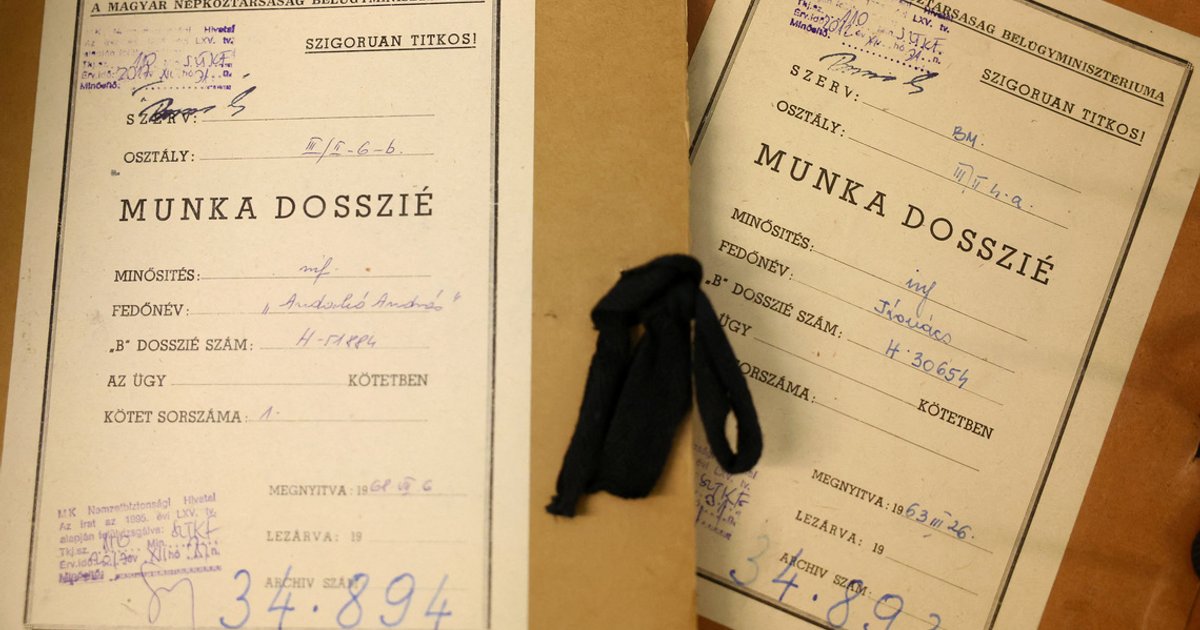
布达佩斯,10月6日——在一项具有历史意义的举措中,匈牙利即将启动一个在线公共数据库,公开数万份共产主义时期的警察档案,使公众能够查阅前国家安全机构所使用的线人和合作者名单。
BUDAPEST, Oct 6 - In a historic move, Hungary will soon start releasing tens of thousands of Communist-era police files in an online public database, giving people access to lists of informers and collaborators used by the former state security services.
此次公开恰逢匈牙利1956年反苏起义70周年,是总理彼得·马扎尔兑现承诺的一部分。他承诺将这些存放在布达佩斯一处庞大地下档案库中的记录公之于众,让匈牙利人直面其极权主义历史。
The release, timed for the 70th anniversary of Hungary's 1956 anti-Soviet uprising, is part of Prime Minister Peter Magyar's pledge to make the records, stored in a vast basement of archives in Budapest, public and allow Hungarians to come to terms with their totalitarian past. Although Communist rule ended in 1989, Hungary delayed fully opening the files due to a lack of strong political will from successive governments.
尽管共产主义统治已于1989年结束,但由于历届政府缺乏坚定的政治意愿,匈牙利一直拖延全面开放这些档案。迄今为止,除研究人员外,普通民众仅能申请查阅本人或直系亲属的记录,但现在任何人都可以在该在线数据库中进行检索。
So far, apart from researchers, ordinary people could only request access to their own records or those of close family members but now anybody will be able to conduct searches in the online database. During the Cold War, secret police agencies in eastern Europe such as East Germany's Stasi or Hungary's security services relied on collaborators drawn from the public, often via blackmail, threats or rewards.
冷战期间,东欧的秘密警察机构,如东德的斯塔西或匈牙利的安全部门,依赖从公众中招募的合作者,通常通过勒索、威胁或奖励手段获取其协助。1956年至1989年间,匈牙利记录了约5.5万名秘密合作者。
Between 1956 and 1989 some 55,000 secret collaborators were recorded in Hungary. They monitored friends, family members, neighbours and co-workers to detect signs of dissent and Western influence -- and their reports often led to arrests and interrogation.
他们监视朋友、家人、邻居和同事,以发现任何异议或西方影响的迹象——他们的报告往往导致逮捕和审讯。
Many flats in downtown Budapest -- called K-flats or conspiracy flats -- served as locations for meetings between secret police officials and civilian collaborators.
布达佩斯市中心的许多公寓——被称为“K公寓”或“阴谋公寓”——曾作为秘密警察官员与平民合作者会面的地点。
MUSIC BANDS TARGETED In the 1980s, informants attended concerts in Budapest's underground rock scene that attracted youthful crowds and were seen by the authorities as potentially subversive.
音乐乐队成为目标 20世纪80年代,线人曾出席布达佩斯地下摇滚乐场景中的音乐会。这些音乐会吸引了大量年轻观众,被当局视为具有潜在的颠覆性。
Peter Muller "Sziami", still an iconic figure in today's music scene, recalls his band Kontroll Csoport (group) performing in 1983 a song he had written titled "Informers and Provocateurs". "In our own way," the lyrics read, "we keep watch too: the one standing in front of you is our man -- you’ve blushed, you’ve been exposed, informers and provocateurs."
彼得·穆勒(绰号“Sziami”)至今仍是音乐界的一个标志性人物,他回忆起自己的乐队“Kontroll Csoport”(控制小组)在1983年演奏了他创作的一首名为《线人与煽动者》的歌曲。
"And then we turned spotlights on the crowd and we saw the audience of around 1,000 people spinning around, looking to see who could be the informers," Muller, 74, said in his studio, smiling mischievously.
歌词中写道:“以我们自己的方式观察:站在你面前的人是我们的男人--你脸红了,你被暴露了,线人和小丑。74岁的穆勒在他的工作室里顽皮地微笑着说道:“然后我们把聚光灯转向人群,看到大约1,000名观众在周围转来转去,想看看谁可能是线人。”
Muller was almost thrown out of college for his music, and police banned some of his concerts and interrogated him.
穆勒因音乐差点被大学开除,警方禁止了他的一些音乐会并审问了他。他的第一支朋克摇滚乐队于1980年成立,名为“URH”,在地下文化中具有传奇色彩,以州警察使用的无线电频段命名,经常成为攻击目标。
His first punk-rock band called "URH" in 1980, legendary in the underground culture, was named after the radio frequency band used by the state police and was often targeted. Despite those memories, however, Muller has mixed feelings about the opening of the files after such a long time.
然而,尽管有这些回忆,穆勒对这么长时间后打开文件的感觉很复杂。
"I do not feel entirely comfortable with the idea that society needs such a cleansing or catharsis after all this time — that people must be singled out, humiliated, shamed, and punished when they have either already died or moved on to a different stage of life," he told Reuters.
他告诉路透社:“我对这样一种想法感到不太满意:经过这么长时间,社会需要这样的清洗或宣泄--当人们已经死亡或进入人生的不同阶段时,他们必须被挑出来、羞辱、羞辱和惩罚。”“更加深入”地面对我们的过去匈牙利国家安全历史档案馆(ABTL)管理前国家安全部门的记录,其中包含50,000至60,000名合作者的姓名。
CONFRONTING OUR PAST 'MORE DEEPLY' The Historical Archives of the Hungarian State Security (ABTL) manages the former state security services' records, with files comprising the names of 50,000 to 60,000 collaborators.
其主任Bendeguz Gergo Cseh称赞根据议会9月份通过的一项法律公布的共产主义时代文件是“历史性的一步”,并表示这比前东欧集团的其他地方走得更远。
Its director, Bendeguz Gergo Cseh, hailed the release of the Communist-era files, based on a law passed by parliament in September, as a "historic step" and said it went further than elsewhere in the former eastern bloc.
波兰很早就开放了档案馆,但不允许公开、不受限制的搜查,就像匈牙利现在的情况一样。
Poland opened its archives much earlier but does not allow open, unrestricted searches, as will be the case now in Hungary.
德国在1991年的法案中也采取了更严格的做法来打开斯塔西文件,而在捷克共和国,并非所有文件都上传到在线数据库。
Germany also took a more restrictive approach in its 1991 act to open the Stasi files, while in the Czech Republic not all files have been uploaded to an online database.
匈牙利法律称,了解过去和公共机构的透明度是民主国家运作的“必要先决条件”。
The Hungarian law says understanding the past and the transparency of public institutions are "essential prerequisites" for the functioning of a democratic state.
四类文件的发布将分两个阶段进行,自11月4日起启动。1956年的那一天,苏联坦克进入布达佩斯,镇压了始于10月23日的亲民主起义。
The release of four types of files will come in two stages, starting on November 4. On that day in 1956 Soviet tanks entered Budapest to crush a pro-democracy uprising that had begun on October 23.
为保护敏感个人信息,包括健康记录、成瘾问题和性取向,文件中的部分细节将被涂黑。
Some details of the files will be redacted to protect sensitive personal information, including health records, addictions and sexual orientation.
切什在接受路透社采访时表示:“作为一名档案管理员和历史学家,我认为基于这些信息作出评判是不恰当的。”
"As both an archivist and a historian, I believe that passing judgment based on this information is inappropriate," Cseh told Reuters.
“不过,我认为这确实有助于深入了解个人生平,并更深刻地面对我们的过去——不仅是在个人层面,也是在社会层面。”路透社
"However, I do think it is possible to gain insight into life stories and confront our past more deeply — not only at an individual level but also at a societal one." REUTERS