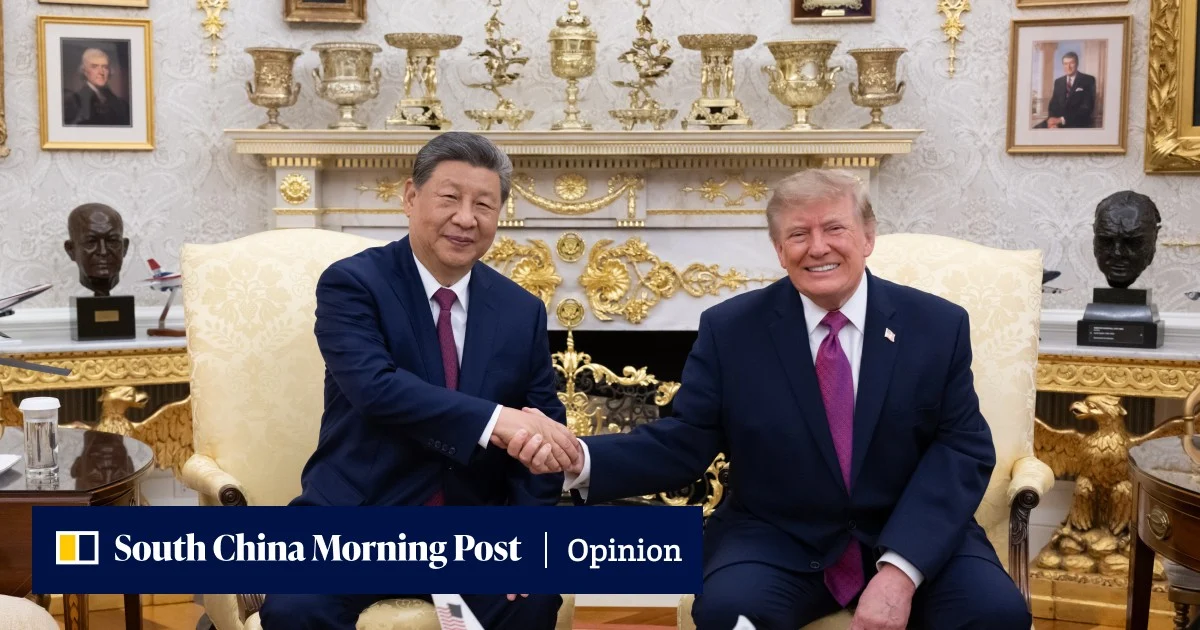
最近的美中峰会为双边贸易带来了一个狭隘的、充满谨慎的结果:吉隆坡贸易休战延长两个月,该休战将于明年1月10日到期。这一暂缓缓解了对关税立即升级的担忧,并表明国家元首外交仍然可以遏制螺旋式上升的对抗。然而,短暂的时间轴暴露了双方优先事项之间的巨大鸿沟。
The recent US-China summit yielded a narrow, caution-filled outcome for bilateral trade: a two-month extension of the Kuala Lumpur trade truce, which now expires on January 10 next year. This reprieve eases fears of immediate tariff escalation and shows that head-of-state diplomacy can still curb spiralling confrontation. Yet the short timeline exposes the wide gulf separating the two sides’ priorities.
中国的立场是明确的:取消2018年以来实施的所有惩罚性关税和限制性措施。北京一再强调,贸易战中没有人获胜。即便如此,它还是对延期做出了善意的回应。商务部表示,暂停让双方有时间评估已落实的共识,并为企业提供稳定、可预测的政策条件。
China’s position has been unambiguous: removal of all punitive tariffs and restrictive measures imposed since 2018. Beijing has repeatedly stressed that no one wins in a trade war. Even so, it responded to the extension with goodwill. The Ministry of Commerce said the pause gave both sides time to take stock of implemented consensus and deliver stable, predictable policy conditions for businesses.
华盛顿提出了不同的叙述。美国财政部长斯科特·贝森特将这两个月描述为合规审查,指责中国未能完全履行其承诺。他和其他美国官员没有庆祝停火,而是谈到了在达成任何更长的停火协议之前仍然存在的障碍。
Washington offered a different narrative. US Treasury Secretary Scott Bessent portrayed the two months as a compliance review, accusing China of failing to fully meet its commitments. He and other US officials did not celebrate the pause, instead speaking of obstacles remaining before any longer truce could be agreed.
这种框架不仅仅是外交辞令。它表明,这一窗口与其说是创造突破性条件,不如说是服务于国内政治需求,同时让华盛顿在今年中期选举后采取更强硬的立场。
That framing is not merely diplomatic semantics. It reveals that the window is less about creating breakthrough conditions than about serving domestic political needs while positioning Washington for a possible tougher line after this year’s midterm elections.
潜台词很熟悉:休战取决于华盛顿是否同意,中国是不情愿的执行者,任何延期都是一种让步,而不是共同利益。这种框架在选举季是很好的政治,在谈判中也是很好的影响力,但它对供应链争端实际上如何开始的描述却很糟糕。
The subtext is familiar: the truce is Washington’s to grant or withdraw, China is the reluctant performer and any extension is a concession rather than a mutual interest. That framing is good politics in an election season and good leverage in a negotiation, but it is a poor description of how the supply-chain dispute actually started.
稀土是华盛顿公开为其行为辩护的核心。北京坚称其合法管理两用品,批准合规的民用申请,并致力于全球关键矿产供应链稳定。
Rare earths sit at the centre of Washington’s public justification of its actions. Beijing maintains that it manages dual-use items lawfully, approves compliant civilian applications and is committed to global critical-mineral supply-chain stability.
美国抱怨稀土出口量反弹得不够快,这忽视了摩擦本身造成的性质。8月份中国向美国出口稀土磁铁512吨(564吨),同比下降13%,比7月份下降20%。
The US complaint that rare earth export volumes have not bounced back fast enough ignores the self-inflicted nature of the friction. China exported 512 tonnes (564 tons) of rare earth magnets to the United States in August, down 13 per cent year on year and 20 per cent lower than July.
同样要求贸易流动更顺畅的特朗普政府也通过自己的关税和出口管制维持了广泛的压力,扩大了301条款行动,并将中国生产半导体、电池和清洁能源的能力视为威胁。当供应商也是系统遏制的目标时,受限制的交付就是可预测的结果。
The same Trump administration that demands smoother trade flows has also maintained broad pressure through its own tariffs and export controls, expanded Section 301 actions and treated China’s capacity to produce semiconductors, batteries and clean energy as a threat. When a supplier is also the target of systematic containment, constrained deliveries are the predictable result.
如果美国期望中国满足其稀土供应需求,那么北京完全有理由要求华盛顿取消对先进半导体和人工智能技术的限制。当华盛顿将芯片出口管制视为不可谈判的红线时,不能指望北京放弃将其稀土出口政策朝同一方向调整。
If the US expects China to meet its rare earth supply demands, then Beijing has every reason to demand that Washington lift its restrictions on advanced semiconductors and artificial intelligence technology. When Washington treats chip export controls as a non-negotiable red line, Beijing cannot be expected to forego aligning its rare earth export policies in the same direction.
由于美国认为芯片限制对其国家安全至关重要,中国自然保留将出口管制和供应安全视为合法主权工具的权利。任何对稀土和技术限制的实质性解决都需要公平的一揽子协议,而不是单方面的协议。
Since the US considers chip restrictions essential to its national security, China naturally reserves the right to treat export controls and supply security as legitimate sovereign tools. Any substantive resolution of rare earth and technology restrictions requires an equitable package deal, not a one-sided agreement.
除了稀土之争之外,延长两个月的贸易休战协议还符合美国总统唐纳德·特朗普的国内政治目的。特朗普将短暂的缓刑视为美国实力的标志,而华盛顿则对中国保持控制,他依靠他熟悉的剧本,将自己塑造成掌握所有牌的谈判代表的形象。
Beyond the fight over rare earths, the two-month trade truce extension serves US President Donald Trump’s domestic political purposes. By framing the short reprieve as a sign of US strength, with Washington keeping China on a leash, Trump leaned on his familiar playbook of projecting an image of himself as a negotiator holding all the cards.
去年4月“解放日”全球关税浪潮爆发后,特朗普试图将自己描绘成占据主导地位的人。他告诉记者,中国国家主席习近平已与他通电话,寻求达成关税协议,但中国外交部否认了这一说法。
In the wake of his “Liberation Day” wave of global tariffs in April last year, Trump attempted to portray himself as holding a commanding position. He told reporters that Chinese President Xi Jinping initiated a phone call with him to seek a tariff deal, a claim China’s Foreign Ministry rejected.
选举时间轴使特朗普的政治动机更加清晰。美国中期选举将于11月3日举行,第120届国会将于1月就职。对于面临选民对通胀焦虑的政府来说,短暂的延期避免了在选举窗口期间做出任何艰难的决定。额外的两个月足够长,可以取得进展,同时又足够短,不必征收进一步关税或升级贸易战。
The election timeline makes Trump’s political motive clearer. The US midterm elections take place on November 3, with the 120th Congress set to take office in January. The brief extension avoids any difficult decisions during the election window for an administration facing voter anxiety over inflation. The extra two months are long enough to claim progress while short enough not to have to impose further tariffs or escalate the trade war.
同样的编排在伊朗也可见。特朗普没有选择在中期选举前寻求最终的军事或外交胜利,而是表示他预计在选举后恢复轰炸伊朗。在这两个冲突中,暂停都不是和平,而是一种保持模式,直到国内政治动荡结束。
The same choreography is visible on Iran. Rather than opting to pursue a definitive military or diplomatic victory before the midterms, Trump has indicated he expects to resume bombing Iran after the election. The pause is not peace in either conflict but a holding pattern until domestic political turbulence clears.
延长两个月是更广泛的美中经济关系的一个缩影。华盛顿将停火视为一种战术暂停,为巩固国内支持赢得时间。与此同时,它正准备通过延长贸易休战期从中国那里获得让步。这本剧本并不是什么新鲜事。美国前总统乔·拜登在竞选期间发誓要废除特朗普的惩罚性关税,但在上任时仍将其作为讨价还价的筹码。
The two-month extension is a microcosm of the broader US-China economic relationship. Washington views the truce as a tactical pause that buys time to shore up domestic support. Meanwhile, it is gearing up to extract concessions from China through trade truce extensions. This playbook is nothing new. Former US president Joe Biden vowed to scrap Trump’s punitive tariffs on the campaign trail yet kept them in place as a bargaining chip when in office.
更广泛的教训是,贸易休战并不是持久稳定的基础。只要美国对华战略保持不变,危机和有管理的降级节奏就会持续下去。
The broader lesson is that a trade truce is not a foundation for lasting stability. As long as the US’ strategy towards China remains unchanged, the rhythm of crisis and managed de-escalation will continue.
对于北京来说,正确的回应不是为了自身而追求更长时间的休战,而是以美国的具体行动为条件,例如取消惩罚性关税和放松科技管制。作为回报,中国将能够批准经过验证的民用稀土和磁铁订单,同时将国家安全保障作为谈判立场。
For Beijing, the right response is not to chase a longer truce for its own sake but to condition any extension on concrete US moves, such as scrapping punitive tariffs and easing tech controls. In return, China will be in a position to grant approvals for verified civilian rare earth and magnet orders while keeping national security safeguards as a negotiated position.