美国汽车制造商受益于一道针对中国的贸易壁垒,这为它们提供了庇护。但同样地,那些在美国销售车辆的外国非中国汽车制造商也从中受益,尤其是那些在美国本土生产汽车的企业。这意味着,中国竞争对手已经对美国的经销商库存造成了压力——尽管这种影响是间接的,但未来很可能会进一步加剧。底特律的防御壁垒,并不像表面上看起来那样坚不可摧。
America’s automakers enjoy the refuge of an anti-Chinese wall. But so do foreign, non-Chinese automakers who also sell vehicles in America, especially if they manufacture here. This means Chinese competition is exerting pressure on US dealer lots already; indirectly, yes, but it’s likely to intensify. Detroit’s defensive moat is less impenetrable than it might seem.
最近,通用汽车公司(General Motors Co.)的首席财务官保罗·雅各布森(Paul Jacobson)在一次会议上也间接表达了这一观点:中国汽车制造商长期面临产能过剩和国内市场的激烈竞争。出口成为它们的一条出路。预计2026年,中国将有约1000万辆汽车出口海外,约占该国境外销售汽车总量的六分之一,这一数字在短短六年间增长了十倍。尽管美国市场实际上对中国品牌关闭,但中国品牌已在亚洲、欧洲、中东和南美洲取得了显著进展。
This point was made recently, if also indirectly, by none other than Paul Jacobson, General Motors Co.’s chief financial officer, at a recent conference: Chinese automakers suffer from chronic overcapacity and cutthroat competition in their domestic market. One escape hatch is exports. China is expected to ship about 10 million vehicles overseas in 2026, roughly one in every six vehicles sold outside of the country and up tenfold in just six years. While the US is effectively off-limits, Chinese brands have made big inroads in Asia, Europe, the Middle East and South America.
即使通用汽车和福特汽车公司(Ford Motor Co.)已经基本退守本土市场,但许多同行仍保持着真正的全球布局——因此,无论是在国内市场还是出口领域,它们都面临着这一新兴且迅速增长的中国竞争。陷入困境的大众汽车公司(Volkswagen AG)正是这一现象的不幸例证。
Even if GM and Ford Motor Co. have largely retreated to their home base already, many of their peers remain truly global — and therefore exposed to this new, fast-growing competition in both domestic and export arenas, with stricken Volkswagen AG the unfortunate exemplar.
这使得美国成为一个颇具吸引力的避风港。虽然美国市场已不再是增长型市场,但其汽车销量规模仍位居世界第二,按收入计算则位居第一(得益于较高的平均售价)。此外,美国市场仍然高度依赖传统内燃机技术,而这正是老牌汽车制造商所熟悉和擅长的领域。
This makes the US an appealing bolt-hole. It isn’t a growth market but remains the second largest in the world by units and number one in revenue terms (due to high average pricing). Plus, it is still weighted heavily to the internal combustion engines that legacy automakers know and love.
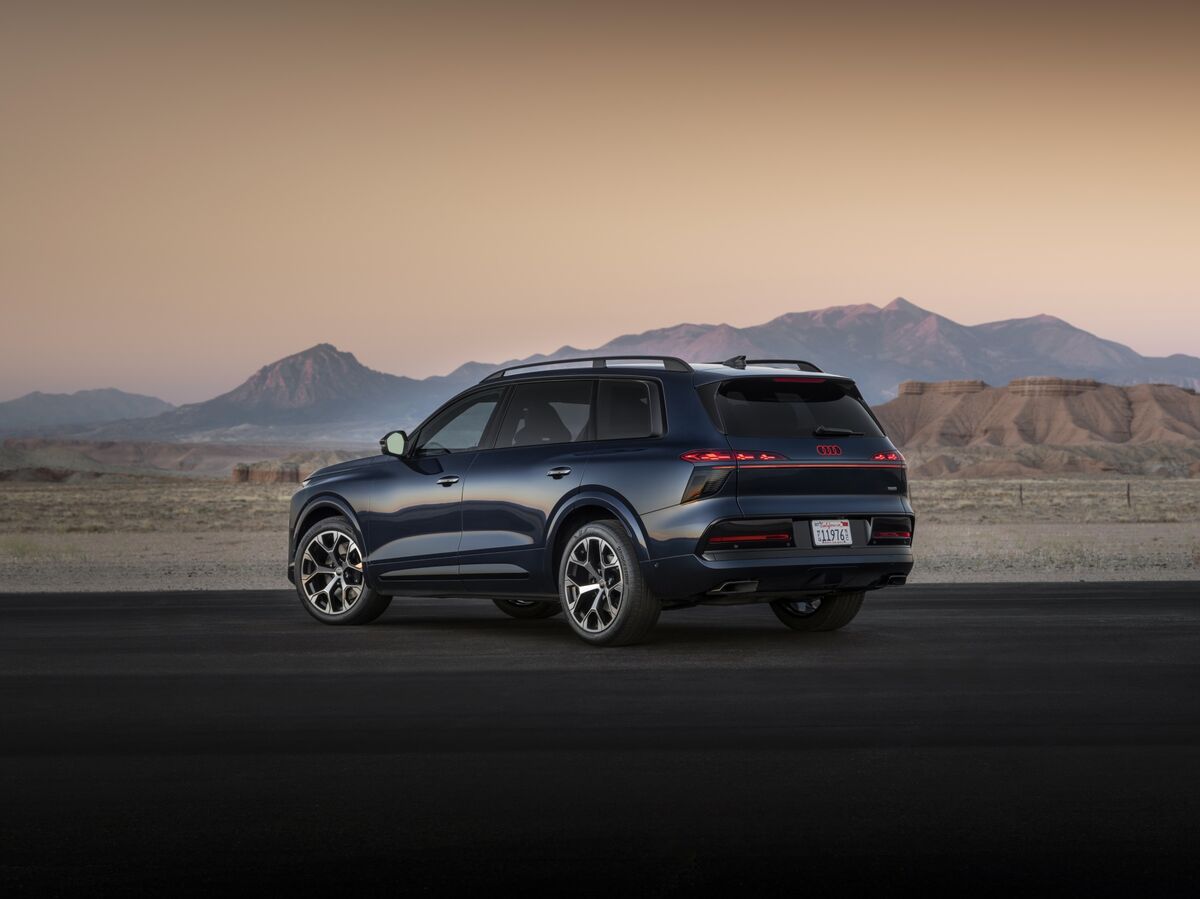
宝马集团今年夏天指出,美国市场的强劲销售增长部分抵消了上半年中国市场出现的急剧下滑。大众旗下的豪华品牌奥迪在中国和美国市场均面临困境,但仍认为美国是“中期来看所有主要市场中潜力最大的市场”。奥迪最近发布了Q9,这是一款三排座的豪华SUV,配备巨大的前格栅,明显针对那些花十万美元却不想买太多新东西的美国消费者。
Bayerische Motoren Werke AG noted this summer that strong US sales growth helped to partly offset a steep decline in China in the first half. Audi, VW’s premium brand, is struggling in both China and the US but still regards the latter as having “the greatest potential in the medium term” of any major market. Audi recently unveiled the Q9, a three-row luxury SUV complete with monumental front grille that is very much geared to the American driver not looking for much change out of a hundred grand.
然而,近期真正在美国市场占据优势的是面向大众市场的日本和韩国汽车制造商。本田汽车公司和现代汽车公司在9月份的销售量(按销售天数调整)均实现大幅增长,而通用汽车和福特则出现下滑。丰田汽车公司的增长较为温和,但这主要归因于其最畅销的RAV4 SUV逐步转向全混合动力车型,导致旧款纯汽油版车型的销量下降。相比之下,这家凭借普锐斯将混合动力车型大众化的公司,其电气化(主要是混合动力)车型的销量则跃升了三分之一。
It is mass-market Japanese and South Korean automakers that are really capitalizing on the US market of late, however. Honda Motor Co. Ltd. and Hyundai Motor Co. both enjoyed big jumps in sales in September, adjusted for selling days, even as GM and Ford recorded declines. Toyota Motor Corp.’s growth was more subdued, but that was owed mostly to the swap-over of its best-selling RAV4 SUV to an all-hybrid lineup, depressing sales of the outgoing gasoline-only variant. In contrast, sales of electrified, mostly hybrid, models jumped by a third for the company that mainstreamed the category with the Prius.
凭借价格更便宜、燃油效率更高以及混合动力车型组合,日本和韩国汽车制造商已准备好在美国市场取得良好表现——尽管该市场正受到5万美元的起售价、低迷的消费者信心以及战争推高的油价的拖累。
With their portfolios of cheaper, more fuel-efficient and hybrid models, Japanese and South Korean automakers are primed to do well in a US market weighed down by $50,000 sticker prices, low consumer confidence and war-fueled pump prices.
通用汽车和福特在纯电动汽车的销量上都出现了急剧下滑——考虑到联邦政府对电动汽车的补贴已经取消,这一结果并不意外;而皮卡车型在9月份的表现则更为出色。拥有克莱斯勒的斯泰兰蒂斯公司整体上也呈现出类似趋势。这些结果反映出美国本土车企正专注于价格高昂、耗油量大的高端车型,这体现了它们对国内汽车市场“K型”结构中较高收入消费者的依赖。
GM and Ford both suffered steep declines in battery-electric vehicle sales — unsurprising given the disappearance of federal EV subsidies — while pickup trucks fared better in September. Stellantis NV, owner of Chrysler, broadly fit the same pattern. These results are emblematic of the US incumbents leaning into premium-priced gas-guzzlers, reflecting their reliance on buyers in the upper arm of a K-shaped domestic auto market.
底特律或许对收入较低的消费者选择本田CR-V或丰田凯美瑞感到乐观,但事实并非如此。首先,由于电动汽车销量暴跌,美国汽车制造商正更加转向混合动力车型,但在这个领域,它们显然仍处于追赶状态。
Detroit may feel sanguine about drivers of less means going for a Honda CR-V or Toyota Camry. It shouldn’t. For one thing, with their EV sales having collapsed, the US automakers are pivoting harder to hybrids themselves, but that is an area where they are clearly playing catch-up.
更广泛地说,虽然美国汽车制造商将更多重点放在价值而非销量上,从而稳固了定价和利润率,但市场份额却不可轻易放弃。2000年时,底特律三大车企仍占据其国内市场约67%的份额。根据摩根士丹利整理的数据,今年9月结束的九个月内,它们的市场份额已降至37%,同比下滑约1.3个百分点。
More broadly, while greater focus on value over volume has shored up pricing and margins for the US automakers, market share can’t be traded away . Back in 2000, the Detroit three still commanded about 67% of their home market. Their market share in the nine months through September this year stands at 37%, down about 1.3 percentage points, year over year, according to figures compiled by Morgan Stanley.
福特在美国的销量面临被现代汽车超越的风险,而丰田则在紧追通用汽车,试图争夺第一的位置——它曾在2021年短暂实现过这一目标,尽管当时部分得益于半导体短缺。别忘了,这一切都发生在中国企业尚未在美国设厂之前。
Ford is at risk of being overtaken by Hyundai in terms of US unit sales, while Toyota is snapping at GM’s heels for the number one position — something it managed to grab once before, in 2021, albeit partly due to semiconductor shortages back then. All this is before any Chinese companies set up shop stateside, remember.
虽然尚未达到中国的水平,但美国已经存在过剩的汽车工厂,这反映在相对较低的产能利用率上。华盛顿推动制造业回流带来的副作用是,这将鼓励更多产能投入建设,尤其是外国汽车制造商希望扩大在美国市场的份额,以抵消中国在其他市场的压力。这一制造业回流计划的推动者——总统唐纳德·特朗普曾豪言:“他们全都将来到这里。”这确实属实,对投资而言或许是好事,但对于必须奋力捍卫本土市场的现有企业来说,未必如此。
While not at Chinese levels, the US already suffers an excess of auto plants that shows up in relatively low capacity utilization. The side-effect of Washington’s reshoring drive is that it will encourage yet more capacity to open up, especially as foreign automakers seek a bigger slice of the US market to offset Chinese pressure elsewhere. The architect of that reshoring, President Donald Trump, has boasted, “They’re all coming here.”True enough and good for investment, if not necessarily for the homegrown incumbents who must fight to keep their turf.