离网太阳能技术正在巴西的亚马逊地区广泛普及,帮助偏远社区应对严重干旱,同时逐步取代成本高昂且污染严重的柴油发电机。
Off-grid solar power is spreading across Brazil’s Amazon, helping remote communities prepare for severe drought while replacing costly, polluting diesel generators.
巴西圣塔伦市——对于地处亚马逊雨林保护区深处的诺瓦索西埃达德村而言,阿拉皮翁斯河是当地居民通往外界的唯一通道。
GABRIELA SÁ PESSOA SANTAREM, Brazil — For the riverine community of Nova Sociedade, deep inside a protected area of Brazil’s Amazon rainforest the Arapiuns River is the only route to the outside world.
这条河流最终汇入塔帕若斯河——亚马逊河的主要支流之一。这片水域辽阔无垠,航行其间宛如穿行于茫茫大海。然而在2024年的一场历史性干旱中,诺瓦索西埃达德的村民们不得不步行最远达20公里(约12.4英里)去寻找水源。
The Arapiuns flows into the Tapajos, one of the Amazon River’s major tributaries, across waterways so vast that navigating them can feel like crossing the open sea. Yet during a historic drought in 2024 Nova Sociedade’s residents had to walk as far as 20 kilometers (12.4 miles) in search of water.
“天刚亮,我们的艰难跋涉就开始了,”诺瓦索西埃达德村的阿拉皮翁斯原住民领袖蒂亚戈·席尔瓦说道,“孩子们背着水,老人也背着水。所有人都深受其苦。”两年后的今天,面对今年可能再度出现的厄尔尼诺现象——这种自然气候现象会导致全球气温升高并加剧亚马逊地区的干旱状况——该社区已做好了更充分的准备。
“At daybreak, our struggle would begin,” said Tiago Silva, an Arapium Indigenous community leader in Nova Sociedade. “Children carrying water, elderly people carrying water. We all suffered.”Two years later, the community is better prepared for this year’s El Niño, the naturally occurring climate phenomenon that raises global temperatures and can worsen drought in the Amazon.
今年6月,诺瓦索西埃达德村安装了太阳能板,用以驱动水泵向储水罐供水,从而确保全村36户家庭都能获得清洁用水。总部位于亚马逊地区的非营利组织“健康与欢乐”负责提供了这套系统;此前该组织也已在其他29个社区安装了同类设备,以应对可能出现的严重干旱。
In June, Nova Sociedade installed solar panels to power water pumps that fill storage tanks and provide clean water to all 36 families in the village. The Amazon-based nonprofit Saude e Alegria provided the system and has equipped 29 other communities with similar technology ahead of another possible severe drought.
在太阳能技术普及之前,诺瓦索西埃达德村只能依靠柴油发电机来提供基本电力。然而柴油价格昂贵且会造成环境污染,发电机提供的电力也既有限又不稳定。
Before solar power arrived, Nova Sociedade relied on diesel generators for basic electricity. Fuel is costly and polluting, and the generators provide limited, unreliable power.
如今,在整个亚马逊地区,这种不依赖公共电网的离网太阳能技术正日益普及。它有效帮助偏远社区减少对柴油发电的依赖,同时显著提升了当地居民在家庭、学校及医疗中心获取清洁用水与电力的能力。
Across the Amazon, the spread of off-grid solar power, closed systems not connected to utility companies, is helping remote communities reduce their reliance on diesel while improving access to clean water and electricity in homes, schools and health centers.
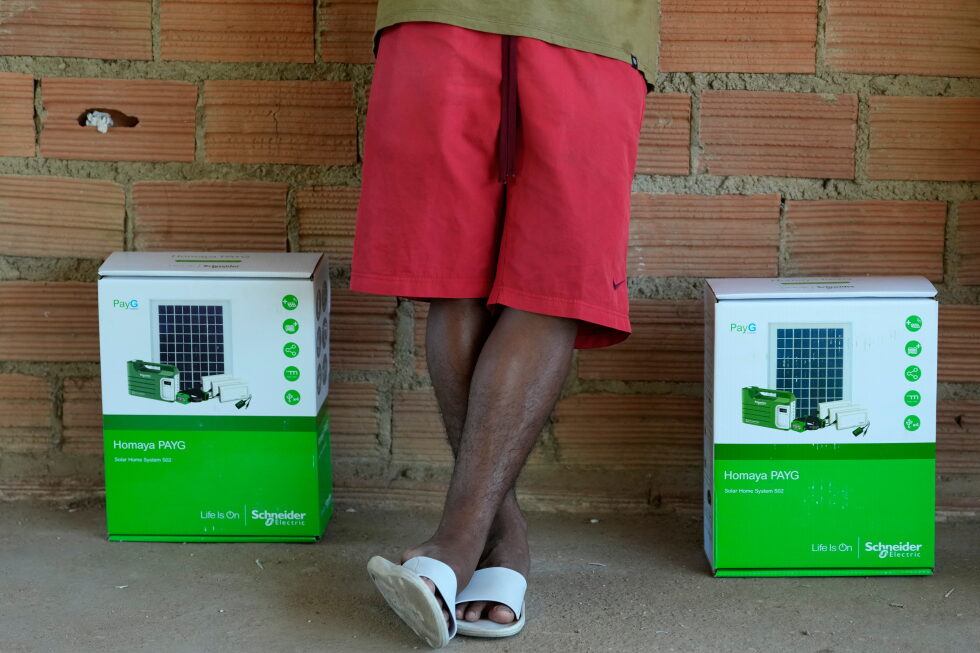
上个月,诺瓦索西埃达德社区的每户家庭都收到了由施耐德电气通过“健康与快乐”组织捐赠的太阳能发电系统。这些易于安装的套件配有蓄电池,可在夜间为照明供电,还能为手机及其他小型设备充电。
Last month, each Nova Sociedade household received its own solar-power system donated by Schneider Electric through Saude e Alegria. The easy-to-install kits include batteries to power lights at night and enough electricity to charge phones and other small devices.
“这项技术利用太阳能,能够替代那些往往需要砍伐森林或燃烧燃料的发电方式——而这些行为正是导致全球变暖的元凶,”在居民们领取太阳能套件时,环保人士兼“健康与快乐”组织负责人凯塔诺·斯卡纳维诺这样说道。他还警告称,今年10月和11月很可能再次出现严重旱情。在社区负责人的召集下,居民们面带笑容上前领取各自的套件。
“This technology uses the power of the sun and can replace other ways of generating electricity that often require clearing the forest or burning fuel, the very practices driving global warming,” Caetano Scannavino, an environmentalist and manager of Saude e Alegria, told residents as they received the solar kits. Scannavino also warned of another severe drought likely coming in October and November. As community leaders called chiefs of households, residents rose smiling to collect their kits.
不少人称这项技术简直是天赐之福。女性手工艺人们表示,有了更好的照明条件,她们便能在日落后继续编织传统首饰与篮子,从而延长创收时间。
Some described the technology as a blessing. Women artisans said better lighting would allow them to continue weaving traditional jewelry and baskets after sunset, extending the hours they can spend producing an important source of income.
目前仍缺电的家庭大多居住在亚马逊地区。诺瓦索西埃达德社区的案例充分说明,离网式太阳能发电正如何改变亚马逊偏远社区的日常生活。除了提供饮用水与家庭用电外,这项技术还日益助力当地学校、医疗中心及商业发展。
Most of those still without power live in the Amazon Nova Sociedade illustrates how off-grid solar power is changing daily life in isolated Amazon communities Beyond providing water and household electricity, the technology is increasingly supporting schools, health centers and local businesses.
官方数据显示,2020年时亚马逊偏远地区安装的离网式发电系统仅有105套;到2022年这一数字已增至1.1万套以上,至2026年更是突破10万套大关。
According to official data, the number of off-grid systems installed in remote areas of the Amazon rose from just 105 in 2020 to more than 11,000 in 2022. By 2026, it had exceeded 100,000.
“可以说,这些系统几乎全都是太阳能发电装置,”巴西致力于可持续能源的非营利机构——能源与环境研究所的研究员法比奥·加尔迪诺·多斯桑托斯说道。
“It’s fair to say that nearly all of these are solar installations,” said Fabio Galdino dos Santos, a researcher at the Institute for Energy and Environment, or IEMA, a Brazilian nonprofit focused on sustainable energy.
根据2022年的人口普查数据,巴西2.14亿居民中,超过99%的人用上了电。目前尚未通电的人群大多居住在亚马逊地区,由于地处偏远且基础设施建设成本高昂,当地电气化进程受到阻碍。据IEMA统计,该地区仍有约100万人用不上电。
More than 99% of Brazil’s 214 million residents had electricity access as of the 2022 census. Most of those still without power live in the Amazon, where isolation and high infrastructure costs have hindered electrification. About 1 million people in the region still lack access to electricity, according to IEMA.
长期以来,许多远离电网的社区只能依赖价格昂贵且污染严重的柴油发电机。在诺瓦索西埃达德,居民要购买燃料,必须乘船近3个小时才能抵达最近的城市桑塔伦。
Many off-grid communities have long relied on costly, polluting diesel generators. In Nova Sociedade, buying fuel requires a nearly three-hour boat trip to Santarem, the nearest city.
即便能买到燃料,电力供应也极为有限。发电机通常在晚上10点后便停止运转,其发电能力也往往不足以带动冰箱等电器。当地气温经常超过35摄氏度(95华氏度)。改善医疗条件与营造安静的学习环境在亚马逊地区,政府与慈善机构正联手推进电气化项目,重点建设能惠及整个社区的基础设施。
Even when fuel is available, electricity is limited. Generators typically shut down shortly after 10 p.m. and often lack enough capacity to run refrigerators. Temperatures there regularly exceed 35 degrees Celsius (95 degrees Fahrenheit). Better healthcare and quieter schools Across the Amazon, government-backed and philanthropic initiatives are expanding access to electricity, often prioritizing infrastructure that serves entire communities.
在阿拉皮昂斯河沿岸的阿纳村,一家公共卫生诊所新安装了太阳能板。如今,医护人员得以冷藏疫苗、开展远程诊疗,还能使用雾化器等基础医疗设备——这些设备在野火烟雾弥漫时尤为重要。
At a public health clinic in Ana, another riverine community along the Arapiuns River, newly installed solar panels allow staff to refrigerate vaccines, conduct telemedicine appointments and operate basic medical equipment, including nebulizers, which are essential when wildfire smoke covers the region.
在塔帕若斯河沿岸的苏鲁库阿村,太阳能的普及最直观的体现便是环境的宁静。
In Surucua, a community along the Tapajos River, the arrival of solar power is most noticeable in the silence.
此前,这所服务于全村116名学生的圣贝内迪托学校完全依赖一台噪音极大的柴油发电机供电。
Until last year, Sao Benedito School, which serves all 116 of the community’s students, relied solely on a noisy diesel generator.
“如今,耳边只有孩子们的欢声笑语和鸟鸣声,”校长罗塞尼尔塞·克鲁兹说道,“以前发电机太吵,我们根本无法在户外开展教学。现在孩子们能在户外阅读,我们也能在那里实施各类教学计划,连老师讲课的声音都能听得清清楚楚。”过去电力短缺导致教室昏暗,学校甚至无法使用冰箱。后来,桑塔伦市政府对学校进行了翻修并安装了太阳能板。
“Today, all you hear are the children and the birds,” said Rosenilce Cruz, the school principal. “We couldn’t work outdoors because the generator was so loud. Now, the children can read outside. We can carry out projects there, and you can hear both the children and the teacher perfectly.”The limited electricity supply also left classrooms dim and prevented the school from using refrigerators. Then the Santarem city government renovated the school and installed solar panels.
“如今,我们为孩子们提供的餐食不再以罐头食品为主,而是选用新鲜的蛋白质来源。由于现在全天都有电力供应,我们也有了合适的场所来储存这些食物,”克鲁兹补充道。
“Today, our children’s meals are no longer based on canned foods but on fresh sources of protein. We now have a place to store that food because electricity is available 24 hours a day,” Cruz added.
太阳能也开始助力当地企业发展。在邻近的亚马孙州,位于索利蒙伊斯河畔偏远村落贝拉孔基斯塔的一家巴西莓加工厂,最近也告别了依赖柴油发电的模式。
Solar power is also beginning to support local businesses. In neighboring Amazonas state, an acai processing facility in the Bela Conquista community, a remote village along the Solimoes River, recently shifted away from diesel-generated electricity.
过去,柴油发电限制了生产规模,导致大量采摘下来的水果无法及时加工而腐烂变质。在“全球能源联盟”以及巴西矿业和能源部的协助下,亚马孙可持续发展基金会为这家工厂安装了太阳能与蓄电池系统。未来两到三年内,合作各方计划再开展20个试点项目,助力当地渔业、农业及水果加工产业的可持续发展。
Diesel power constrained production and left harvested fruit to spoil. The Foundation for Amazon Sustainability installed a solar-and-battery system in partnership with the Global Energy Alliance for People and Planet and Brazil’s Ministry of Mines and Energy. The partners plan to develop 20 pilot projects over the next two to three years, supporting sustainable fishing, agriculture and fruit-processing businesses.
作为全球最大的热带雨林,亚马孙雨林对全球气候稳定至关重要。它不仅能吸收大量碳元素,其植被释放的湿气还能调节气温,影响整个南美洲乃至全球的天气变化。
The Amazon, the world’s largest rainforest is vital to the global climate. It stores vast amounts of carbon, and moisture from its trees regulates temperatures and shapes weather across South America and beyond.
保护原住民及传统社区的领地是维护雨林生态最有效的途径之一。据专门监测土地利用情况的机构MapBiomas统计,今年上半年,巴西亚马孙地区超过80%的保护区——包括330块原住民领地——均未出现森林砍伐现象。
Protecting Indigenous and traditional territories is one of the most effective ways to preserve the rainforest. According to MapBiomas, an organization tracking land use, more than 80% of protected areas in the Brazilian Amazon — including 330 Indigenous territories — recorded no deforestation in the first half of this year.
圣塔伦市西帕拉联邦大学可再生能源实验室主任、工程学教授拉扎罗·席尔瓦指出,扶持这些如今已用上太阳能的传统社区,有助于确保雨林得以保存。
Strengthening such traditional communities, including those now powered by solar energy, could help keep the forest standing, said Lázaro Silva, an engineering professor and coordinator of the renewable energy laboratory at the Federal University of Western Para, in Santarem.
自2022年起,席尔瓦和他的学生们已在亚马孙地区的27个偏远社区安装了40套太阳能发电系统。
Silva and his students have installed 40 solar systems across 27 remote communities in the Amazon since 2022.
“这些社区展现出了极强的组织能力,这让他们更具韧性,也更能意识到自身在保护雨林方面所发挥的关键作用,”他说道。
“These communities have demonstrated a level of organization that makes them more resilient, helping them acknowledge their leading role in protecting the forest,” he said.