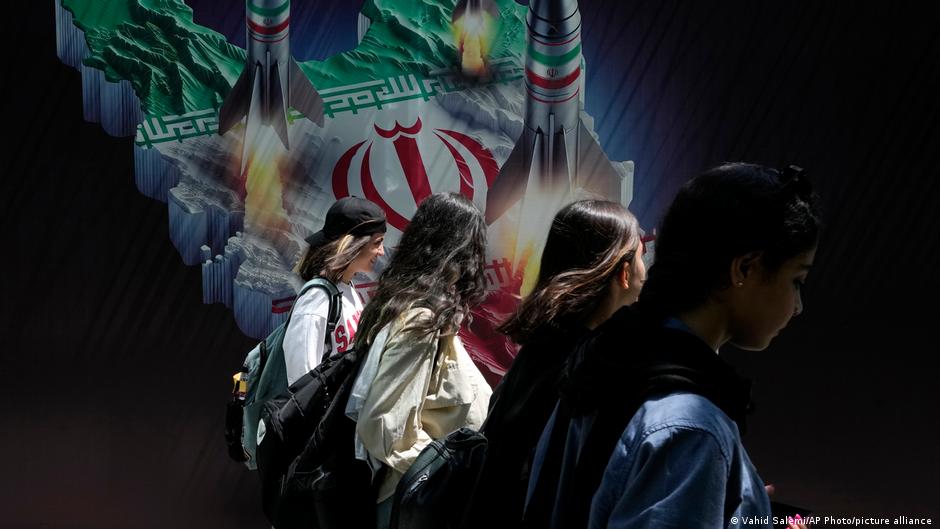
伊朗政权加大对不戴头巾女性的社会压力阿米尔·索尔塔纳扎德 2026年10月6日随着越来越多的伊朗女性拒绝遵守强制佩戴头巾的伊斯兰主义规定,强硬派势力正将重点从“道德警察”的街头执法转向职场、服务业及商业领域的社会压力手段。
Iran's regime raises social cost for women defying hijab Amir Soltanzadeh October 6, 2026 As more women in Iran reject Islamist rules on wearing hijab headscarves, hardliners are shifting focus from "morality police" street enforcement towards social pressure in workplaces, services and businesses.
伊朗政权试图对“正确佩戴头巾”的女性设定严格标准。如今,不戴头巾便出现在公共场合的女性在伊朗日益常见,这堪称2022年“妇女、生命、自由”抗议运动以来最显著的社会变化。那次抗议的起因是一名女子因被指控未正确佩戴头巾遭逮捕,随后在警方羁押期间死亡。
Iran's regime pushes strict distinctions for women considered to be 'properly veiled' Women appearing in public without wearing a hijab has become an increasingly common sight across Iran, marking one of the most visible social changes since the 2022 "Woman, Life, Freedom" protests which were sparked after a woman died in police custody after she was arrested for allegedly wearing her headscarf improperly.
当局已无法恢复抗议运动前的街头执法力度。然而,“道德警察”巡逻的相对减少并不意味着强制戴头巾的规定就此消失。
Authorities have been unable to restore the level of street enforcement that existed before the protests. But the relative retreat of so-called "morality police" patrols does not mean the compulsory hijab has disappeared.
目前,当局与保守派团体正尝试多种手段来抵制这一社会变化,同时避免重演那些曾引发2022年抗议的街头冲突。司法机构负责人戈拉姆侯赛因·穆赫辛尼-埃杰伊近期呼吁整治他所称的社会“反常现象”“不雅行为”及“裸露现象”,要求检察官与警方、情报机构及政府部门协同行动。
Now, authorities and conservative groups are experimenting with different ways to resist that change without necessarily recreating the same street confrontations that helped fuel the 2022 protests Judiciary chief Gholamhossein Mohseni-Ejei recently called for action against what he described as social "abnormalities," "indecency" and "nudity," urging prosecutors to coordinate with police, intelligence bodies and government institutions.
与此同时,支持强制戴头巾规定的人士也在网上发起活动,号召民众避开那些由不遵守着装规定的女性经营的商铺,转而光顾遵守规定的女性所经营的企业。
At the same time, supporters of hijab mandates have circulated online campaigns encouraging people to avoid businesses run by women who do not follow the state dress code and instead patronize women who do.
由此形成了一种更为分散的管控模式:执法手段有时从街头巡逻转向职场、商业场所乃至日常服务的准入环节。伊朗女性摘下头巾:强制戴头巾政策是否正在松动?
The result is a more fragmented form of enforcement, moving in some cases from police patrols toward workplaces, businesses and access to everyday services. Iranian women unveiled: A shift in hijab enforcement?
为观看此视频,伊朗政权转而借助社会压力。这些网络运动倡导支持者所称的“有意识的消费”,鼓励消费者去支持那些要求佩戴头巾的商家。
To view this video , and Iran's regime turns to social pressure The online campaigns call for what supporters describe as "conscious purchasing," encouraging consumers to support hijab-observing vendors.
德黑兰的一位女律师对德国之声表示,此类运动非但无法促进社会规范的遵守,反而可能加剧社会分裂。
A female lawyer in Tehran told DW that such campaigns risk deepening social divisions rather than encouraging adherence to a social norm.
“这是一种蓄意根据身份特征将人群分类并挑拨对立的手段,”出于安全考虑要求匿名的她说道。
"This is a deliberate attempt to categorize people by identity and put them against one another," she said under condition of anonymity for safety concerns.
她指出,仅仅因为他人的外貌特征就对其施加经济压力,这已超出了个人选择购物场所的权利范畴。
She argues that encouraging economic pressure against people solely because of their appearance goes beyond an individual's right to choose where to shop.
“当经济制裁施加到他们(政权)身上时,他们称之为压力、不公乃至经济战,”她说,“可当他们在国内运用同样的逻辑来强迫部分民众改变行为方式时,这就变成了‘对价值观的支持’。”她还质疑了那种认为只有遵循特定着装规范的女性才能代表伊朗社会价值观的观点。“伊朗社会的现实远比这复杂得多,”她说道。
"When economic sanctions are imposed on them [the regime], they call it pressure, injustice and economic warfare," she said. "But when they use the same logic domestically to force part of society to change its behavior, it becomes 'support for values.'" She also questioned the assumption that women who conform to one particular dress code uniquely represent Iranian social values. "The reality of Iranian society is much more complex than that," she said.
一些伊朗女性的反馈显示,着装规范的执行甚至渗透到了日常服务领域。不少女性在社交媒体上反映,因未佩戴头巾而被拒绝进入诊所或银行。
Accounts posted by Iranian women suggest that dress-code enforcement can also appear in everyday services, with some women reporting on social media being denied access to clinics and banks for not wearing a headscarf.
2022年,22岁的吉娜·玛莎·阿米尼之死成为了伊朗政权压迫女性的象征。女性身体被政治化利用。希林·沙姆斯是一位流亡海外的伊朗政治活动家,也是“妇女革命组织”的负责人,该组织致力于推动伊朗的世俗化、女性解放与人权事业。
The death 22-year-old Jina Mahsa Amini in 2022 symbolized the Iranian regime's oppression of women When women's bodies become political Shirin Shams is an exiled Iranian political activist and director of the Women's Revolution Organization, which advocates for secularism, women's liberation, and human rights in Iran.
她对德国之声表示,近期针对不佩戴强制头巾女性的这些运动,意在重新挑起曾在“妇女、生命、自由”运动中有所缓和的社会对立情绪。
She told DW the recent campaigns targeting women who ditch the compulsory hijab are an attempt to revive social divisions that were weakened during the "Woman, Life, Freedom" movement.
“伊朗伊斯兰共和国多年来一直试图按着装方式将女性划分开来,”这位定居德国的活动家说道。
"The Islamic Republic has tried for years to divide women according to their clothing," the Germany-based activist said.
她将强制佩戴头巾视为伊朗政府最重要的意识形态准则之一,并指出如今大量不戴头巾的女性出现,恰恰反映出社会现实已远远超出了官方的预期。
She describes the compulsory hijab as one of the Iranian state's most important ideological lines and argues that the widespread presence of women without headscarves shows how far social reality has moved beyond official expectations.
在她看来,近期重新发起的整治行动并不仅仅关乎着装问题,而是试图在“遵守规定”与“违反规定”的女性之间重新划出界限。
The renewed campaigns, in her view, are about more than clothing, representing an effort to reconstruct a boundary between women who comply and those who do not.
法国洛林大学的教授萨伊德·佩万迪指出,这场冲突折射出一场更为广泛的社会控制权之争。他向德国之声表示,多年来伊朗当局一直在试图区分“规范佩戴头巾”的女性与那些被官方定性为“佩戴不规范”或“未戴头巾”的女性。“政府再次将女性的身体变成了一个社会、道德乃至安全问题,”佩万迪说道。
Saeed Paivandi, a professor at the University of Lorraine in France, says the conflict reflects a broader struggle over social control. He told DW that Iranian authorities have spent years creating distinctions between women considered properly veiled and those officially labeled "badly veiled" or "unveiled." "The government is once again turning women's bodies into a social, moral and even security issue," Peyvandi said.
他还指出,一个不戴头巾的女性绝不仅仅被视为做出了个人选择;在某些政治势力眼中,她还可能是对现有意识形态秩序的一种公开挑战。
A woman without a headscarf is not interpreted merely as someone making an individual choice, he said. For parts of the political establishment, she can also represent a visible challenge to an ideological order.
“我将成为伊朗暴力压迫的活生生的例证。”伊朗强硬派势力与现实社会之间的冲突愈演愈烈。尽管伊朗总统马苏德·佩泽希齐扬多次强调社会团结与国家统一,但保守派伊斯兰主义司法及政治人士仍不断要求更严格地执行着装规定。
'I will be living proof of the violent oppression in Iran' Iran's hardliners vs. modern reality While Iranian President Masoud Pezeshkian has repeatedly spoken about social cohesion and national unity, conservative Islamist judicial and political figures continue to demand tougher enforcement of dress regulations.
这种状况导致伊朗政坛呈现出一种不稳定的平衡状态,也暴露出其内部的分歧。部分政治势力意识到,若再度爆发警方与女性之间的大规模冲突,可能带来巨大的社会与政治代价;而另一些势力则不愿接受女性公开不戴头巾的现象常态化。
This produces an uneasy balance and exposes differences within Iran's political establishment. Parts of the establishment appear aware that a return to large-scale confrontations between police and women could carry significant social and political costs. Others are unwilling to accept the normalization of women appearing in public without wearing a hijab.
最终的结果既不是恢复以往那种街头全面执法模式,也不是彻底废除强制着装规定。取而代之的是,来自法院、职场、商业机构、行政程序及社会宣传等方面的压力会间歇性地出现。
The result is neither the old system of comprehensive street enforcement nor an end to compulsory dress rules. Instead, pressure can appear intermittently through courts, workplaces, businesses, administrative procedures and social campaigns.
2022年,一名女子在被“道德警察”拘留期间死亡,随后伊朗各地爆发抗议活动。
In 2022, protests erupted across Iran after a woman died in the custody of the 'morality police"
佩万迪认为,即便没有“道德警察”的介入,强制手段的效力也已接近极限;如今那些支持伊斯兰着装规范的人正在寻求其他方式来促使民众遵从相关规定。这样一来,部分执行责任便可能从国家机构转移到社会层面。
Enforcement without the 'morality police' Paivandi believes direct coercion has reached its limits and that supporters of Islamic dress codes are looking for alternative ways to enforce conformity. That could shift part of the burden from state institutions to society itself.
即便没有警察在场,银行职员、诊所接待员、雇主、店主乃至普通顾客都可能参与到规范执行的过程中。这导致法律约束、个人判断与意识形态压力之间的界限愈发模糊。
A bank employee, clinic receptionist, employer, shopkeeper or customer can become involved in enforcing standards even without a police officer being present. This makes the boundary between law, personal discretion and ideological pressure increasingly unclear.
佩万迪还警告称,将宗教与羞辱、排斥及强制手段挂钩,可能会让更多伊朗年轻人对宗教机构产生疏离感。
Peyvandi also warns that linking religion to humiliation, exclusion and coercion could further alienate younger Iranians from religious institutions.
他指出,如果佩戴头巾被视作政治忠诚的标志,那些自愿戴头巾的女性也可能被卷入一场她们本不愿参与的对抗之中。编辑:韦斯利·拉恩
Women who choose to wear a hijab may also be drawn into a confrontation they did not choose, he said, if their clothing is presented as a marker of political loyalty.