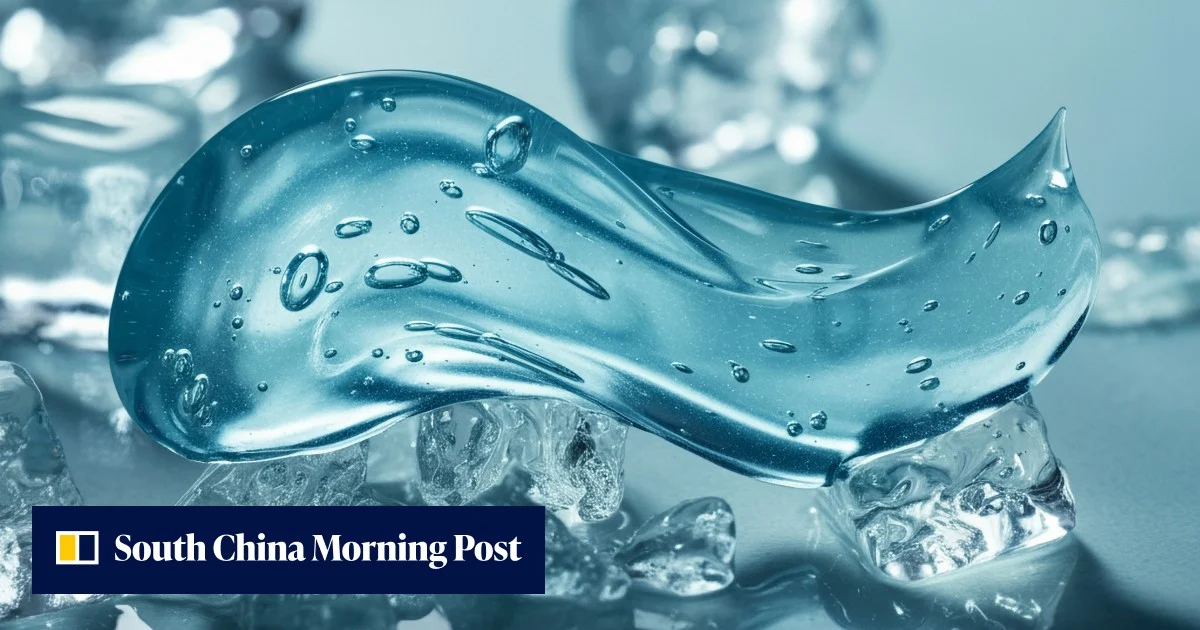
中国研究人员开发出一种“具有生命特征”的可变形水凝胶,据称该材料有望为下一代技术发展提供重要平台,例如柔性组织工程支架、脑机接口以及类人机器人。
Chinese researchers have developed a “lifelike” shape-changing hydrogel they say could provide a platform for next-generation developments, such as flexible tissue engineering scaffolds, brain-computer interfaces and humanlike robots.
受生物体启发,研究团队研发出一种名为STERS的光触发系统。该系统利用液态金属颗粒引发缓慢且能自我维持的化学反应,促使水凝胶随时间发生结构变化。
Inspired by living organisms, the team created a light-triggered system called STERS, which uses liquid metal particles to generate slow, self-sustaining chemical reactions that allow a hydrogel to change its structure over time.
这种能够随活体组织一同生长与变化的自适应系统,有望催生新一代生物医学材料与器械。研究人员指出,它还能在再生医学及软体机器人等诸多领域发挥重要作用。
Capable of growing and changing alongside living tissues, this adaptive system could inspire next-generation biomedical materials and devices. It could also have broad implications in fields such as regenerative medicine and soft robotics, according to the researchers.
在9月4日发表于同行评审期刊《Matter》的一篇论文中,研究团队介绍道:“这一创新方法可实现水凝胶在微观至宏观尺度、几分钟至数周时间跨度内,经历单次或多次形态变化,且整个过程具备可编程性。”
“This novel approach enables programmable, lifelike morphological evolution in hydrogels, spanning microscopic to macroscopic scales, minutes to weeks, and single to multiple transformation cycles,” the team said in a paper published in the peer-reviewed journal Matter on September 4.
生物体依靠形态结构的改变——如颜色变化与定向生长——来实现适应、发育与进化。科学家们正积极研发受此类生物动态机制启发的智能合成材料与装置。
Living organisms rely on physical structural changes – such as colour changes and directional growth – to adapt, grow and evolve. Scientists are actively developing smart synthetic materials and devices inspired by these dynamics.
该研究的作者、中国科学院深圳先进技术研究院教授杜学敏表示,自己长期致力于智能材料研究,此前曾从含羞草等受触碰后叶片会向内卷曲的植物,以及变色龙等生物身上获取灵感。
Du Xuemin, study author and a professor at the Chinese Academy of Sciences’ Shenzhen Institutes of Advanced Technology, said he had long been engaged in research on smart materials and had previously drawn inspiration from species such as sensitive plants, whose leaves fold inward when touched, and the chameleon.
杜学敏在接受采访时称,当前智能材料领域发展迅猛,材料的形态重构速度也由原先的缓慢变化提升至毫秒级水平。
Du said in an interview that the field of smart materials had advanced rapidly, with shape reconfiguration accelerating from slow speeds to the millisecond range.
目前正在研发的材料还包括形状记忆合金,这类材料在受到温度变化等外部刺激时,可在预设形态间快速切换。
Materials in development include shape memory alloys, which can bounce back and forth between set shapes when triggered by external stimuli such as temperature changes.
“然而,在对该领域进行了大量研究后,我又重新回到了生物体的视角,”杜说道。
“However, after conducting extensive research in this area, I returned to the perspective of living organisms,” Du said.
“我意识到,生物体在经历快速形态变化的同时,也会发生缓慢而长期的进化性转变,”他举例说明,比如伤口愈合与胚胎发育过程便是如此。
“I realised that while organisms undergo rapid shape changes, they also undergo slow long-term evolutionary transformations,” he said, pointing to wound repair and embryonic development as examples.
组织工程领域常使用负载有活性物质的支架来促进组织修复,但杜指出,现有的材料要么形态变化速度过快,要么缺乏形态可塑性。
Tissue engineering often uses scaffolds loaded with active substances to promote healing, but Du noted that existing materials either transformed too rapidly or lacked shape-morphing abilities.
“因此我就在想,能否模仿自然界中那些缓慢的形态转变过程,从而开发出具备缓慢形态变化能力的材料呢?”他说道。
“So I wondered if we could mimic these slower morphological transformation processes in nature to construct slow, shape-morphing materials,” he said.
为实现这一目标,研究团队借鉴了细胞内释放活性化学物质以驱动形态变化的机制,开发出一种基于液态金属的系统。
To achieve this, the team developed a liquid metal-based system inspired by active chemical species being released in cells to drive morphological changes.
这一被称为“时空演化型活性物质系统”(STERS)的技术,利用镓基液态颗粒产生活性物质,同时借助乙烯基单体促进这些物质的生成以及水凝胶的聚合反应,从而为水凝胶的形态变化提供基础条件。
The STERS or “spatiotemporally evolving reactive species” system integrates gallium-based liquid particles that produce reactive species and vinyl monomers that help drive that production and the polymerisation of the hydrogel, thus creating building blocks for the gel to change shape.
该系统可通过近红外光激活,单次光照即可维持其运作长达四周时间。
The system is activated by near-infrared light, and a single exposure can sustain the STERS system for up to four weeks.
研究人员解释称,其原理在于液态金属在接触外界环境时会发生表面氧化并形成活性物质,随后氧化层被去除,金属表面重新暴露,从而促使反应循环进行。
The researchers said this worked because the liquid metals generate reactive species through cycles of surface oxidation when exposed to environmental elements, followed by the removal of the oxide layer to re-expose the metal and allow the reaction to repeat.
为验证该系统的有效性,研究人员利用这种水凝胶引导干细胞分化为骨细胞和类神经细胞。
To test their system, they used the hydrogels to guide stem-cell differentiation into bone and neural-like cells.
“此外,我们还用这种材料对脑机接口电极的表面进行了改性,用以监测大鼠胚胎发育过程中电信号的变化情况,”杜说道。
“Furthermore, we modified the surface of a brain-machine interface electrode with this material to monitor how electrical signals evolve during rat embryo development,” Du said.
“这一技术能够精准检测脑电波的变化,为研究胚胎发育阶段的脑活动提供了新方法,有助于推动脑科学的发展。”该材料的形态变化速率与幅度均可根据胚胎大脑的变化特征进行调节,因为现有文献已对大脑发育模式有较为深入的研究。
“This allows precise detection of changes in brain waves, offering a new technique for studying brain activity during embryonic development and advancing brain science.”The material’s transformation rate and magnitude can be tailored to match embryonic brain changes, as development patterns are already well understood in existing literature.
杜指出,液态金属可能对组织产生生物安全风险,这也是需要重点考虑的安全因素。为降低风险,研究团队采用了三明治式结构对材料进行封装,从而安全有效地防止材料泄漏至周围组织。
Du said the use of liquid metals, which can pose biological safety risks to tissue, was another safety consideration. To mitigate this, the team packaged the materials using a sandwich structure to safely and effectively encapsulate the material and avoid leaks to surrounding tissue, he said.
杜认为,STERS系统在机器人等其他领域也具有应用潜力。他表示,要想让机器人更加接近人类形态,其感知能力、皮肤结构及其他物理特性也必须与人类相符。
Du said he believed there were opportunities for the STERS system in other fields such as robotics. For robots to become more humanlike, he said, their sensing capabilities, skin and other physical characteristics must also align with humans.
该系统在传感应用方面同样前景广阔。研究团队研发出一种水凝胶,这种材料能在一个月内逐渐变色,可作为长期可视化的指示剂使用。
The system also holds promise for sensing applications. The team created a hydrogel that gradually changes colour over the span of a month, serving as a long-term visual indicator.
不过杜也指出,要实现该系统的长期临床应用,仍有诸多难题需要克服,包括使材料的形态变化时间线与特定组织完全匹配、实现更缓慢的形态变化过程,以及借助外部刺激对形态变化过程进行按需控制。
However, Du noted that several hurdles remained for long-term clinical applications, including precisely matching the material’s transformation timeline to specific tissues, exploring even slower shape morphing and achieving on-demand control of the transformation process using external stimuli.
目前,该系统可充当传感器使用,也可用于组织工程及脑机接口领域的实验演示。
For now, he said, the system could be used as a sensor or for laboratory demonstrations in tissue engineering and brain-machine interfaces.