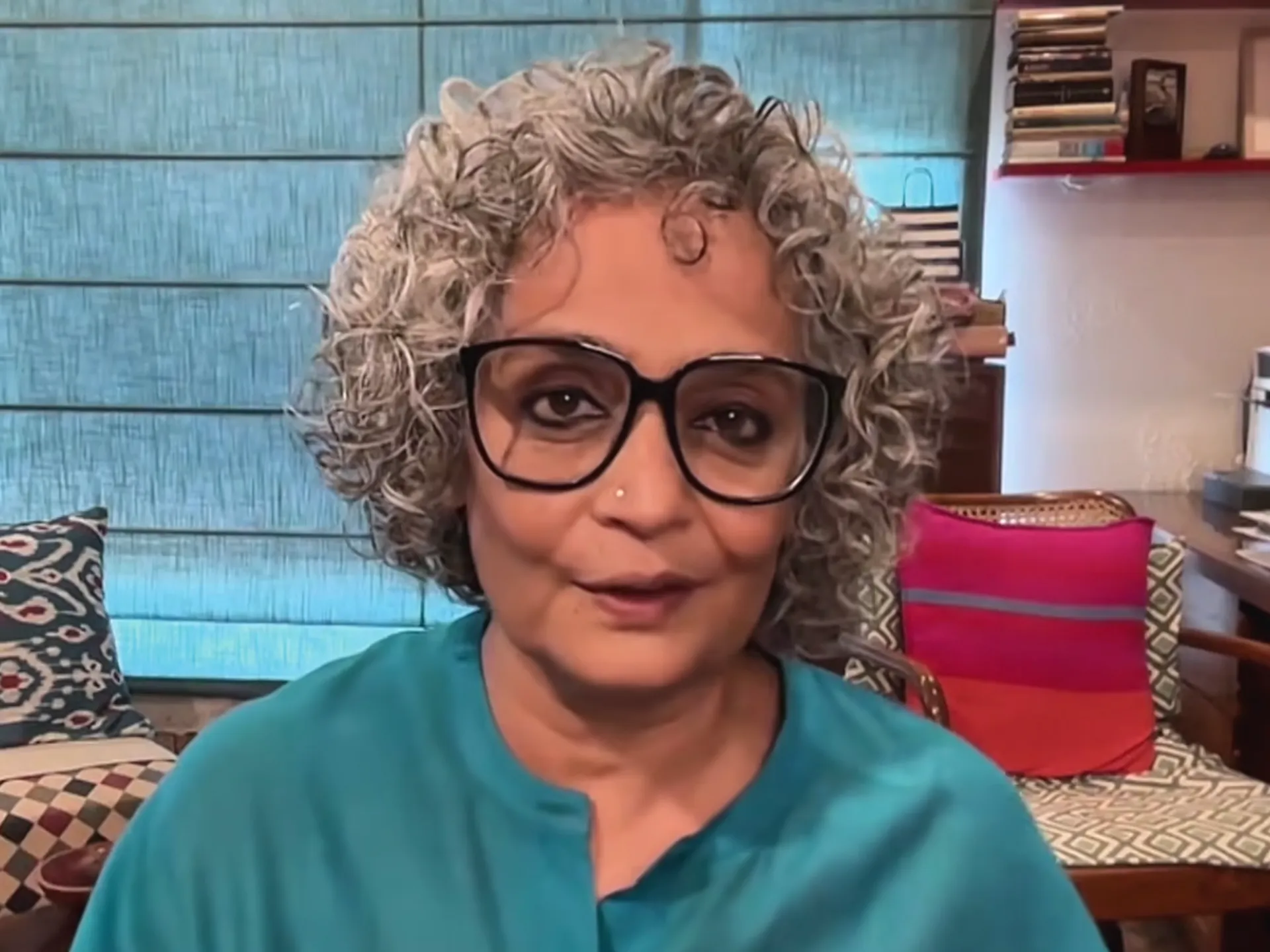
屡获殊荣的印度作家阿兰达蒂·罗伊表示,当前针对纳伦德拉·莫迪总理政府的抗议活动——主要由带有讽刺意味的“蟑螂人民党”发起——已经彻底打破了这位右翼印度教民族主义领袖原本精心塑造的形象。这一形象原本是由印度那些被大企业掌控的新闻媒体以及执政的印度人民党对社交媒体的控制力共同维持的。
Award-winning Indian author Arundhati Roy says the ongoing protests against Prime Minister Narendra Modi’s government – mainly led by the satirical Cockroach Janta Party (CJP) – have stripped the right-wing Hindu nationalist leader of his “carefully confected image” propped up by India’s corporate-owned news channels and the governing Bharatiya Janata Party’s (BJP) control over social media.
在与半岛电视台记者伊姆兰·汗探讨包括由“Z世代”主导的反政府抗议、对莫迪政府操纵选举的指控在内的诸多议题时,这位64岁的布克奖得主表示,她希望这个世界上人口最多的民主国家的政治氛围即将发生转变。
Speaking with Al Jazeera’s Imran Khan on a range of issues, including the Gen Z-led antigovernment protests and allegations of vote theft against Modi’s government, the 64-year-old Booker Prize-winning writer says she hopes the political climate in the world’s most populous democracy is about to change.
“我确实感觉到,某种变化正在暗流涌动,即将发生。那个‘皇帝’已被揭穿真面目,也失去了权力。”以下是罗伊接受半岛电视台采访的内容,为便于阅读已作删减。
“I do feel that something is boiling just under the surface. Something is going to happen,” she said. “The emperor has been called out, and he has lost his power.”Here’s the interview Roy gave to Al Jazeera TV, edited for brevity.
阿兰达蒂·罗伊:感谢您接受半岛电视台的采访。您的处女作小说曾荣获享有盛誉的布克奖。此后,您又创作了多部广受好评的小说、犀利有力的政论文章以及散文集。您会如何定义自己:小说家、作家还是政治活动家?或者您并不在意这些界限?
Arundhati Roy, thank you for talking to Al Jazeera. Your debut novel won the prestigious Booker Prize. Since then, you have written acclaimed novels, hard-hitting political pieces, and collections of essays. How would you describe yourself: novelist, writer or a political activist? Or you don’t really think about those boundaries?
其实我尽量避免给自己下定义。这个工作还是留给别人去做吧。毕竟,我们为何要给自己下定义、划分类别呢?那是别人该做的事。
Well, I actually refrain from describing myself. I will leave that to other people because, you know, why should we describe ourselves? And categorise ourselves? That’s for other people to do.
贯穿您不同创作领域的共同元素便是讽刺手法。您虽不算典型的讽刺作家,但在《微物之神》与《极乐之部》中,您运用讽刺手法取得了极佳效果。这些作品似乎始终围绕政治主题展开,这是您有意为之吗?
One of the things that links all of your different aspects is this idea of satire. You are not chiefly a satirist, but in The God of Small Things and in The Ministry of Utmost Happiness, you have used satire to devastating effects. But it always seems to be about politics. Is that a deliberate choice?
我不这么认为。我的意思是,从某种程度上来说,这取决于你如何定义“政治”,对吧?在我看来,即便是一则童话故事在某种程度上也具有政治性,但并非那种“我要用锤子敲你的头”或“我要公开展示我的政治宣言”式的政治。我并非那种人。从我的著作以及我的成长经历来看,或许对你的问题的答案是:私人领域与公共领域之间其实并无区别。
I don’t think so. I mean, in some ways it depends on how you define what politics is, right? To me, even a fairy tale is in some ways political, but not let-me-hit-you-on-the-head-with-a-hammer or let-me-display-my-manifesto type of politics. I am not. From my books and from the way I grew up, possibly the answer to your question is that there is no difference between the personal and the public space.
让我们谈谈印度及其政治环境。你曾写过关于CJP运动的文章。那是一场由年轻人发起的草根运动,他们面对“被称作蟑螂”这样的侮辱,不仅没有退缩,反而欣然接受了这个称呼。你在文章开篇写道:“当希望似乎已然破灭之时,这群年轻的‘蟑螂’冒雨出现了,他们是‘法官与笑话所结下的邪恶结合体’的后代”——这句描写实在精彩至极。是什么吸引了你去关注这场运动呢?
Let’s talk about India and its political climate. You wrote about the CJP movement. Now that’s a grassroots movement fuelled by young people who took an insult – of being called a cockroach – and owned it. And you started your essay with when hope seemed lost, in came these young roaches riding in the rain, “the progeny of the unholy union between a judge and a joke”, which is a brilliant line. What drew you to this particular movement?
说来也巧,就在我们谈话的此刻,一场巨大的危机正在酝酿之中。那些“蟑螂”们又出现了,他们宣称几天后将在全国范围内发起抗议——起因是某家报纸揭露了印度选举制度存在严重漏洞的事实。其实这一点我们早就知道,也多次撰文提及,如今总算有了确凿的证据。吸引我的正是这场充满欢乐与独特幽默感的青年运动:他们通过Instagram短视频等全新方式传递信息,成功打破了印度总理莫迪精心塑造的形象。
Well, ironically, as we speak at this moment, there is a huge crisis brewing, and the cockroaches are back, saying they are going to be protesting all over the country in a few days because of the scandal exposed by a particular newspaper about the fact that India’s elections are completely compromised – which is something we have known and have written about for years. But now there is a sort of concrete proof. So what drew me to it was this young people’s movement, which was full of joy and unusual humour – this new way of messaging with their [Instagram] reels and so on. It stripped Prime Minister Narendra Modi’s very carefully confected image.
这是莫迪的失算吗?是他不了解社交媒体,也不了解年轻一代对技术的运用方式?这场运动又会对印度产生怎样的影响呢?
Is this a miscalculation on his part? Not understanding social media, not understanding young people’s use of technology? And is it going to have an effect on India?
不,我认为这根本不是什么误解。他和印度人民党是最早涉足社交媒体领域的,因此他们比其他人都更早进入这一领域。不过我觉得当时发生的事情实在太多,一个接一个。最终这场运动也就这样瓦解了——这简直就是压垮骆驼的最后一根稻草。事情的起因是:在2024年的选举中,莫迪未能获得绝对多数席位……接着出现了选举丑闻、考试泄题丑闻,还有严重的失业问题。所有这些因素叠加在一起,最终引发了这场看似戏谑实则严肃的社会大爆发。
No, I don’t think it’s a misunderstanding at all. He and the BJP were the first to wade into the field of social media, so they have been there before anybody else. But I just think there were too many things happening, one after another. And somehow this movement sort of broke. It was the straw that broke the camel’s back. It started out with the fact that in 2024 [election], Modi did not win a full majority… There’s scandals around elections. There’s scandals around the paper leak in exams. There’s massive unemployment.
印度官方总宣称自己是一个经济成功的典范、气候领域的领军者。但在你看来,现代的印度究竟是什么样的呢?
So it all sort of came together to create this sort of irreverent but serious explosion. India publicly says we are an economic success story, a climate leader.
嗯,现代的印度是一个极其富裕的国家,但同时也充斥着极其贫穷的人群。我认为世界上没几个国家会让民众生活在如此极端的贫困之中,承受如此屈辱的境遇。人们居然还吹嘘印度是经济超级大国,实在令人汗颜——正如我反复强调的,印度其实极其贫穷。当然,也有极少数超级富有的人、掌控一切的富豪,但这些财富极少能惠及穷人……因此,在民众如此缺乏话语权的情况下,还称印度为超级大国或经济强国,实在是一种耻辱。
But what is modern India to you? Well, modern India is a very rich country full of very, very, very poor people. I mean, I don’t think there are many countries in the world where people live in such deep poverty, in such conditions of humiliation. And it’s a shame for people to boast about this being a super economic power, because, as I keep saying, it’s super poor. Surely, there are extremely rich people, extremely rich industrialists who control everything, but very little of that seeps down to the poor… So it’s a scandal to call India a superpower or an economic force, when the people are so disempowered.
不过,很多这类问题往往被归咎于英国的殖民统治。你对这种观点持认同态度吗?
But a lot of these problems are often blamed on British colonialism. Do you have any sympathy with that argument?
不再是了。曾经确实有过那样的时刻。但现在,我们看到的是一个让一切变得更糟的政府,包括对自由理念的理解。昨天我和一些年轻人交谈,我说,[圣雄]甘地、[比姆拉奥]·安贝德卡尔、毛拉[阿卜杜勒·卡拉姆]·阿扎德、[贾瓦哈拉尔]·尼赫鲁以及所有这些人在英国殖民时期所说和所写的内容,如今没有人敢再这样说了,因为那样做会被投入监狱。
Not any more. There was a point at which it was true. But now we are watching a government just making everything much worse, including the idea of freedom. I was talking to some young people yesterday, and I said that what [Mahatma] Gandhi and [Bhimrao] Ambedkar and Maulana [Abul Kalam] Azad and [Jawaharlal] Nehru and all these people said and wrote during the British times, today, nobody can say those things because they would be put into prison.
有大量的人,大量的学生、活动家和律师,不断进出监狱。我们面临着反恐怖法律的威胁。今年独立日,莫迪在红堡的城墙上发表讲话,称最危险的人是“dimaghi Naxal”,即“思想上的纳萨尔派”(指毛主义者),这当然包括我们所有人。他说必须孤立这些人等等。所以我认为,这已经是老生常谈了。
There are a lot of people, a lot of students, a lot of activists, lawyers in and out of prison constantly. We are threatened with the antiterrorism law. This Independence Day, from the ramparts of the Red Fort, Modi said the most dangerous people are “dimaghi Naxal”, which means intellectual Maoists, which includes all of us, of course. And that we must be isolated and so on. So I think that’s a tired horse to whip now.
很高兴你提到了毛主义者。今年早些时候,印度宣布持续六十年的毛主义叛乱实际上已经结束。但纳萨尔派所为之奋斗的那些问题,难道不依然存在吗?
I am glad you mentioned the Maoists. Earlier this year, India declared the six-decade-long Maoist insurgency effectively over. But all the problems that the Naxalites were fighting for still remain, don’t they?
是的,确实如此。我的意思是,纳萨尔派是谁?他们在为什么而战?事实是,他们不断宣布叛乱结束,但随后它又会在某处、以某种方式重新浮现,因为你不可能长期压制如此多的人并摧毁他们的生活。总有人会采取自力救济的行动。所以,我们对这类声明已经习以为常了。
Well, yes. I mean, who are the Naxalites? What were they fighting? And the fact is that they keep declaring the end of it, but then it resurfaces somewhere, somehow, because you can’t just hold so many people down and devastate their lives. Some people are going to take things into their own hands. So we are used to these declarations, you know.
在国大党执政时期,大概是2012年或2013年,时任总理曼莫汉·辛格将原住民的家园划归给大型基建企业。当时签署了大量谅解备忘录。随后政府又发起了所谓的“绿色狩猎行动”,大量安全部队被派往森林地区。一个又一个村庄被烧毁;妇女遭到强奸,村民们因担心被包围并遭焚毁而不敢留在家中。媒体则把这些可怜的民众称作“恐怖分子”……当上千名安全人员包围了你在丛林中的住所时,你还能做什么呢?他们遭到了残酷的镇压。
During the Congress rule, I think it was around 2012 or 2013, the prime minister [Manmohan Singh] had signed over the homelands of indigenous people to big infrastructure companies. There were many MoUs signed. And then they declared something called Operation Green Hunt. They flooded the forest with security forces. Village after village was being burned down; women were being raped, villagers could not live in their houses for fear that they would be surrounded and burned down. And the media was calling all these poor people “terrorists”… What do you do when a thousand security personnel come and surround your house in the middle of the jungle? And they were brutally put down.
那些在莫迪政权下变得畏缩不安的人,如今突然又挺直了腰杆——即便还没完全恢复勇气——于是便出现了一丝喘息的空间。
People who sort of crumbled and quivered under the Modi regime are suddenly finding a couple of vertebra, if not a spine, and it's creating little spaces.
作家阿伦达蒂·罗伊:您一直反对“作家应当保持非政治化”这一观点。您关于克什米尔并非印度固有领土的立场便是个例证。我想问问您,如此直言不讳需要付出怎样的个人代价?您又是如何应对的呢?
Arundhati Roy, Author You have always rejected the idea that writers should remain apolitical. Your stance on Kashmir, calling it not an integral part of India, comes to mind. I want to talk to you about the personal cost of being so forthright. How do you deal with that?
嗯,2019年之后,这种说法已站不住脚了,因为克什米尔已被宣布为印度的固有领土,相关宪法条款也被重新解读。不过说实话,我并不会为作家制定什么规则,也不会规定他们该不该参与政治或该怎么做。对此我并无定论。我只知道,如果我不写下那些真正触动我的内容,那就等于在他们把我关进监狱之前,我自己先把自己关进了牢笼。
Well, after 2019, one cannot say that because it has been made an integral part of India. And that section of the Indian Constitution has been read down. But honestly, I am not a person who makes rules for writers and says they should be political or shouldn’t be or how they should be. I don’t have a prescription for that. I just know that if I didn’t write what I am really moved to write, then it would be like putting myself into prison before they put me into prison.
正如我在回忆录中所说,这就像是在布满地雷的舞池上跳舞——谁也不知道炸弹何时会爆炸。但我还是做自己必须做的事,而且并非只有我一人如此。有太多人勇敢地站出来,为此付出了沉重代价。为了什么呢?只为了说出或做到自己坚信的事罢了。因此,我不想把自己塑造成什么殉道者。
As I said in my memoir, it’s like a dance on a mined dance floor. One doesn’t know when the bombs will go off. But I do what I have to do, and I’m not the only person. There are so many people who stand up so bravely and who have paid huge prices. For what? For doing or saying what they believe in. So I don’t want to make a martyr of myself here.
但印度是否存在一个拥有强大声音且被广泛倾听的知识分子运动,还是说它正被政治喧嚣所淹没?
But is there an intellectual movement in India that has a strong voice that is being listened to, or is it being drowned out by the shoutings of the politics?
实际上,这一运动一直存在。尽管自2014年以来,它被那些由不同企业拥有、试图压制所有异见的24小时电视新闻频道猛烈打压,但其力量依然极其强大。因此,每当莫迪赢得选举,他便会站出来试图妖魔化我们。
Actually, that movement has always existed. It has been extremely strong, even though since 2014, it has been hammered down by these 24-hour television news channels owned by various corporations who try and shout everyone down. So, every time Modi wins an election, he comes out and tries to demonise us.
印度是否仍是世界上最大的民主国家——值得庆祝?还是你认为这只是一场虚假的民主?
Is India still the world’s largest democracy – something to be celebrated? Or do you think it’s a democracy in sham?
这正是问题所在。莫迪政府重组了选举委员会的遴选方式。他任命了首席选举专员。反对派[政党]和首席大法官通常对首席选举专员的遴选拥有发言权,但现在他们已不再拥有这一权利。如今,关于选举如何进行的争议已演变成一场彻底的丑闻。从2024年大选到马哈拉施特拉邦、哈里亚纳邦、西孟加拉邦、比哈尔邦和果阿邦的[地方]选举,人们发现,本应掌握选民数据的数千名选举官员被排除在外,一切均由新德里方面控制。
This is exactly where the axe has fallen. The Modi government reconstituted the way in which the election commission is chosen. He appointed a chief election commissioner. The opposition [parties] and the chief justice normally had a voice in selecting the chief election commissioner, but they don’t any more. Now, there has been an absolute scandal about how the elections have been conducted. From the 2024 elections to the [regional] elections in Maharashtra, Haryana, West Bengal, Bihar, and Goa. You are finding a situation where thousands of electoral officers who are supposed to have the voter data with them have been locked out, and it’s all been controlled from New Delhi.
选民,尤其是少数族裔选民或据称对印度人民党不友好的选民,被简单地剥夺了投票权。我指的是数百万人的规模……我们常说,选举并非民主的证明。你需要宪法,需要其他制度,需要制衡机制。所有这些都被掏空了。如今,选举本身也受到了质疑。在未来几个月里,随着2029年大选的临近,这个国家将面临巨大的动荡,大家拭目以待。
And voters, especially minority voters or supposedly BJP-unfriendly voters, have been simply not allowed to vote. And I am talking about the numbers in the millions… We always say that elections are not proof of democracy. You need a constitution, you need other institutions, you need checks and balances. All of those were hollowed out. Now the election itself is impugned. And you will watch and see in the next few months, there is going to be big trouble in this country as we inch closer to the 2029 election.
那么,你目前的立场是什么?在你看来,印度的民主,真正的民主,还有希望吗?
So where are you landing right now? Is there hope for democracy, true democracy in the way that you see it in India?
嗯,我的一本散文集是献给那些学会了将希望与理性分离的人的。我将永远希望这里能有所改变。我确实感到,表面之下有什么东西正在沸腾。有些事情即将发生。至于它会如何发展,我说不准,因为我们面对的是相当无情的一群人。
Well, one of my collections of essays was dedicated to those who have learned to divorce hope from reason. I will always be hopeful that something will change here. And I do feel that something is boiling just under the surface. Something is going to happen. How that plays out, I can’t say because we are up against a pretty ruthless set of people.
在印度,在这场“蟑螂”起义之后,你看到的是,所有人都被警告了。所以,所有那些在莫迪政权下崩溃颤抖的人,突然找到了几节脊椎骨,甚至可能是一整条脊梁,这正在创造出一些小小的空间。各地都有很多抗议活动。正如我所说,发生的最重大的事情之一就是,皇帝被公开点名了,他失去了他的权力。他甚至不再公开露面。
What you’re seeing in India, after this “cockroach” uprising, is that everybody has been put on notice. So all the people who sort of crumbled and quivered under the Modi regime are suddenly finding a couple of vertebrae, if not a spine, and it’s creating little spaces. There’s a lot of protests in all kinds of places. As I said, one of the biggest things that’s happened is that the emperor has been called out, and he has lost his power. He is not even showing up publicly.
他的内政部长也在躲躲闪闪。上一次议会(季风)会期期间,蟑螂运动正在进行,他们两人甚至一次都没有露面。所以,有些事情正在改变。我认为他们正在害怕。让我们看看会发生什么。当然,我现在比三个月前更加乐观了。
His home minister is ducking and diving. Neither of them showed up even once for the entire [monsoon] session of Parliament last time when the cockroach movement was on. So there’s something changing. And I think they are running scared. Let’s see what happens. Certainly, I am more optimistic now than I was three months ago.
在这次采访之前,我和另一位在以色列的作家朋友交谈。他说你必须问罗伊小姐的一个问题是,人工智能(AI)和社交媒体的武器化正在助长反民主运动和政府的威权主义。你对此怎么看?
Before this interview, I was speaking to another writer friend of mine who is based in Israel. He said one of the questions you must ask Miss Roy is the fact that artificial intelligence (AI) and the weaponisation of social media is fuelling anti-democratic movements and government authoritarianism. Where do you land on that?
我认为这是终结。我认为这是人类努力和文明的私有化。它在国防、政治和个人生活中如何运作,以及它提供的闪亮礼物背后隐藏的黑暗,是我们需要思考的事情。这也是我正在写作的内容。关于现代印度,关于这个世界,有什么让你感到希望的吗?
I think it’s the end. And I think it’s privatisation of human endeavour and civilisation. How it works in defence and in politics and in personal life, and the shiny gifts it offers with the darkness behind them, is something we need to think about. It’s something I am writing about. Is there anything about modern India, about the world, that gives you hope?
当然,完全没错。正如我所说,印度是一个拥有深厚抵抗文化、思想认同、非凡思维和非凡异议传统的国家。那么你怎么能不抱有希望呢?看到这一切真是太棒了。
Well, absolutely. As I have said, India is a country with such a deep culture of resistance, of intellectual thinking, of unusual thinking, of unusual kinds of dissent. So how can you not have hope? It’s a wonderful thing to see.