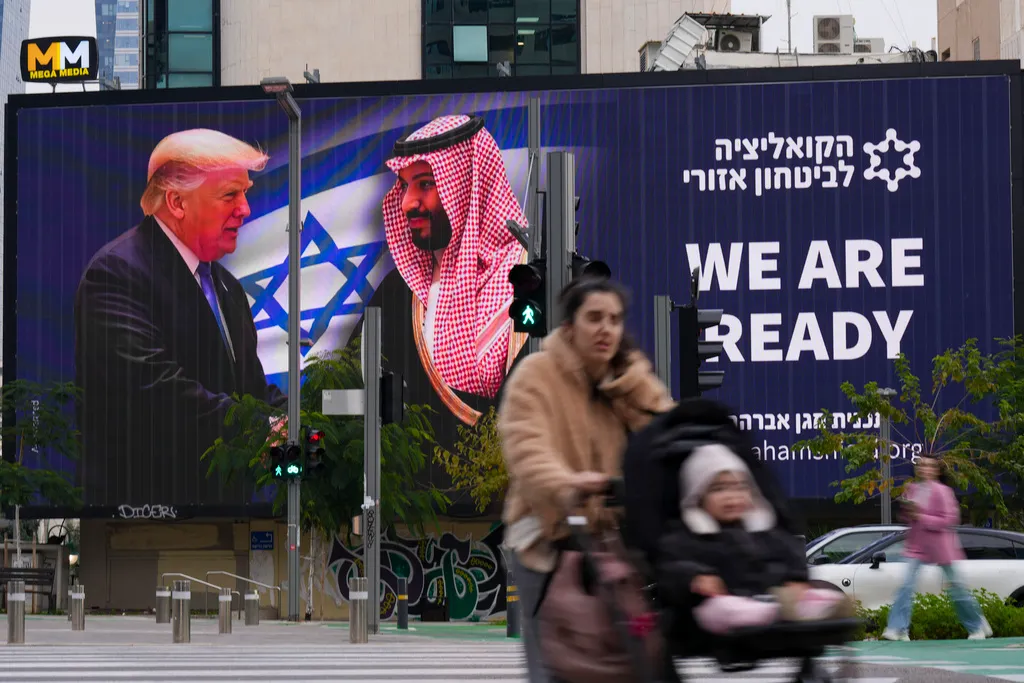
特朗普总统已将同以色列关系正常化作为推进美沙民用核合作的前提,与此同时,华盛顿也深化了与利雅得的防务关系。沙特方面尚未公开接受特朗普的“交换条件”,并持续要求朝着巴勒斯坦建国方向取得实质性进展。特朗普或许能在其剩余任期内实现一件在10月7日之后看似不可能完成的事:沙特承认以色列。但华盛顿不应将外交突破误认为真正的和平。
President Trump has made normalization with Israel a condition for moving forward with U.S.-Saudi civilian nuclear cooperation, while Washington has deepened defense ties with Riyadh. The Saudis have not publicly accepted Trump’s quid pro quo and continue to demand meaningful progress toward Palestinian statehood. Trump may accomplish during his remaining term what seemed impossible after Oct. 7, Saudi recognition of Israel. But Washington should not confuse a diplomatic breakthrough with a warm peace.
王储穆罕默德·本·萨勒曼或许已准备好与以色列建立战略关系,但沙特社会尚未准备好接纳这个犹太国家。如果最终能够建立外交关系——这几乎可以肯定会在美国重大影响下实现——关键问题在于,这种关系将呈现何种形态。它会像以色列与阿拉伯联合酋长国之间相对融洽的关系吗?这种关系自10月7日以来虽承受巨大压力,但依然维系至今。
Crown Prince Mohammed bin Salman may be ready for a strategic relationship with Israel, but Saudi society is not ready to embrace the Jewish state. If diplomatic relations are eventually established, almost certainly with significant American influence, the critical question is what kind of relationship will follow. Will it resemble Israel’s relatively warm relationship with the United Arab Emirates, which has survived the enormous strains since Oct. 7?
还是会更像以色列与埃及、约旦之间的“冷和平”:在必要的安全合作背后,伴随着民众相当程度的敌意?华盛顿过于频繁地使用“和平”一词,仿佛中东地区的关系正常化就意味着类似美国与加拿大之间的关系。事实并非如此。地区各国政府必须面对保守的国内政治、伊斯兰主义宗教潮流、脱离历史事实的积怨,以及民众对以色列的态度可能远比其统治者更为敌对。
Or will it look more like Israel’s cold peace with Egypt and Jordan, essential security cooperation accompanied by considerable public hostility? Washington too often uses the word “peace” as though Middle Eastern normalization means something resembling relations between the United States and Canada. It does not. Regional governments must contend with conservative domestic politics, Islamist religious currents, ahistorical grievances, and populations whose attitudes toward Israel can be far more hostile than those of their rulers.
沙特阿拉伯正是这一问题的典型例证。本·萨勒曼对沙特部分领域进行了戏剧性的现代化改革,但沙特社会并非利雅得的商业精英阶层,其对以色列的态度为建立类似阿联酋模式的关系构成了巨大障碍。近期的民意调查凸显了这一挑战。2025年,81%的沙特受访者对与以色列建立正常和平关系持负面看法,而仅有13%的人对《亚伯拉罕协议》持正面态度。
Saudi Arabia illustrates the problem. Bin Salman has dramatically modernized parts of the kingdom. But Saudi society is not Riyadh’s business elite, and its attitudes toward Israel present a formidable obstacle to an Emirati-style relationship. Recent polling underscores the challenge. In 2025, 81 percent of Saudis surveyed viewed establishing normal, peaceful relations with Israel negatively, while only 13 percent viewed the Abraham Accords positively.
10月之后……79%的民众支持阿拉伯国家与以色列断绝关系,这凸显了本·萨勒曼的战略考量与沙特公众舆论之间的巨大鸿沟。多年来,以色列和沙特一直低调合作,共享情报并协调应对共同对手,尤其是伊朗。在可预见的未来,这种合作模式或许比效仿阿联酋全面接纳以色列更符合利雅得的意愿,或至少是其认为在政治上能够承受的选择。
After Oct. 7, 96 percent favored Arab states cutting ties with Israel, illustrating the enormous gulf between Bin Salman’s strategic calculations and Saudi public opinion. Israel and Saudi Arabia have quietly cooperated for years, sharing intelligence and coordinating against common adversaries, particularly Iran. For the foreseeable future, that may be closer to what Riyadh wants or believes it can politically sustain, than an Emirati-style embrace of Israel.
10月7日,破坏沙特与以色列的关系正常化进程,恰恰符合哈马斯和伊朗的战略利益。在那次袭击发生之前,人们曾普遍乐观地认为,沙特的关系正常化可以以《亚伯拉罕协议》为基础,将以色列的技术、情报和安全能力与沙特的经济实力相结合。但那个时刻已经过去了。即使特朗普能说服本·萨勒曼重启关系正常化,双方关系也将始于截然不同的环境。
Disrupting Saudi-Israeli normalization served Hamas and Iran’s strategic interests on Oct. 7. Before the attack, there was considerable optimism that Saudi normalization could build upon the Abraham Accords, combining Israeli technology, intelligence and security capabilities with Saudi economic power. That moment has passed. Even if Trump persuades Bin Salman to resume normalization, the relationship will begin under vastly different circumstances.
此外,华盛顿在允许沙特在其境内进行铀浓缩——作为建立外交关系的交换条件——之前,也应慎重考虑。沙特目前局势稳定,但核协议必须着眼于数十年后的长期影响。本·萨勒曼最终将接替其父萨勒曼国王,而王室成员仍记得他在巩固权力期间曾将人质困在丽思卡尔顿酒店。未来的权力交接可能会引发严重的不稳定。因此,建立本土的铀浓缩能力将带来核扩散风险,其影响远超当前的地缘政治考量。
Washington should also think carefully before permitting Saudi Arabia to enrich uranium on its soil as a quid pro quo for diplomatic relations. Saudi Arabia is stable today, but nuclear agreements must be designed for decades. Bin Salman will eventually succeed his father, King Salman, while members of the royal family remember being detained at the Ritz-Carlton during his consolidation of power. A future succession could produce significant instability. Creating an indigenous enrichment capability therefore carries proliferation risks extending well beyond today’s geopolitical calculations.
与此同时,以色列也仍有工作要做。未来的以色列政府或许能在巴勒斯坦问题上向利雅得做出足够让步,从而推动关系正常化。但以色列也可以立即采取一项更为可控的措施:遏制约旦河西岸的极端主义暴力。以色列每天都在面对真实的巴勒斯坦恐怖主义威胁,这一威胁不应被低估,也不应与定居者暴力混为一谈。
Israel, meanwhile, has work to do. A future Israeli government may offer Riyadh sufficient movement on the Palestinian issue to facilitate normalization. But Israel can take immediate action on something far more manageable, extremist violence in the West Bank. Israel confronts genuine Palestinian terrorism every day. That threat should not be minimized or equated with settler violence.
但攻击无辜巴勒斯坦人、破坏财产或违反以色列法律的以色列人,正在损害其国家的战略利益。内塔尼亚胡政府或下一届政府,都应坚决执行以色列法律,包括在安全考量有正当理由时实施行政拘留,以应对那些负有责任的少数极端分子。若放任他们的行为继续,当以色列需要重建国际支持,尤其是美国支持时,将造成不必要的外交脆弱性。
But Israelis who attack innocent Palestinians, destroy property or violate Israeli law undermine their country’s strategic interests. The Netanyahu government or the next one, should aggressively enforce Israeli law, including administrative detention when justified by security considerations, against the relatively small number of extremists responsible. Allowing their actions to continue creates an unnecessary diplomatic vulnerability when Israel needs to rebuild international and, most importantly, American support.
欧洲各国政府正加大对以色列约旦河西岸政策的压力,而国会民主党人则提议对以色列的定居点活动实施制裁。目前,以色列与沙特阿拉伯之间取得重大公共进展的可能性不大,尤其是在以色列选举后尚未组建稳定政府之前。然而,伊朗将继续推动两国走近。来自德黑兰和胡塞武装的共同威胁,使得沙特与以色列在情报和安全领域的合作成为必要,尽管其中许多内容仍处于幕后。
European governments are increasing pressure over West Bank policies, while congressional Democrats have proposed sanctions connected to Israeli settlement activity. For now, substantial public progress between Israel and Saudi Arabia is unlikely, particularly before Israel has a stable government following its elections. Yet Iran will continue pushing the two countries together. Shared threats from Tehran and the Houthis make Saudi-Israeli intelligence and security cooperation necessary, even if much remains in the shadows.
利雅得还必须评估美国对该地区的长期承诺。特朗普将于2029年1月离任,而沙特阿拉伯和以色列都不清楚他的继任者——无论是民主党人还是共和党人——是否会维持同等程度的互动。美国在中东的信誉和威慑力也影响着北京和台北。尽管如此,也不应低估特朗普。《亚伯拉罕协议》推翻了数十年来的一种传统观念,即阿拉伯与以色列关系正常化无法在解决巴勒斯坦冲突之前取得进展。
Riyadh must also calculate America’s long-term commitment to the region. Trump leaves office in January 2029, and neither Saudi Arabia nor Israel knows whether his successor, Democrat or Republican, will sustain the same level of engagement. American credibility and deterrence in the Middle East also reverberate in Beijing and Taipei. Trump nevertheless should not be underestimated. The Abraham Accords overturned decades of conventional wisdom that Arab-Israeli normalization could not advance without first resolving the Palestinian conflict.
他或许会再次给该地区带来惊喜。但沙特对以色列的承认,无论多么具有历史意义,并不必然意味着和解。更现实的关系可能类似于埃及或约旦:建立正式的外交关系并开展广泛的安全合作,而社会层面的正常化仍需数年,甚至数十年才能实现。
He could surprise the region again. But Saudi recognition of Israel, however historic, would not necessarily mean reconciliation. The more realistic relationship may resemble Egypt or Jordan: formal diplomatic relations and extensive security cooperation while societal normalization remains years, perhaps decades, away.
耶路撒冷深知这一点,华盛顿也应该明白政府间协议与人民间和平之间的区别。埃里克·R·曼德尔(Eric R. Mandel)是中东政治信息网络主任,也是《耶路撒冷邮报》《耶路撒冷报告》的高级安全编辑。
Jerusalem knows, and Washington should understand the difference between an agreement between governments and peace between peoples. Eric R. Mandel is the director of the Middle East Political Information Network and senior security editor for the Jerusalem Post’s Jerusalem Report.