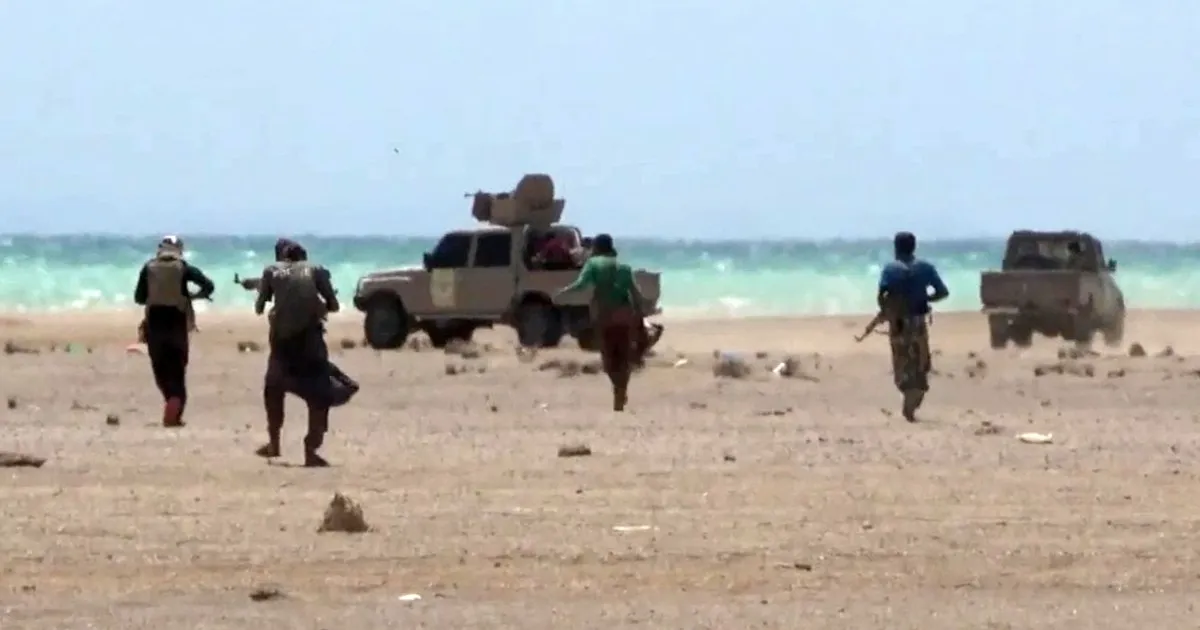
国际公认的也门政府宣布反攻两天后,名为“也门黎明”的行动已经取得了重大进展。其军队在曼德布海峡附近的红海沿岸从伊朗支持的胡塞武装手中夺回了领土。
Two days after the announced counter-offensive by the internationally recognised Yemeni government, the operation named Dawn of Yemen has already made significant advances. Its forces recaptured territory from the Houthis, an Iran-backed group, along the Red Sea coast near the Bab al-Mandeb strait.
沙特领导的支持政府的联盟部署了100架战斗机,全天候飞行,以帮助确保海峡安全。作为回应,胡塞武装声称袭击了沙特领土。
The Saudi-led coalition backing the government has deployed 100 fighter jets, flying round-the-clock to help secure the strait. In response, the Houthis have claimed attacks on Saudi territory.
这是自2022年联合国斡旋停火以来也门战争中最严重的升级。四年来,这场战争一直被视为一场冻结的冲突。现在,双方都在努力重新绘制地图。
This is the most consequential escalation in the Yemen war since the UN-brokered truce of 2022. For four years, the war was managed as a frozen conflict. Now, both sides are trying to redraw the map.
在未来几天里,进攻的成功不仅取决于三条不同战线的进展,还取决于忠于也门政府的部队保持凝聚力并迫使胡塞武装改变冲突代价的能力。
In the coming days, the success of the offensive will be determined not only by gains along three different fronts, but also by the ability of the forces loyal to the Yemeni government to maintain cohesion and force the Houthis to change their cost of conflict calculus.
让胡塞武装过度扩张西海岸是这场战役的成败之地,原因在于也门以外。随着伊朗扰乱霍尔木兹海峡的交通,红海已成为海湾地区的战略生命线。沙特阿拉伯通往延布的东西管道是其周边霍尔木兹的主要路线,但从延布运往亚洲市场的原油仍必须经过曼德布。
Keeping the Houthis overstretched The western coast is where the campaign will be won or lost, and the reason lies beyond Yemen. With Iran disrupting traffic through the Strait of Hormuz, the Red Sea has become the Gulf’s strategic lifeline. Saudi Arabia’s East-West pipeline to Yanbu is its main route around Hormuz, yet crude shipped from Yanbu to Asian markets must still pass through Bab al-Mandeb.
胡塞武装对也门海峡海岸的控制使这条绕道变成了人质。阿拉伯半岛的两端将同时受到挤压,任何海湾国家首都和几乎没有石油进口经济体都无法长期容忍这种情况。
A Houthi grip on the strait’s Yemeni shore turns that bypass into a hostage. The Arabian Peninsula would then be squeezed at both ends simultaneously, a scenario that no Gulf capital, and few oil importing economies, can tolerate for long.
这里还有一个违反直觉的一点。胡塞武装今年最大的收获--巴布曼德附近的领土--也可能是他们最暴露的阵地。他们的传统优势在于北部的山区,那里的地形、部落网络和短暂的补给线有利于防御。
There is also a counterintuitive point here. The Houthis’ greatest gain of the year – the territories near Bab al-Mandeb – may also be their most exposed position. Their traditional strength lies in the mountains of the north, where terrain, tribal networks and short supply lines favour defence.
蒂哈马海岸正好相反:一片平坦的平原,远离他们的高地基地,有漫长而脆弱的补给线,几乎没有持续的空中力量的掩护。
The Tihama coast is the opposite: a flat plain, far from their highland base, with long and vulnerable supply routes and little cover from sustained airpower.
如果政府能在任何地方取得决定性胜利,那就是在这里。当前的目标不必是彻底击败胡塞武装,而是将他们从海峡中赶回来,夺回这些岛屿,并剥夺他们将地理优势转化为地区影响力的能力。
If the government can win decisively anywhere, it is here. The immediate aim need not be to defeat the Houthis outright, but to push them back from the strait, retake the islands and deny them the ability to convert geography into regional leverage.
第二条决定性的战线是塔伊兹。这座城市是胡塞武装控制的北部地区、政府控制的南部地区和西部沿海地区之间的枢纽。如果胡塞武装继续切断亚丁道路,任何更广泛的进攻都会一分为二。如果政府军重新开放,他们将获得亚丁、塔伊兹和海岸之间的领土连续性。第三个是马里布省,拉格万前线的战斗已经升级,可能还有乔夫。
The second decisive front is Taiz. The city is the hinge between the Houthi-held north, the government-held south and the western coastal theatre. If the Houthis keep the Aden road severed, any broader offensive is split in two. If government forces reopen it, they gain territorial continuity between Aden, Taiz and the coast. The third is Marib governorate, where fighting has escalated on the Raghwan front, and potentially al-Jawf.
尽管也门政府发表了广泛的言论,但提前向萨那游行的可能性仍然不大。更合理的策略是累积压力:如果海岸、塔伊兹和马里布同时受到压力,胡塞武装将难以将人力、导弹、无人机和后勤集中在任何一个轴上。政府不需要到处取得突破;它需要让胡塞武装捉襟见肘。
Despite sweeping rhetoric from the Yemeni government, an early march on Sanaa remains unlikely. The more plausible strategy is cumulative pressure: if the coast, Taiz and Marib are pressed at the same time, the Houthis will struggle to concentrate manpower, missiles, drones and logistics on any single axis. The government does not need breakthroughs everywhere; it needs to keep the Houthis overstretched.
支持不是问题,凝聚力是问题政府很少缺乏外部支持者。它一再失败的是将这种支持转化为也门连贯的军事力量。沙特阿拉伯仍然是决定性的,它的激励措施现在是直接的而不是抽象的:阿美石油公司的设施受到攻击,与沙特有关的航运被宣布为目标,绕过霍尔木兹海峡的主要航线也暴露了。100架飞机的承诺表明利雅得愿意大力投资。
Support is not the problem, cohesion is The government has rarely lacked external backers. Its recurring failure has been converting that support into coherent Yemeni military power. Saudi Arabia remains decisive, and its incentives are now direct rather than abstract: Aramco facilities are under fire, Saudi-linked shipping has been declared a target and the main route circumventing the Strait of Hormuz is exposed. The commitment of 100 aircraft signals that Riyadh is willing to invest heavily.
空中力量可以摧毁阵地,切断补给线,打破兵力集中,但它不能守住领土。这要求也门部队在统一的指挥系统下作战,支持运作正常的地方行政当局,并维持防止派别间内讧的政治协议。
Airpower can destroy positions, cut supply lines and break concentrations of force, but it cannot hold territory. That requires Yemeni forces to fight under a unified chain of command, support functioning local administration and maintain political agreement that prevents infighting between factions.
在这里,反胡塞阵营可以说比战争中的任何时候都要弱。南方过渡委员会于2025年12月在南部发动了自己的攻势,在沙特支持的反攻后于1月解散,其领导人Aidarous al-Zubaidi离开了该国。在其旗帜下作战的南方部队仍然拥有武器和能力,但没有政治屋顶,他们对也门政府的忠诚是有条件的。
Here the anti-Houthi camp is arguably weaker than at any point in the war. The Southern Transitional Council, which launched its own offensive across the south in December 2025, was dissolved in January after a Saudi-backed counteroffensive, and its leader, Aidarous al-Zubaidi, left the country. The southern units that fought under its banner remain armed and capable, but without a political roof, and their loyalty to the Yemeni government is conditional.
与他们一起,塔里克·萨利赫领导的沿海国家抵抗运动、南方巨人旅以及与塔伊兹和马里布的伊斯兰党结盟的部队,都对不同的领导人、地区优先事项和外部赞助人负责。相比之下,胡塞武装拥有集中的政治和军事指挥权。
Alongside them, Tareq Saleh’s National Resistance on the coast, the Southern Giants Brigades, and units aligned with the Islah Party in Taiz and Marib each answer to different leaderships, regional priorities and external patrons. The Houthis, by contrast, possess a centralised political and military command.
这种不对称是进攻最大的弱点。如果通过支离破碎的指挥系统进行战斗,那么收益将是暂时的:敌对势力将争夺占领的领土、收入和权力,胡塞武装将重新集结并反击。
This asymmetry is the offensive’s greatest vulnerability. If it is fought through fragmented chains of command, gains will be temporary: rival forces will compete over captured territory, revenues and authority, and the Houthis will regroup and counterattack.
认识到这一现实,也门政府已开始准备发放工资并在收复地区进行重建。这是正确的本能。一个被空袭占领但没有得到报酬和无人管理的城镇不会继续被占领。这一努力需要继续下去。转折点?
Recognising this reality, the Yemeni government has started preparing to hand out salary payments and undertake reconstruction in recovered areas. That is the right instinct. A town taken by airstrikes but left unpaid and ungoverned will not stay taken. This effort needs to be maintained. A turning point?
进攻不应以是否占领萨那来判断。该基准是最大限度的,几乎可以保证失败的判决。更好的问题是,它是否使冲突变得成熟。
The offensive should not be judged by whether it captures Sanaa. That benchmark is maximalist and almost guarantees a verdict of failure. The better question is whether it makes the conflict ripe for resolution.
用冲突研究的语言来说,当各方认为陷入相互伤害的僵局时,他们就会认真谈判。自2022年以来,僵局损害了也门人民、政府、沙特阿拉伯和全球航运业,但胡塞武装却没有受到伤害,他们有充分理由相信时间对他们有利。正确理解的是,也门黎明的目的不是彻底胜利,而是胡塞武装对持续对抗成本的评估的改变。
In the language of conflict studies, parties negotiate seriously when they perceive a mutually hurting impasse. Since 2022, the deadlock has hurt the Yemeni people, the government, Saudi Arabia and global shipping, but not the Houthis, who have had every reason to believe that time works in their favour. The purpose of Dawn of Yemen, properly understood, is not total victory, but a change in the Houthis’ assessment of the costs of continued confrontation.
有一个复杂的情况。胡塞武装的算计不再纯粹是也门人。他们的决定现在与德黑兰的战争及其与华盛顿的讨价还价纠缠在一起。如果该集团领导层认为应该在更广泛的地区协议中进行让步,即使是重大的战场损失也可能不会产生该集团的灵活性。因此,针对也门的解决方案可能部分取决于也门人无法控制的谈判中的进展。
There is a complication. The Houthis’ calculus is no longer purely Yemeni. Their decisions are now entangled with Tehran’s war and its bargaining with Washington. Even significant battlefield losses may not produce flexibility in the group if its leadership believes concessions should be traded within a wider regional deal. A specifically Yemeni settlement may therefore depend partly on movement in a negotiation that Yemenis do not control.
在接下来的几周里,四个指标将告诉我们战争的走向:政府军是否夺回并控制了海岸和海峡岛屿;泰兹-亚丁公路是否重新开放;胡塞武装是否被迫从泰兹撤军以保卫海岸和马里布;以及收复的地区是否受到统一指挥并获得工资和服务。
Over the coming weeks, four indicators will tell us which way the war is turning: whether government forces retake and hold the coast and the strait islands; whether the Taiz-Aden road is reopened; whether the Houthis are forced to pull forces from Taiz to defend the coast and Marib; and whether recovered areas come under a single command and receive salaries and services.
如果其中大部分发生,战争的战略格局可能会发生变化。如果政府军仅以微弱优势前进、遭受重大损失或互相攻击,胡塞武装就会声称自己在另一场外部支持的运动中幸存下来,而这种说法将坚定他们的信念,即他们能够比对手持久。
If most of these happen, the strategic geometry of the war may shift. If government forces advance only marginally, suffer heavy losses or turn on one another, the Houthis will claim to have survived yet another externally backed campaign, and that narrative will harden their conviction that they can outlast their opponents.
所有这一切都是在一场日益加深的人道主义灾难中展开的。自8月初以来,世界卫生组织已记录了5,000多人伤亡,近20万人流离失所,疑似霍乱病例增加了两倍。忽视这一点的运动将很快耗尽国际社会的耐心,就像2018年夺回荷台达的行动所发生的那样,当时政府军被迫停止以避免人道主义灾难。
All of this unfolds amid a deepening humanitarian catastrophe. The World Health Organization has recorded more than 5,000 casualties since early August, while nearly 200,000 people have been displaced and suspected cholera cases have tripled. A campaign that ignores this will exhaust international patience quickly, as happened with the operation to recapture Hodeidah in 2018, when government forces were pressured to stop to avert a humanitarian disaster.
那么进攻本身并不是转折点。这是一个测试的开始。也门政府必须做它在这场战争中一直在努力做的事情:将外部支持转化为统一的政治权威和可持续的军事力量。如果失败,胡塞武装将从另一轮中脱颖而出,比以往任何时候都更加相信时间仍然站在他们一边。
The offensive then is not the turning point itself. It is the opening of a test. The Yemeni government must do what it has struggled to do throughout this war: convert external support into unified political authority and sustainable military power. If it fails, the Houthis will emerge from another round more convinced than ever that time remains on their side.