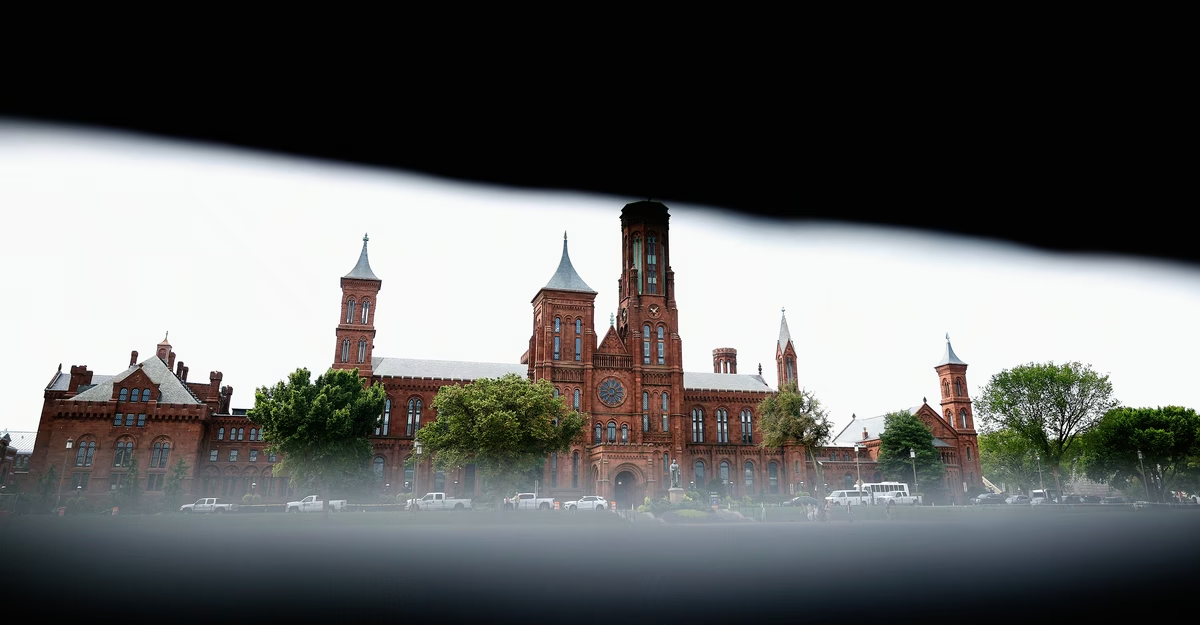
白宫重施施压手段以控制史密森尼学会 特朗普政府威胁要削减1.9亿美元的博物馆经费。作者:凯尔西·阿布尔斯特朗普为掌控美国最大的博物馆体系采取了诸多举措,且大多高调行事:他曾在社交媒体上试图解雇史密森尼学会的某博物馆馆长,下令在该馆的美国历史博物馆外张贴警示标语,还要求撤下他不喜欢的现代派雕塑。然而,在这些政治闹剧公开上演的同时,白宫管理与预算办公室却悄然利用一项鲜为人知的预算权力,试图左右史密森尼学会对美国历史的讲述方式。
The White House Revives a Pressure Tactic Against the Smithsonian The Trump administration is threatening $190 million in museum funding.
据此前未公开的公共记录显示,上月底,管理与预算办公室在最近两次联邦资金分配文件中添加了一条附注,规定史密森尼学会必须遵守特朗普于2025年3月签署的行政命令——该命令指责学会传播“制造分裂的言论”——才能获得近1.9亿美元的拨款。实质上,白宫正试图借助这一鲜为人知却具有法律约束力的预算机制,强制推行其认定的历史叙事版本。
By Kelsey Ables Most of Donald Trump’s efforts to control the nation’s largest museum complex have been loud. He tried to fire a Smithsonian museum director on social media, ordered the placement of warning signs outside its American-history museum, and demanded that the museum take down a modernist sculpture he dislikes. But while this political theater plays out publicly, the White House’s Office of Management and Budget is quietly using an obscure funding power as part of its campaign to influence how the Smithsonian tells the American story.
这条适用于2027财年的附注涉及史密森尼学会两个主要薪资及开支账户中结转自上一财年的资金,其具体内容如下:在法律许可的范围内,所分配的资金须按照与2025年3月27日发布的第14253号行政命令《恢复美国历史的真相与理性》相一致的方式予以使用。该行政命令标志着特朗普政府着手改造史密森尼学会的开端;政府指责该学会“受到了一种制造分裂、以种族为核心的意识形态的影响”,并禁止“将资金用于那些贬损美国共同价值观、基于种族制造民众分裂,或宣扬与联邦法律及政策相悖的理念与项目的展览或活动”。
Late last month, according to previously unreported public records, OMB included a footnote in two recentapportionments of federal funds that conditions nearly $190 million for the Smithsonian on the institution’s compliance with Trump’s March 2025 executive order accusing it of spreading “divisive narratives.”
该注释并未明确说明史密森尼学会应如何落实这一措辞模糊的禁令。然而,这绝不仅仅是一种威胁:根据《防止资金滥用法》,此类拨款注释具有法律强制力,违反者可能面临刑事处罚。此类注释正是特朗普政府试图削弱国会预算审批权的诸多手段之一。由此可见,围绕史密森尼学会使命的争议,其深层意义远非特朗普表面上的种种举措所能体现。
Essentially, the White House is trying to force adherence to its preferred version of history through a little-known but legally binding budget mechanism.
如今,史密森尼学会的经费约有三分之二来自联邦政府拨款,每年获得的资金总额接近10亿美元。这一现状恐怕会让该学会的早期支持者们倍感痛苦。从某种意义上说,约翰·昆西·亚当斯似乎预见到了特朗普如今试图对史密森尼学会采取的举措:1842年,时任国会议员的这位前总统反对一项向史密森尼学会提供联邦资金的法案,他主张位于华盛顿特区的这一新机构“应完全独立运作,绝不可与任何需要动用公共资金的全国性机构产生牵连或混为一谈”。
就连史密森尼学会的首任秘书长约瑟夫·亨利也对此忧心忡忡——正是在他的任期内,该学会开始获得用于博物馆建设的定期联邦拨款。1877年,亨利在信中写道,该博物馆“极易受到直接的政治干预”。如果说美国社会存在某种亘古不变的规律,那么亚当斯与亨利当年便已深谙此道,如今的特朗普也同样明白:钱就是控制力。
The fiscal-year-2027 footnote, which applies to funds carried over from last year in two of the Smithsonian’s main salaries and expenses accounts, reads:
尽管特朗普政府在与史密森尼学会的对抗中仅取得些许成效,但自去年起,这个本应独立运作的机构便一直遭到政府以资金为手段的施压。去年9月起,美国行政管理和预算局开始在相关文件中添加注释,要求史密森尼学会遵守两份文件:一份是3月份发布的行政命令,另一份则是8月份致史密森尼学会会长洛尼·邦奇的信件,信中要求史密森尼学会提交展览材料及其他文件以供内容审查。
To the extent permitted by law, amounts apportioned shall be available for obligation in a manner consistent with Executive Order 14253 (March 27, 2025), “Restoring Truth and Sanity to American History.”That executive order marked the beginning of the Trump administration’s campaign to change the Smithsonian, alleging that the institution had come “under the influence of a divisive, race-centered ideology” and prohibiting “expenditure on exhibits or programs that degrade shared American values, divide Americans based on race, or promote programs or ideologies inconsistent with Federal law and policy.”
今年4月起,上述注释内容又被修改,要求史密森尼学会遵循特朗普提出的预算请求,而非国会已通过的2026年度拨款法案——这实际上是要求史密森尼学会在国会规定的预算基础上出现8900万美元的赤字。经过多次调整,该注释最终于7月2日被删除。两天后,白宫发布了针对美国国家历史博物馆的严厉批评报告。此后,这种通过注释施压的手段似乎暂时不再被使用,直到上月底又重新出现。
The footnote does not specify how the Smithsonian should apply the order’s vague prohibition. But it is more than simply a threat: Apportionment footnotes are enforceable under the Antideficiency Act, the violation of which can carry criminal penalties. Such footnotes are one of several tactics that the Trump administration has used to try to supplant Congress’s spending power. In this case, the footnote suggests that the fight over the Smithsonian’s purpose goes much deeper than Trump’s most visible attacks.
目前尚不清楚这些注释是否对史密森尼学会的运作产生了实质性影响。史密森尼学会拒绝了关于这些注释的采访请求,白宫也未回应相关问题。
Today, the Smithsonian is nearly two-thirds federally funded and receives an annual total appropriation of about $1 billion—a reality that would have agonized some of its earliest supporters. In a way, John Quincy Adams could be said to have foreseen what Trump is trying to do to the Smithsonian: In 1842, the former president, then serving in Congress, opposed a bill providing federal funds to the Smithsonian, writing that the new institution in Washington, D.C., should be “exclusively confined to itself and not entangled or commingled with any national establishment requiring appropriations of public money.”Even Joseph Henry, the first Smithsonian secretary, under whom the institution began receiving regular federal funding to support a museum, worried about it, writing in an 1877 letter that the museum was “liable to be brought under direct political influence.”If there is any constant in American life, Adams and Henry knew it then and Trump knows it now: Money is control.
缅因州民主党众议员切莉·平里是负责监管史密森尼学会的众议院拨款小组委员会中的资深成员。她告诉我,今年夏天她曾与邦奇谈及资金问题,感觉该机构似乎在等待那些脚注内容真正开始影响其工作运转时才采取应对措施。她说,那些脚注内容始终未遭到任何质疑。“我认为它们给史密森尼学会带来了极大的困扰。最终资金还是得以发放,如今我担心的是下一轮拨款会出现什么状况。”
Although the Trump administration has notched only small wins against the Smithsonian, it’s been playing money games since last year with an institution that is meant to operate independently. Starting in September of last year, OMB began adding footnotes demanding that the Smithsonian comply with two documents: the March executive order and an August letter to Smithsonian Secretary Lonnie Bunch insisting that exhibition materials and other documents be turned over for a content review. Then, starting in April of this year, the footnote was revised to require the Smithsonian to follow Trump’s budget request rather than the 2026 appropriations bill Congress had passed—essentially telling the Smithsonian to operate at a $89 million deficit from what lawmakers had legislated. After several iterations, that footnote was ultimately removed on July 2. Two days later, the White House issued a scathing report on the National Museum of American History. At that point, the footnotes tactic seemed to have gone dormant. Until late last month.
俄勒冈州民主党参议员杰夫·默克利同样负责监督史密森尼学会的相关事务,他担任该事务小组委员会的少数党领袖。他谴责了今年早些时候出现的拒绝拨付数千万美元资金的行为。他在给我写的信中说道:“管理和预算办公室利用一些不起眼的脚注内容,荒谬地声称将拨款额度维持在总统预算设定的水平——不过就是纸面上的一个数字而已——便可以凌驾于现行法律之上。事实上,扣留此类资金的行为本身就是违法的。”
It is unclear whether the footnotes have had any concrete impacts on the Smithsonian’s operations. The Smithsonian declined a request for an interview about the footnotes and the White House did not answer questions about the matter.
多位预算领域的专家也向我指出,这些脚注内容实在不合常理。无党派监督组织“保护民主”的律师塞林·林格雷萨维奇一直密切跟踪各项拨款情况,她告诉我,史密森尼学会相关的那些脚注内容极为特殊,以至于她们组织开发的监测工具都未能识别出来。“我们压根没想到会有人在文本中加入如此离谱的内容,”她说。她特别强调:“把在拨款流程早期提出的、根本不具备法律效力的总统预算请求硬生生挪到流程末尾来强行实施,这种做法完全违背了法治原则以及我们所熟知的宪政秩序。”
Representative Chellie Pingree, a Maine Democrat who is the ranking member on the House appropriations subcommittee that oversees the Smithsonian, told me she spoke with Bunch this summer about the funding issues and got the sense that the institution was waiting to push back until the footnotes really interfered with its work. The footnotes were never challenged, she said. “I think they caused enormous heartburn for the Smithsonian. Eventually, the funds were released, and so now my worry has turned to what will happen on the next round.”Senator Jeff Merkley, an Oregon Democrat who is also the minority leader on a subcommittee tasked with Smithsonian oversight, condemned what he described as the refusal to release tens of millions of dollars earlier this year. “OMB used small footnotes to make a huge, absurd assertion that holding funding to the President’s budget level—just a number on a piece of paper—overrode the actual law,” he wrote to me. “In fact, it is illegal to withhold such funding.”Multiple budget experts told me these footnotes are very strange. Cerin Lindgrensavage, a lawyer at the nonpartisan watchdog group Protect Democracy, has been following apportionments closely and told me that the Smithsonian footnotes were so bespoke that a tracker that her organization had made did not flag them. “It never occurred to us that somebody would put something so egregious in text,” she said. In particular, “the idea that you would resurrect the president’s request that has zero force of law from an earlier part of the appropriations process and impose it at the very end is abhorrent to the rule of law and the constitutional order as we know it,” she said.
这一背景使得特朗普2027年的预算请求对史密森尼学院更加令人担忧,因为这是近年来该机构的最低预算。以96130万美元的提款额,特朗普的提案将支出减少约11%。该请求还强调了维护和保护位于国家大道上的博物馆的重要性,这些博物馆占史密森尼学院博物馆的一半左右,且是特朗普在华盛顿的个人项目的重点区域。
This context makes Trump’s 2027 budget request even more ominous for the Smithsonian, because it’s the lowest for the institution in years. At $961.3 million, Trump’s proposal cuts spending by about 11 percent from the previous year. The request also stresses the importance of maintaining and protecting museums on the National Mall, which is home to about half of the Smithsonian’s museums and ground zero for Trump’s pet projects in Washington.
白宫曾利用注释条款来施压其他联邦机构,其中包括国家科学基金会。上个月,一名法官在一起涉及教育部经费分配的案件中裁定特朗普政府败诉。法官指出,政府在此案中利用限制性注释条款来强制相关机构执行行政命令的做法属于违法。目前该案中其他诉求仍在审理中,其中包括关于管理和预算办公室利用经费分配手段来削减政府不喜欢的特定项目资金的指控。
The White House has used footnotes against other federal entities, including the National Science Foundation. Last month, a judge ruled against the Trump administration in a case about Education Department apportionments, writing that the government’s use of restrictive footnotes to force compliance with executive orders in this situation was unlawful. Remaining claims in the case, including those related to OMB using apportionments to withhold money from specific programs the administration doesn’t like, are pending. (Lindgrensavage is one of the plaintiffs’ lawyers.)
(林德格伦萨维奇是原告方的代理律师之一。)除了今年早些时候关于相关注释条款的报道外,史密森尼学会内部的这些暗流涌动鲜受外界关注。白宫为其这一系列举措辩护称,史密森尼呈现的美国历史版本过于负面,且其管理层带有政治倾向。历史学家们对特朗普政府试图干预该机构的做法表示强烈谴责,民主党议员也提出了旨在维护史密森尼独立性的立法提案。
Little attention has been paid to these behind-the-scenes tensions at the Smithsonian, except for when reported on some of the footnotes earlier this year. The White House has justified its broader campaign by claiming that the Smithsonian presents an overly negative version of U.S. history and that its leadership has a political agenda. Historians have decried the Trump administration’s attempt to influence the institution, and Democratic lawmakers have introduced legislation to protect the Smithsonian’s independence.
史密森尼管理层偶尔也会反驳政府的说法,强调其工作秉持中立立场且以学术研究为基础。不过这场对峙恰逢一场关于如何讲述美国历史的讨论:究竟应该呈现一个统一的整体叙事,还是容纳多种不同的视角?应当侧重强调国家团结,还是多元性?这些问题在史密森尼的美国国家历史博物馆尤为引人关注。该馆以行事审慎著称,一直顺应学术界与策展界的大趋势,致力于拓宽历史叙事的覆盖范围,将更多群体纳入其中,同时如实呈现美国历史的复杂性。
Smithsonian leadership has occasionally pushed back against the administration’s wider claims, saying its work is nonpartisan and rooted in scholarship. But the face-off coincides with an ongoing debate over how to tell American history. Should it be one overarching narrative or comprise many smaller, varied perspectives? Should it focus on national unity or diversity? These questions are especially top of mind at the Smithsonian’s National Museum of American History, which is widely seen as measured in its work and has followed larger curatorial and academic trends of widening the historical narrative to include more groups while emphasizing the complexities of the American story.
无论采取何种方式,史密森尼博物馆的历史一直由策展人而非馆长来掌管。不过目前史密森尼正处于一个极为脆弱的时期。邦奇将于今年年底退休。据今年夏天的报道,随着任期届满,越来越多的民间代表陆续退出史密森尼理事会,相关席位也一直空缺,据称是因为白宫试图对新任人选施加影响。此外,全馆多个博物馆的馆长职位也处于空缺状态——上周,国家自然历史博物馆的馆长宣布即将离任,使得这一空缺情况愈发严重。对于试图掌控全局的总统而言,这种权力真空与机构运转的混乱局面或许正是一个良机。
Whatever the approach, history at the Smithsonian has been the responsibility of curators, not presidents. But the Smithsonian is in a particularly vulnerable period. Bunch will retire from his post at the end of the year. Citizen members keep dropping off the Smithsonian’s Board of Regents when their terms expire, and their seats are going unfilled, reportedly because the White House is trying to influence the new picks, s wrote this summer. Museum-director positions are open across the institution too—last week, the director of the National Museum of Natural History announced that he is stepping down—adding to a number of major vacancies. For a president seeking control, a power vacuum and a fraying institution could represent an opportunity.
一位因未获授权公开发言而要求匿名的工作人员在邦奇宣布退休后告诉我,部分员工担心总统可能会试图任命新的馆长,正如他去年在“Truth Social”上发文“解雇”国家肖像馆馆长金·萨杰特那样。(史密森尼方面称特朗普并无此权限,但金·萨杰特最终还是辞职了。)这位工作人员说道:“我觉得,若对此事毫无焦虑感,那简直就是装糊涂了。”从某种意义上说,白宫的这些举动已然奏效——整个博物馆系统如今都处于高度紧张状态。
One staffer who requested anonymity because she was not authorized to speak on the record told me after Bunch’s retirement announcement that some employees worried that the president might attempt to appoint a secretary, just as he “fired” National Portrait Gallery Director Kim Sajet in a Truth Social post last year. (The Smithsonian said Trump did not have the authority to do that, but she ultimately stepped down anyway). “I think you’d have to really stick your head in the sand to not feel some level of anxiety around this,” the staffer said. In a sense, the White House’s efforts have already worked simply by placing an entire museum system on edge.
史密森尼面临诸多损失风险。在史密森尼,私人资金多用于举办具有开创性的展览或建设新设施等“光鲜亮丽”的项目,而公共资金则主要用于维持日常运营、保护国家馆藏以及设施维护等基础工作。公共资金保障了博物馆的正常开放,也正因如此,当政府停摆导致博物馆不得不闭馆时——就像去年发生的那样——其作为公私合营机构的特殊性质便显露无遗。
It has a lot to lose. At the Smithsonian, private money goes toward the glossier endeavors, such as groundbreaking exhibitions and new facilities, while public money is typically used for basic needs, such as operations, conservation of national collections, and maintenance. Public funding keeps the doors open, which is why the institution’s unusual status as a private-public entity is most visible when it has to close during a government shutdown, as happened last year.
脚注战术正是利用了这一漏洞。林格瑞诺维奇(Lindgrensavage)表示,尽管配账程序旨在帮助防止接收联邦资金的实体出现超支行为,但这并“不是邀请办公管理预算局对联邦政府进行大肆微观管理的邀请。”特朗普政府曾测试过其配账权限的极限。最近,有白宫备忘录称,总统要求取消约8.1亿美元的联邦资金,其中大部分来自“难民、避难者和其他非公民”的资源。
The footnote tactic exploits that vulnerability. Although the apportionment process was designed to help prevent entities receiving federal dollars from overspending, it is “not an invitation to the Office of Management and Budget to micromanage the federal government,” Lindgrensavage said. The Trump administration has tested the limits of its apportionment authority. More recently, the president has called for a sweeping cancellation of about $810 million in federal dollars, much of it coming out of resources for “refugees, asylees, and other non-citizens,” according to a White House memo.
来自缅因州的共和党参议员苏珊·科林斯在X平台上发文称,办公管理预算局正试图“破坏国会的宪法财政权力”。预算专家们向我强调,每一行脚注都是有意为之,且背后都有其故事。在史密森尼学院的情况下,脚注内容详尽具体。今年春天办公管理预算局添加的脚注版本中,该办公室提议对史密森尼学院施加旅行限制,但对特朗普特别喜欢的两个项目予以豁免:半千年纪庆活动和国家动物园的阿拉伯狮猫(该项目由沙特阿拉伯捐赠支持)。
Senator Susan Collins, a Maine Republican, posted on X that OMB was trying “to undermine Congress’s Constitutional power of the purse.”Budgeting experts stressed to me that every line of a footnote is intentional and has a story behind it. In the Smithsonian’s case, the footnotes go into very specific detail. In the version of the footnote that OMB added this spring, the office proposed imposing travel restrictions on the Smithsonian, with exceptions for two projects that Trump is fond of: the semiquincentennial festivities and the Arabian leopards at the National Zoo (which are supported by a gift from Saudi Arabia).
1839年,亚当斯写道,他担心史密森尼学院的捐赠可能会“被浪费在鱼鹅身上”,这是指贪得无厌的鸟类。亚当斯对史密森尼学院的财务纠葛所表达的忧虑是有先见之明的,只是他选错了动物。事实上,史密森尼学院的主要对手是一位热爱大猫的狂热者。
In 1839, Adams wrote that he feared a Smithsonian bequest might be “squandered upon cormorants,” referring to voracious birds. Adams was prescient in his anxieties about the Smithsonian’s financial entanglements; he just had the wrong animal. Instead, the Smithsonian’s main antagonist is a devotee of big cats.