新加坡:并非所有的海上威胁都需要动用军舰来应对。如今,许多海上安全挑战既需要超越常规执法手段的应对方式,又无需采取传统的军事行动。
SINGAPORE: Not every threat at sea calls for a warship. Many maritime security challenges today require more than routine law enforcement but less than a conventional military response.
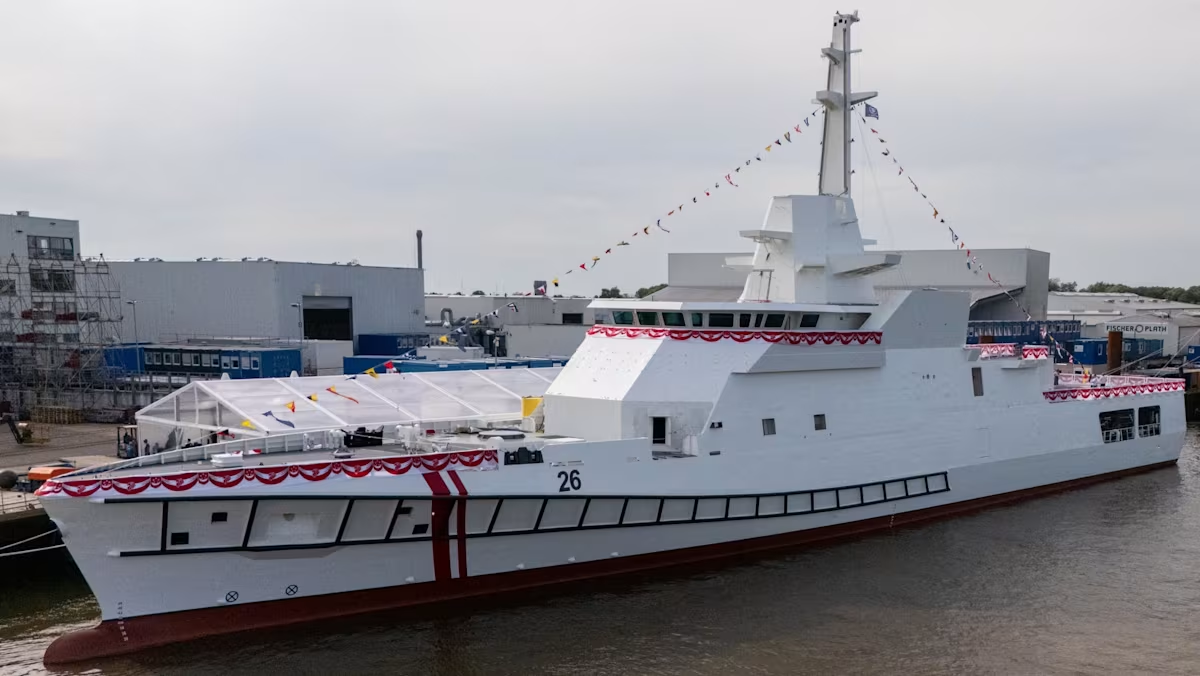
新加坡新购置的近海巡逻舰正是为应对此类情况而设计的。10月2日星期五,新加坡共和国海军正式下水了四艘近海巡逻舰中的第一艘。这些舰艇将编入海上安全与应急响应舰队,旨在实现更加精准、适度的应对措施。
It is in this space that Singapore’s new offshore patrol vessels (OPVs) are intended to operate. On Friday (Oct 2), the Republic of Singapore Navy (RSN) launched the first of its four OPVs which will join the Maritime Security and Response Flotilla to “enable more calibrated responses”.
这些近海巡逻舰由德国法斯默造船厂制造,预计从2028年起陆续交付海军,用以取代目前服役的体型较小的“哨兵级”海上安全与应急响应舰。
The OPVs, acquired from Germany’s Fassmer, will be delivered to the navy progressively from 2028 to replace the existing, smaller Sentinel-class maritime security and response vessels (MSRVs).
这一新型近海巡逻舰系列有两个显著特点:首先,它们并未采用海军舰艇常见的灰色涂装,而是漆成了白色;其次,这些舰艇也不会使用通常赋予现役军舰的“RSS”(新加坡共和国舰船)前缀。这些细节表明,新加坡并不打算将这些巡逻舰当作常规军舰来使用。
Two peculiar features stand out of this new class of OPVs: The vessels do not sport the usual grey livery of navy vessels; instead, they are painted white. They will also not use the RSS (Republic of Singapore Ship) prefix usually assigned to commissioned vessels. These suggest that Singapore does not intend for the OPVs to be operated like regular Navy warships.
海上应对手段亟需多样化 当前,海上威胁日益复杂化。诸如海上胁迫行为以及对重要海底基础设施的破坏等事件,虽然未必构成武装攻击,却可能产生重大的战略影响,因此也需要采取相应的应对措施。
THE NEED FOR MORE OPTIONS AT SEA The challenge comes as threats at sea become more complex. Incidents, such as maritime coercion and threats to critical underwater infrastructure, can have strategic consequences yet fall short of an armed attack and may not necessarily require a militarised response.
当事件涉及民用或商业船只时,情况尤为复杂。例如2023年10月,连接芬兰与爱沙尼亚的波罗的海天然气管道及海底通信电缆遭到破坏。据称,当时一艘名为“NewNew Polar Bear”的集装箱船的锚链拖行了海底区域。即便如此,要判定该事件属于意外事故还是蓄意破坏依然十分困难。
This is especially when incidents involve civilian or commercial vessels. For example in October 2023, a Baltic Sea gas pipeline and subsea telecommunications cables between Finland and Estonia were severed. A container ship, the NewNew Polar Bear, allegedly dragged its anchor across the seafloor. Even then, the distinction between an accident and intentional sabotage is hard to prove.
在此情况下,视觉形象同样是传递信息的重要一环。一艘全副武装的“灰壳”军舰去对付一艘武装薄弱甚至毫无武装的民用船只,这种做法显然有些过度,倘若相关国家之间本就存在海上紧张局势,此举还可能引发局势升级的信号。
This is where optics also matter as part of the message. A heavily-armed “grey hull” warship facing down a civilian vessel – lightly armed or even unarmed – would be overkill and could send a signal of escalation if the countries involved face existing maritime tensions.
这也解释了为何近年来“白壳”船只在亚洲大量出现——这类船只通常与海岸警卫队及海上执法机构相关联。
This helps explain why there has been a “white hull” proliferation across Asia, referring to vessels typically associated with coastguards and maritime law enforcement.
尽管中国海军建设步伐迅猛,但该国仍持续投入大量资源强化海岸警卫队力量。这支队伍在南海等争议海域承担着维护中国海洋主权与权益的重任。菲律宾同样在不断扩充并升级其海岸警卫队。
Despite its rapid navy buildup, China has continued to pour immense resources into bulking up its coastguard, which spearheads its maritime sovereignty and rights assertion in contentious waters such as the South China Sea. The Philippines has likewise been expanding and modernising its coastguard.
理论上而言,白壳船只能给人留下军事色彩较淡的印象,尤其当它们被派往政治敏感地区时更是如此。
In theory, white hulls could project a less militaristic impression, especially when deployed to politically sensitive areas.
然而现实中,“灰壳”与“白壳”之间的界限已日益模糊。海军在和平时期同样肩负重要职责;而某些国家的海岸警卫队则承担着传统上由海军负责的职能,它们或是国防体系的一部分(如印度、越南),或是直接隶属于海军编制(如挪威、哥伦比亚)。
In practice however, this “grey versus white” distinction has become blurred. Navies perform important peacetime roles. Some coastguards undertake roles traditionally associated with navies and are part of the defence establishments such as in India and Vietnam, or are integral parts of navies, such as in Norway and Colombia.
恰到好处的“分寸感”新加坡新购置的近海巡逻舰之所以能成为海军力量的有力补充,关键在于其具备的强大作战能力、适用的任务区域以及部署后所能传递的明确信号。
WHAT MORE CALIBRATED MEANS What makes Singapore’s new OPVs an interesting addition to the fleet is the combination of the force they can bring to bear, where they can operate and the signal their deployment sends.
在2026年2月的预算委员会辩论中,新加坡国防部长陈振声指出,新加坡武装部队不仅需具备“强大的常规作战能力”,还需拥有“多种恰到好处的应对手段,以应对战争门槛之上及之下各类复杂局势”。
During his speech at the Committee of Supply Debate in February 2026, Singapore Defence Minister Chan Chun Sing said that the Singapore Armed Forces (SAF) must possess not just “robust conventional capabilities” but also “other calibrated options in response to an expanded range of scenarios beyond and below the threshold of war”.
这些近海巡逻舰配备了致命性与非致命性武器,为海军提供了更为多元的作战手段,比如无人系统。新加坡海军可灵活运用这些装备来执行从低强度到高强度的各类任务。
The OPVs are equipped with both lethal and non-lethal capabilities and make available a broader set of capabilities to the fleet, such as unmanned systems, that the RSN can flexibly employ across a spectrum of low to high-intensity missions.
这些新型近海巡逻舰的体型远大于它们将要取代的旧型舰船:其长度约为95米,排水量接近2700吨,而现有的近海巡逻舰长度仅为55米,排水量为500吨。这一尺寸优势使得新舰具备更远的航程、更长的海上续航能力,还能根据任务需求灵活搭载各类载荷模块。
The OPVs are substantially larger than the vessels they will replace: They measure about 95 metres-long and displace close to 2700 tonnes, compared to the current MSRVs at 55m and 500 tonnes. This gives them longer operating range, at-sea endurance and space to flexibly accommodate a variety of payload modules depending on the mission.
这也解释了为何这些新舰隶属于新加坡海军,而非职责范围仅限于新加坡领海的警察海岸警卫队。新加坡海军的行动范围可超出领海界限,从而能灵活应对更远海域的潜在威胁,或与区域伙伴开展海上安全合作。
This also helps explain why the OPVs sit within the RSN rather than the Police Coast Guard (PCG), whose mandate is confined to Singapore’s territorial waters. The RSN can operate beyond that – which allows for flexibility to address threats farther afield or for maritime security cooperation activities with regional partners.
与区域内众多致力于维护海上稳定的国家类似,新加坡新引进的近海巡逻舰也体现了该国一贯的务实策略:打造一支由海军操控、却不会给人留下浓厚军事化色彩的海上力量——即一支在武装冲突门槛之下执行任务的海上力量。上述种种特性为新加坡海军提供了更大的灵活调整空间。
Like many regional countries seeking to promote stability at sea, Singapore’s new OPVs reflect this continued emphasis on projecting a less militaristic impression: a platform that is operated by the navy yet operating under the threshold of armed conflict. Taken together, these features give more room for calibration.
以有限资源完成更多任务:全球范围内的众多海军,尤其是像新加坡海军这样的小型海军,都面临着一个现实难题:日益复杂的海上安全环境要求它们在资源有限的情况下完成更多任务。
DOING MORE WITH A SMALL NAVY Many navies worldwide, especially small ones like the RSN face a practical challenge: An increasingly complex maritime security environment requires us to do more with finite resources.
人力短缺问题长期困扰着新加坡武装部队,因此该国一直致力于发展那些所需船员较少、又能灵活适应不同任务需求的多功能舰船。新引进的近海巡逻舰正是这一思路的产物。在应对不断变化的海上安全挑战时,新加坡如何在不断扩大的任务范围与有限的能力资源之间寻求平衡,其做法颇具借鉴意义。
The perennial issue of manpower concerns has long dogged the SAF, which puts emphasis on multi-role platforms that require less crew yet flexible enough to adapt to different mission requirements. The OPVs fit that logic. Singapore’s approach is instructive in how small navies seek to draw a tight balance between an expanding mission scope and capacity constraints in the context of evolving maritime security challenges.
柯天伟是新加坡南洋理工大学拉惹勒南国际研究院下属国防与战略研究所的高级研究员。
Collin Koh is Senior Fellow at the Institute of Defence & Strategic Studies, a constituent of the S Rajaratnam School of International Studies, based at Nanyang Technological University, Singapore.