奥纳西斯·穆尼奥斯身上连接的肾脏透析机发出的嗡嗡声突然戛然而止。头顶的荧光灯也接连熄灭,委内瑞拉巴伦西亚市这家诊所里的房间顿时陷入一片黑暗。
The hum of the kidney dialysis machine that Onasis Munoz is connected to suddenly stops. The fluorescent lights overhead flicker out, and his room at a clinic in Valencia, Venezuela, is plunged into darkness.
这并非第一次因停电而中断穆尼奥斯的透析治疗。他每周需要进行三次透析,以替代已无法正常运作的肾脏功能,过滤血液中的废物与多余水分。
It is not the first time a power cut has interrupted one of the three weekly sessions Munoz needs to do the work his failing kidneys can no longer do, filtering waste and excess fluid from his blood. For years, electricity would go out every couple of days across parts of Venezuela's Carabobo state.
多年来,委内瑞拉卡拉沃沃州的部分地区每隔几天就会出现停电现象。
But in recent months, Munoz said, the outages have grown to be daily, lasting around seven hours.
但据穆尼奥斯称,近几个月来停电变得频繁至每天一次,每次持续约七小时。诊所的应急电池早已耗尽,备用发电机也彻底失灵。
The clinic's emergency batteries have since been depleted, and its backup generator no longer works. He explained that the frequent power failures have disrupted his treatment.
他坦言,频繁的停电严重干扰了治疗进程,导致他的健康状况不断恶化。
His health has slumped as a result. "I arrive home, exhausted, as if I had run a marathon," the 34-year-old said.
“每次治疗结束后我回到家,疲惫得就像刚跑完一场马拉松,”这位34岁的男子说道。
But often there is no electricity there either, and recent weeks have been sweltering. "I can't switch on the air conditioning.
然而他家中的电力供应也时常中断,最近几周天气更是酷热难耐。“我无法打开空调。酷热与蚊虫让我根本无法休息,毫无缓解的可能,”穆尼奥斯说道。
在委内瑞拉全国范围内,持续不断的停电令民众怨声载道,家庭、企业及各类基本服务设施的供电均变得极不稳定。
I cannot rest because of the heat and the mosquitoes. There's no relief," Munoz said. Onasis Munoz of Valencia, Venezuela, has seen his dialysis treatment interrupted by power outages [Courtesy of Onasis Munoz] Across Venezuela, the prolonged outages are riling locals, as the electricity supply to homes, businesses and essential services becomes unstable.
部分停电是临时总统德尔西·罗德里格斯领导的政府为实施电力配给制而有意为之。
Some of the cuts are deliberate, as the government of interim President Delcy Rodriguez rations electricity.
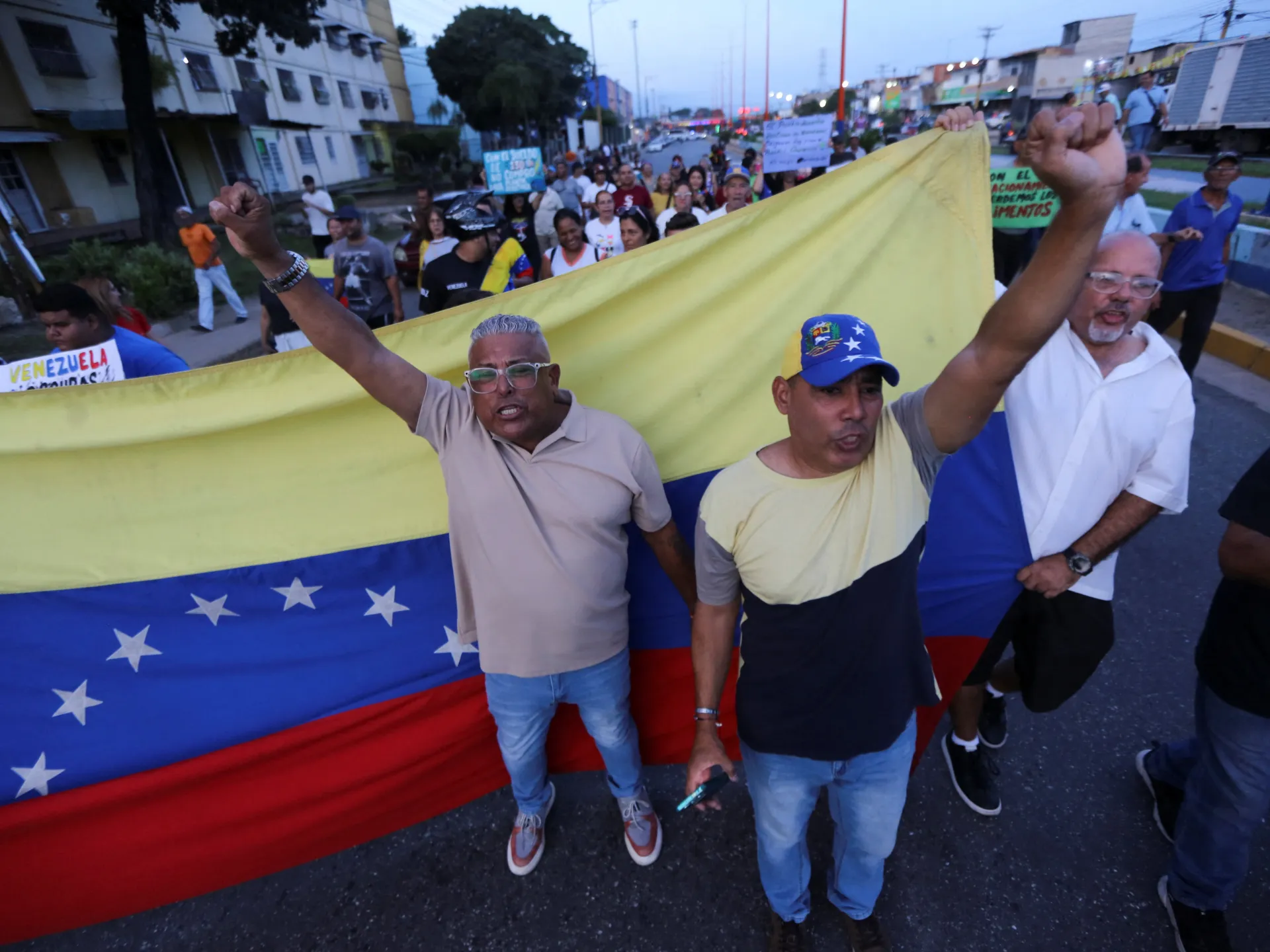
由此引发的民众不满情绪已蔓延至街头:抗议者们举行“敲锅抗议”——这是一种通过敲打锅碗瓢盆来表达不满的传统示威方式。
The resulting frustration has spilled onto the streets, where demonstrators hold "cacerolazos" – a traditional form of protest that involves banging pots and pans.
甚至有人封锁道路、焚烧轮胎。这场电力危机也引发了人们对政府如何管理本国丰富石油资源的担忧,石油正是委内瑞拉重要的经济支柱。
Some have gone as far as blocking roadways and setting tyres on fire. The electricity crisis has also raised concerns about how the government is managing the country's vast oil supply, a key source of income for the country.
“我们绝望至极。实在无法理解,一个资源如此丰富的国家为何会陷入几乎无电可用的境地,”来自石油资源丰富的苏利亚州首府马拉开波的律师帕特里夏·奎埃拉说道。
"We are desperate. We cannot understand how a country so rich in resources can be practically left in the dark," said Patricia Cueva, a lawyer from Maracaibo, the capital of oil-rich Zulia state.
“我们无法休息,也无法工作。孩子们都在哭泣。”咨询公司ANOVA政策研究近期发布的一项研究显示,2026年有62.8%的委内瑞拉家庭——相当于每三户家庭中就有近两户——每天都遭遇停电,而2024年这一比例仅为37.1%。仅有6.9%的家庭表示能够持续获得电力供应。
"We cannot rest. We cannot work. Our children cry." A recent study by ANOVA Policy Research, a consultancy firm, found that 62.8 percent of Venezuelan households – or nearly two out of every three families – experienced daily electricity cuts in 2026, compared with 37.1 percent in 2024. Only 6.9 percent reported a continuous supply of electricity.
此次能源危机的成因错综复杂。历届政府均将外国制裁视为削弱委内瑞拉经济的主要因素。
The energy crisis has its roots in multiple causes. Previous governments have blamed foreign sanctions for weakening Venezuela's economy.
而罗德里格斯政府则把气候现象厄尔尼诺归咎为危机的诱因。委内瑞拉约90%的电力由水力发电提供,因此整个供电系统极易受到极端高温与干旱天气的影响。
The Rodriguez administration, meanwhile, has cited the climate phenomenon El Niño for the crisis. Some 90 percent of Venezuela's electricity is generated by hydropower, making the system vulnerable to extreme heat and drought.
不过,能源专家纳尔逊·埃尔南德斯等委内瑞拉民众认为,政府才是今年停电现象激增的罪魁祸首。
But energy specialist Nelson Hernandez is among the Venezuelans pointing a finger at the government for this year's surge in outages.
埃尔南德斯承认气候条件确实会对发电产生影响,但他强调委内瑞拉的电力危机绝非“偶然事件”。
Hernandez acknowledges that climate conditions can have an impact on electricity production. But he underscored that Venezuela's electricity crisis is not a "random event".
他在接受半岛电视台采访时指出:“这场危机几乎完全源于对基础设施的长期疏于维护。”他还提到了管理层面的严重失误、战略规划的缺失以及技术设备老化等问题。此外,他亦指出政府政策向石油开采领域的倾斜也是重要诱因。委内瑞拉拥有全球已探明的最大石油储量。
"Practically the entire crisis stems from the systematic neglect of the infrastructure," he told Al Jazeera, pointing to what he called "profound failures" in management, lack of strategic planning and ageing technology. He also signalled that shifting government policies towards oil extraction plays a key role. Venezuela sits on the largest proven oil reserves in the world.
该国石油产业原本大多处于国有化状态,但今年1月美国发动军事行动绑架并监禁时任总统尼古拉斯·马杜罗后,这一状况开始发生转变。
Much of the oil industry was nationalised, but that started to change in January, after the US conducted a military operation to abduct and imprison Venezuela's then-President Nicolas Maduro.
自那时起,华盛顿与加拉加斯之间的关系发生了转变。在美国总统唐纳德·特朗普的压力下,马杜罗的前副总统罗德里格斯推行了一系列改革措施,旨在吸引更多外国投资进入委内瑞拉的石油行业。
Since then, relations between Washington and Caracas have shifted. Under pressure from US President Donald Trump, Rodriguez – Maduro's former vice president – has implemented reforms to allow greater foreign investment in the country's oil sector.
与此同时,特朗普也放宽了对委内瑞拉石油出口的限制,并提升了美国在该行业中的作用。
Trump, meanwhile, has eased restrictions on the oil's export and expanded the US role in the industry.
结果便是石油产量有所回升。据石油输出国组织(OPEC)统计,今年委内瑞拉的石油日产量增长了近30%,从1月份的92.4万桶上升至8月份的120.1万桶。
The result has been an uptick in output. Oil production in Venezuela has risen by almost 30 percent this year, from 924,000 barrels per day in January to 1.201 million in August, according to the Organization of the Petroleum Exporting Countries (OPEC).
随着委内瑞拉破败的石油产业逐步复苏,埃尔南德斯指出,产量增加给本就不堪重负的电力系统带来了更大压力。
As Venezuela revives its dilapidated oil industry, Hernandez says increased production is putting pressure on an already strained electricity system.
“由于无法对油田供电实施配给制,否则将危及石油生产,因此调整的重担以及停电后果便直接落在了居民区和商业区身上,”他说道。
"Because electricity supplies to oil fields cannot be rationed without jeopardising oil production, the burden of adjustment and the power cuts fall directly on the residential and commercial sectors," he said.
据埃尔南德斯估算,石油行业进行开采、输送、运输及炼制所需电力约为1600兆瓦甚至更多。
Hernandez estimates the oil industry requires around 1,600 megawatts or more for extraction, pumping, transportation and refining.
罗德里格斯政府称,目前正致力于稳定电力系统,计划在今年第四季度新增1300兆瓦的发电能力。
The Rodriguez government says it is working to stabilise the system, with plans to add 1,300 megawatts of generation in the final quarter of the year.
此外,政府还出台了相关法律措施,强制能源企业自行投资建设电力基础设施,以减轻公共电网的压力。
It has also put in place legal measures that compel energy companies to invest in their own electrical infrastructure, to lessen the strain on the public power grid.
不过业内专家指出,要彻底解决问题,还需投入大量资金来修复老化的发电厂,并大力发展本地发电及可再生能源。
But industry experts say lasting solutions require major investments to repair ageing power plants, while building more locally generated and renewable power.
对于经济条件尚可的家庭和企业而言,备用发电机能在停电时提供一定帮助;但许多民众无力负担此类设备,只能另寻应对办法。
For families and businesses who can afford them, backup generators provide some respite during outages. But many cannot afford them and are forced to find other ways to cope.
“我家经营一家面包店,由于停电频繁,根本无法维持稳定的生产,”委内瑞拉卡拉博博州纳瓜纳瓜市的曼努埃尔·雷耶斯说道。
"My family owns a bakery, and with the constant power cuts, it is impossible to maintain consistent production," said Manuel Reyes of Naguanagua, in Venezuela's Carabobo state.
“有时候我们会营业到午夜之后,只为充分利用有电的这段时间来生产可售卖的商品。”接受半岛电视台采访的多个州的居民表示,持续不断的停电正严重影响着他们的心理健康。
"There are days when we stay open until after midnight to make the most of the hours when there is electricity and produce something to sell." Residents across several states who spoke to Al Jazeera said the prolonged power cuts were taking a toll on their mental health.
住在阿拉瓜州马拉凯市的米莱迪·布兰科每天凌晨4点就起床,赶在停电前为家人准备好一天的食物。
Mileidy Blanco, who lives in Maracay in the state of Aragua, gets up before dawn at 4am to prepare the day's food for her family before the electricity goes out.
但她坦言,自己越来越担心6岁的女儿,因为孩子已经出现了压力过大的迹象。最近,女儿所在的学校、家里以及舞蹈课上都接连发生停电。
But she said she is increasingly worried about her six-year-old daughter, who is showing signs of stress. Recently, the electricity went out at her daughter's school, then at home and again at her dance class.
“她崩溃了,再也承受不住了。她开始大哭,不停地问停电还要持续多久、这种情况什么时候才会结束,”布兰科对半岛电视台说道。
"She broke down; she couldn't take it anymore. She started crying, asking how long the lights were going to be out and how long this would last," Blanco told Al Jazeera.
布兰科带女儿去看了心理医生,医生建议她在停电期间让孩子玩桌游或去公园游玩来分散注意力。
Blanco took her daughter to a psychologist, who advised her to keep the child occupied during outages with board games and trips to the park.
“她现在最该操心的应该是取得好成绩、好好学习、完成作业以及整理房间,”布兰科说。
"Her only concern should be getting good grades, studying, doing her homework, cleaning her room," Blanco said.
然而如今,每当停电时,她发现6岁的女儿就会去拿锅碗瓢盆。她还会跟着街上人们敲打锅具的抗议活动一起敲打——这种抗议活动至今仍未停歇的迹象。
Instead, when the power goes out, she has noticed that her six-year-old reaches for pots and pans. She bangs along with the cacerolazo demonstrations outside in the streets – protests that show no sign of stopping.