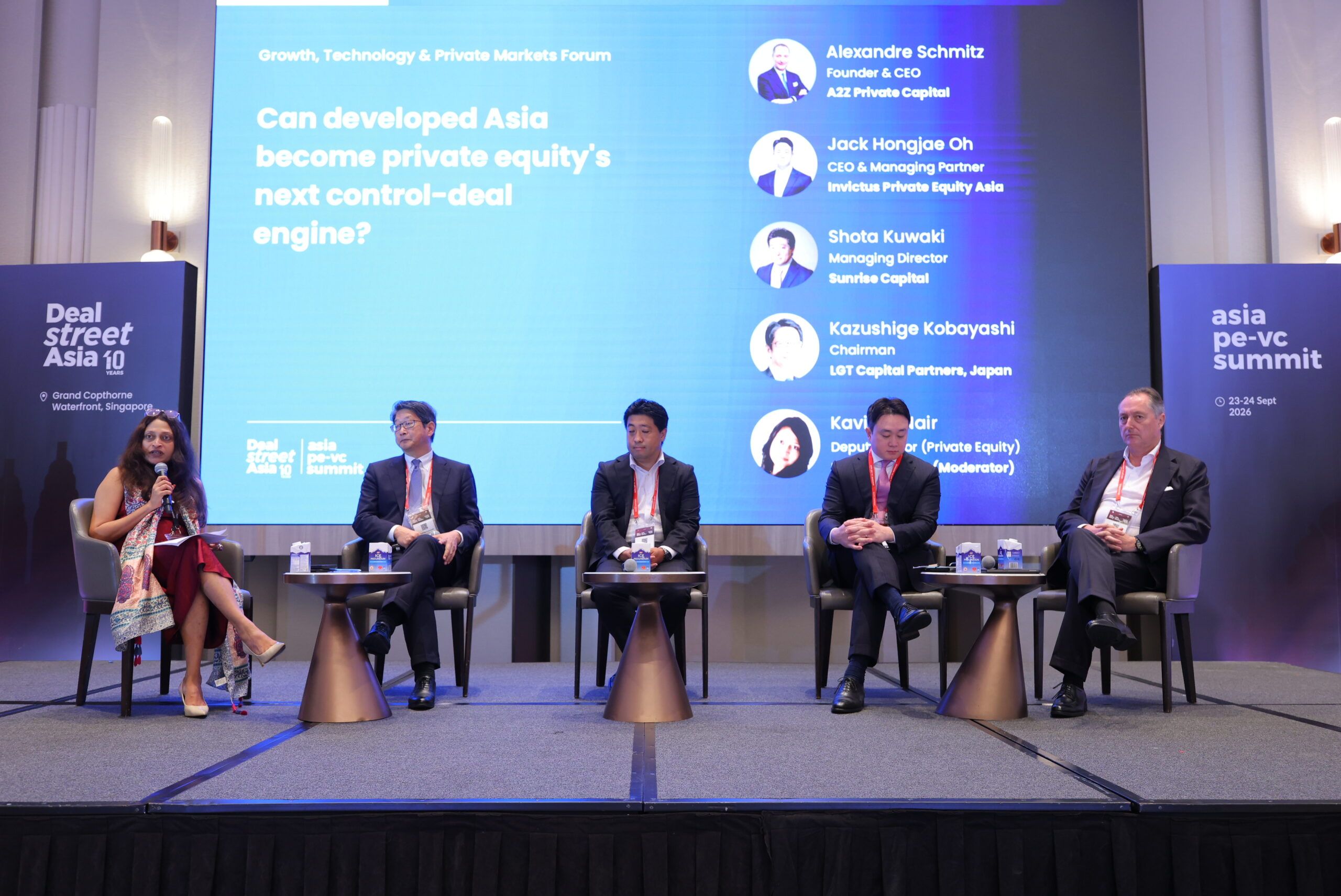
发达亚洲市场正有望成为私募股权的下一个控股交易引擎,这得益于强劲的交易供应和市场特定的有利因素。在日本,企业传承出售、治理改革和公司分拆正在催生优质资产;而在韩国,集团重组和创始人 succession 则发挥着同样的作用。此外,出售给收购基金已不再是业主的最后选择。
Developed Asian markets are on course to become private equity’s next control-deal engine thanks to robust deal supply and market-specific tailwinds. In Japan, succession sales, governance reform and corporate carve-outs are producing assets while, in Korea, conglomerate restructuring and founder succession are doing the same. And s elling to a buyout fund is no longer a last resort for owners.
“历史上,日本的收购公司常被称为‘秃鹰基金’,”在新加坡举行的亚洲PE-VC峰会2026上,Sunrise Capital的董事总经理桑田修太表示,“过去出售给私募股权赞助商更多是机遇性的,现在它已成为出售选项中的一个有效选择。”在韩国,Invictus Private Equity Asia的首席执行官兼董事合伙人权钟灿杰指出,公司分拆、中市值家族企业集团和企业传承方面都有着活跃的交易流。他说:“对于小市值交易来说,企业传承是当前最热的话题。”
“Historically, Japanese buyout firms were referred to as vulture funds,” said Shota Kuwaki, Managing Director of Sunrise Capital, at the Asia PE-VC Summit 2026, held in Singapore recently. “Selling to a private equity sponsor used to be opportunistic. Now it is a valid option among the selling options.”In Korea, Jack Hongjae Oh, CEO and Managing Partner of Invictus Private Equity Asia, pointed to an active deal flow across carve-outs, mid-cap family-owned groups and succession. “Succession is the hottest issue for small-cap deals,” he said.
他们与其他面板嘉宾一起探讨了发达亚洲的潜力,包括A2Z Private Capital的创始人兼CEO亚历桑德罗施米茨,以及LGT Capital Partners Japan的董事长小林和重。
They were joined by other panellists Alexandre Schmitz, Founder and CEO of A2Z Private Capital, and Kazushige Kobayashi, Chairman of LGT Capital Partners Japan, to explore the potential of developed Asia.
桑田还提到了日本市场结构所带来的机会。“我们认为目前日本很不错,因为它的规模还不是太大,”他说,“这也是我们至今仍能发现许多低效率之处的原因,而正是在这些地方我们可以创造巨大的价值。”当被问及可能阻碍市场发展的因素时,有人指出竞争问题,有人则指出市场规模问题。权钟灿杰表示,随着竞争日益激烈,韩国的战略买方正变得越来越强大。“韩国的战略投资者非常活跃,他们的交易执行水平也不断提高。”
Kuwaki touched upon opportunities created by Japan’s market structure. “We think Japan is good right now because it isn’t so big,” he said. “That’s why we still find a lot of inefficiencies, which is where we can create a lot of value.”When asked what could hold the market back, some pointed to competition, others to the market’s size. Oh said strategic buyers in Korea were becoming formidable rivals as competition turns fierce. “Korean strategic investors are very active, and their level of deal execution keeps rising,” he observed.
不过,施密茨指出,“制约因素不是竞争”。“日本、韩国和澳大利亚的竞争强度仍然相对低于美国或欧洲,即使是较小的公司。对我来说,主要的制约因素是能否找到好的经理人。”虽然全球有限合伙人已决定日本、韩国和澳大利亚是其亚洲资产配置的核心,但挑战在于进入重要的基金。
However, Schmitz pointed out that “the constraint is not competition.”“Competitive intensity in Japan, Korea and Australia remains relatively lower than in the US or Europe, even for smaller companies. For me, the main constraint is access to good managers.”While global LPs have decided Japan, Korea and Australia belong at the core of their Asia allocations, the challenge lies in entering the funds that matter.
日本就是最明显的例子。西方LP一直在将资本从中国转移到日本、澳大利亚和韩国。国内机构也在提高家庭拨款。对于大型资产池来说,一两个百分点的转变就是一大笔钱。这一切都流向了一小群已经返还资本的经理,其中最优秀的经理获得了大量超额认购。
Japan is the clearest example. Western LPs have been moving capital from China towards Japan, Australia and Korea. Domestic institutions are raising their home allocations too. For large asset pools, a shift of a percentage point or two is a lot of money. It is all heading for a small group of managers who have returned capital, and the best of them are heavily oversubscribed.
施密茨说:“你有相当数量的优秀经理,但他们的认购量过高。”“当地有限合伙人的需求很大且不断增长,他们希望投入更多资金。与此同时,许多西方有限合伙人希望将资金投入日本工作。”回归环境也变得越来越不宽容。日本中端市场投资较低的轻松岁月--廉价的进入价格、廉价的杠杆和退出时愿意的战略买家--正在消失。竞争正在推高估值,而利率和更谨慎的贷方则降低了融资的支持性。对于外国投资者来说,货币增加了另一层风险。
“You have a reasonable number of good managers, but they are oversubscribed,” Schmitz said. “There is big and growing demand from local LPs that want to put more money to work. At the same time, a lot of Western LPs want to put money to work in Japan.”The return environment is also becoming less forgiving. The easy years of lower mid-market investing in Japan — cheap entry prices, cheap leverage and willing strategic buyers at exit — are fading. Competition is pushing valuations higher, while rates and more cautious lenders have made financing less supportive. For foreign investors, currency adds another layer of risk.
“因为竞争,入场价格正在逐渐上升,” 小林说道。“即使在日本,我们也面临更高的利率,银行也有些谨慎。”关于货币问题,他补充道:“日元现在非常疲软,我们不确定它在未来近期是否会走强。”
“Because of competition, entry prices are gradually increasing,” said Kobayashi. “Even in Japan, we are having higher interest rates, and banks are a bit cautious.”On currency, he added: “The Japanese yen is very weak now, and we are not sure whether it will get stronger in the near future.”
“我预计未来的整体回报率会更低,优秀的基金经理和一般基金经理之间的差距可能会更大,” 小林说。“但市场上优秀的普通合伙人(GP)并不是很多,选择基金经理变得越来越困难。”
“I expect overall returns to be lower in the future, and there will probably be more difference between good managers and okay managers,” Kobayashi said. “But there are not so many good GPs in the market. Manager selection is getting more difficult.”
桑崎表示,文化因素可能会让一些偏远地区的废品商对与外国投资者打交道感到谨慎。“创始人非常关心私募股权公司在他离开之后如何对待员工。”在这些市场的低端,交易往往是本地人赢得的。业主,尤其是那些居住在大城市以外的人,希望找到一个会说他们的语言、了解他们的员工并在创始人离开后依然留下的买家。
Kuwaki said cultural considerations can make owners in some remote prefectures wary of dealing with foreign investors. “Founders really care about how the private equity firm is going to treat the employees, even after he’s gone.”At the lower end of these markets, deals are won locally. Owners, especially outside the big cities, want a buyer who speaks their language, understands their employees and will still be there after the founder leaves.
这可能会使得跨区域基金和地理上远离的有限合伙人(LPs)在本地市场建立关系变得更加困难。对于一位来自伦敦或纽约的LP来说,与一位来自东京或墨尔本的经理建立关系可能需要跨时区的定期电话以及面对面的会面。
That can make it more difficult for pan-regional funds and geographically distant LPs to establish relationships in local markets. For an LP in London or New York, building a relationship with a manager in Tokyo or Melbourne can require regular calls across time zones as well as in-person meetings.
“在纽约投资伦敦要容易得多,” 施密茨说。“如果你想投资一家位于墨尔本或东京的GP,你就需要适应在奇怪的时间接听电话。这就是现实。”在此背景下,小林自己的答案是过去五六年一直支持新兴基金经理,包括那些年轻但能够激进、“但以一种好的方式”的人才。
“It’s easier to be in New York and invest in London,” Schmitz said. “If you want to invest in a Melbourne- or Tokyo-based GP, you need to adapt to taking calls at odd times. It is what it is.”Against that backdrop, Kobayashi’s own answer has been to spend the past five or six years backing emerging managers, including younger talent who can be aggressive, “but in a good way”.